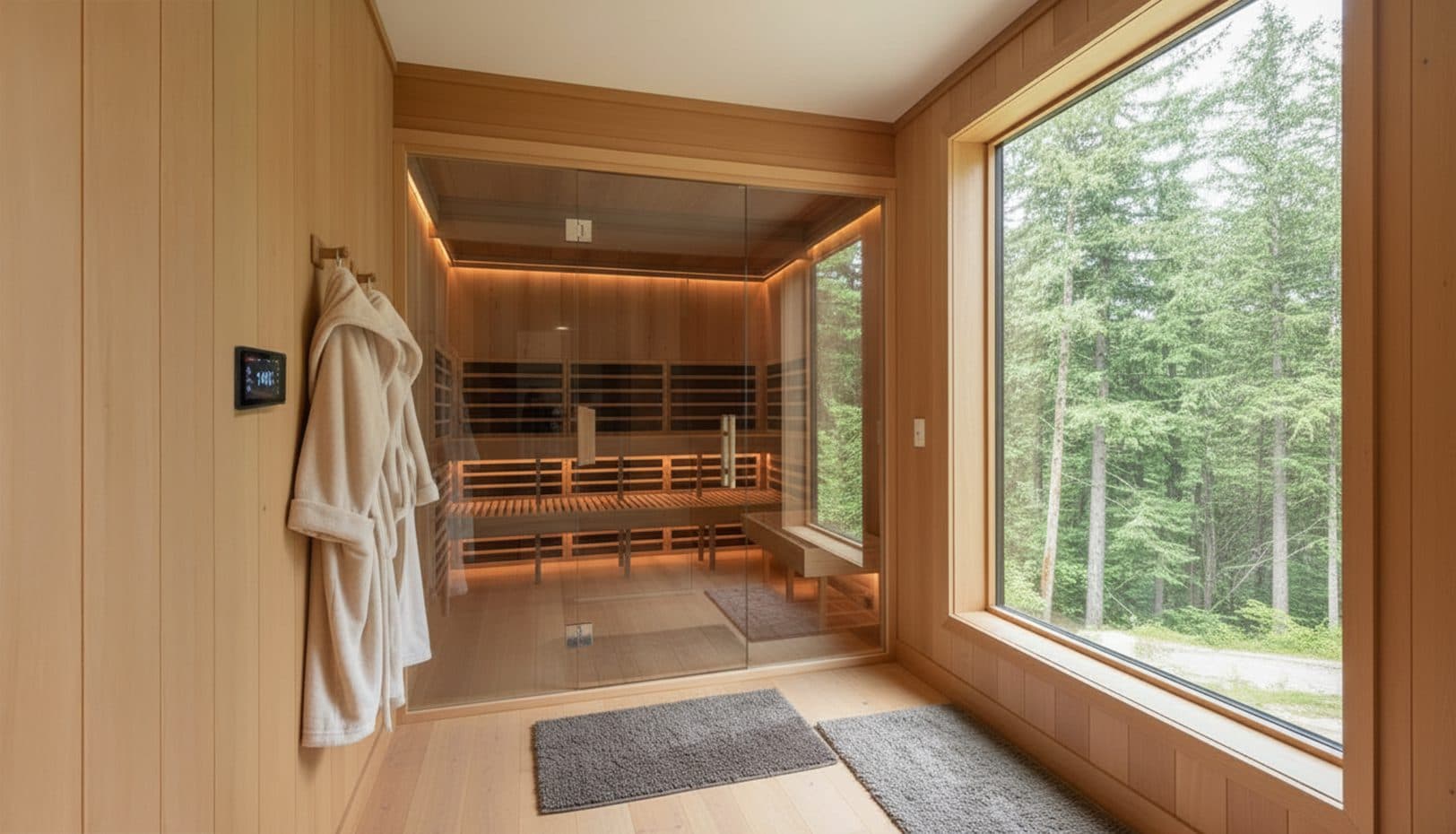
What is the Lifespan of an Infrared Sauna? Element vs. Unit Life
Key Takeaways
- A premium sauna heater body lasts 20 to 30 years with routine care, while residential heating elements last 5 to 15 years (or 2 to 5 years in commercial gyms running 8+ hours daily) and temperature sensors last 5 to 10 years.
- Carbon infrared heaters run at 140°F to 150°F (peaking around 8.6 to 8.7 microns) and wear out more slowly than ceramic heaters running at 350°F to 400°F (peaking around 6 to 7 microns), while SaunaCloud's VantaWave panels run at up to 190°F for a peak wavelength near 8.0 microns.
- Replacing a single failed part such as a $30 temperature sensor, an $80 heating element, or an under-$20 LRS-75-12 power supply is almost always smarter than replacing the whole sauna until the unit is 15+ years old with frequent failures.
In This Article
When a sauna starts heating slowly, leaves cool spots along the bench, or stops responding at the keypad, you're rarely looking at a dying unit: you're usually looking at a single $30 sensor or data cable that's reached the end of its service life. How long an infrared sauna lasts comes down to which component you're asking about, not one single whole-unit number. The wood cabinet and heavy heater body are the durable long-term assets, the heating elements are replaceable consumables like brake pads, and the sensors and electronics are the actual weak links.
What is the lifespan of an infrared sauna?
Your infrared sauna doesn't have one single expiration date: its lifespan comes down to individual replaceable parts, from 20 to 30 year heater bodies to 5 to 15 year residential heating elements. In normal home use of three to five sessions per week, an infrared sauna typically lasts 10 to 20 years overall while a well-cared-for wooden cabinet can last 15 to 25 years or even 30 to 40 years, looking better at year 20 than on day one. As Caleb Robertson outlined in a July 3, 2026 repair guide alongside maintenance documentation from Finnish manufacturer Narvi, published durability figures track individual heater parts and traditional Finnish kiuas heater bodies rather than a single verified number for whole infrared cabins:
- Premium heater bodies: 20 to 30 years when built with thick steel construction, high-grade stainless steel components, reinforced fireboxes, and corrosion-resistant materials.
- Residential heating elements (3 to 5 uses weekly): 5 to 15 years. That window depends on your heater model, mineral levels in your water, and whether water hits the stones instead of the elements.
- Commercial heating elements (8+ hours daily): 2 to 5 years between replacements.
- Temperature sensors and sensor cables: 5 to 10 years depending on usage intensity.
When comparing an infrared sauna vs regular sauna, remember how the heat reaches you. As mindbodygreen notes, infrared saunas warm your body directly with light so you sweat deeply at lower air temperatures than a traditional stove requires. That means your long-term upkeep focuses on heating panels and control electronics instead of rocks and fireboxes.
What wears out first in an infrared sauna
Infrared sauna heating elements are replaceable consumables that last 5 to 15 years in home use before needing replacement, while temperature sensors, cables, thermostats, and controllers typically wear out in 5 to 10 years. Inside a hot, humid cabin, every electrical part ages under constant thermal stress. Elements degrade across thousands of heat-and-cool cycles alongside humidity corrosion and mineral buildup from löyly water, while sensors drift out of calibration and digital data cables fail so frequently that they top replacement-part orders.
Heating elements
Heating elements are the number-one failure point in electric heaters. You'll spot a failing infrared sauna heating element when the cabin heats up noticeably slower, tops out at a lower maximum temperature, leaves cool sections in the stone bed, or trips the circuit breaker from a shorted coil.
Sensors and sensor cables
Temperature sensors and cables, such as Harvia's WX232 sensor and WX237 cable, live in extreme heat and humidity. They corrode or drift out of calibration every 5 to 10 years and are one of the most common reasons a heater appears completely dead.
Thermostats and high-limit switches
Mechanical thermostats, like the built-in knob controls on a Harvia KIP, suffer from contact wear, sensing-element drift, and sticking mechanisms. If the high-limit safety switch trips or fails closed, the heater won't heat at all.
Contactors
In heaters rated 8 kW and above, contactors erode from repeated high-amperage switching under load, leaving a heater that either refuses to turn on or won't shut off.
Data cables and controllers
Digital controllers like the Harvia Griffin and Harvia Xenio communicate with the heater through a data cable that fails from heat damage, rodent chewing, or age. Haven of Heat reports that Harvia data cables outsell every other replacement part they stock.
Why is my infrared sauna not heating up and how do I fix it
A non-heating infrared sauna is almost always suffering from a single failed component rather than a dead heater body, and you can fix it with OEM replacement parts matched to your exact model, kW rating, and voltage by running a sensor-first diagnostic sequence. Because most infrared systems rely on panels, power boxes, and low-voltage controls rather than a stone stove, troubleshooting starts with the cheapest failure points at the control box before testing individual heaters for continuity with a multimeter. Live-system and high-voltage testing belongs with a qualified electrician.
Check the sensor first
Because a dead temperature sensor regularly mimics a dead heater, swapping the sensor is the first and cheapest diagnostic step before you assume the heater itself has failed.
Check the data cable
If a digital keypad is completely unresponsive or power reaches the unit without firing the panels, check the connections at the power box and inspect the data cable or bulb connections. Infrared panels rarely fail on their own without a power supply issue or water intrusion behind them.
Test elements with a multimeter
Unplug the sauna and pull each ceramic heater from its shielding so you can test continuity and resistance with a multimeter, as troubleshooting specialist Fix My Sauna recommends. Because many infrared sauna heaters are wired in series, one dead element breaks the circuit for the whole chain, so you have to test every heater individually. A failed element reads as an open circuit (infinite resistance) or a short, as internal coils rarely separate unless they overheat.
Carbon vs. ceramic vs. halogen: how heater technology changed longevity expectations
Carbon infrared sauna heaters are cooler-running emitters that last longer than ceramic heaters because lower surface temperatures create less thermal stress on the heating material. Under heavy use, ceramic elements degrade faster and create harsh hot spots close to the body, whereas carbon panels distribute gentler heat evenly across a wider surface area. Carbon panels operate at roughly 140°F to 150°F (peaking around 8.6 to 8.7 microns), while ceramic heaters run at 350°F to 400°F (peaking around 6 to 7 microns).
The only three heater types
When Christopher Kiggins published our SaunaCloud heater comparison guide on 1 June 2025 (and updated it on 19 March 2026), we laid out the engineering breakdown we wished existed when we started building saunas in 2014. Only three real types of infrared sauna heaters exist: carbon, ceramic, and halogen. Labels like "full spectrum" and "tri-light fusion" are marketing repackaging, not distinct heater technologies, and understanding how infrared saunas evolved over the last two centuries makes it much easier to separate basic radiator physics from showroom buzzwords. Carbon infrared heaters typically show up in $1,500 to $3,000 budget saunas, while halogen quartz tubes running at roughly 750°F are used by brands such as Clearlight.
| Heater technology | Measured surface temperature | Peak wavelength (Wien's Law) | Emissivity rating | Even heat distribution without hot spots |
|---|---|---|---|---|
| Standard carbon panels | 140°F to 150°F | 8.6 to 8.7 microns | 0.94 to 0.95 | Yes (wider coverage, slower wear) |
| SaunaCloud VantaWave panels | Up to 190°F | ~8.0 microns | 0.97 | Yes (engineered radiant intensity) |
| Ceramic heaters | 350°F to 400°F | 6.0 to 7.0 microns | 0.99 | No (creates hot spots and degrades faster) |
| Halogen quartz tubes | ~750°F | 4.3 to 4.4 microns (mid-infrared) | Partial (quartz emitter) | No (high-heat point source) |
What surface temperature does to wavelength and wear
In physics, Wien's Law of Displacement dictates that emitted wavelength is strictly a function of surface temperature, calculated as:
$$ ext{Peak wavelength (microns)} = 5268 \div ( ext{surface temperature in °F} + 460)$$
Hotter surfaces emit shorter wavelengths. A 750°F halogen tube peaks around 4.3 to 4.4 microns, while our low-EMF VantaWave panels run at up to 190°F to hit a peak wavelength near 8.0 microns. Cooler panels experience far less thermal strain and last longer, though they emit less intense radiant energy unless the cabin is engineered to compensate. Emissivity measures how effectively a surface radiates thermal energy compared to an ideal blackbody rather than electrical conversion efficiency: infrared heating elements ceramic rate at 0.99, VantaWave at 0.97, and standard carbon panels at 0.94 to 0.95.
What actually determines performance
Research links infrared heat to faster muscle recovery, pain relief, lower inflammation, and cardiovascular support, but getting those results takes more than heater material and wavelength alone. Your actual thermal dose and treatment depth depend on how the whole cabin is built. When we evaluate a cabin at SaunaCloud, we look at measured surface temperature, radiant intensity, how much of your body the infrared panels for sauna cover, panel placement, your distance from the emitters, exposure time, guarding, controls, and whether the manufacturer actually documents those specs.
Is it worth repairing an old infrared sauna or should I replace it?
Yes, repairing an old infrared sauna is worth it when the unit is under 15 years old, only a single component has failed, and the repair costs less than half the price of a new unit. Replacing one consumable part is almost always more economical than throwing out a solid wooden cabin or heavy steel heater body. Swapping a $30 temperature sensor, an $80 heating element, or an under-$20 generic power supply restores full heat for a fraction of replacement cost, whereas a sauna that is 15+ years old with stacking failures points toward full replacement (retail part and device prices may vary).
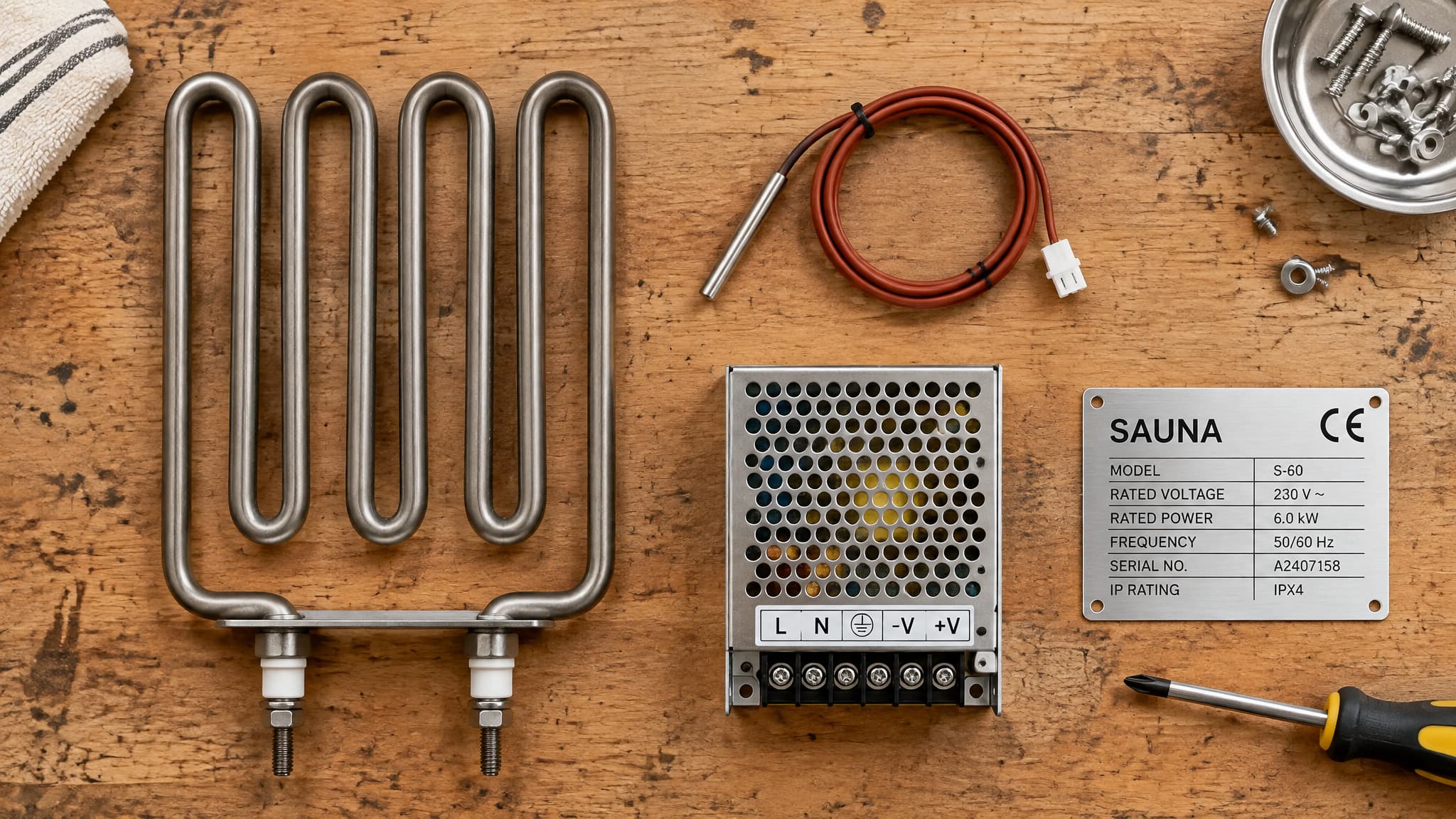
One of the clearest examples of smart component repair involves a completely dead infrared cabin with no display power. A known weak point in many infrared systems is the 12V 6A power supply. Instead of paying $350 for a proprietary OEM power module, you can often swap in a generic LRS-75-12 12V 6A power supply yourself for $15 to $20. Before ordering the part, use a voltage tester to verify that power is flowing through the fuse and from the motherboard, and make sure you match the line/neutral (L/N) and positive/negative terminals exactly during installation.
You can apply a simple two-condition decision framework when weighing a repair against a new build:
- Repair the existing unit if the heater is under 15 years old, the cabinet or steel body is structurally sound, and you're dealing with an isolated wear item like a sensor, data cable, power supply, or single element. High-grade Finnish kiuas stoves and modular infrared cabins are purposefully built so you can swap consumable elements while keeping the heavy enclosure that represents most of your upfront investment. Scheduling an annual professional inspection helps catch these wearing parts before they fail mid-winter.
- Replace the whole heater or unit once it passes 15 years and parts start failing back-to-back. Full replacement also makes sense if you're ready to swap built-in mechanical knob dials for WiFi digital controls. If you're comparing how long-standing North American builders handle modular repairs, see our breakdown of legacy infrared brands like SaunaRay and TheraSauna.
Ordering replacement parts: why exact matching matters
Replacing individual sauna parts costs roughly $15 to $20 for a generic 12V power supply (versus $350 for an OEM module), $30 for a temperature sensor, and $80 for a heating element, while full infrared sauna heater panels are priced model-by-model through manufacturers and require exact matching by model, kW rating, and voltage. Because standalone retail pricing for full infrared replacement panels isn't published in standardized public catalogs, every electrical swap depends on matching your unit's exact specifications (120V, 208V, or 240V). A 240V element will never heat properly inside a 208V system.
Finding the right part number
OEM components carry stamped part numbers directly on the metal: ZSL-313 on a 2 kW/240V heating element, WX232 on a temperature sensor, and the ZSK-762 thermostat on a Harvia KIP. Always check your heater's metal data plate for the exact model and kW rating before ordering. OEM parts match original electrical tolerances where aftermarket substitutes often don't. Specialty retailers like Haven of Heat stock OEM parts for Harvia, HUUM, and Finlandia, and if you text or call them at (360) 233-2867 with a photo of your data plate, they'll identify the exact part or suggest a compatible alternative even for brands they don't normally carry.
Why wattage alone misleads
Two elements with similar shapes and voltage ratings can have completely different electrical resistance values. For instance, a 2 kW element (ZSL-313) built for a 6 kW/240V Harvia KIP is not interchangeable with the 2.67 kW element required for an 8 kW/240V Harvia KIP. Installing the wrong element can trip your breaker or permanently damage the heater.
Can I replace infrared sauna parts myself, or do I need an electrician?
You can safely replace low-voltage sauna parts like temperature sensors and data cables yourself with the power off and the circuit breaker locked out, but any repair on a 240V circuit requires a licensed electrician. Most residential saunas run on high-amperage electric circuits where a wiring mistake can cause severe injury or void your warranty, as many manufacturers require professional installation and servicing by a licensed electrician to keep coverage active.
Keep your DIY work strictly on the low-voltage side once you've narrowed down why the heater stopped working. Swapping a WX232 sensor or threading a new controller data cable takes basic hand tools once the breaker is locked out. When the diagnosis points to the three most common high-voltage electric-heater failure points, heating elements, the contactor, or the high-limit switch, or involves mechanical thermostats and internal 240V wiring, hand the job to a licensed electrician. (If you run a traditional wood-fired stove instead, watch for a different set of structural failures: thermal stress cracks in the firebox, warped baffle plates, deteriorating door gaskets, and chimney draft issues.)
What maintenance keeps an infrared sauna lasting longer
Drying your cabin after every session and running a quick monthly check stops heat, dust, and moisture from killing your heaters early. Good infrared sauna maintenance prevents thermal stress, high-resistance connections, and humidity corrosion. Power off the system to wipe dust from cool elements, check electrical terminals for corrosion, keep air intake vents clear, and let the wood dry completely after you step out.
The routine that prevents component wear
Keep the electrical, ventilation, and drying habits from traditional Finnish stove makers like Narvi, and skip the wood-stove chores (like emptying ash pans every three to four uses, cleaning fireboxes monthly, checking door gaskets, or booking yearly chimney inspections). Crack the cabin door after every session so moisture escapes, never use salt-based cleaners that trigger chemical rust, and run the sauna occasionally during off-season storage so dampness doesn't corrode idle circuit boards and cables.
Stone and water discipline
If you own a traditional or hybrid unit with a stone bed, proper stone care protects the elements underneath. Use 5 to 10 cm olivine diabase or vulcanite stones for electric heaters (10 to 15 cm for wood-burning stoves), arrange them without overloading the tray so air flows freely, and pour low-mineral water onto the stones rather than directly onto the red-hot elements. Knock two stones together to test for internal cracks, and replace worn stones every 12 to 18 months for weekend home use, annually for one to two weekly sessions, or every 6 to 8 months in commercial gyms.
Corrosion and ventilation
Blocked intake vents trap heat around the control board and sensors, quietly accelerating corrosion and stressing every internal wire. Checking your sensor placement and terminal connections once a month keeps resistance low and temperatures accurate.
Checking a sauna at delivery or secondhand: the inspection most owners skip
Anyone unboxing a newly delivered sauna or evaluating a secondhand unit should inspect every ceramic heater pole connection before turning the power on, because ocean-freight and highway vibration routinely shakes terminal nuts and washers loose on mass-market imported cabins. Skipping this five-minute check is one of the fastest ways to ruin a brand-new or used sauna on day one.
The delivery-day five-minute check
When terminal hardware vibrates loose during overseas shipping, the gap creates high electrical resistance at the heater poles. Turning the sauna on with loose poles can blow out control boxes and digital keypads or even start an electrical fire. Before your first session, check every ceramic heater pole by hand, tighten any loose terminal nuts, and add Loctite washers so they stay locked under thermal cycling.
Evaluating a used unit
If you're inspecting a used infrared sauna before buying, run four quick checks:
- Verify that every ceramic heater pole terminal is tight.
- With the unit unplugged and the heaters removed from their shielding, test every heating element individually for continuity with a multimeter.
- Inspect the temperature sensor and data cables for brittle insulation, rodent damage, or green terminal corrosion.
- Check the unit's age and service history, and walk away if it's 15+ years old with a pattern of frequent part replacements.
Does build quality predict lifespan? Craftsmanship as prepaid maintenance
Whether a cheap infrared sauna wears out faster than a premium brand comes down to inspectable construction proxies, material thickness, heat-distribution engineering, and replaceable-component design, because no published study tracks failure rates between budget and high-end cabins head-to-head. When a manufacturer cuts corners on heater components where buyers can't easily see the physics, components run under higher thermal stress and fail sooner. Investing in thicker steel enclosures, corrosion-resistant hardware, handcrafted cedar cabinets, and even radiant distribution works like prepaid maintenance through better materials.
Across more than 3,000 installations in homes, clinics, and wellness centers since we founded SaunaCloud in California in 2014, our design logic has centered on building custom cedar cabins, low-EMF VantaWave heaters, CORE 5 control electronics, and power supplies in-house so every wear item can be serviced individually. Instead of sealing components into disposable assemblies, we evaluate heater coverage, CORE 5 controls, electrical requirements, and panel placement up front so owners can swap a single part decades down the road while keeping the cabinet intact.
Frequently Asked Questions
What is the lifespan of an infrared sauna?
An infrared sauna used three to five times a week at home generally runs 10 to 20 years overall, though longevity really comes down to individual parts rather than one expiration date. A well-maintained wood cabin can easily hold up for 15 to 25 years, or even 30 to 40 years, and a heavy steel heater body lasts 20 to 30 years. The shorter-lived pieces are the replaceable consumables, like heating elements and electronic sensors.
How long do infrared sauna heating elements last before they need replacing?
In a residential setup used three to five times per week, heating elements last 5 to 15 years before wearing out. If the sauna runs 8 or more hours a day in a commercial gym, expect to swap those elements every 2 to 5 years. Repeated thermal cycling, humidity corrosion, and mineral-heavy water hitting the elements directly all speed up the wear.
How long do sauna sensors, thermostats, and controllers last?
Temperature sensors and their cables usually last 5 to 10 years before constant heat and moisture knock them out of calibration or corrode the connections. Digital controller data cables are actually the single most replaced part in the industry due to heat fatigue, age, or pests. Mechanical thermostats and high-limit switches also wear down over that same 5-to-10-year window from sticking mechanisms and contact wear.
Between carbon vs ceramic infrared sauna heaters, which lasts longer?
Carbon panels last longer because they operate at cooler surface temperatures of 140°F to 150°F, which puts far less thermal strain on the material. Ceramic heaters crank up to 350°F to 400°F, creating harsh hot spots and degrading much faster under heavy use. At SaunaCloud, we engineer our VantaWave panels to run at up to 190°F so you get higher radiant intensity near an 8.0-micron wavelength without the rapid burnout of ceramic rods.
Why is my infrared sauna not heating up and how do I fix it?
A sauna that stops heating rarely has a ruined heater body; it usually has one dead sensor, a bad data cable, or a single broken element in a series circuit. Start by checking the temperature sensor and control box data cables, since those cheap parts regularly mimic a total system failure. If the controls are fine, unplug the unit and test each heater element for continuity with a multimeter to find which one broke the circuit, then replace it with an exact OEM match for your model, kW rating, and voltage.
What maintenance keeps an infrared sauna lasting longer?
Crack the cabin door after every session to let moisture escape, and run a monthly check with the power off to wipe dust from cool emitters, clear air intake vents, and inspect wire terminals for corrosion. Never use salt-based cleaners inside the cabin, and fire the heaters up occasionally during the off-season so damp air doesn't corrode idle circuit boards. On a newly delivered or secondhand sauna, always hand-check and tighten every ceramic heater pole terminal nut before powering it on so shipping vibration doesn't cause high-resistance shorts.

Founder & Lead Designer, SaunaCloud®
SaunaCloud: 3,000+ installations since 2014 · Author of The Definitive Guide to Infrared Saunas · Featured in Forbes, Inc., and MSN
Christopher designs every SaunaCloud sauna. His work brings the room, heaters, controls and installation plans together so you can review the project before committing. His professional expertise is sauna design and construction, not clinical medicine.
Custom 3D renderings and a proposal in 24-48 hours.
Continue Reading
Sauna Design & Technology
Infrared Sauna Maintenance & Repair Guide: Troubleshooting, Wood Care, and When to Call for Help (2026)
Read article
Sauna Design & Technology
Is Cedar Safe for Infrared Saunas? The Material Science Behind Your Sauna Wood (2026)
Read article
Sauna Design & Technology
Why Comfort Is the Most Overlooked Feature in Infrared Saunas (And Why It Determines Whether You'll Actually Use Yours)
Read articleReady to Design Your Sauna?
Every project starts with a conversation. Tell us about your space and we'll create your custom plan — free, no obligation.
Custom 3D renderings and a proposal in 24-48 hours.