
Should You Use an Infrared Sauna When You're Sick? The Three-Phase Decision Guide (2026)
Key Takeaways
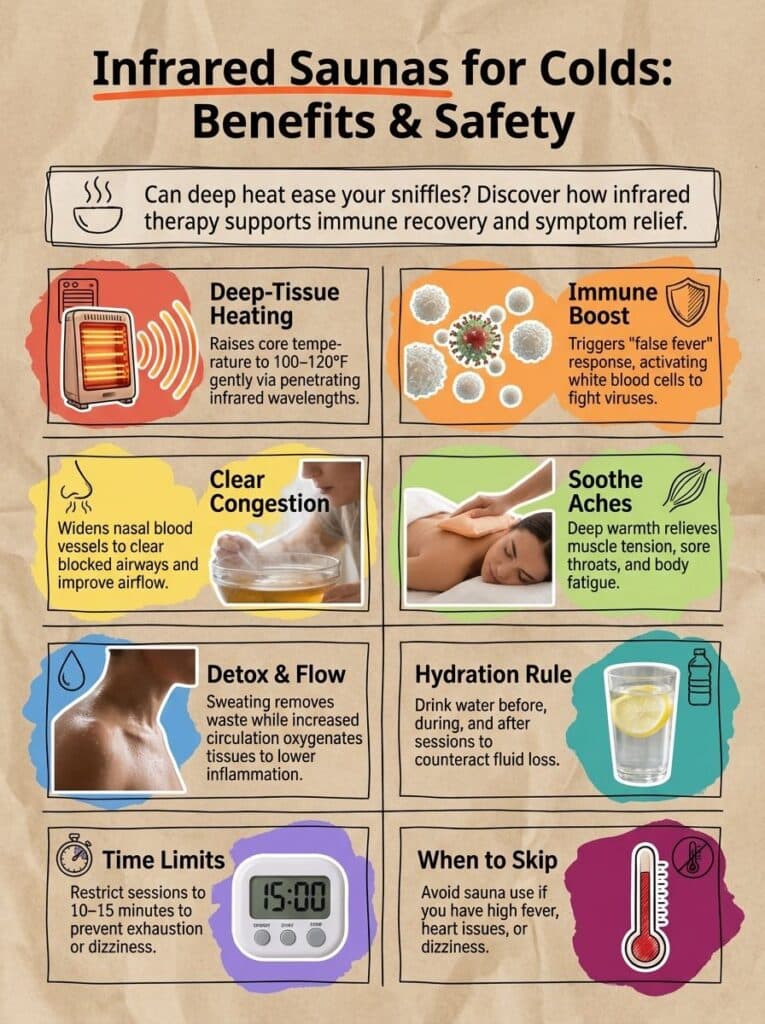
- The answer depends on WHERE you are in your illness. Prevention (regular use): strong evidence — Ernst 1990 showed ~50% fewer colds with regular sauna. Early symptoms without fever: proceed with caution. Active fever: DO NOT sauna. Recovery phase: resume gently
- A fever IS your body's version of sauna therapy — the hypothalamus deliberately raises core temperature to enhance immune function. Adding external heat during a fever overrides this precise thermoregulatory response and can push core temperature dangerously high. Your body is already doing what the sauna does
- Dehydration during illness is already elevated (fever sweating, reduced intake, potential vomiting/diarrhea). Sauna adds more fluid loss on top of an already-depleted state. Dehydration impairs immune function — the opposite of what you need when fighting an infection
- For shared/gym saunas: going while actively infectious is irresponsible to other users. A home sauna eliminates this ethical concern entirely while still providing symptom comfort during the phases when sauna use is appropriate
- No published clinical trials of sauna use DURING active illness exist. The prevention evidence (Ernst 1990, Pilch 2023) supports regular practice for immune resilience — not acute treatment during infection
Should you use a sauna when you're sick? The answer isn't yes or no — it depends on which phase of illness you're in. Get this wrong and you can make yourself worse. Get it right and you may recover faster. (For the general safety overview, see Are Infrared Saunas Safe?)
Phase 1 — Prevention (before you get sick): YES
Ernst et al. 1990 (Annals of Medicine) found that regular sauna bathing reduced common cold incidence by approximately 50% over a 6-month period. Pilch et al. 2023 showed that a series of sauna sessions improved immune parameters — white blood cell subpopulations, HSP70, and immunoglobulins. Regular sauna use appears to build immune resilience over time.
This is the strongest evidence: consistent, regular sauna practice as a PREVENTION tool. Your daily sauna habit may reduce how often you get sick. But this benefit comes from the cumulative effect of regular sessions — not from a single session when you feel a cold coming on.
Phase 2 — Early symptoms, no fever: PROCEED WITH CAUTION
Scratchy throat. Mild congestion. That 'I think I'm getting sick' feeling — but no fever, no body aches, no significant fatigue. In this early phase, a gentle sauna session may provide comfort and support.
The mild core temperature increase from infrared heat may support immune function — heat shock protein activation, increased white blood cell activity, and improved circulation. Warm air can temporarily relieve nasal congestion through vasodilation of nasal passages. Endorphin release provides comfort.
Modified protocol: Keep it short (15-20 minutes) and cool (120-130°F — below your normal temperature). Hydrate aggressively. Listen to your body more carefully than usual. If you feel worse during the session — more fatigued, dizzy, or achey — exit immediately. This is not the time to push through discomfort.
Phase 3 — Active fever or acute illness: DO NOT SAUNA
If you have a fever, do not use a sauna. Your body is already performing its own thermal therapy — the hypothalamus has deliberately raised your core temperature to enhance immune cell activity and create an inhospitable environment for pathogens. Adding external heat overrides this precisely regulated response and can push core temperature to dangerous levels.
A fever IS your body's version of what sauna does — it raises core temperature to fight infection. But a fever is precisely controlled by your hypothalamus, adjusting temperature moment-by-moment based on immune signaling. Sauna heat is external and unregulated — it adds thermal load on top of an already-elevated set point. The combination can cause hyperthermia (dangerously high core temperature), severe dehydration, and cardiovascular strain.
Also avoid sauna with: significant body aches and fatigue (your body needs rest, not additional physiological stress), active vomiting or diarrhea (dehydration is already critical), any illness requiring bed rest, and any infection where your physician has recommended avoiding heat.
Phase 4 — Recovery (fever broken, improving): RESUME GENTLY
Once your fever has broken, your energy is returning, and you're clearly on the mend — you can begin resuming sauna use. Start at lower parameters than your normal routine: 120-125°F for 15 minutes. Hydrate more than usual (you're likely still somewhat dehydrated from illness). Build back to your normal protocol over several sessions.
Recovery-phase sauna may help by improving circulation (delivering immune cells and nutrients to tissues still fighting residual infection), clearing residual congestion, improving sleep quality (critical for recovery), and providing mood improvement during the 'feeling better but not great' phase.
The dehydration compounding risk
When you're sick, you're already losing fluids — fever sweating, reduced appetite and fluid intake, potential vomiting or diarrhea. Adding 300-500ml of sauna sweat loss on top of illness-related fluid loss can tip you into significant dehydration. Dehydration during illness impairs immune function, reduces kidney clearance of metabolic waste, and concentrates medications in the blood (potentially increasing side effects). If you sauna during early illness (Phase 2), hydrate more aggressively than normal — 24-32oz before and after.
The shared sauna consideration
If you use a gym or spa sauna: do not go while actively infectious. Colds, flu, and respiratory infections spread easily in enclosed warm spaces. Using a shared sauna while sick is irresponsible to other users. A home sauna eliminates this concern — you can use it during any phase of illness without exposing others, and there's no pressure to leave home when you don't feel well.
Frequently asked questions
Frequently Asked Questions
Can I use a sauna with a cold?
It depends on the phase. Early cold symptoms without fever (scratchy throat, mild congestion): a gentle, short session may provide comfort and support immune function. Once fever develops or symptoms become significant: stop sauna use until the fever breaks and you're clearly improving. Regular sauna use BEFORE getting sick may reduce cold frequency by ~50% (Ernst 1990).
Why shouldn't I sauna with a fever?
Because a fever IS thermal therapy — your hypothalamus has deliberately raised your core temperature to enhance immune function. Adding external heat overrides this precise regulation and can push core temperature dangerously high. Your body is already doing what the sauna does, and it's doing it more precisely than any sauna can. Let the fever work.
Will sauna help me get over a cold faster?
No published trials test sauna use during active illness. The prevention evidence (regular use reduces cold incidence) is about immune resilience from consistent practice — not acute treatment. A gentle session during early, mild symptoms may provide comfort and mild immune support, but it's not a proven 'cure' for an active cold.
Can sauna prevent the flu?
Ernst 1990 showed ~50% fewer common colds with regular sauna use. The flu (influenza) is a different, more serious infection — no specific flu-prevention data from sauna studies exists. However, the immune modulation from regular heat exposure (improved immune parameters, HSP activation) may contribute to general immune resilience against respiratory infections broadly.
When can I go back to my sauna after being sick?
After your fever has broken, your energy is returning, and you're clearly improving — typically 24-48 hours after the last fever. Start at lower parameters than your normal routine (120-125°F, 15 minutes) and build back over several sessions. Hydrate more than usual. If the first session makes you feel worse, wait another day or two.
Should I use a gym sauna when I have a cold?
No — not for your sake, but for others. Colds and respiratory infections spread easily in enclosed, warm spaces. Using a shared sauna while actively infectious is irresponsible. A home sauna eliminates this concern entirely, allowing you to use sauna during any appropriate illness phase without exposing other people.

Founder & Lead Designer, SaunaCloud®
3,000+ custom saunas built since 2014 · Author of The Definitive Guide to Infrared Saunas · Featured in Forbes, Inc., and MSN
Chris has been designing and building custom infrared saunas since 2014. He wrote one of the first comprehensive books on infrared sauna therapy and is personally involved in every SaunaCloud build — from design consultation through delivery and beyond. His professional expertise is sauna design and construction, not clinical medicine.
Continue Reading
Infrared Sauna and Your Immune System: The Science of Immune Resilience vs 'Immunity Boosting' (2026)
Read article
Infrared Saunas and Chronic Infections: What the Evidence Actually Supports (2026)
Read article
How Often Should You Use an Infrared Sauna? Research-Backed Frequency for Every Health Goal (2026)
Read article
Are Infrared Saunas Safe? The Evidence-Based Answer (2026)
Read article
Infrared Sauna and Medications: A Drug-Class-by-Drug-Class Safety Reference (2026)
Read article
Build Immune Resilience With Daily Practice
The strongest evidence supports PREVENTION through regular sauna use — not acute treatment. A home sauna makes daily consistency possible, every season.