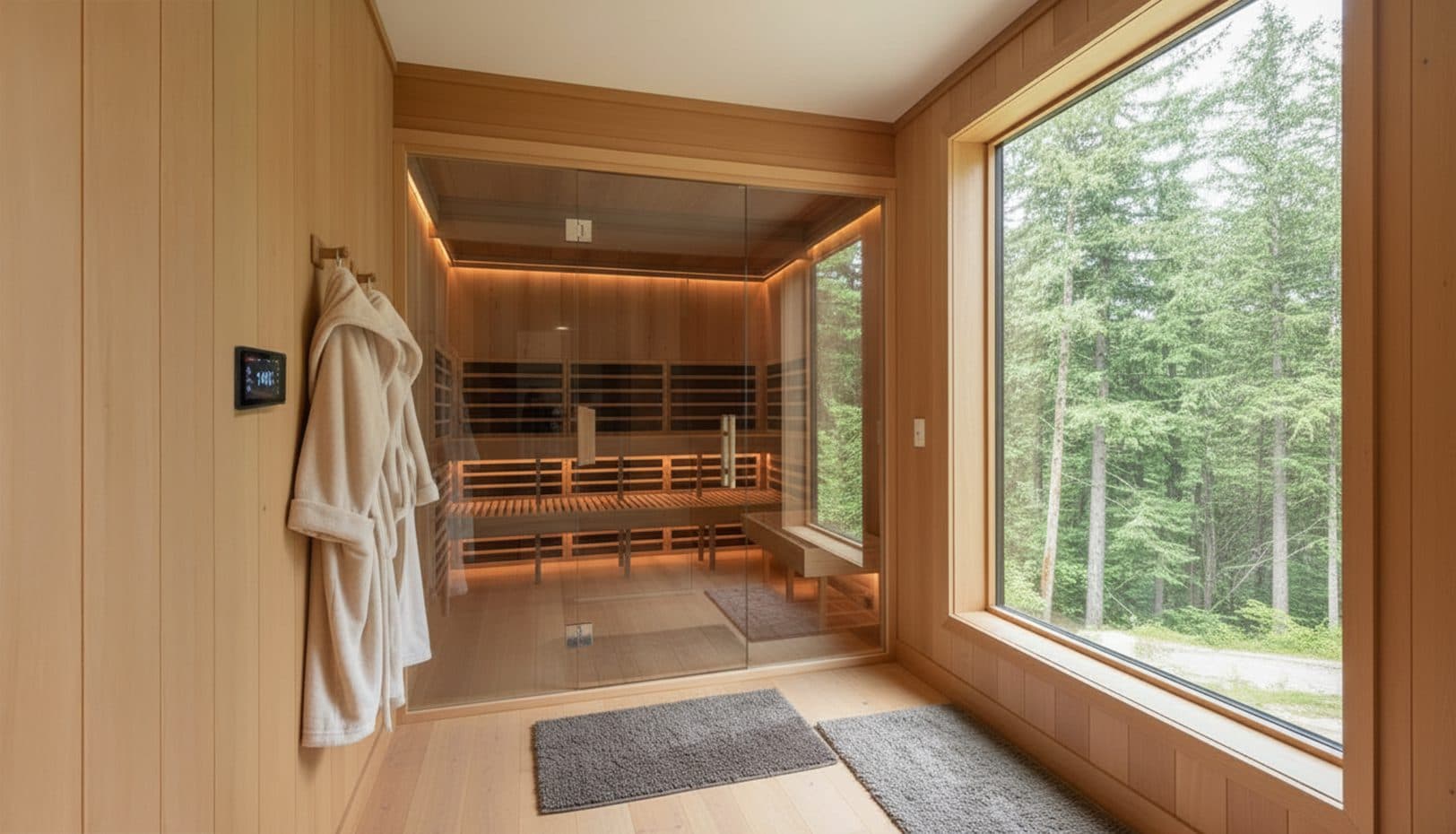
Infrared Sauna for Chronic Fatigue Syndrome (ME/CFS): The Waon Therapy Evidence
Key Takeaways
- Waon therapy — a far-infrared dry sauna protocol developed at Kagoshima University — is one of the few interventions studied specifically for CFS/ME. The protocol: 15 minutes at 60°C (140°F) followed by 30 minutes rest under a blanket. The post-sauna warming phase is critical — it extends the core temperature elevation that drives the therapeutic effect
- Across small studies (Masuda 2005, Soejima 2015, Amano 2015), Waon therapy produced significant improvements in fatigue, mood, sleep, and functional capacity. Two patients who had failed medication returned to work within 6 months and had no relapse over the following year while continuing weekly sessions. Fatigue scores dropped from 6.7 to 4.8/10 after 4 weeks in the Soejima pilot
- For CFS/ME patients, the appeal of sauna is that it's passive: a gentle thermal stimulus without the physical exertion that triggers post-exertional malaise. It isn't a substitute for exercise, and thermoregulation still costs energy
- The evidence is promising but early — approximately 30 total patients across all CFS-specific studies. No randomized controlled trials with sham controls exist. About 22% were 'poor responders' in the Amano study. Not everyone benefits
- CFS/ME patients must start exceptionally low and slow: 115-120°F for just 5-8 minutes (some need 110°F for 3 minutes), with a 72-hour PEM monitoring window and mandatory blanket rest afterward. Never advance through PEM — if a phase causes a crash, go back. Some patients stay at Phase 2 permanently, and that's perfectly fine
In This Article
If you have chronic fatigue syndrome, you've probably been told to exercise. And you've probably learned — painfully — that exercise makes you worse.
Post-exertional malaise is the hallmark of ME/CFS. The very interventions that help almost every other condition — cardiovascular exercise, strength training, active recovery — can trigger crashes that last days or weeks. This creates a cruel paradox: the most effective non-pharmacological treatments for fatigue, depression, and deconditioning are off-limits for the people who need them most.
Which is why a passive intervention — one that doesn't ask you to exert yourself physically — has particular relevance for this population. Far-infrared sauna therapy — specifically a protocol called Waon therapy — has been studied in CFS/ME patients with promising results. And unlike most conditions discussed on sauna websites, this research was conducted specifically with far-infrared technology.
What CFS/ME actually is
Chronic fatigue syndrome / myalgic encephalomyelitis is a serious, debilitating, medically recognized condition — not 'just being tired.' It involves post-exertional malaise (worsening of symptoms after physical or mental exertion), unrefreshing sleep (sleeping 10+ hours and waking exhausted), cognitive dysfunction ('brain fog' — difficulty with concentration, word-finding, short-term memory), orthostatic intolerance (dizziness/fainting upon standing), immune dysregulation, and documented mitochondrial dysfunction (reduced ATP production, impaired oxidative phosphorylation).
CFS/ME patients have been dismissed by medicine for decades — told their condition is psychosomatic, that they should exercise more, that they should think more positively. CFS/ME involves measurable biological dysfunction. The research on this page takes the condition seriously. The limitations of the evidence are stated honestly. The protocol is designed for people whose bodies don't tolerate what most bodies tolerate.
The far-infrared evidence for CFS/ME
Masuda et al. 2005 (Journal of Psychosomatic Research): Two CFS patients who had failed prednisolone treatment received 35 sessions of far-infrared dry sauna at 60°C, 15 minutes per day. Fatigue, pain, sleep disturbance, and low-grade fever 'dramatically improved' after 15-25 sessions. Both patients returned to work within 6 months. Neither relapsed over the following year while continuing outpatient sessions once or twice a week. Limitation: n=2 case study, no control group. But the clinical trajectory — from failed medication to return to work to sustained remission — is striking.
Soejima et al. 2015 (Internal Medicine): Ten CFS inpatients received Waon therapy — 60°C far-infrared sauna for 15 minutes followed by 30 minutes rest under a blanket — 5 days per week for 4 weeks. Perceived fatigue decreased significantly (6.7 to 4.8 on a 10-point scale). Anxiety, depression, and performance status improved. Pain and vigor did not change significantly. No adverse effects were reported. Limitation: n=10 pilot study, no control group.
Amano et al. 2015 (Journal of the Japanese Society of Balneology, Climatology and Physical Medicine): Nine female ME/CFS patients received modified Waon therapy at lower temperatures — 40°C or 45°C (104-113°F) for 15 minutes, either twice daily for 3 weeks or once daily for 5 weeks. 77.8% were classified as 'good responders' with improvements in SF-36 quality-of-life scores across role physical, bodily pain, general health, and role emotional domains. The remaining 22.2% were 'poor responders' who showed no improvement. Limitation: n=9, open-label, compared only with 6 patients who chose not to have sauna; 3 of the good responders later regressed.
Munemoto et al. 2017 (Internal Medicine): Pilot study demonstrating that Waon therapy increased regional cerebral blood flow in CFS patients. Brain perfusion deficits are a documented feature of CFS/ME and may underlie the cognitive dysfunction ('brain fog') that patients consistently report as one of their most disabling symptoms.
Honest context: The total CFS-specific far-infrared evidence base includes approximately 30 patients across all studies. There are no randomized controlled trials with sham controls. The results are promising — but this is early-stage research, not established treatment. About 22% of patients in the Amano study didn't respond. Not everyone benefits.
Why this therapy may work for CFS
Mitochondrial support: CFS/ME patients have documented mitochondrial dysfunction — reduced ATP production and impaired oxidative phosphorylation. Far infrared sauna activates heat shock proteins (HSP70), which promote mitochondrial biogenesis — the creation of new, functional mitochondria. This is a plausible mechanism for why Waon therapy helps CFS specifically: not just symptom relief, but potentially addressing the underlying energy production deficit.
Cerebral blood flow: Munemoto 2017 showed Waon therapy increased regional cerebral blood flow. Brain fog is one of the most disabling CFS symptoms. If sauna improves brain perfusion, this may explain the cognitive improvements patients report.
Autonomic rebalancing: CFS/ME involves autonomic nervous system dysfunction — often sympathetic overdrive. Sauna triggers parasympathetic activation post-session, shifting the autonomic balance toward rest-and-repair. This may explain improvements in sleep, anxiety, and overall sense of well-being.
Passive, not exertional: Sauna triggers endorphin release and anti-inflammatory responses without asking your muscles to do any work. It is not a substitute for exercise. But for CFS patients who cannot exercise without crashing, a stimulus that doesn't require physical exertion may be easier to fit inside a limited energy envelope — as long as the energy cost of thermoregulation is respected.
The part of the protocol most people skip
Waon therapy isn't just 'sit in a sauna.' It's a two-phase protocol, and the second phase is as important as the first.
Phase 1 — Sauna (15 minutes): Far-infrared dry sauna at 60°C (140°F). Core temperature begins rising. Vasodilation occurs. Heat shock proteins activate. Sweating begins.
Phase 2 — Blanket rest (30 minutes): Immediately after exiting, wrap in a warm blanket or robe and rest lying down or seated. This extends the core temperature elevation — your body continues experiencing the thermal stimulus without additional heat input. The vasodilation continues. The parasympathetic rebound begins. The warming phase is where much of the therapeutic benefit occurs.
Every Waon therapy study includes this rest phase. It's not optional comfort — it's integral to the protocol. If you step out of the sauna, take a cold shower, and immediately return to activity, you're cutting the therapy short. For CFS patients especially, the rest phase also prevents the orthostatic stress and energy expenditure that could trigger a crash.
The ME/CFS sauna protocol — ultra-gentle
CFS patients are the population most likely to overdo sauna and crash. Thermoregulatory systems may be compromised. Orthostatic intolerance is common. Energy reserves are minimal. Start FAR more conservatively than any general sauna protocol recommends. Discuss with your physician before beginning.
This is the most conservative protocol on this entire site. It starts lower, goes slower, monitors longer, and never, ever pushes through symptoms. This is by design — because PEM is the defining feature of ME/CFS, and any protocol that triggers PEM is doing harm regardless of its other benefits.
Low temperatures aren't a compromise. The Amano study used 40-45°C (104-113°F), below the standard Waon protocol. Treat Waon therapy's 60°C (140°F) as a reference point, not a target you have to reach.
Phase 0 — Tolerance test (sessions 1-3)
115-120°F, 5-8 minutes. Yes, five minutes. This phase exists to answer one question: can your body tolerate the energy demand of thermoregulation without triggering PEM? Monitor yourself for 72 hours after each session — PEM can be delayed by 24-48 hours. If no crash, proceed to Phase 1. If crash, reduce further (even lower temp, even shorter time) or wait longer between attempts. Some patients need to start at 110°F for 3 minutes. That's fine.
Phase 1 — Establishing baseline (weeks 1-3)
120°F, 8-12 minutes, 2 sessions per week. Monitor for PEM after every single session. Use a 72-hour monitoring window. Track fatigue levels, pain, sleep quality, and cognitive function. Only move to Phase 2 if you've completed 4-6 sessions with zero PEM episodes.
Phase 2 — Gradual building (weeks 4-8)
120-125°F, 12-15 minutes, 2-3 sessions per week. Advance only if Phase 1 produced zero PEM. Some patients find their sustainable sweet spot in this phase and stay here permanently. That is a perfectly valid long-term protocol.
Phase 3 — Therapeutic range (weeks 9-16)
125-130°F, up to 15 minutes, 3-4 sessions per week. This is still below the Waon therapy temperature. Continue monitoring — PEM can emerge at thresholds you haven't tested before.
Phase 4 — Full protocol (month 4+, only if consistently tolerated)
130-135°F, 15 minutes, 4-5 sessions per week. Only for patients who've demonstrated consistent tolerance through three months of gradual building. Not everyone reaches this phase. Not everyone needs to.
The blanket rest is non-negotiable. After EVERY session, however short, rest lying down under a warm blanket for 30 minutes. Do not stand up quickly. Do not shower immediately. Hydrate with electrolytes. This rest period is part of the Waon protocol, and for ME/CFS patients specifically, it helps keep the thermoregulatory energy cost of rapid cooling from tipping you past your energy threshold.
If you have orthostatic intolerance, lie down. Take the session itself lying down — not just the rest afterward — if your sauna allows it. Get up slowly, and stop if you feel dizzy or lightheaded.
The cardinal rule: never advance through PEM. If a higher temperature or longer session causes a crash, go back to the previous phase. There is no timeline pressure. There is no shame in Phase 2. The goal is sustainable improvement, not aggressive progression.
Best timing: afternoon or evening. Morning sessions may consume energy needed for the day's baseline activities. Evening sessions (60-90 minutes before bed) may also support sleep.
Stop immediately if: Post-exertional malaise worsens in the 72 hours following a session. Dizziness or fainting occurs during or after (orthostatic intolerance). Heart rate remains elevated >15 minutes after exiting. Cognitive function worsens rather than improves. Any symptom that feels like a 'crash' is beginning. Drop back to the previous phase, and check with your doctor if symptoms persist.
When sauna may not be right for CFS
Severe orthostatic intolerance or POTS (postural orthostatic tachycardia syndrome) — the hemodynamic shifts during sauna may be poorly tolerated. Active infections — CFS patients are vulnerable to immune challenges. Certain medications that impair thermoregulation. Severe malnutrition or underweight — sauna increases metabolic demand. Recent onset CFS (<3 months) — allow stabilization before adding interventions. Always discuss with your physician — and bring the study citations from this page.
Why a home sauna matters for CFS
CFS patients can't reliably leave the house, schedule appointments, or drive to facilities. A home sauna removes the travel, the scheduling, and the energy spent getting there. A custom build like the Atlas can also include the option to lie down for patients with orthostatic intolerance.
Medical disclaimer: This article is for informational purposes only and is not medical advice. ME/CFS is a complex neuroimmune disease requiring specialized care. Infrared sauna therapy is a complementary approach that should be discussed with your healthcare provider. Never push through post-exertional malaise.
Frequently asked questions
Frequently Asked Questions
Does infrared sauna help chronic fatigue syndrome?
Small studies using far-infrared Waon therapy (60°C, 15 min + 30 min blanket rest) showed significant improvements in perceived fatigue, mood, sleep, and functional capacity in CFS/ME patients. Two patients returned to work and had no relapse over the following year while continuing sessions. But the total evidence base includes only ~30 patients with no randomized controlled trials. The results are promising, not proven.
What is the Waon therapy protocol?
Developed at Kagoshima University in Japan: 15 minutes in a 60°C (140°F) far-infrared dry sauna, followed immediately by 30 minutes of rest under a warm blanket. The blanket rest phase extends the core temperature elevation and is integral to the protocol — not optional. Administered 5 days/week in the clinical studies. A far-infrared home sauna can replicate it — but CFS/ME patients should start far below it, using the ultra-gentle protocol above.
Is infrared better than traditional sauna for CFS?
The CFS-specific research was conducted exclusively with far-infrared technology — Waon therapy uses FIR dry saunas. Infrared operates at lower ambient temperatures (130-140°F vs 170-200°F), which may be better tolerated by CFS patients with heat sensitivity. The gradual body heating also produces a more controlled core temperature rise. Traditional saunas haven't been studied for CFS specifically.
How long until I notice improvement?
In the Masuda 2005 case study, 'dramatic improvement' began after 15-25 sessions. The Soejima pilot showed significant fatigue reduction after 4 weeks (20 sessions). The Amano study used 3-5 weeks. Expect to invest at least 3-4 weeks of consistent sessions, at whatever level you tolerate, before evaluating whether it's helping. Some patients notice mood and sleep changes earlier.
Can sauna replace exercise for CFS patients?
No. Sauna is passive heat, not exercise — it doesn't build muscle or bone density, and it isn't a replacement for exercise. What it offers CFS patients is a gentle thermal stimulus without the physical exertion that triggers post-exertional malaise. Thermoregulation still costs energy, so the ultra-gentle protocol must be followed.
What if sauna makes my CFS worse?
Stop immediately and reduce parameters. CFS patients can crash from heat exposure just as they can from physical exertion. If a session triggers PEM, you've exceeded your tolerance. Drop to a lower temperature, shorter duration, or fewer sessions per week. The 22% non-responder rate in the Amano study confirms that not every CFS patient benefits. Listen to your body — in CFS, post-exertional worsening is a real signal, not something to push through.
Should I tell my doctor about Waon therapy?
Yes. Bring the study citations: Masuda 2005 (Journal of Psychosomatic Research), Soejima 2015 (Internal Medicine), and Amano 2015. These are published in peer-reviewed medical journals. Frame it as a complementary approach alongside your existing treatment — not a replacement. Most physicians will appreciate the evidence-based approach and the conservative starting protocol.
Founder & Lead Designer, SaunaCloud®
SaunaCloud: 3,000+ installations since 2014 · Author of The Definitive Guide to Infrared Saunas · Featured in Forbes, Inc., and MSN
Christopher designs every SaunaCloud sauna. His work brings the room, heaters, controls and installation plans together so you can review the project before committing. His professional expertise is sauna design and construction, not clinical medicine.
Custom 3D renderings and a proposal in 24-48 hours.
Continue Reading
Infrared Sauna Benefits
Infrared Sauna for Fibromyalgia: What the Research Shows
Read article
Infrared Sauna Benefits
Getting High Naturally: The Complete Neurochemistry of the Infrared Sauna Euphoria (2026)
Read article
Tips & Routines
How Often Should You Use an Infrared Sauna? Research-Backed Frequency for Every Health Goal
Read article
Infrared Sauna Benefits
Infrared Sauna and Meditation: Your Sauna Is Already a Meditation Device (The Neuroscience Proves It) (2026)
Read article
Infrared Sauna Benefits
How Infrared Saunas Calm Your Nervous System: The Autonomic Rebalancing That Underlies Every Benefit (2026)
Read articleWe Understand ME/CFS — Let's Design a Protocol Together
VantaWave heaters start as low as 115°F with CORE 5 precision. Custom bench configurations for lying down (orthostatic intolerance). Zero-glue construction for chemical sensitivity. Red light therapy for direct mitochondrial support. Call 800-370-0820.
Custom 3D renderings and a proposal in 24-48 hours.