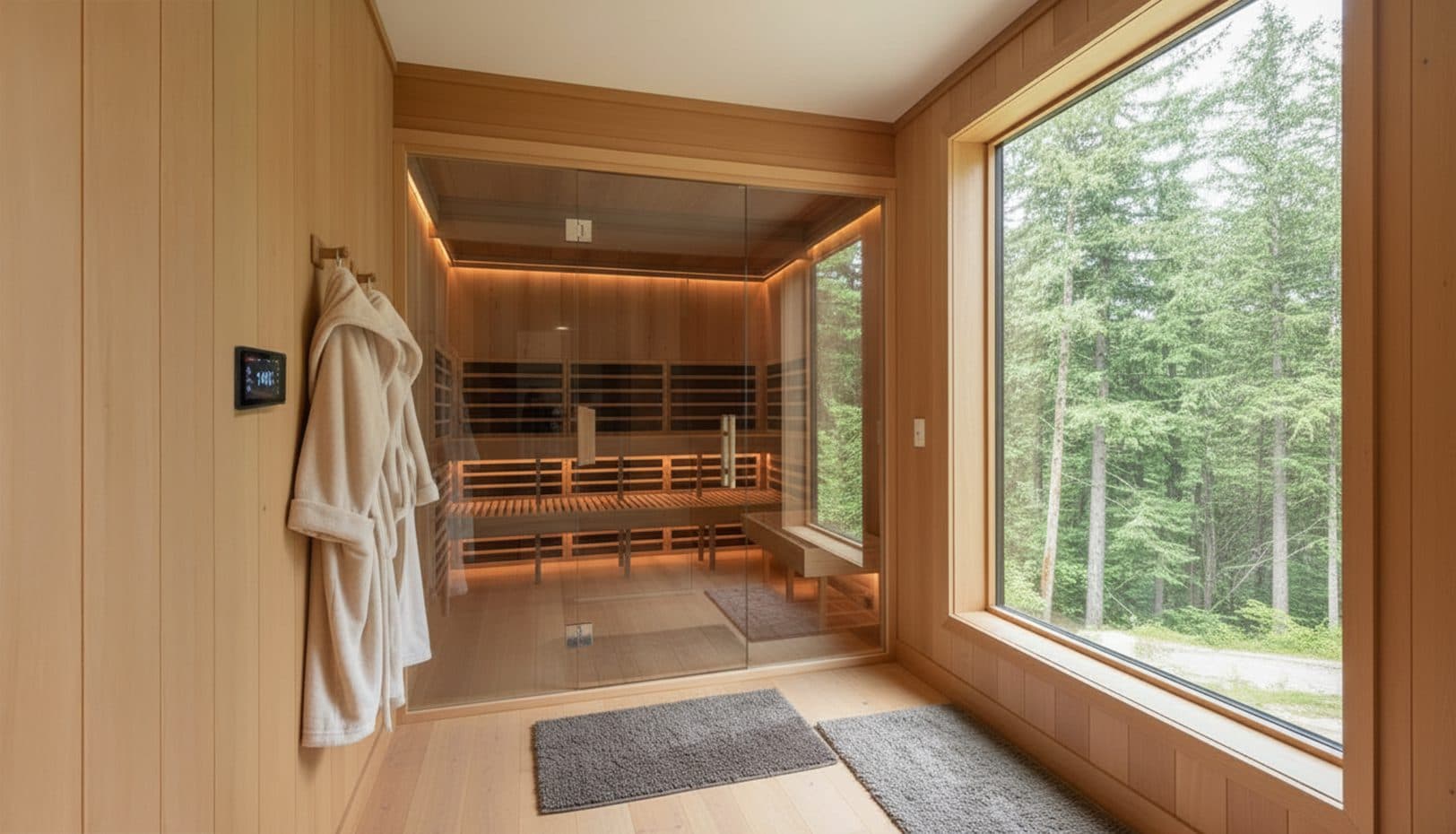

Key Takeaways
- At sauna temperatures (120–150°F), adhesives in construction materials can release VOCs you inhale during each session. Formaldehyde — a Group 1 carcinogen — is used in the resins of many plywood, MDF, and particleboard products, which some prefab saunas use as structural backing. Off-gassing rate INCREASES with temperature
- Glue hides where you can't see it: plywood behind visible cedar veneer, MDF bench supports, laminated panels (thin cedar on cheap substrate), heater mounting boards, and assembly joints where construction adhesive replaces proper joinery
- The 'new sauna smell' companies say will dissipate is the most volatile VOCs leaving first. Lower-level formaldehyde emission continues for months to years at elevated temperatures. The smell going away doesn't mean the chemicals stopped
- SaunaCloud builds without problematic adhesives: tongue-and-groove Western Red Cedar with mechanical joinery, stainless steel fasteners, zero plywood/MDF/particleboard in the interior. If you're breathing inside a heated box 30 min/day, what it's made of matters enormously
- Ask any sauna company: 'Is there plywood, MDF, or particleboard anywhere in the construction — including behind the panels and under the benches?' If yes, ask whether those boards use formaldehyde-based resins or are made with no added formaldehyde. If they don't know, treat that as a warning sign
In This Article
Here's the irony few people consider: you step into your infrared sauna to 'detoxify' — and if the cabin is built with plywood, MDF, or particleboard, you may also be breathing whatever the adhesives in those boards give off as they heat up.
Not every sauna has this problem. But some prefab saunas do — because they use plywood, MDF, and construction adhesives that were never designed to be heated to 150°F and breathed in daily.
The off-gassing chemistry
Formaldehyde: Found in urea-formaldehyde and phenol-formaldehyde adhesives. Many plywood, MDF, and particleboard products are bonded with these resins, and some are made with no added formaldehyde. Classified as a Group 1 carcinogen by the International Agency for Research on Cancer (IARC). Formaldehyde off-gassing INCREASES with temperature. A sauna is the worst possible environment for these materials — elevated heat + enclosed space + deep breathing = maximum exposure.
Toluene and xylene: Found in some construction adhesives. Neurotoxic at sustained exposure levels. Isocyanates: Found in polyurethane adhesives. Respiratory sensitizers that can cause occupational asthma. They mainly matter while the adhesive is still uncured.
No comprehensive study has measured formaldehyde levels inside mass-produced infrared saunas at operating temperature — but the physics and chemistry make the concern impossible to dismiss.
Where adhesives hide in saunas
The beautiful cedar you see on the interior walls may be covering formaldehyde-emitting plywood an inch behind it. Here's where to look:
Plywood backing panels: Some prefab cabins use plywood as structural backing behind the visible wood — often bonded with formaldehyde-based resin. MDF or particleboard: Used as bench supports, structural framing, or heater mounting boards in cheaper saunas. Laminated wood panels: Thin cedar veneer glued to a cheaper substrate — looks like solid cedar but isn't.
Heater panel mounting: Some manufacturers use adhesive to attach heater elements to backing boards rather than mechanical fasteners. Assembly joints: Construction adhesive used instead of proper joinery (tongue-and-groove, screws, or dowels). Door seals: Silicone or adhesive bonding around glass doors.
How to spot a glued sauna: the buyer's checklist
Whether you're evaluating a new purchase or checking a sauna you already own, here's how to identify adhesive-containing materials:
- Check behind the heater panels. Many heater panels are removable or have accessible edges. If the backing material is layered (visible layers of thin wood glued together), it's plywood. If it's smooth, dense, and uniform without visible wood grain, it's MDF or particle board.
- Look under the benches. Bench supports are a common place for engineered board. Lift the bench slats if possible. Is the support structure solid wood or engineered board?
- Inspect door frame construction. Run your finger along the inside edges of the glass door frame. Is it solid wood or layered/pressed material? Is there caulk or sealant where the glass meets the frame?
- The smell test. Heat the sauna to operating temperature and step inside. Close your eyes and breathe. A properly built sauna with solid wood and no adhesives should smell like natural wood — cedar, hemlock, or whatever species is used. If you detect a chemical, plastic, acrid, or "new furniture" smell, adhesives or finishes are off-gassing. A clean smell alone doesn't prove there's no formaldehyde, so check the materials too.
- Ask for material safety data sheets (MSDS). Any legitimate manufacturer can provide MSDS documentation for every material in their product. If a company can't — or won't — provide this documentation, that's your answer.
- Check the wood surface. Is it coated with a glossy or satin finish? Run a fingernail across it. Natural untreated wood has a matte, slightly rough texture. Varnished or stained wood feels smooth and sealed.
The 'new sauna smell' reality
New prefab saunas often have a chemical smell during the first few uses. Companies tell customers to 'let it off-gas' by running the sauna empty for a few sessions. This is technically partially true — the most volatile compounds dissipate first, and the detectable smell fades.
But the smell going away doesn't mean the chemicals stopped. Formaldehyde from composite wood products made with formaldehyde-based resins off-gasses continuously, especially at elevated temperatures — for months to years. The most pungent VOCs leave first (which is why the smell fades), but lower-level formaldehyde emission continues well below the detection threshold of your nose. You can't smell it. You're still breathing it.
The certification gap
CARB (California Air Resources Board) Phase 2 standards limit formaldehyde emissions from composite wood products, and federal TSCA Title VI limits have applied to hardwood plywood, MDF and particleboard, including imports, since 2018 (fully phased in by March 2019). But those limits are set for ROOM TEMPERATURE testing — not for sustained 150°F exposure. There is no specific formaldehyde emission standard for heated enclosures like saunas. The standards that exist don't test under the conditions you actually use the product.
How to build without problematic adhesives
SaunaCloud's approach eliminates the problem: Tongue-and-groove Western Red Cedar throughout — mechanical joinery that doesn't need adhesive. Stainless steel fasteners (screws, not staples or glue). Zero plywood, MDF, particleboard, or laminate anywhere in the sauna interior. Mechanical heater panel mounting — VantaWave panels designed for screw mounting, not adhesive attachment. If any adhesive is necessary (certain seal applications), only food-grade or medical-grade silicone rated for sustained heat.
Tongue-and-groove joinery also allows the wood to expand and contract naturally with temperature and humidity changes. This is actually a critical engineering point: cedar in a sauna undergoes thermal cycling from room temperature to 150°F and back, hundreds of times per year. Rigid adhesive joints resist this movement, creating stress fractures, delamination, and warping over time. Tongue-and-groove joinery accommodates the expansion and contraction naturally — each panel slides fractionally against the next without breaking the seal.
When you're breathing inside a heated box for 30 minutes every day, what that box is made of matters as much as what the heaters produce. Material safety is one of the key factors in our complete infrared sauna safety guide — and it's why every SaunaCloud custom build uses solid cedar with zero composite materials in the sauna interior.
What about the heaters?
This is a detail most people don't think to ask about, but it matters. Some manufacturers use hot-melt adhesive to bond heater elements to mounting panels. When the heater reaches operating temperature (200°F+), that adhesive softens and off-gasses — right next to the hottest surface in the enclosure.
VantaWave® heaters use exclusively mechanical mounting — stainless steel hardware rated for continuous operation at elevated temperatures. No adhesive touches any heat-producing component. The wiring uses high-temperature rated insulation, and the control panel components are industrial-grade — not consumer-grade plastics that degrade under thermal cycling.
Questions to ask before buying
Ask any sauna company: 'Is there any plywood, MDF, or particleboard anywhere in the construction — including behind the visible panels, under the benches, or in the structural framing?' If the answer is yes, ask whether those boards use formaldehyde-based resins or are made with no added formaldehyde. If the salesperson doesn't know — that tells you about the company's relationship with their own manufacturing process.
This article is general information about sauna materials, not medical advice. If you have asthma, chemical sensitivities, or another health condition, check with your doctor before using a sauna.
Frequently asked questions
Frequently Asked Questions
Is formaldehyde really in infrared saunas?
In some prefab saunas, yes — not deliberately, but as a component of the resins in plywood, MDF, and particleboard used for structural backing, bench supports, and heater mounting. Many composite boards use formaldehyde-based resins, and some are made with no added formaldehyde. Where it is present, it off-gasses continuously, and the rate increases with temperature — making saunas a worst-case exposure scenario.
Will the chemical smell from a new sauna go away?
The detectable smell will fade after several sessions as the most volatile compounds dissipate. But formaldehyde from composite wood off-gasses below your nose's detection threshold for months to years, especially at elevated temperatures. The absence of smell doesn't mean the absence of chemicals — it means the most noticeable ones left first.
How do I know if my sauna has problematic materials?
Check behind the visible interior panels — is there plywood or MDF backing? Look under benches — are supports solid wood or composite? Inspect heater mounting — adhesive or mechanical fasteners? If you see any composite wood (plywood, MDF, particleboard, laminate), it contains adhesive, and many composite boards use formaldehyde-based resins. Solid wood throughout with mechanical joinery is the safe standard.
Is CARB Phase 2 certification enough?
CARB Phase 2 and the federal TSCA Title VI rules limit formaldehyde emissions from composite wood — but the testing standard is at room temperature. At sauna operating temperatures (120–150°F), formaldehyde emission rates are significantly higher than what that testing captures. There is no formaldehyde emission standard specifically for heated enclosures. Certification is better than none, but it doesn't fully address the sauna-specific exposure scenario.
Does SaunaCloud use any glue in their saunas?
No problematic adhesives. Our construction uses tongue-and-groove Western Red Cedar with mechanical joinery (no adhesive needed for wood assembly), stainless steel fasteners, and mechanical heater panel mounting. Zero plywood, MDF, or particleboard anywhere in the interior. If any adhesive is required for specific applications (certain seal points), only food-grade or medical-grade silicone rated for sustained elevated temperatures.

Founder & Lead Designer, SaunaCloud®
SaunaCloud: 3,000+ installations since 2014 · Author of The Definitive Guide to Infrared Saunas · Featured in Forbes, Inc., and MSN
Christopher designs every SaunaCloud sauna. His work brings the room, heaters, controls and installation plans together so you can review the project before committing. His professional expertise is sauna design and construction, not clinical medicine.
Custom 3D renderings and a proposal in 24-48 hours.
Continue Reading
Buying & Comparison Guides
The Infrared Sauna Buying Guide: What 3,000+ Installations Taught Me About What Matters (2026)
Read article
Buying & Comparison Guides
Why 99% of Infrared Saunas Are Exactly the Same — and How to Find the 1% That Aren't (2026)
Read article
Sauna Design & Technology
Why Premium Materials Matter in Infrared Saunas: The Italian Ingredient Philosophy
Read articleSafety & Best Practices
Are Infrared Saunas Safe? The Evidence-Based Answer (2026)
Read article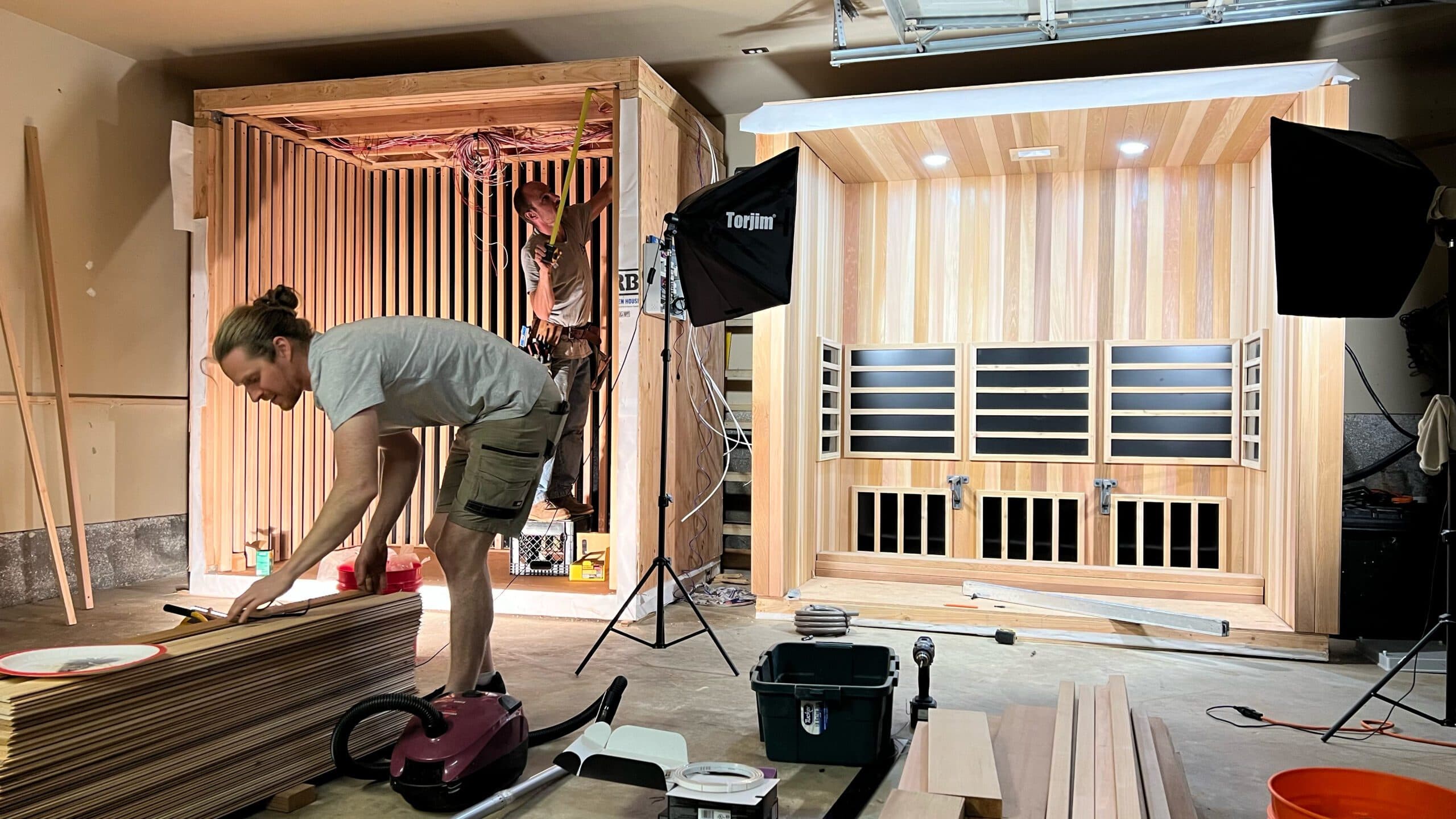
Sauna Design & Technology
How to Build a Custom Infrared Sauna: The Engineer's Guide (2026)
Read articleBuild a Sauna You Can Breathe In
100% solid Western Red Cedar. Zero glue. Zero stains. Zero adhesives. Just natural wood and VantaWave® heaters. Custom designed for your space.
Custom 3D renderings and a proposal in 24-48 hours.