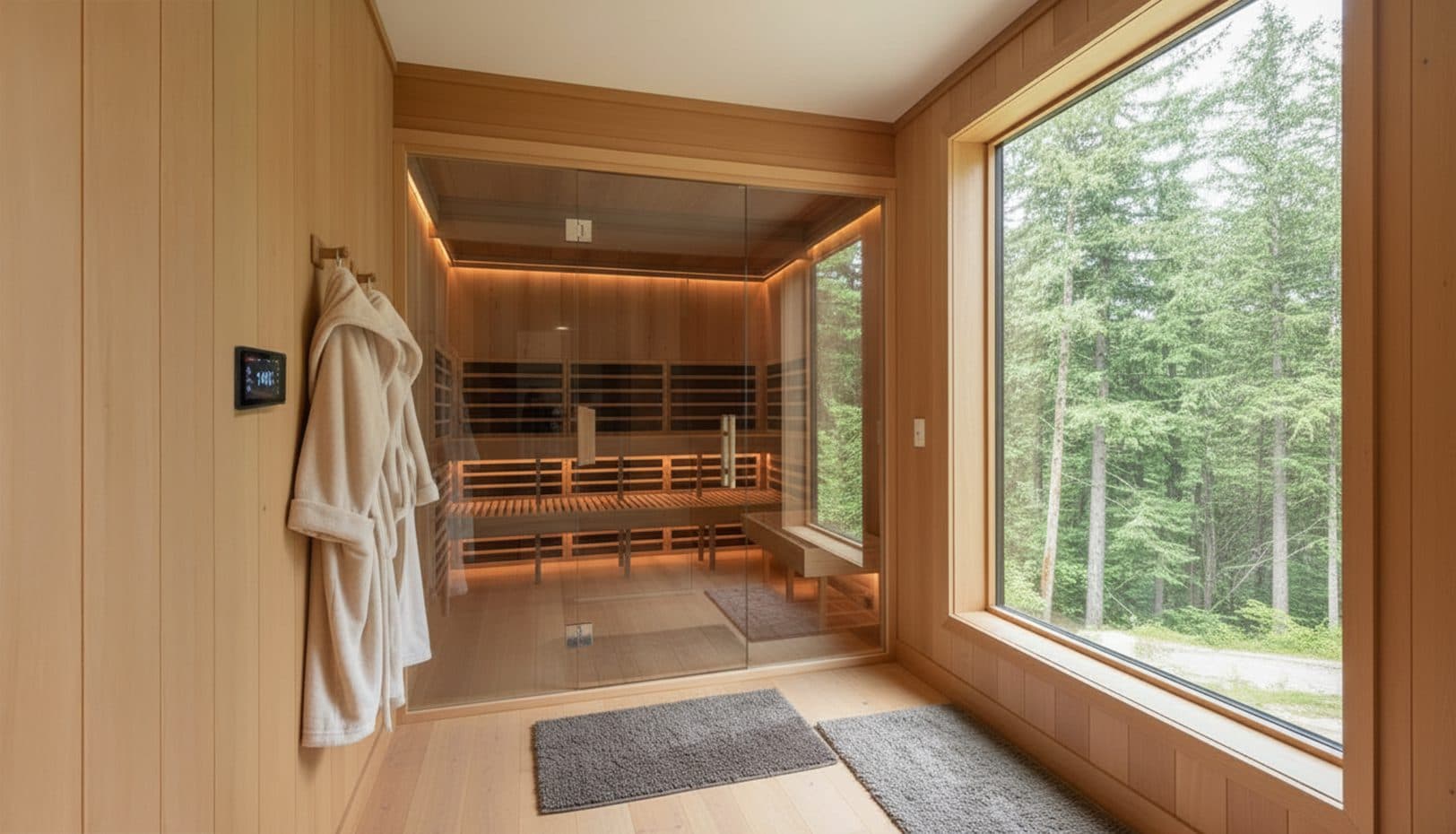
How Often Should You Use an Infrared Sauna? Research-Backed Frequency for Every Health Goal

Key Takeaways
- Daily use appears safe for most healthy adults who tolerate it and stay hydrated, but it isn't required. Most of the research sits at 3–4 sessions a week
- In Laukkanen's Finnish study, 4-7 sessions a week was linked to 63% lower sudden cardiac death, 65% lower Alzheimer's and 66% lower dementia vs once a week. It was an observational study of traditional Finnish saunas (about 79°C / 174°F) in middle-aged Finnish men, so it shows association, not that infrared at home produces the same results
- Condition-specific studies used 2-7 sessions per week: pain (daily × 4 wk), fibromyalgia (sauna 3 days a week plus underwater exercise for 12 wk), COPD (5x/wk × 4 wk), skin (daily × 6 mo)
- Beginners start with 15–20 minutes and build up; 45–50 minutes is the maximum recommended per session
- Habituation takes 2-3 weeks. Commit to 10 sessions before judging. Check with your doctor before regular use if you're pregnant, have heart disease or blood pressure problems, kidney disease, or take medications that affect heat tolerance
In This Article
The direct answer: yes, you can use your infrared sauna every day. Daily use appears safe for most healthy adults who tolerate it and stay hydrated — but it isn't required. Most of the research sits at 3–4 sessions a week.
The most important number in sauna research isn't a temperature. It isn't a duration. It's a frequency.
When Finnish researchers followed 2,315 middle-aged men for over 20 years, the men who used a sauna more often had lower rates of sudden cardiac death, dementia and Alzheimer's disease. That was an observational study of traditional Finnish saunas (about 79°C / 174°F), so it shows an association — not that infrared sessions at home produce the same results.
Still, it changes the question from 'should I try a sauna?' to 'can I build a regular sauna habit?' And THAT question is about access — which is why owning a custom infrared sauna at home helps.
The numbers that changed how we think about frequency
Tier 1 — 1x/week (baseline): The reference group in Laukkanen's study. Almost no one in it never used a sauna, so it can't say how once a week compares with none.
Tier 2 — 2-3x/week: Slightly lower risk than once a week, but for most outcomes the difference was not statistically significant.
Tier 3 — 4-7x/week: Sudden cardiac death 63% lower. Alzheimer's 65% lower. Dementia 66% lower.
These figures come from Laukkanen's observational study of traditional Finnish saunas (about 79°C / 174°F) in middle-aged Finnish men, compared with once a week. They show that frequent users fared better, not that infrared sessions at home produce the same results.
What the researchers used — not what we 'recommend'
Cardiovascular: 4-7x/week (Laukkanen, 20yr — observational, traditional Finnish saunas at about 79°C / 174°F, middle-aged Finnish men; an association, not proof for home infrared). Chronic pain: daily × 4 weeks alongside inpatient treatment (Masuda 2005 — at 2 years, 77% of the sauna group had returned to work vs 50% without). Fibromyalgia: sauna 3 days a week plus underwater exercise for 12 weeks (Matsumoto 2011). COPD: 5x/week × 4 weeks (Kikuchi 2014).
Arthritis: 2x/week × 4 weeks = 8 sessions (Oosterveld — a small study reported less pain). Skin: a Korean study (Lee 2006) used a far-infrared facial device at about 32°C — not a sauna — on weekdays for 6 months. Sleep: evening sessions, 60–90 minutes before bed. Immune: 10 traditional sauna sessions over 3 weeks changed immune markers in young men where a single session did not (Pilch 2023).
The condition-specific studies above used 2-7 sessions per week.
Session duration: how long each time
- Beginners (first 2–3 weeks): 15–20 minutes at 125–130°F. Regardless of frequency. Your body needs to learn to sweat efficiently. See our beginner's guide.
- Intermediate (weeks 3–8): 25–35 minutes at 130–140°F. Deeper sweat, more therapeutic benefit.
- Experienced (8+ weeks): 35–45 minutes at 135–145°F. Full therapeutic protocol.
- Maximum recommended: 45–50 minutes per session. Beyond this, diminishing returns and increased dehydration risk.
Best time of day
- Morning (6–8 AM): Energizing start. Norepinephrine release improves focus and alertness. Best for: productivity, energy, pre-workout warm-up.
- Afternoon (2–5 PM): Mid-day reset. Relieves accumulated work stress. Post-workout muscle recovery. Best for: athletes, high-stress professionals.
- Evening (7–9 PM) — most popular: 60–90 minutes before bed. Core temperature rises during the session, then drops afterward, which can help you wind down. Best for: sleep improvement, relaxation, wind-down.
What your first month actually feels like
Sessions 1-3: Unfamiliar. May feel too hot or underwhelming. Check time constantly. Start 120-125°F, 20 min. Sessions 4-7: Acclimation. Sweat sooner, more profusely. More natural. Some post-session fatigue (parasympathetic response — desirable). Sessions 8-15: Routine crystallizes. Preferred temp, duration, time of day. Sleep improvement noticeable. Sessions 16-30: Habit solidifies. Missing a session feels wrong. Most users say it's the best part of their day.
People who quit almost always stop during sessions 1-7 — not because sauna doesn't work, because they didn't give their body time to adapt. Our beginner's guide covers the full adaptation timeline. Commit to 10 sessions before judging.
Can you overdo it? Yes — here's how to tell
Twice-daily sessions without adequate hydration/electrolytes can cause: chronic dehydration, electrolyte depletion (muscle cramps, palpitations), or heat tolerance that masks overheating. Warning signs: feeling WORSE after sessions, persistent unexplained fatigue, dizziness beyond mild lightheadedness, nighttime muscle cramps, dark urine despite drinking water.
Correction: 1x/day, add electrolytes (sodium, potassium, magnesium) to post-session hydration, take 1-2 days off. One session per day, 25-35 minutes, with water + electrolytes is a sustainable protocol for most healthy adults who tolerate it.
Who should limit frequency or check with a doctor first
- Pregnancy: check with your doctor before using a sauna.
- Heart disease or a recent heart event, or uncontrolled high or low blood pressure: get your doctor's clearance first.
- Medications that affect heat tolerance, blood pressure or hydration, such as diuretics or beta blockers: ask your prescriber. See our medication interaction guide.
- Kidney disease: check with your doctor before regular use.
- Alcohol: never use a sauna after drinking.
Frequently Asked Questions
Can I use my sauna every day?
Yes — daily use appears safe for most healthy adults who tolerate it and stay hydrated, but it isn't required. Most of the research sits at 3–4 sessions a week. Hydrate properly with water + electrolytes, and check with your doctor first if you have a heart condition, blood pressure problems or take medications that affect heat tolerance.
Is morning or evening better?
Depends on your goal. Morning for energy and alertness. Evening (60–90 minutes before bed) for sleep and pain relief. Cardiovascular and HSP benefits are time-independent — your body responds to heat regardless of when you do it.
How long should each session be?
20-35 minutes for most goals. Waon therapy studies, including the COPD study, used 15 min + blanket rest. Beyond 45–50 minutes you get diminishing returns and more dehydration risk. Quality (core temp above 101°F) matters more than raw duration.
Should I take rest days?
Not necessarily, if you feel well. Sauna doesn't damage tissue the way exercise does — no muscle fiber repair needed. In the Finnish data, the 4-7x/week group fared best, but that was an observational study of traditional saunas, so it shows an association. If you feel consistently worse after sessions, reduce intensity or take 1-2 days off.
Can I combine sauna with exercise?
Possibly — one study found a single infrared session after exercise helped recovery (Ahokas 2023), though a 2025 review found the overall evidence uncertain. If using sauna BEFORE morning exercise, keep it brief and at lower temperature to avoid dehydration affecting performance.
How quickly will I see results?
Acute mood/pain relief: often first session. Sleep improvement: 1-2 weeks. Blood pressure changes: 4-8 weeks. Skin improvement: 8-12 weeks. Cardiovascular and longevity benefit: years of consistent use.
Is 2-3x/week enough?
It can produce benefit — a small arthritis study reported less pain at just 2x/week. In Laukkanen's observational study of traditional Finnish saunas in middle-aged Finnish men, those using a sauna 4-7x/week had lower rates of sudden cardiac death and dementia than once-a-week users. That's an association, not proof that home infrared does the same, so 2-3x/week is a reasonable place to be.
This guide is general information, not medical advice. If you have a medical condition, are pregnant, or take medication, check with your doctor before using a sauna regularly.

Founder & Lead Designer, SaunaCloud®
SaunaCloud: 3,000+ installations since 2014 · Author of The Definitive Guide to Infrared Saunas · Featured in Forbes, Inc., and MSN
Christopher designs every SaunaCloud sauna. His work brings the room, heaters, controls and installation plans together so you can review the project before committing. His professional expertise is sauna design and construction, not clinical medicine.
Custom 3D renderings and a proposal in 24-48 hours.
Continue Reading

Infrared Sauna Benefits
Infrared Sauna Health Benefits: What a Decade of Research Actually Shows (2015-2026)
Read article
Buying & Comparison Guides
The Infrared Sauna Buying Guide: 10 Things to Know Before You Buy (2026)
Read article
Infrared Sauna Benefits
Infrared Saunas and Sleep: The Science of Why Heat Therapy Works (2026)
Read article
Infrared Sauna Benefits
Infrared Saunas for Pain Relief: What the Research Shows (2026)
Read article
Infrared Sauna Benefits
Infrared Sauna and Longevity: A Hallmarks-of-Aging Analysis (2026)
Read articleBuild the Sauna You'll Use Every Day
VantaWave® heaters reach therapeutic temperature in minutes — no preheat barrier to daily use. 20,000+ hour lifespan for years of daily sessions. Custom designed for your space.
Custom 3D renderings and a proposal in 24-48 hours.