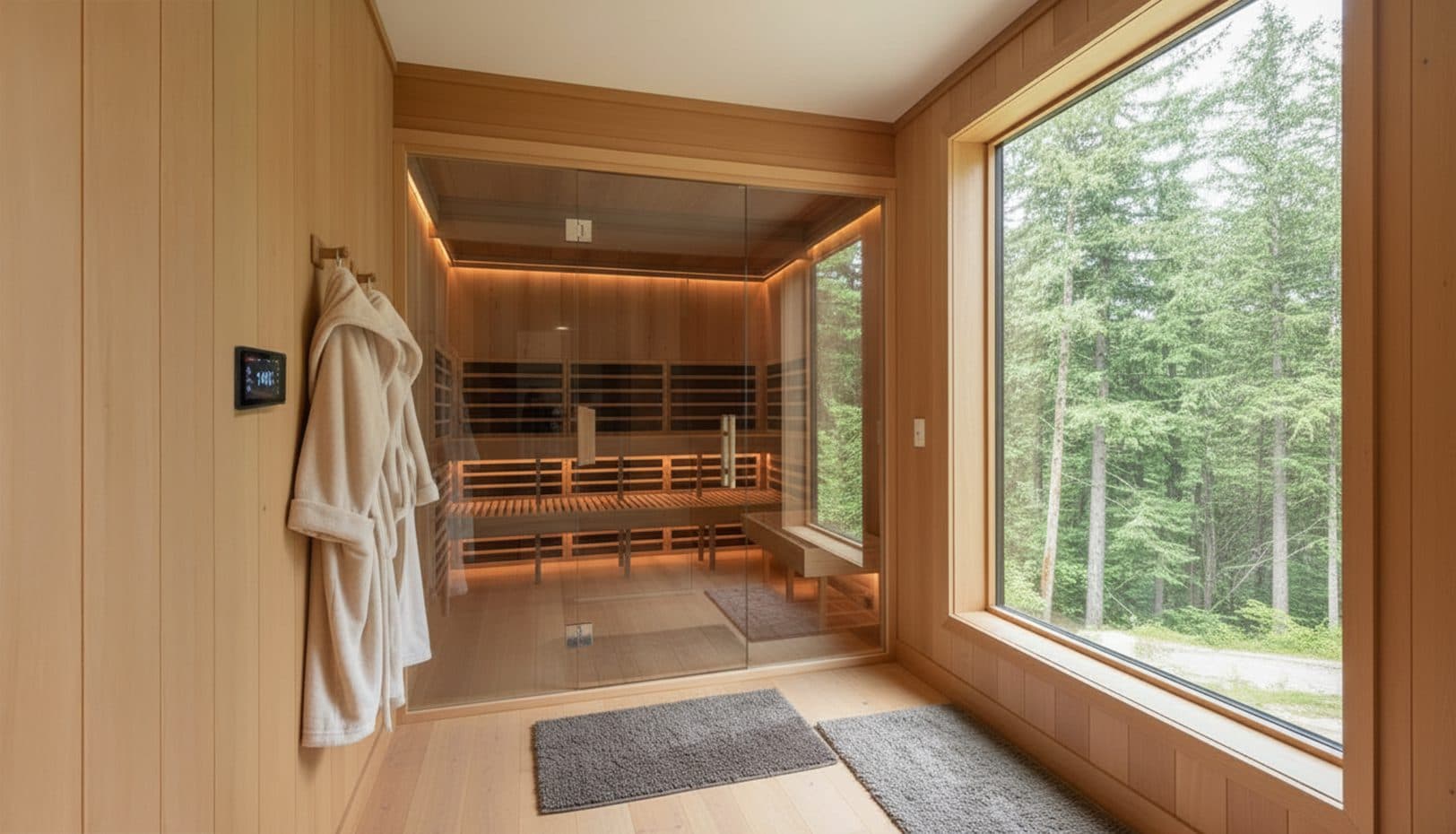
Why Don't Infrared Saunas Get as Hot? The Thermostat Is Measuring the Wrong Thing
Key Takeaways
- Five of 10 sauna guides we checked recommend 30 to 45 minutes for an infrared session, giving your body time to build heat gradually at lower air temperatures.
- Radiant panels heat your tissue directly at 110-150°F, whereas traditional saunas warm the cabin air to 150-195°F or higher to heat you from the outside in.
- Long-term Finnish research puts the cardiovascular sweet spot around 175°F with 4 to 7 weekly sessions linked to a 50% lower risk of cardiovascular mortality, showing that consistency matters more than extreme heat.
In This Article
You power on a brand-new infrared sauna, step inside five minutes later, and wait for that familiar blast of heavy heat. Instead, the cabin feels pleasantly warm, and the digital display reads 130°F, nowhere near the 175°F or higher you expect from a gym's Finnish sauna.
It's easy to assume the heater is defective or that you bought the wrong machine. Across more than 3,000 North American installations we've completed here at SaunaCloud since 2014, that exact worry is the most common question new owners bring to us.
The display isn't broken, and you aren't missing out on a real sweat. Infrared cabins run cooler by design because they heat your body directly rather than warming the room around you, which is why 130°F in an infrared sauna can make you sweat as much as 170°F in a traditional sauna, over a longer timeframe.
Why infrared saunas don't get as hot
Infrared saunas don't get as hot as traditional saunas because their radiant panels emit light waves that penetrate your skin directly and warm your body from the inside out, rather than heating the surrounding air. In a traditional sauna, the air itself has to get scorching hot before you break a sweat, which is why the thermometer climbs so high.
In an infrared cabin, air is only the space between you and the panel, so judging an infrared unit by its air temperature is like judging a heat lamp by the temperature of the room it sits in. Because those radiant waves can penetrate up to 1.5 inches into tissue, a 120-140°F cabin still drives a deep sweat without turning the room into an oven.
The experience feels closer to sitting in direct sunshine on a cool day than stepping into a heated box. Traditional Finnish saunas follow a centuries-old ritual where a wood fire or electric heater warms a pile of stones, and those stones heat the cabin air through convection. That hot air warms you from the outside in, triggering a shallow surface sweat as your body tries to cool itself down (a few infrared heaters rely on convection too, though most use direct radiant panels).
If you're wondering whether electromagnetic waves sound intense, infrared is a wavelength on the sun's spectrum, distinct from ultraviolet rays or microwaves. Doctors have used it safely for decades in heat lamps and incubators that keep premature babies warm. Here at SaunaCloud, we build our handcrafted cedar cabins around low-EMF VantaWave heaters for exactly this kind of direct radiant transfer, cooler cabin air is a deliberate engineering choice, not a power limit.
Infrared sauna temperature vs. traditional sauna
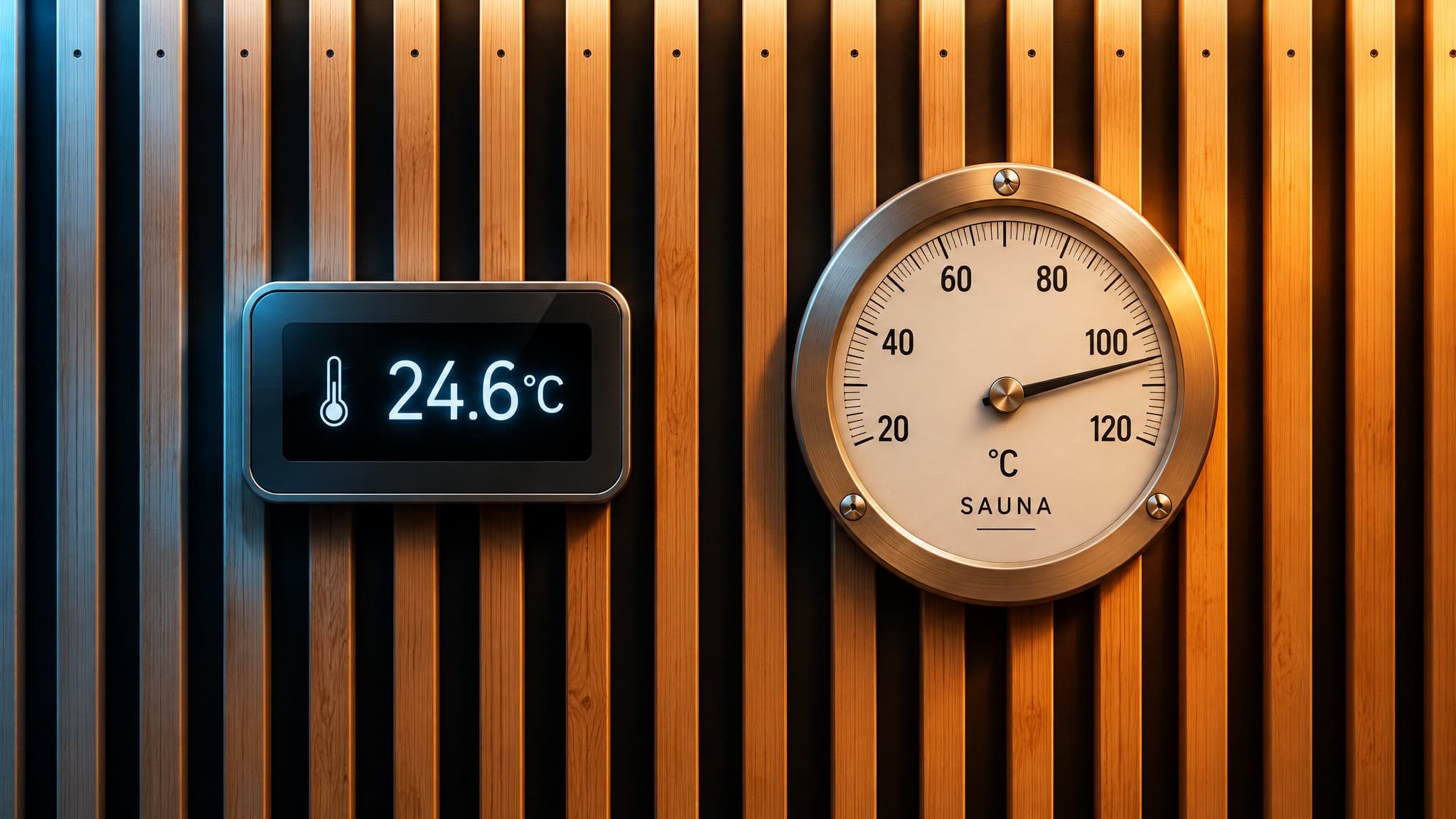
Infrared saunas typically operate between 110°F and 150°F, whereas traditional saunas run between 150°F and 195°F, and those two ranges are separated by hard safety ceilings rather than manufacturer preference. Most infrared sessions land comfortably in the 120-140°F zone, with 125-135°F acting as the everyday sweet spot. Traditional Finnish rooms, by contrast, aim for 150-175°F at head level on the upper bench.
Traditional sauna temperatures run anywhere from 60 to 80 degrees Celsius (140 to 176 degrees Fahrenheit) up to 150-220 degrees Fahrenheit. Dean Stattmann, who writes at GQ, cites 150-220°F for traditional dry heat and 100-165°F for infrared. Matt Justice, creator of the video "Infrared Saunas Don't Get Hot Enough," notes that most infrared cabins run 125-150°F. Personally, he prefers 133-148°F.
Inside a traditional cabin, how hot you run the room changes what your body can tolerate. At 150°F, most people start sweating within 5 to 10 minutes. At 175°F, you get deep, penetrating heat that supports a 15-to-20-minute session. Push past 190°F, and most bathers tap out early before they stay long enough to get the full benefit.
Safety standards lock in the gap between the two systems. Infrared saunas are capped at 149°F at the ceiling, while Underwriters Laboratories (UL) caps electric traditional heaters at 194°F with built-in high-limit switches to prevent overheating. Just because an electric heater can reach 194°F doesn't mean you'll get more out of running it at the limit.
Wood-fired saunas aren't bound by electrical limits. They swing from 160°F to over 200°F depending on how you feed the stove, and some owners push them to 210°F or higher. The heat feels softer because of natural humidity shifts in the room, and even the firewood changes the curve: a full load of dry birch burns hotter than oak, while smaller wood splits heat the cabin faster for shorter sessions, though above 190°F most people tap out before getting full benefits.
Can infrared saunas get hot enough?
Infrared saunas can get hot enough to produce a deep sweat and comparable everyday benefits, since a 130°F infrared session can match the sweat output of a 170°F traditional sauna over a longer climb, though traditional saunas still hold an edge for cardiovascular stimulus around 175°F. The difference comes down to time and direct energy transfer rather than peak air temperature. At 125-135°F, you can sit comfortably for 30 to 45 minutes instead of tapping out after 15 or 20 minutes in 175°F air. During a 130°F infrared session, your core body temperature rises steadily over 20 to 40 minutes, turning light perspiration into a heavy, drenching sweat.
Some people even sweat heavily with the sauna door propped open because the radiant waves hit skin and tissue directly regardless of room temperature.
How well a panel delivers that energy matters more than the number on the wall display. In thermal engineering, that transfer efficiency is called emissivity, and many budget heaters struggle to deliver consistent output or high emissivity.
Dr. Melissa Young at Cleveland Clinic says, "They'll both make you sweat, but infrared saunas tend to be gentler and more comfortable." You can get similar effects from each because hotter doesn't necessarily mean better.
The best temperature for sauna health benefits
The best temperature for sauna health benefits is around 170-175°F in consistent, moderate sessions rather than maximum heat. Long-term Finnish cohort studies and Japanese hospital protocols both point to steady, repeatable heat exposure as the real driver of physiological change, not bragging rights on a thermometer.
- Cardiovascular mortality: Dr. Jari Laukkanen's Finnish studies put the heart-health sweet spot at roughly 175°F (80°C) for at least 19 minutes per session. People who bathed 4 to 7 times a week at those temperatures had a 50% lower risk of cardiovascular mortality than once-a-week users, driven by frequency rather than extreme heat.
- Two-decade heart tracking: A 2015 Finnish study followed 2,315 men over 20 years, linking regular sauna bathing to stronger heart health and lower rates of cardiovascular disease and all-cause mortality.
- Heat shock proteins: Once your core body temperature climbs past 101.3°F, usually after 10 to 15 minutes in a 170°F sauna, your cells produce heat shock proteins that help repair cellular damage, improve insulin sensitivity, and may slow aging. That response is robust between 158°F and 185°F, with diminishing returns above that ceiling.
- Heart rate zones: Your pulse scales predictably with cabin temperature, sitting around 100-110 beats per minute at 150°F (similar to a brisk walk), 120-150 bpm at 170°F (similar to moderate exercise), and past 150 bpm at 190°F, where extra strain doesn't bring extra cardiovascular reward.
- Sweat math: Sweat rate climbs from roughly 0.5 pounds in 15 minutes at 160°F to about double that at 180°F, yet sweat composition stays fairly constant above 150°F. Spending 25 minutes at 165°F often produces more total sweat than a 10-minute blast at 190°F.
- Clinical infrared protocols: Japanese hospitals use infrared Waon therapy for cardiovascular patients without extreme heat, relying on controlled warmth and improved circulation to show that therapeutic results don't require blistering air.
How long to stay in an infrared sauna
Most infrared sessions run 30 to 45 minutes at 125-135°F, with time and temperature working together like a single dial. Of the 10 sauna guides we checked, 5 recommend 30 to 45 minutes for an infrared session, 4 recommend 20 to 30 minutes, and 1 recommends 15 to 20 minutes, which means you should plan on staying longer than you would in a traditional room.
- Give the cabin a short warm-up: Two of the 4 guides we checked recommend 10 to 15 minutes to preheat an infrared unit, 1 recommends 20 to 30 minutes, and 1 leaves it to personal preference. Unlike traditional saunas that can need up to a 2-hour preheat, firewood, or a 240V electrical circuit, an infrared unit warms up in 10 to 20 minutes and fits easily into a spare bedroom.
- Start low and slow: Dr. Young suggests beginners start around 110°F for 5 to 10 minutes and cap infrared sessions at 20 to 30 minutes even after building tolerance.
- Scale traditional heat gradually: In a traditional sauna, session length drops as heat climbs: 20 to 30 minutes at 150-160°F, 15 to 20 minutes at 165-175°F, 10 to 15 minutes at 180-190°F, and 5 to 10 minutes max above 190°F, or three 15-minute Finnish rounds at 170°F with cool-offs in between. Start with 10 minutes at 150°F and add either 5 degrees or 5 minutes per week, never both, to reach 20 minutes at 170°F within a month.
- Hydrate before and after: Drink around a liter of water beforehand, bring water inside with you, replace electrolytes afterward while skipping alcohol, and rinse off to cool down.
Why your infrared sauna doesn't feel hot enough
An infrared sauna that tops out around 140°F isn't broken, because that lower air temperature is built into the design. Most complaints about weak heat come from an expectation mismatch: you expect a 200°F gym sauna, step in five minutes after flipping the switch, and assume the panels failed when you aren't dripping right away. Infrared requires a proper warm-up, 20 to 40 minutes of exposure, and solid hydration beforehand before the sweat opens up.
Four practical factors govern how hot a session feels more than the number on the thermostat:
- Stepping in too early: Walking in before the panels and cabin walls finish their warm-up cuts into your core temperature climb.
- Cold surrounding rooms: Placing a cabin in an unheated garage or unfinished basement forces the unit to fight cold ambient air and slows heat buildup.
- Larger cabin volume: Bigger multi-person cabins take noticeably longer to reach steady radiant warmth than compact one- or two-person units.
- Uneven heater layout: Poorly spaced panels leave cold spots in the cabin, so your front or back never warms evenly.
Instead of staring at the display, judge your sauna by physical results: steady, heavy sweating after 20 to 30 minutes, a gentle lift in heart rate, deep relaxation, and that post-session endorphin rush. A 140°F infrared sauna you actually look forward to using 4 or 5 times a week will outperform a 200°F sauna you tolerate once a month, because consistency beats intensity every time.
Infrared vs. traditional sauna: which wins where
Neither infrared nor traditional saunas are universally better: cardiovascular stimulus favors traditional saunas around 175°F, while skin benefits and lower-heat tolerability favor infrared.
A recent study in the American Journal of Physiology led by Christopher T. Minson, PhD, at the University of Oregon compared traditional saunas, far-infrared saunas, and hot tubs head-to-head. The hot tub produced the strongest heart-health response, while the far-infrared sauna produced the least core temperature rise and the least cardiovascular impact. Minson noted that getting meaningful cardiovascular gains from far-infrared would take months of longer sessions, and he called far-infrared company claims "way outblown beyond the science" because the heat didn't penetrate as deeply as advertised.
That reality check also applies to muscle and joint marketing. While some guides promote infrared as a deep-tissue fix for chronic pain, muscle recovery, and flexibility, research doesn't back up that claim, and Minson's testing found far-infrared didn't reach muscles as deeply as marketed.
Where infrared does show a genuine edge is skin health and everyday comfort. Dermatologist Dara Spearman notes that deeper infrared penetration increases blood flow to the second layer of skin. That extra circulation helps clear clogged pores, reduce acne and blackheads, shed dead skin cells, and stimulate collagen. A Yonsei Medical Journal study also links infrared exposure to better skin elasticity and reduced hyperpigmentation, fine lines, and wrinkles. Both sauna types share core benefits like better circulation, relaxation, recovery support, and lower blood pressure, though infrared's claims around "passive cardio," chronic pain, immunity, and sleep still need more research and don't replace exercise.
For anyone who finds traditional heat overwhelming, deals with respiratory sensitivities, or is brand new to sauna bathing, infrared is an easier entry point that also spares surrounding rooms from heavy ambient heat. Just don't chase a higher thermostat reading for "detox": Minson points out that traditional sauna sweat is almost entirely water and salt, not toxins leaving your glands. Real detoxification depends on consistent sessions, hydration, electrolyte replenishment, mineral and vitamin balance, healthy circulation, and total time under heat stress, not peak air temperature.
Infrared sauna safety: who should opt out
Lower cabin air temperature doesn't remove standard medical cautions, because your body still responds to heat exposure itself regardless of how that heat is delivered.
Skip sauna use during pregnancy, especially early on, per the American College of Obstetricians and Gynecologists (ACOG), since elevated core heat can harm the fetus. Avoid saunas when trying to conceive, because prolonged heat can temporarily reduce sperm count and health, and stay out when you're sick or running a fever.
People with multiple sclerosis should avoid saunas or use them with extreme caution, as heat sensitivity can worsen symptoms, and anyone with heart conditions, high blood pressure, or daily medications should check with a doctor first. Dehydration is the main everyday risk in any sauna, so step out immediately if you feel dizzy or nauseated. Inside a traditional sauna, heat layers by height and drops 10 to 15°F per foot. That means a 170°F upper bench (35 inches up) cools to 155°F on the lower bench and 140°F near the floor. Kids and heat-sensitive bathers can cool down simply by sitting lower.
Frequently Asked Questions
Can infrared saunas get hot enough?
Yes, they just rely on direct energy transfer and longer sessions rather than blistering air. Sitting in a 125-135°F cabin for 30 to 45 minutes steadily raises your core temperature and can produce just as much sweat as a 15-to-20-minute stint in a 175°F traditional room. As Dr. Melissa Young at Cleveland Clinic notes, both styles get you sweating, though infrared delivers a gentler, easier-to-tolerate heat.
Why am I not sweating in an infrared sauna?
Most of the time, it comes down to jumping in too soon or skimping on water before your session. Unlike a traditional stove that blasts the air right away, infrared units need 10 to 20 minutes to warm up, followed by 20 to 40 minutes inside for your core temperature to climb into a heavy sweat. Placing the cabin in a cold garage, using a larger multi-person unit, or dealing with unevenly spaced panels can also slow down that heat buildup.
What is the downside to an infrared sauna?
The biggest drawback is that infrared falls short of traditional saunas for cardiovascular conditioning and doesn't live up to some of its bolder marketing promises. Research led by Christopher T. Minson, PhD, at the University of Oregon found that far-infrared units raised core temperature and boosted heart-health markers less than both traditional saunas and hot tubs. Claims around deep-tissue muscle recovery, chronic pain relief, and "passive cardio" also outpace the current science, and you won't get that intense, 175°F+ blast of hot air.
Why don't infrared saunas get as hot as traditional saunas?
Infrared units skip heating the air and instead use radiant panels to send light waves up to 1.5 inches into your tissue, warming you directly. Traditional Finnish rooms have to superheat stones and cabin air so convection can warm you from the outside in, which is why their thermometers climb so much higher. Here at SaunaCloud, we design our cedar cabins with low-EMF VantaWave heaters specifically for that direct radiant transfer, making cooler room air an intentional feature rather than a power limit.
What temperature does an infrared sauna actually reach compared to a traditional sauna?
Infrared cabins typically run between 110°F and 150°F, with most everyday sessions landing in the 125-135°F range and safety limits capping the ceiling at 149°F. Traditional saunas operate much hotter, usually 150°F to 195°F, with electric heaters capped at 194°F by Underwriters Laboratories (UL). Wood-fired rooms aren't bound by electrical limits and can easily swing past 200°F depending on how you load the stove.
Can infrared saunas get hot enough to produce the same benefits as a traditional sauna?
They overlap on several core perks, including better circulation, lower blood pressure, relaxation, and a deep sweat, but each type pulls ahead in different areas. Traditional rooms around 175°F still deliver a stronger cardiovascular workout, whereas infrared struggles to match that heart-rate stimulus without months of longer sessions. On the flip side, infrared shines for comfort and skin health, with dermatologist Dara Spearman noting that deeper radiant warmth boosts blood flow to the second layer of skin to clear pores and stimulate collagen.
Why am I not sweating much in an infrared sauna?
If you're only seeing a light sheen, check your hydration and your timer. Drinking around a liter of water beforehand gives your body enough fluid to sweat, and you'll usually need 20 to 40 minutes inside, five of 10 sauna guides we checked recommend 30 to 45 minutes total, for your core temperature to climb into a full drench. Budget panels with poor emissivity can also output uneven energy, leaving you warm without triggering a strong sweat response.
Is it safe to use an infrared sauna at lower temperatures if you have heart conditions or high blood pressure?
You still need to clear it with your doctor first, especially if you take daily medications. Even though the cabin air feels gentler, your body still undergoes real heat stress and cardiovascular changes regardless of how the warmth is delivered. While Japanese hospitals do use controlled infrared Waon therapy for heart patients, home sessions aren't medically supervised, so getting a physician's green light is essential.
Infrared sauna vs traditional sauna: which one is better for cardiovascular health?
Traditional saunas take the win for heart health. Long-term Finnish research led by Dr. Jari Laukkanen found that bathing 4 to 7 times a week at roughly 175°F for at least 19 minutes was linked to a 50% lower risk of cardiovascular mortality compared to weekly sessions. Head-to-head testing by Christopher T. Minson, PhD, also showed far-infrared cabins produced less core temperature rise and a smaller cardiovascular boost than both traditional saunas and hot tubs.
What is the best temperature for a sauna if you want the most health benefits?
Research points to 170-175°F as the overall sweet spot for physiological benefits. That range pushes your heart rate to 120-150 beats per minute, comparable to moderate exercise, and reliably triggers heat shock proteins, which peak between 158°F and 185°F. That said, consistency trumps peak thermometer numbers: using a 140°F infrared cabin four or five times a week will do more for you than enduring a 200°F room once a month.
How hot do saunas get at their maximum, and is hotter always better?
Infrared units top out at a 149°F ceiling limit, electric traditional heaters are capped at 194°F by Underwriters Laboratories (UL), and wood-fired stoves can push past 210°F. More heat isn't better, though, cellular heat shock protein benefits level off above 185°F, and pushing past 190°F drives your pulse over 150 beats per minute without adding cardiovascular payoff. Because most people tap out after 5 to 10 minutes in extreme heat, a 25-minute session at 165°F often produces more total sweat than a short blast at 190°F.

Founder & Lead Designer, SaunaCloud®
SaunaCloud: 3,000+ installations since 2014 · Author of The Definitive Guide to Infrared Saunas · Featured in Forbes, Inc., and MSN
Christopher designs every SaunaCloud sauna. His work brings the room, heaters, controls and installation plans together so you can review the project before committing. His professional expertise is sauna design and construction, not clinical medicine.
Custom 3D renderings and a proposal in 24-48 hours.
Continue Reading

Sauna Design & Technology
Why We Feel Infrared as Warmth But Can't Feel UV — And Why That Matters for Your Sauna
Read article
Sauna Design & Technology
Why Premium Materials Matter in Infrared Saunas: The Italian Ingredient Philosophy
Read article
Sauna Design & Technology
Why We Stopped Calling Our Saunas 'Full Spectrum' — And What I Learned About Infrared Physics
Read articleReady to Design Your Sauna?
Every project starts with a conversation. Tell us about your space and we'll create your custom plan — free, no obligation.
Custom 3D renderings and a proposal in 24-48 hours.