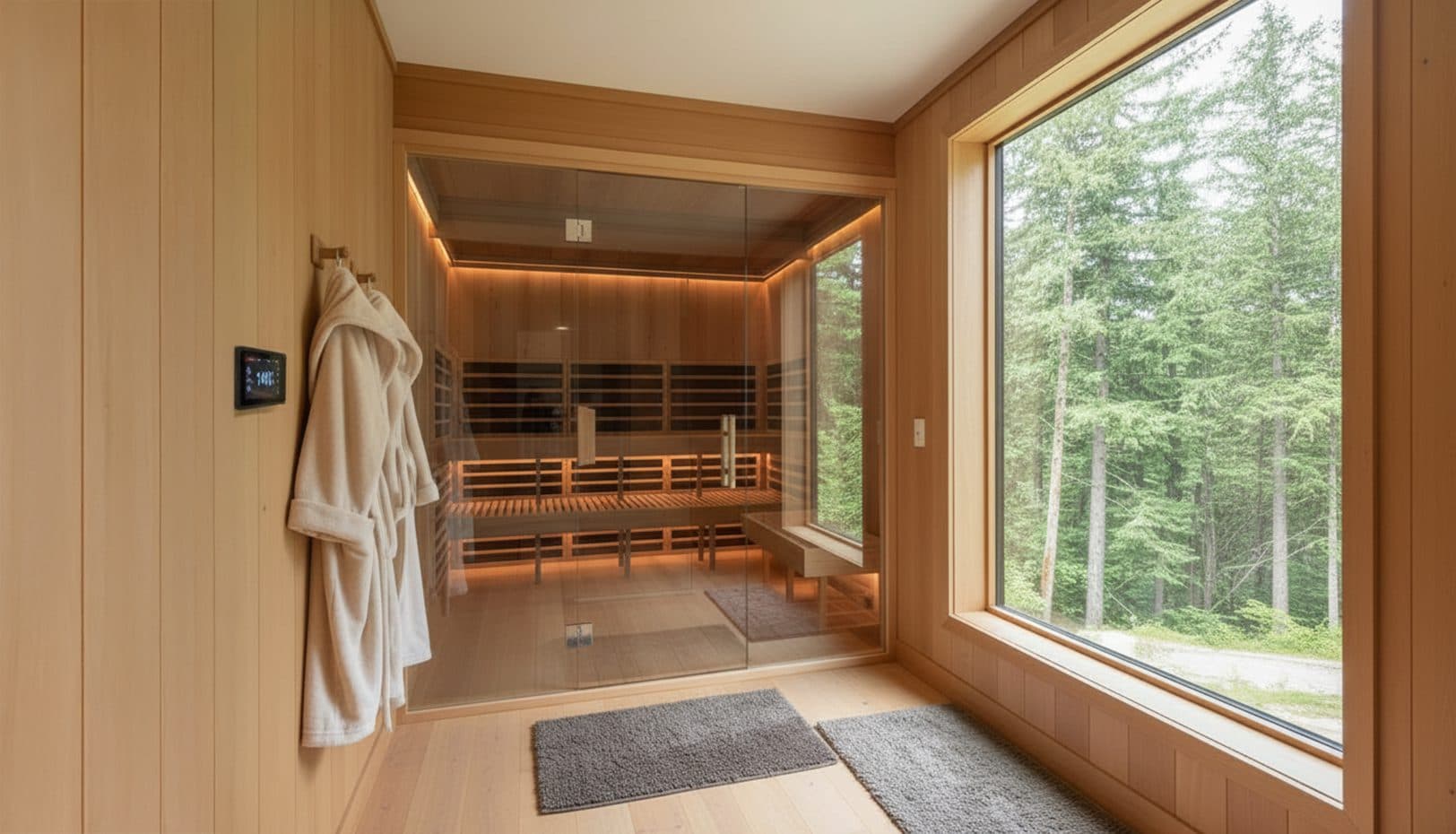
How Infrared Sauna Works: Why It Heats Your Body, Not the Air
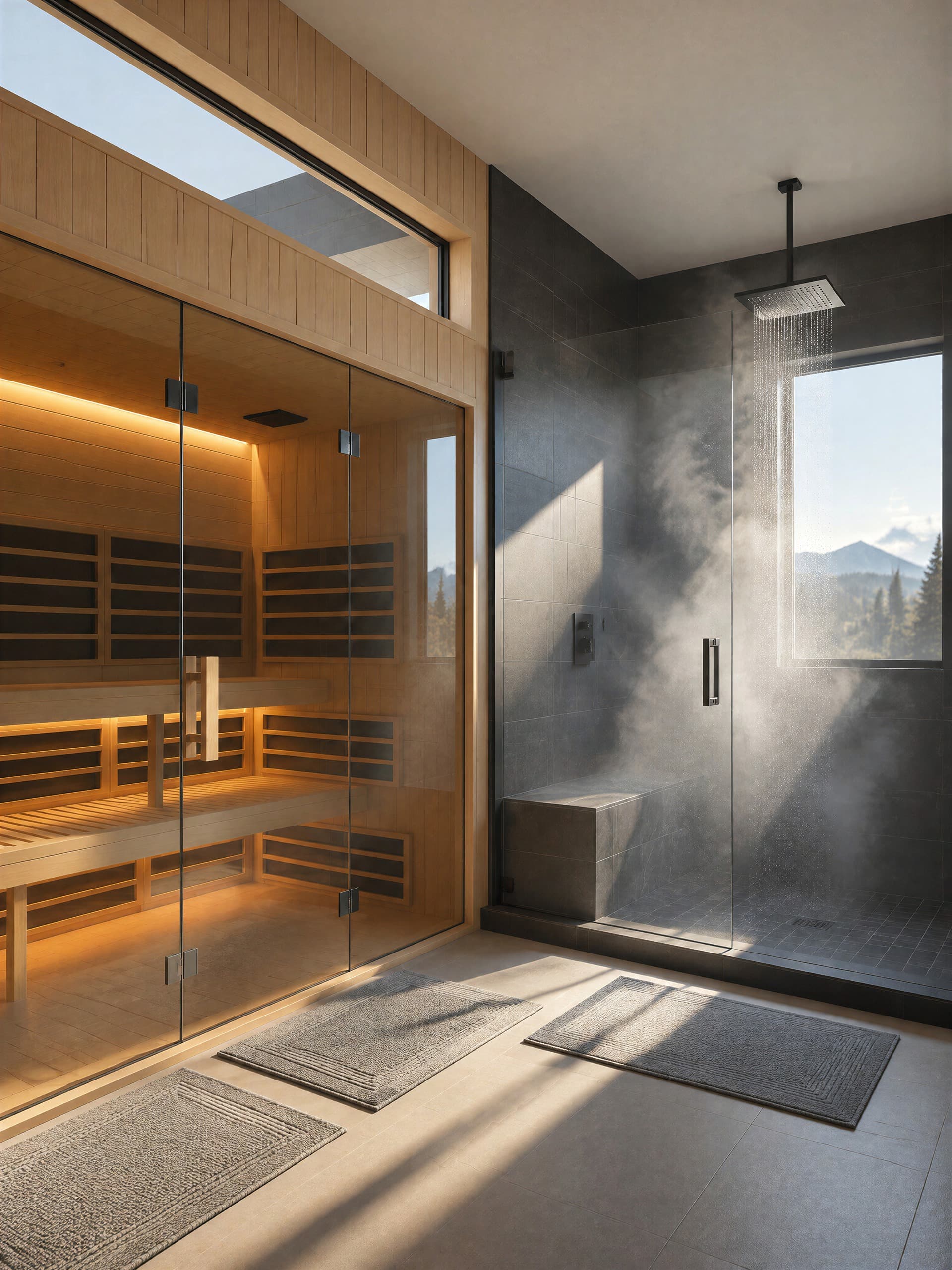
Key Takeaways
- Infrared saunas heat your body directly with invisible light instead of heating the air, running at 104-140°F versus 158-194°F for traditional saunas, which is why sessions feel gentler and can last longer.
- The strongest quantitative sauna evidence, including a 2018 meta-analysis of nine heart-failure trials, came from conventional saunas, so marketing that borrows those results for infrared is extrapolating.
- Relaxation and recovery are the best-supported reasons to use one. Detox claims don't hold up (sweat is about 97% water), and the autism, cancer, and COVID-19 treatment claims are pseudoscience.
In This Article
You've seen them everywhere: the cedar cabin at your gym, the glowing tent on a wellness influencer's story, the sauna blanket stacked next to the face masks at Sephora. Every one of them promises the same things: detox and heart health. So the question underneath all the marketing is fair: when you look at how infrared sauna works, is this different technology, or just a heat lamp with better branding? It's the first one, mostly: the mechanism is real and easy to understand.
But we build these cabins for a living, and the strongest long-term sauna studies weren't done on infrared saunas at all. They were done on traditional ones. So in this article, we'll cover how the heat actually gets into your body, what it does once it's there, and which benefits the evidence supports, supports weakly, or borrows from a different machine entirely.
How an infrared sauna heats your body
An infrared sauna skips the air entirely: invisible infrared light warms your body itself. That's the whole trick, and it's the clearest difference from a traditional sauna, where heated stones and surfaces warm the air first and the hot air then heats you. If you've ever felt sunlight warm your skin on a cool day, you already know the sensation: radiant heat arriving without the air doing any of the work. Infrared does that without the harmful UV part of sunlight.
Here's the mechanism in one place:
- Direct heating. Infrared waves travel from the heater panels and get absorbed by your skin, so you're the thing being warmed, not the room.
- Lower air temperatures. Because the air isn't the delivery method, the cabin can run far cooler than a traditional sauna while your body still heats up.
- Specific wavelengths. Far-infrared sits at roughly a 10-micron wavelength, felt as radiant heat absorbed at the skin, and it reaches into tissue enough to produce a fast, vigorous sweat. That's why a session feels different from sitting in hot air: heat on your skin, cooler air around it.
One reassurance for anyone expecting a light show: the infrared itself is invisible. That soft red glow from the panels is just the heater element working, the way a stovetop coil glows before it's fully hot. If you can see red, the heater's on. The light doing the heating, you'll never see.
And a calm word about "far-infrared," because the word gets used like a luxury trim level: "far" only describes where the waves sit on the light spectrum. It's a position, not a quality grade. Full-spectrum systems combine far, mid, and near wavelengths for broader heating coverage, which is a legitimate hardware configuration, but it's not a clinically proven upgrade, and no one should tell you otherwise.
This is also where heater construction matters more than most listings admit. At SaunaCloud, we've manufactured our own low-EMF VantaWave heaters and hand-built cedar cabins since 2014, with more than 3,000 installations across homes, clinics, and wellness centers, and the reason we went vertical is simple: wavelength output, heater surface area, and EMF levels vary a lot across the market, and you can't evaluate any of it from a product photo.
Infrared sauna vs traditional sauna
The two formats heat you differently, run at different temperatures, and don't share the same research record.
| Infrared | Traditional | |
|---|---|---|
| Ambient temperature | 104-140°F | 158-194°F (some sources up to 200°F) |
| Heating method | Radiation alone, body heated directly | Heated air and surfaces heat you first |
The temperature gap explains the feel. Lower air temperature means longer, more tolerable sessions, and it suits people who can't stand traditional heat.
The strongest quantitative sauna evidence is a 2018 meta-analysis by Källström and colleagues in Clinical Cardiology: nine trials in heart failure patients, five weekly conventional sauna sessions for 2 to 4 weeks. It reduced markers of heart strain (BNP, a blood marker that rises when the heart is under stress) and improved ejection fraction, the measure of how well the heart pumps. It never tested infrared.
This is a frequent misreading of the research: results from conventional saunas get quietly repurposed for infrared marketing. That doesn't mean infrared offers zero cardiovascular benefit. It means the two formats aren't interchangeable in the evidence, and you deserve to know which machine the studies actually used.
What an infrared sauna does to your body
A session nudges your heart rate up the way light or moderate exercise does, gets you sweating hard, and opens up your blood vessels, which is vasodilation, plain-terms for vessels opening up to move more blood, improving circulation. Some research suggests possible improvements in left ventricular function and arterial flexibility, and "may" is doing real work in that sentence.
But there's a real counterweight to those cardiovascular findings. Steven Novella, writing at Science-Based Medicine in 2021, argues these cardiovascular changes are short-term: they show up during the session and about 30 minutes after, and they may reflect dehydration lowering your blood volume, the way a diuretic would. The measured shifts, lower blood pressure, higher heart rate, more blood flow to the skin, are real. Whether they add up to lasting health improvement is an open question.
Dr. Anna B. Shannahan of Northwestern Medicine puts the practical boundary simply: saunas raise your heart rate like moderate exercise, but they should complement physical activity, not replace it.
What the research actually shows, benefit by benefit
Dr. Shannahan's summary is the frame for everything below: the strongest sauna evidence was gathered on traditional saunas, the infrared research is mostly small and short-term, and marketing routinely extrapolates traditional-sauna data onto infrared products. So here's each claim with its actual grade.
Circulation and muscle recovery
More blood flow may deliver oxygen and nutrients to tired muscles and ease soreness. That's the plausible mechanism, and it's honestly hedged: recovery support, not athletic transformation.
Stress and relaxation
Gentle heat may reduce stress and improve mood, and this is the most relatable benefit on the list. A 2019 survey by Hussain, published via The Conversation, found most people sauna for relaxation, and 5 to 15 sessions a month went hand in hand with higher reported well-being. Note the word "associated." That's a correlation, not proof the sauna caused it.
Pain and stiffness
Some research suggests infrared may reduce pain and stiffness, especially with rheumatoid arthritis. The mechanism is the one you already know from a hot shower: heat eases muscle tension and joint stiffness. Beever's 2009 review found fair evidence for chronic pain from a single study, which isn't nothing, but it isn't proof either.
Heart and metabolic health
Infrared sauna use may support healthy blood pressure and circulation. Mayo Clinic's assessment across studied conditions, high blood pressure, heart failure, dementia and Alzheimer's, headache, type 2 diabetes, and arthritis, is "some proof of possible benefit," with the caveats that larger, more precise studies are needed and some studies used regular saunas, a comparison of dry sauna vs. infrared health benefits that matters when weighing those findings. No harmful effects have been reported with infrared saunas. Beever's 2009 review in Canadian Family Physician graded it more bluntly: limited moderate evidence that far-infrared saunas help normalize blood pressure and treat congestive heart failure, fair evidence against cholesterol-reduction claims, and weak evidence for obesity treatment.
All of those studies were small, short, used unvalidated symptom scales, and came from the same core research group. Laukkanen's 2018 review in Mayo Clinic Proceedings is the broader cardiovascular evidence base Mayo cites.
Detox, heat, and the documented pseudoscience record
No, the detox claim doesn't hold up. The NCCIH, the U.S. government's center for reviewing alternative medicine claims, makes the same point: sweat is roughly 97% water and carries away only insignificant amounts of toxins; the detox work happens around the clock in your liver and kidneys. Heavy sweating also means less urine, which may actually reduce how much toxin your body excretes. Going deeper isn't cleaning you out. The viral claim that infrared sweat is 20% toxins versus 3% in traditional sweat is unverified marketing that runs against the medical consensus, and we're not repeating it as fact.
Two other myths while we're here. Hotter isn't automatically better: higher temperatures can add side-effect risk without buying you anything extra, so there's no reason to max the dial. And traditional and infrared saunas work differently, which is exactly why traditional-sauna data doesn't auto-transfer to infrared products.
The claims that crossed into pseudoscience
Some claims aren't just exaggerated, they're documented pseudoscience with no supporting evidence: that infrared saunas treat autism, cancer, or COVID-19. The record is checkable. Fire departments in Texas and Indiana purchased saunas believing they would prevent cancer and flush out pollutants. Naturopaths advised use for cancer and autism.
Wellness clinics claimed radiation and heavy-metal removal. Gwyneth Paltrow's post-COVID sauna recommendation drew criticism from NHS experts. The FTC warned practitioners about false COVID-19 claims. The claims have no evidence behind them.
Can infrared saunas cause cancer?
No strong evidence links infrared saunas to cancer, and the reason is the physics we covered earlier: the infrared used in these saunas is not UV, and it doesn't damage skin the way UV does. That's because of how infrared saunas work, the same physics that makes them gentle on skin. When used properly, infrared saunas are considered safe. "No evidence of harm" is the accurate answer.
Is an infrared sauna safe? Risks and downsides
Yes, an infrared sauna is generally safe for most healthy adults when used properly, with known side effects of dehydration, dizziness, and overheating. That verdict applies to healthy adults using what makes a sauna infrared as designed. The cautions that matter: a 2018 review warned of heat exhaustion and stroke risk with sauna use, so you should talk with your doctor first if you have a heart condition, high blood pressure, or you're pregnant, and skip the sauna entirely after a recent heart attack. Avoid alcohol around sauna use, because it raises the risk of abnormal heart rhythm and dehydration. And if you're a heavy, long-term user, chronic infrared exposure can cause erythema ab igne, a net-like rash that typically fades within a few months once the heat source is removed.
Common side effects
Dehydration is the big one, because you're losing real fluid. Dizziness and overheating usually show up when sessions run too long or too hot for your current tolerance. Skip alcohol around sauna use: it raises the risk of abnormal heart rhythm and dehydration.
Erythema ab igne
This is the named risk almost nobody mentions: erythema ab igne, nicknamed toasted skin syndrome. Chronic infrared exposure can cause a net-like rash, a pattern dermatologists describe with long-term heat exposure. Dr. Shannahan describes it, and the practical detail is that people often don't connect the rash to the heat source until a clinician identifies it. Mild cases typically fade on their own within a few months once the heat source is removed. It's not reported as common among sauna users, but it's worth knowing the name.
Who should talk to a doctor first
Use caution if you have a heart condition, high blood pressure, or are pregnant, and skip sauna entirely after a recent heart attack. If you have any medical condition or take medications, check with your doctor before your first session. Here's what to do otherwise:
- Start short and cool, and build up as tolerated.
- Hydrate before, during, and after.
- Listen to your body, and stop if you feel unwell.
How long and how often: the session protocol research actually used
Typical use is two to four sessions weekly of 15 to 30 minutes, and most studies used 15 minutes, long enough to sweat, not so long you dehydrate. So yes, 20 minutes is enough: it sits comfortably within the studied range. Beginners should start around five minutes and build up gradually, and Cleveland Clinic advises staying under 30 minutes, three to four times weekly. Dr. Shannahan's preference is shorter sessions more often rather than longer sessions less often, which is why frequency beats duration. And hydrate, because that sweat is real fluid leaving your body.
Is 20 minutes enough?
It is. The studied session length is 15 minutes, typical use runs 15 to 30, and Cleveland Clinic's ceiling is 30. Twenty minutes lands right in the middle of what research actually tested, so there's no need to chase longer sessions for their own sake.
The safe-use checklist
- Start at five minutes as a beginner and increase gradually.
- Aim for two to four sessions weekly of 15 to 30 minutes.
- Hydrate before, during, and after every session.
- Stop if you feel dizzy, lightheaded, or unwell.
Are sauna blankets as effective as a full sauna session?
The evidence reviewed here doesn’t establish that. A sauna blanket, an infrared cabin, and a traditional sauna deliver heat in different settings. Findings from traditional-sauna studies or infrared cabins shouldn’t be assumed to apply to blankets; treat them as different formats unless research directly compares them.
Before buying or using a sauna blanket, check the U.S. Consumer Product Safety Commission’s recall notices and confirm whether any notice applies to the product’s model and serial number.
From Kellogg's 1891 light bath to Waon Therapy
The radiant-heat sauna is older than you'd guess: John Harvey Kellogg invented the incandescent electric light bath in 1891, showed it at the 1893 Chicago World's Fair, and patented the Radiant Heat Bath in 1896 (US558394), claiming it heated the body without relying on air heat and produced sweat faster than Turkish or Russian baths at lower temperatures. Installations followed for King Edward VII and Kaiser Wilhelm II, the concept revived in 1970s Japan as Waon ("soothing warmth") Therapy, and neonatal beds still use infrared elements today. So radiant-heat saunas predate modern wellness marketing by 130 years, and historical use doesn't validate health claims.
Home sauna or spa, and is an infrared sauna right for you?
The best choice depends on your lifestyle and budget, and relaxation and recovery are the best-supported reasons to use one, not detox or weight loss. At home, you get convenience, easy regular use, and a one-time cost. At a spa or wellness center, there's no equipment purchase, larger saunas, and a chance to sample different types before committing to a buy. Either way, running a unit is cheap: about 0.5-0.65 kWh for a 30-minute session, usually under 20 cents on a standard 120V outlet.
One kind correction on the scale: any weight you lose in a session is water you'll replace when you rehydrate. Saunas are recovery and relaxation tools, not weight-loss devices. That closes the loop we opened at the start: the cardiovascular and detox claims lean on thinner or borrowed evidence, while relaxation and enjoyment are where the data actually stands firm.
It's a supplement, not a shortcut. And if you have a medical condition, take medications, or are pregnant, talk with your doctor first.
Frequently Asked Questions
What is the downside to an infrared sauna?
The main downsides are dehydration, dizziness, and overheating, especially when sessions run too long or too hot for your tolerance. There's also a lesser-known risk called erythema ab igne (toasted skin syndrome), a net-like rash from chronic infrared heat exposure that people often don't connect to the sauna until a dermatologist identifies it. People with heart conditions, high blood pressure, or pregnancy should talk to a doctor first, and anyone should skip sauna use entirely after a recent heart attack.
What does an infrared sauna do to your body?
Infrared light heats your body directly, nudging your heart rate up the way light or moderate exercise does, producing a vigorous sweat, and opening your blood vessels (vasodilation) to improve circulation. Some research suggests possible improvements in left ventricular function and arterial flexibility, though the cardiovascular changes appear short-term and may partly reflect dehydration. The best-supported effects are relaxation and muscle recovery, not detox or weight loss.
How does an infrared sauna work?
It skips heating the air entirely: invisible infrared light travels from heater panels and is absorbed directly by your skin, so your body is what gets warmed, not the room. That's why infrared cabins run at 104-140°F versus 158-194°F for traditional saunas while still producing a fast, vigorous sweat. Far-infrared sits at roughly a 10-micron wavelength, and the soft red glow you see is just the heater element working, the light doing the heating is invisible.
Can infrared saunas cause cancer?
No strong evidence links infrared saunas to cancer. The infrared used in these saunas is not UV light, so it doesn't damage skin the way ultraviolet radiation does. When used properly, infrared saunas are considered safe, no honest source can promise absolute safety, but 'no evidence of harm' is the accurate answer. Claims that saunas treat cancer fall into documented pseudoscience with no supporting evidence.
How much does it cost to run an infrared sauna?
Very little. A portable 1,050-1,300W unit running for 30 minutes uses about 0.5-0.65 kWh, which usually comes to under 20 cents on a standard 120V outlet. The bigger cost consideration with budget portables is durability, failures cluster at the three-to-six-month mark, usually zippers and the included chair, so replacing a cheap unit every two years can cost more over time than buying a better one once.

Founder & Lead Designer, SaunaCloud®
SaunaCloud: 3,000+ installations since 2014 · Author of The Definitive Guide to Infrared Saunas · Featured in Forbes, Inc., and MSN
Christopher designs every SaunaCloud sauna. His work brings the room, heaters, controls and installation plans together so you can review the project before committing. His professional expertise is sauna design and construction, not clinical medicine.
Custom 3D renderings and a proposal in 24-48 hours.

Ready to Design Your Sauna?
Every project starts with a conversation. Tell us about your space and we'll create your custom plan — free, no obligation.
Custom 3D renderings and a proposal in 24-48 hours.