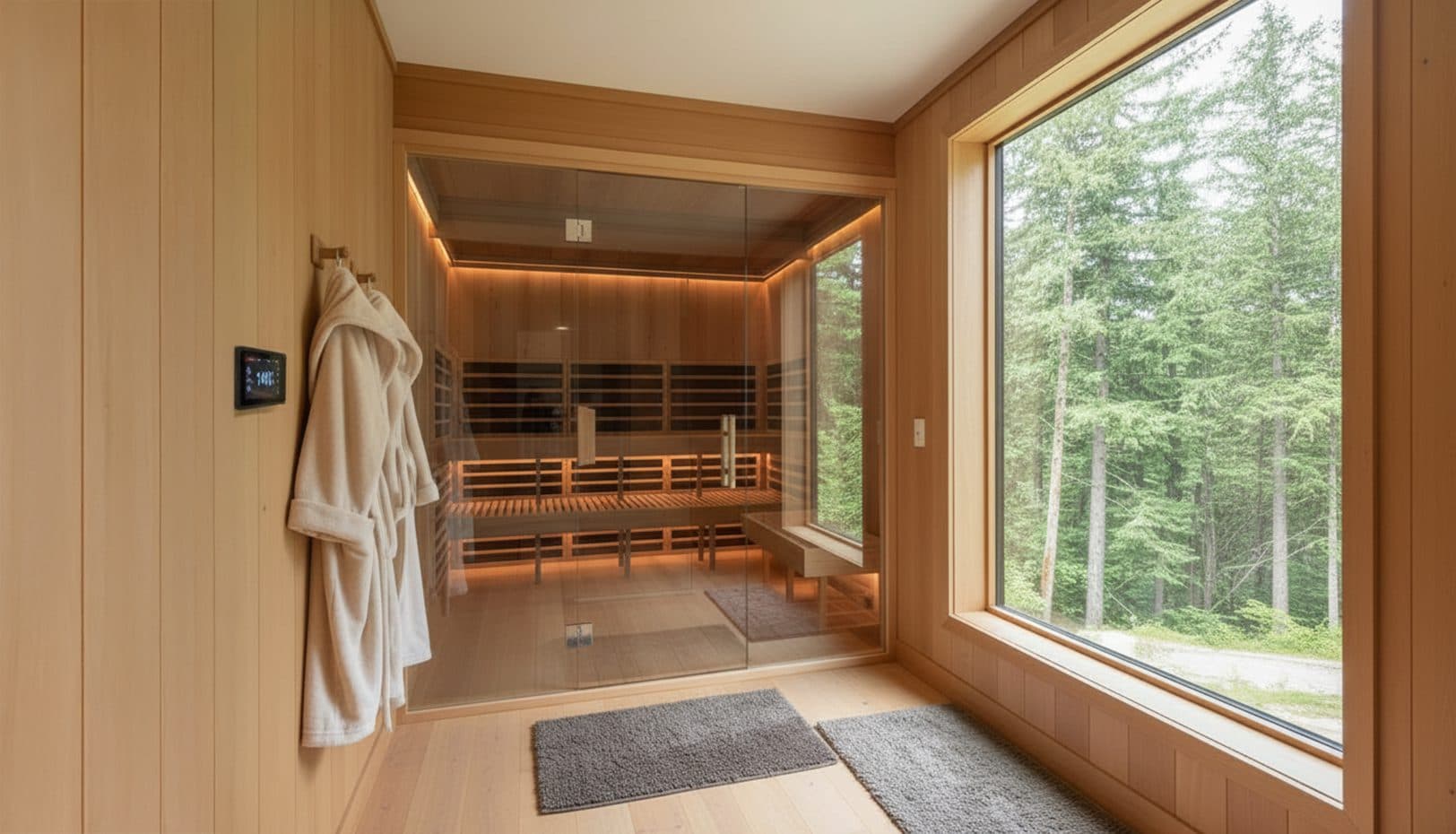
Luxury Home Wellness Rooms: Engineering for Habit, Not Staging
Key Takeaways
- Built-in clinical red light therapy in saunas like the Atlas One requires a precise cellular proximity of 2 to 6 inches to effectively trigger biological photobiomodulation.
- High-performance saunas weighing 725 lbs need early structural load planning and a dedicated 240V, 30-amp hardwired electrical connection before the 7-to-11-week build time.
- Avoid the common showroom trap by prioritizing sequenced zoning, hidden cabinetry storage, and low-elevation, dimmable lighting to naturally activate the body's parasympathetic state of rest.
In This Article
Building a styled workout area that collects dust reveals the tension between design and daily use. In ten years of designing custom wellness spaces, I see clients purchase multiple devices and install high-density equipment displays. This creates cold environments that discourage daily usage and induce mental fatigue.
For lasting restorative habits, focus on sensory-dampened layouts that make daily use seamless. Unlike a clinical or office wellness room that requires sterile, public-minded design, your home space should be a personal, low-friction sanctuary. If you need a space to double as an office or guest retreat, use built-in cabinetry and hidden drawers to keep the room looking like a home while encouraging daily habits.
Build the Room Around One Hero Wellness Piece
Ground your luxury home wellness space around a single, high-performing anchor to define the room's utility and flow.
Elevating recovery with advanced 4D massage mechanisms
If full-body tension or postural stress from a long day at work is your major daily struggle, a professional-grade massage chair is usually a more practical anchor than a collection of scattered micro-tools. When searching for your hero piece, steer clear of chairs that give off a plastic, sweaty "commercial gym" vibe. Look for seating that blends seamlessly into residential interiors while offering advanced modern technology like voice control and precise AI body scanning. Sophisticated chairs utilizing advanced 4D massage mechanisms combined with comprehensive SL-track coverage act as an automated system that maps the body's natural curvature, delivering therapeutic pressure exactly where you need it most.
Passive thermal alignment with therapeutic massage beds
If your physical tension is concentrated in your spine or you require passive traction, a thermal massage bed is the better choice. These systems focus less on muscle compression and more on gentle spinal support and decompression, using far-infrared heat and automated rollers to slowly stretch your vertebrae. Choosing between an automated chair and a passive spinal bed depends on your recovery goals; match the technology to your most persistent physical symptoms.
Design for Calm, Not Display
When you crowd a space with high-density equipment or leave bundles of thick cords lying around, your environment acts as a constant, background cognitive stimulant that blocks your ability to relax.
Prioritize a minimalist, residential aesthetic by opting for high-quality materials and rugs that absorb visual noise. Stick to quiet, layered, and natural color families—warm taupes, raw stone, soft cream, soft charcoal, and muted wood tones. Use high-quality materials and rugs to absorb visual noise. This keeps your eyes from darting around the room, making it easier to step in and switch off.
Prioritize Lighting That Flatters the Body and the Room
Transitioning from a state of high alert to restorative sleep requires a complete shift in the light spectrum surrounding you.
Eliminating overhead glare with low-elevation fixtures
Turn off harsh, recessed ceiling cans entirely. High-temperature blue overhead lights are excellent for focused tasks in a kitchen, but they act as an alert signal that keeps your cortisol levels elevated when you should be prepping for sleep. Layer your lighting by mixing dimmable wall sconces, reading lamps, and concealed low-elevation LED strips. When you're winding down in the evening, use highly warm light temperatures to send a natural rest signal to your nervous system.
Managing natural light with sheer architectural drapery
If you have windows, you don't need to keep them shuttered for privacy. Use textured, floor-to-ceiling linen sheers to soften intense outdoor glare without making your sanctuary feel like a dark, uninviting cave. The sheers diffuse natural light into a soft glow that flatters the raw textures of your interior materials and keeps the vibe grounded.
Create Zones for Different Kinds of Relief
Organize your wellness space as a logical sequence of recovery states rather than a collection of scattered devices.
Implementing sequenced zoning allows you to move effortlessly from an active physical area (like a dedicated yoga mat or functional stretching space) to a deep-decompression zone (like a massage chair, custom infrared sauna, or therapeutic foot therapy corner) without introducing visual noise. You don't need to put up solid walls to define these boundaries. In fact, if you are working with small wellness room ideas, physical barriers will only make the space feel cramped. Use varying rug textures, simple physical screens, or focused local pools of light to separate your active movement spaces from your deep passive unwinding zones.
Add Tactile Comfort That Invites Longer Use
If you select fabrics that are too delicate to handle real-world use—like textiles that get easily ruined by sweat, damp skin post-sauna, or massage oils—you've chosen the wrong finish.
Real utility requires materials that don't need to be babied. Opt for high-density, easily washable performance upholstery, plush wool rugs, and thick, breathable throws. These textures look outstanding in a residential layout, but more importantly, their tactile warmth physically invites you to stay and relax a little bit longer.
Make Technology Feel Invisible
Heavy-duty power cables, complex wires, and plastic power bricks should be masterfully tucked away under the hood or inside cabinetry.
You can still enjoy the benefits of advanced smart integration—such as voice commands or app-based controls—but they must be balanced against clean, raw wood and stone materials. It’s also smart to look at equipment as a long-term investment. True luxury means having a system that runs flawlessly, which is why high-end options include professional white-glove setup, custom structural integration, and long-term warranties that protect you.
Include One Compact Recovery Solution for Everyday Use
To avoid "routine collapse" during busy days, incorporate an accessible, compact recovery tool alongside your primary setup.
Instead, keep a smaller, accessible tool right next to your primary spot. Adding a professional, compact foot massager, smart neck wrap, or heated seat cushion ensures you have a low-friction option. This secondary micro-recovery station strips away any habit friction on hectic days, allowing you to easily complete a 10-minute session and maintain your daily wellness loop when a full-hour ritual is out of the question.
Give the Room Acoustic Softness
Achieve deep physiological rest by prioritizing spatial acoustics to eliminate household echoes.
If possible, tuck your recovery room away from busy areas like the kitchen or hallways, so you don't hear footsteps or clattering plates. Within the room, layer sound-dampening elements: heavy-weight linen drapes, acoustic wall treatments, deep upholstered furniture, and thick wool rugs. Combining these quiet acoustic layers with clean-running equipment, like an Atlas One infrared sauna designed to operate at ultra-low EMF and zero ELF, prepares your sensory environment for immediate, deep parasympathetic activation.
Choose Scent and Air Quality with Restraint
To breathe easy during deep recovery, keep the air clean and highly purified using modern mechanical HEPA filtration.
For fragrance, use restraint. Skip heavy scents entirely for quiet, single-source botanical oils like light eucalyptus or crisp, herbal citrus. This provides a fresh, clean, and authentic sensory backdrop without suffocating a smaller room.
Make Storage Disappear
When planning your wellness room ideas at home, invest in custom, built-in cabinetry that runs flush with your walls.
Deep floor-flush cupboards, custom storage benches, and hidden drawers with integrated wood power outlets are excellent for running and storing high-voltage tool chargers out of sight. This hidden storage is especially critical if you are designing a multi-purpose space—such as a layout that doubles as a high-end guest room—allowing you to wipe away all traces of clinical gear and shift the room's identity instantly.
Let Your Recovery Needs Lead the Design
Before you invest in equipment, take a week to consider your physical pain points so you pick the right tools for your recovery.
Do you deal with targeted lower back stiffness, persistent postural stress from sitting at a desk, or feet that ache after hours of standing? Different physical symptoms require completely different gear. Speak to custom wellness design professionals, like the experts behind advanced curated spaces at Nourest, and physically try high-end equipment when possible. Letting your unique bodily recovery needs lead your floorplan prevents you from creating a stunning room that sits completely unused.
Atlas One Sauna Structural and Layout Integration
Integrating a professional-grade thermotherapy cabin like the Atlas One sauna into your home design is the ultimate path to physical rejuvenation. However, because these systems are engineered to commercial-level standards, placing them in a residential floorplan requires careful structural and electrical preparation before delivery.
The structural engineering realities of a 725 lbs raw cedar footprint
The Atlas One measures 49.5 inches wide, 52.25 inches deep, and 84 inches tall, weighing in at roughly 725 lbs. If you're planning to install this system on a suspended upper floor or a deck, early structural load planning with a licensed contractor is absolutely essential. This substantial weight is a result of its high-performance design, featuring 5.75-inch thick, doubly insulated walls built of solid, untreated, premium Western Red Canadian Cedar. Selecting solid wood over plywood or veneers guarantees long-term durability and remarkable hygroscopic stability, allowing it to withstand major thermal and moisture shifts while naturally resisting mold and bacteria. Because of these thick insulated walls, it can be set up inside your recovery suite or outdoors, showcasing a modern, weather-resistant black cedar exterior.
Electrical infrastructure: Mapping the dedicated 240V, 30-amp pathway
Running a high-capacity heater requires a code-compliant, professional electrical rough-in. The Atlas One has a powerful 6kW heater system operating on a dedicated 240V, 30-amp hardwired connection. Coordinate with a licensed electrician early in your design phase to run the necessary copper lines and safety boxes. Because premium units are built to order and custom-freighted to your door with real white-glove support, expect an 11-week lead time from your design approval to delivery. Plan these physical trades ahead of time so your space is ready when the truck arrives.
VantaWave Far-Infrared Heating Performance
True therapeutic benefit comes from deep, penetrating heat waves that warm your body directly.
This is where high-performance engineering comes into play. Systems like the Atlas One from SaunaCloud utilize Carbon VantaWave heaters, which achieve a safe, uniform peak surface temperature of 190°F to 200°F. Rather than only heating the room, these wavelengths penetrate your tissues to expand blood vessels and prompt a deep, restorative sweat. Because high-performance saunas run on a commercial-grade hardwired design, mapping out a dedicated safety spa disconnect switch in your wall layout is a crucial step to meet building code and keep things running. Ultimately, the intense, even heat calms your central nervous system, and the sharp drop in core body temperature that occurs immediately after a session acts as your body’s natural biological cue to slip into deep, restorative sleep.
Clinical Red Light Therapy Skin-Proximity Setups
For optical cellular therapy to work, we must respect the laws of physics.
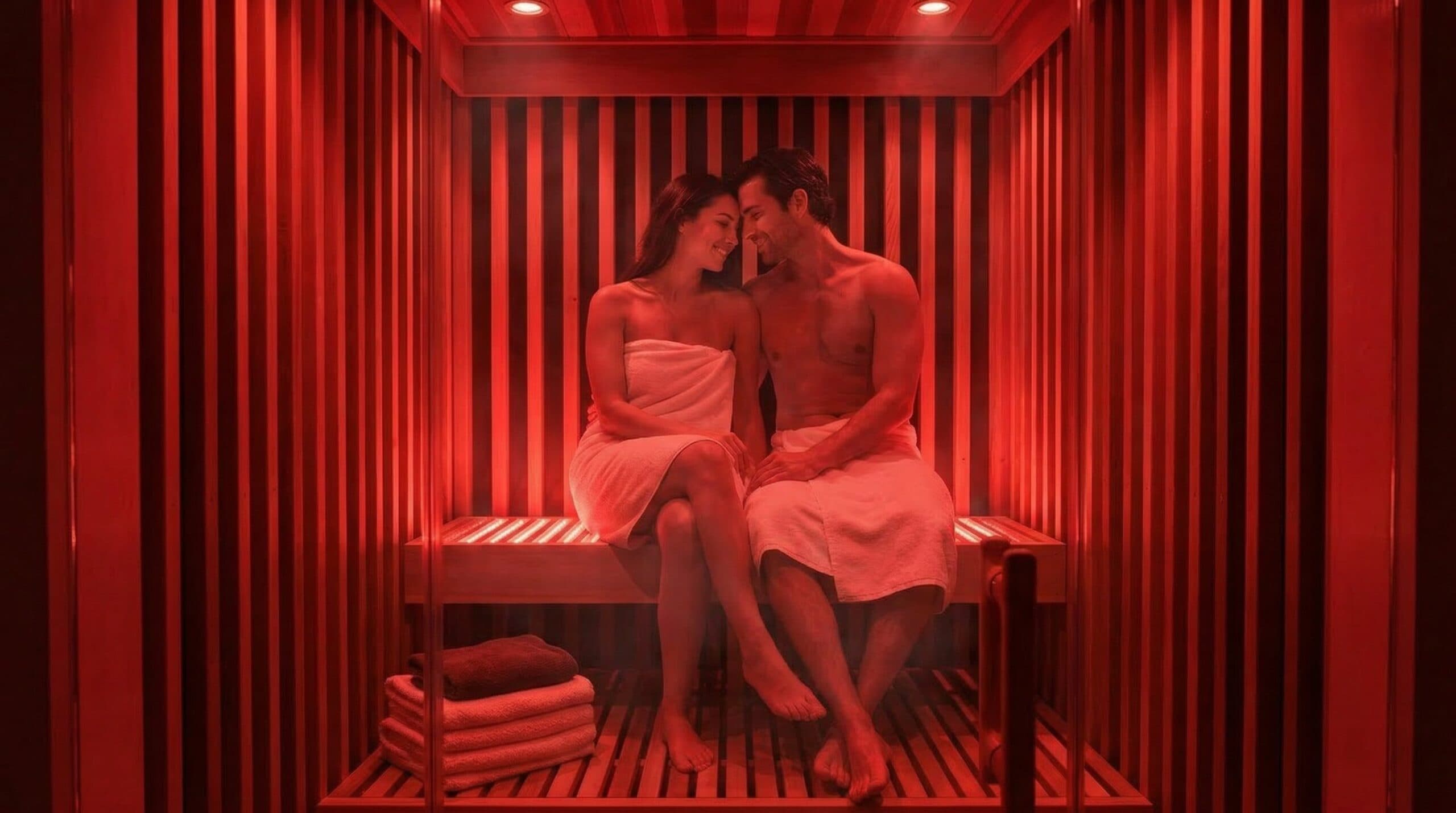
To trigger true photobiomodulation, maintaining an intimate cellular proximity of 2 to 6 inches from the light source is absolutely critical. Once you move a foot or two away from a panel, the light waves disperse so rapidly that they fail to penetrate deeply. This is why bench-integrated LEDs inside a sauna are vastly superior to wall-mounted setups. By positioning medical-grade 660nm red light emitters directly behind your back on a resting bench, you get the optimal dose of red light while you sweat. This 660nm wavelength promotes collagen and tissue repair when positioned 2-6 inches from the skin.
Executing Your Habit-Centric Sanctuary Layout
Build your sanctuary as a low-friction space engineered specifically around your daily biological habits.
By grounding your layout around a high-performance, single recovery anchor—and layering in soft lighting, quiet acoustics, and hidden, clean storage—you turn your room into a sanctuary you'll look forward to using every single day. Because custom high-performance saunas usually take 7 to 11 weeks to build, coordinate early with a pro to prepare your floors and electrical wiring before the sauna arrives.
Frequently Asked Questions
How do I choose between a massage chair and a thermal massage bed for my home wellness room?
The choice depends entirely on your specific physical pain points. A professional-grade massage chair uses 4D mechanisms and AI scanning to target overall muscle tension and postural stress, whereas a thermal massage bed focuses on passive spinal decompression and stretching using infrared heat.
Why is it important to keep red light therapy panels within 2 to 6 inches of my body?
Photobiomodulation relies on light waves that disperse rapidly once they move more than a few inches away from the source. To ensure the light actually penetrates your skin for cellular repair, you must maintain a close, direct proximity between your skin and the emitters.
What electrical requirements do I need for a high-performance home sauna?
Professional-grade saunas, such as those with 6kW heater systems, require a dedicated 240V, 30-amp hardwired electrical connection. You must coordinate with a licensed electrician to install the necessary safety spa disconnect switch during your rough-in phase to ensure the unit is code-compliant.
Is it possible to have a wellness room that doesn't look like a clinical gym?
Yes, by prioritizing a residential aesthetic and using hidden storage, you can keep the space feeling like a sanctuary rather than a cold, commercial facility. Opt for built-in cabinetry to tuck away chargers and cables, and use high-quality materials like linens and wool rugs to absorb visual noise and soften the room's appearance.
How can I organize a small wellness space without creating visual clutter?
Focus on sequenced zoning rather than physical barriers, which can make small rooms feel cramped. Use varied rug textures, low-elevation lighting pools, or simple screens to mentally separate your active stretching areas from your passive decompression zones without blocking sightlines.
Why does overhead lighting ruin the atmosphere of a recovery space?
Harsh, blue-leaning overhead lights act as an alert signal that keeps your cortisol levels high, which is the opposite of the parasympathetic state you want for recovery. To encourage relaxation, replace ceiling-based lighting with low-elevation fixtures, such as dimmable sconces or LED strips, that provide a warmer, softer spectrum.
Do I need to reinforce my floor for a heavy home sauna?
Because high-performance saunas can weigh 725 lbs or more due to thick, insulated cedar walls, structural load planning is essential. If you are placing the unit on a deck or a suspended upper floor, you must consult with a licensed contractor to verify that your flooring can support the weight before delivery.

Founder & Lead Designer, SaunaCloud®
SaunaCloud: 3,000+ installations since 2014 · Author of The Definitive Guide to Infrared Saunas · Featured in Forbes, Inc., and MSN
Christopher designs every SaunaCloud sauna. His work brings the room, heaters, controls and installation plans together so you can review the project before committing. His professional expertise is sauna design and construction, not clinical medicine.
Custom 3D renderings and a proposal in 24-48 hours.
Continue Reading
Ready to Design Your Sauna?
Every project starts with a conversation. Tell us about your space and we'll create your custom plan — free, no obligation.
Custom 3D renderings and a proposal in 24-48 hours.