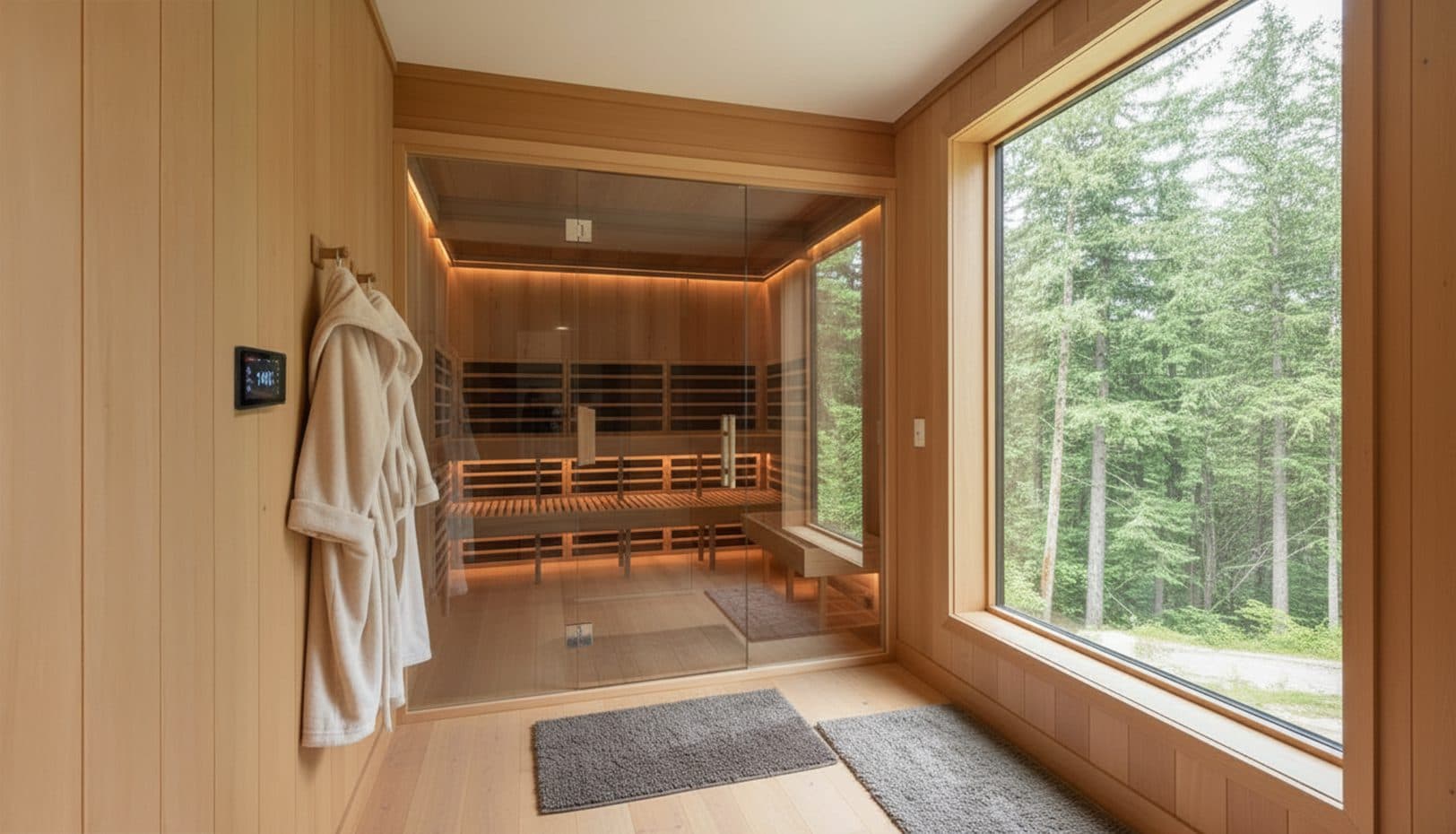
When Did Infrared Saunas Become Popular? The Shift to Home Wellness
Key Takeaways
- Infrared saunas heat the body directly with radiant light at 100°, 150°F rather than heating room air past 200°F, and consumer cabins split into NEAR (700-1200 nm), MID (1400-3000 nm), FAR (3000-1,000,000 nm), or full-spectrum builds.
- Commercial marketing leans heavily on unverified numbers, including claims of 7x detoxification, a 20% toxin sweat ratio compared to 3% in traditional saunas, and an uncited study claiming up to a 40% reduction in all-cause mortality risk.
- Buyers should insist on explicitly labeled low-EMF cabins to avoid high-EMF health risks, keep sessions to 20-45 minutes, and get medical clearance first if they have cardiovascular conditions.
In This Article
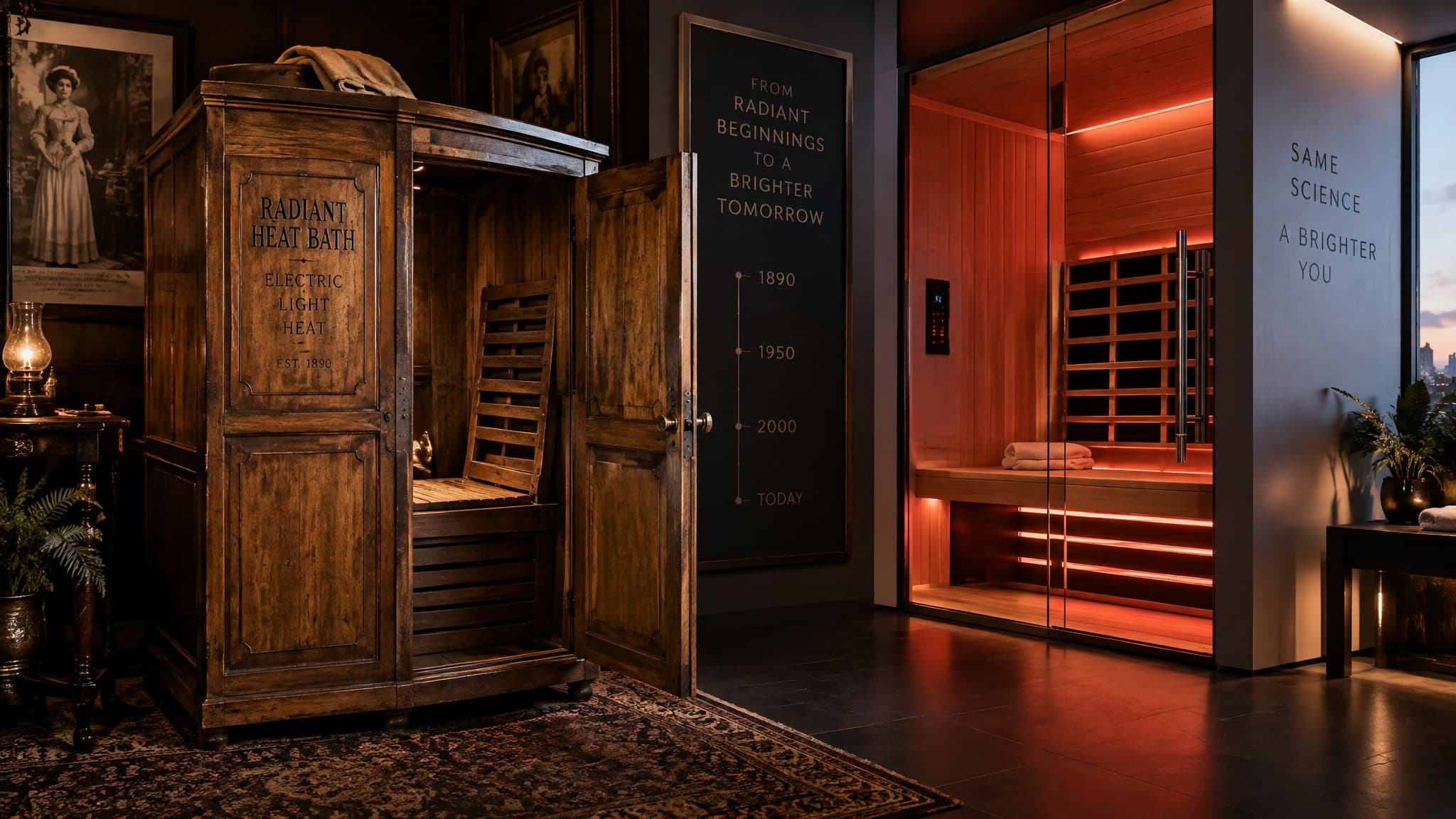
Infrared saunas have no single mainstream breakthrough year; adoption grew gradually as clinical radiant-heat therapy merged with low-EMF home cabin engineering, standard gym memberships, and social media visibility. John Harvey Kellogg built an early precursor in 1891, wiring up an incandescent electric light bath that warmed patients with radiant heat instead of hot air. Anyone who has a fever or is pregnant should avoid using an infrared sauna unless guided by a healthcare professional.
How infrared saunas differ from traditional saunas
Infrared heaters emit infrared light directly onto the body to heat human tissue from the inside at 100°, 150°F, whereas traditional hot-rock or steam saunas heat the surrounding air to well over 200°F. That mechanism gap explains why FLO2S, The FIT Partnership, and The Manual (which published its guide on August 22, 2023) treat the two setups as fundamentally different hardware. Traditional boxes cook the air first, which can feel unbearably hot and difficult to breathe in after a few minutes.
Infrared light skips the air and warms the skin directly with radiant warmth, feeling like lying in the sun on a warm day. Because that direct heat warms the body rather than the surrounding air, users sweat more at much lower ambient temperatures, making a 20-to-45-minute home session comfortable instead of an endurance test. The build economics shift too: consumer infrared sauna installations typically run $2,000 to $10,000 with simpler setup, while traditional sauna builds start at $10,000 and up, though installation prices vary by build.
When did infrared saunas become popular? The mainstream moment
Infrared saunas gained mainstream popularity in recent years as they evolved from traditional sauna practices into a more advanced, comfortable alternative to 200°F+ steam rooms. They entered the commercial and home wellness market after social media, celebrity and influencer endorsements, and gym adoption brought modern infrared cabins into everyday recovery routines. For example, The FIT Partnership bundles infrared sauna access directly into its Level Up and F4F membership packages, where studio manager Gary notes that the cabins help members reach their health goals in a way that's both relaxing and effective.
Social media and biohacking culture turned that hardware upgrade into a household staple. Celebrities, athletes, and wellness influencers began posting their post-workout and recovery sessions, giving wood-lined cabins the same visibility as cold plunges and wearable trackers. Once wellness centers and neighborhood gyms started installing cabins as standard recovery gear rather than spa novelties, buyers started looking for ways to put the same setup in a spare bedroom or garage.
NEAR, MID, and FAR infrared: the three devices sharing one name
An infrared sauna is a radiant-heat cabin built around one or more of three distinct light wavelength bands: NEAR infrared (700-1200 nanometers), MID infrared (1400-3000 nanometers), and FAR infrared (3000-1,000,000 nanometers). While a general infrared sauna might use only a single band or combine all three, the exact nanometer range dictates how deeply the light penetrates human tissue and what the hardware actually targets. NEAR infrared penetrates just under the epidermis and sees documented clinical use for wound healing and pain management, whereas MID reaches deeper into soft tissue to boost blood flow and FAR acts as the primary thermal workhorse for heavy sweating.
| Band | Wavelength Range | Penetration Depth | Primary Targeted Use |
|---|---|---|---|
| NEAR Infrared | 700-1200 nm | Just under the epidermis | Clinical wound healing and pain management; presumed cellular regeneration, skin appearance, anti-aging, and immunity |
| MID Infrared | 1400-3000 nm | Moderate penetration (raises core temperature to induce sweating) | Increasing blood circulation and reducing inflammation and chronic pain |
| FAR Infrared | 3000-1,000,000 nm | Primarily skin surface (despite conflicting deep-penetration claims) | Promoting heavy sweating and detoxification |
| Full-Spectrum | 700-1,000,000 nm (NEAR, MID, and FAR combined) | Just under the epidermis through moderate tissue depth | Combined wound healing, circulation support, pain relief, and core-heating sweat sessions |
NEAR infrared (700-1200 nm)
NEAR infrared sits at the shortest end of the infrared spectrum, spanning 700-1200 nm. Because those shorter waves stop just beneath the epidermis, NEAR is the band with an actual medical footprint for localized wound healing and pain management. In consumer wellness, NEAR wavelengths are also presumed to support cellular regeneration, skin appearance, anti-aging, immunity, and muscle or joint pain relief. The catch is that few clinical studies exist for those broader beauty and immunity pitches, leaving many online claims without scientific proof. Dedicated NEAR-only saunas are rare on the market; builders almost always pair NEAR emitters with MID or FAR panels.
MID infrared (1400-3000 nm)
MID infrared covers the 1400-3000 nm range, acting as the structural middle ground between shallow NEAR light and long-wave FAR heat. It achieves moderate tissue penetration and pushes core body temperature up enough to trigger a solid sweat. Hardware tuned to the MID band targets stronger blood flow while easing chronic pain and inflammation, delivering benefits similar to NEAR saunas but with a stronger effect on deeper muscle and joint tissue.
FAR infrared (3000-1,000,000 nm)
FAR infrared spans the 3000-1,000,000 nm band and serves as the backbone of most commercial cabins. It's the most studied of the three wavelength bands and the one many doctors endorse for general wellness, relaxation, detoxification, and clearer skin for acne-prone users. It also highlights how sloppy spec-sheet copy can get: The Manual's breakdown of FAR infrared states that FAR wavelengths primarily heat the surface of the skin to drive sweating, while simultaneously claiming that FAR penetrates deeply for maximum detoxification.
Full-spectrum infrared saunas
Full-spectrum infrared saunas combine NEAR, MID, and FAR emitters inside a single cabin so the user gets all three wavelength bands at once. Instead of picking between shallow epidermal light and heavy thermal sweating, a full-spectrum rig runs the entire 700 to 1,000,000 nanometer spread in one session.
Clinical roots versus wellness marketing: what the claims rest on
Infrared sauna sessions are claimed to lower cortisol for stress relief, support collagen production to reduce acne and wrinkles, and promote weight loss by raising the body's metabolic rate so a single session burns calories comparable to moderate exercise. Proponents argue that because radiant heat raises core body temperature, users sweat at a cellular level, stimulating the cardiovascular system much like a workout even though specific therapeutic outcomes are still being researched and individual results vary.
Consumer demand usually clusters around six marketed benefit categories:
- Detoxification: Flushing toxins stored in fat cells out through sweat.
- Weight loss: Elevating metabolic rate to burn calories at a pace comparable to moderate exercise.
- Improved circulation: Stimulating blood flow to nourish muscles and soft tissues.
- Pain relief: Relaxing tight muscles and reducing inflammation for conditions such as arthritis.
- Skin health: Boosting collagen production while minimizing wrinkles and acne.
- Stress relief: Dropping levels of cortisol, the body's primary stress hormone.
Marketing copy frequently blurs the hardware boundaries behind those six buckets. A localized FAR Biomat, a non-thermal red light photobiomodulation panel, and a traditional hot-rock sauna all use infrared associations in their promotional material, yet each device delivers a completely different physiological input.
The numbers behind the boom, and where they come from
When comparing infrared saunas to traditional saunas for detoxification, vendor-style marketing claims state that infrared saunas are up to seven times more effective at detoxification by helping eliminate toxins stored in fat cells via sweating, alongside marketing claims that infrared sauna sweat is 20% toxins and 80% water versus 3% toxins and 97% water from a traditional sauna. Both marketing claims lack independent verification, and the 20% toxin sweat composition figure is physiologically implausible. On the longevity side, the opening of The Manual's explainer cites a study showing that frequent sauna sessions reduced all-cause mortality risk by up to 40%, but it supplies no authors, publication year, or sample population, plausibly referring to Finnish cohort studies on traditional hot-air saunas rather than infrared cabins.
If you spend enough time reading wellness hardware pages, you start to recognize how a stray number turns into industry lore. A real clinical citation lets you trace the data: it names the researchers, the year the paper cleared peer review, the exact sample size, and the thermal protocol the participants actually sat through. When a vendor promises that your sweat suddenly shifts from 97% water to 80% water and 20% pure cellular sludge just because the heat arrived via light waves instead of steam, you're looking at a marketing copywriter riffing on the phrase "sweating at a cellular level," not a lab assay.
The 40% all-cause mortality stat is a classic case of category cross-wiring. Traditional Finnish saunas have decades of large-scale population research behind them, whereas the clinical evidence base for FAR infrared cabins is much thinner. When an uncited mortality figure gets pasted onto an infrared buyer's guide, readers end up attributing decades of 200°F hot-rock epidemiological data to a 130°F living-room cabin.
None of that means infrared cabins don't feel great or help you unwind after lifting weights. It just means that when you weigh a $2,000 to $10,000 home unit against a basic gym membership, you should buy the cabin for how radiant warmth actually feels and performs, not because a brochure promised seven-times-faster toxin math.
From clinic to living room: the home-cabin evolution
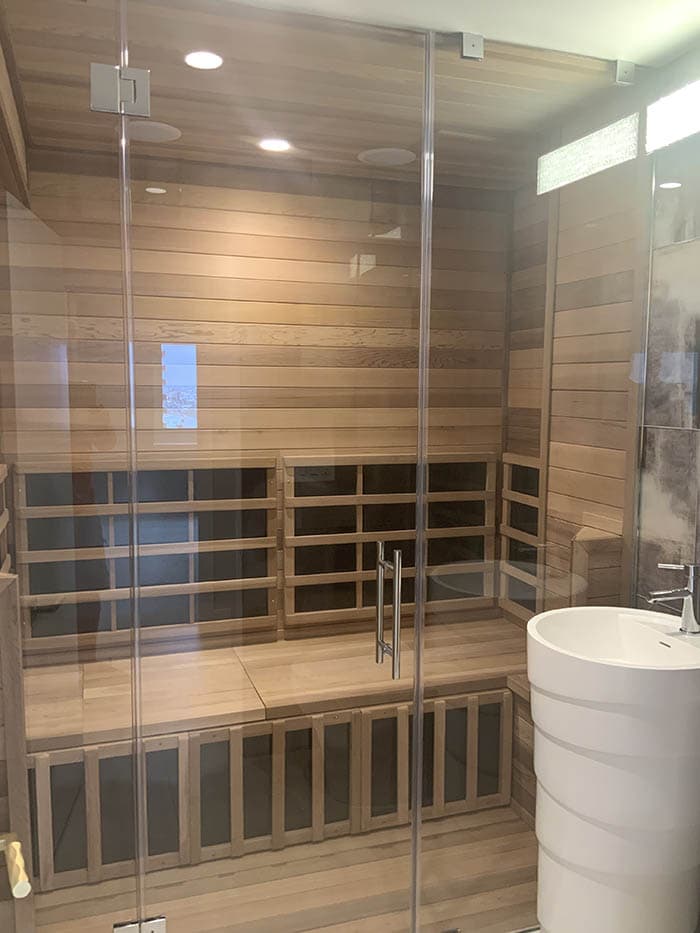
High electric and magnetic field (EMF) saunas carry associated health risks, making low-EMF engineering the primary safety requirement for home buyers: if a product listing doesn't explicitly state that the cabin is low-EMF, it's almost certainly high-EMF. Moving century-old radiant heat technology out of clinics and into spare bedrooms meant solving both electrical shielding and cabinet layout. Consumer hardware ranges from compact one-person pods to multi-person wood-lined cabins with heaters positioned around the bench for even heat distribution. Across more than 3,000 installations in homes, clinics, and wellness centers in North America since SaunaCloud was founded in California in 2014, our engineering approach has centered on pairing handcrafted natural cedar interiors and integrated red light systems with proprietary low-EMF VantaWave heaters rather than relying on unshielded mass-market import panels.
The next wave of cabin hardware is pushing toward customizable light wavelengths, app-controlled session settings, and tighter energy efficiency. In parallel, clinical researchers are actively investigating how infrared sessions affect heart health and recovery in neurological conditions.
Safety profile: the hidden cost of gentle heat
No, if you've got a cardiovascular condition, don't make infrared sessions a habit without clearing it with your doctor first, and anyone who has a fever or is pregnant should avoid infrared sessions entirely unless guided by a medical professional. While infrared cabins are generally considered safe for most people as a gentle way to sweat, a 2018 systematic review warns that infrared heat still carries real risks of overheating, dehydration, heat exhaustion, and heat stroke.
Because a 100°, 150°F cabin lacks the immediate lung-searing bite of a 200°F steam room, the failure mode shifts from ambient temperature to session duration and frequency. It's easy to feel comfortable enough to stay inside too long or run back-to-back sessions without recovering. Mild dehydration and dizziness are the most common side effects, while heat exhaustion shows up uncommonly when users push session length or frequency too hard. Drink plenty of water, skip alcohol beforehand, and step out of the cabin immediately if you feel dizzy, short of breath, or unwell.
Matching the wavelength to the goal: a wavelength-first buying framework
A typical infrared sauna session lasts 20 to 45 minutes, starting with shorter beginner sessions and ramping up gradually as your body adapts, studios like The FIT Partnership and protocols cited by Ivanhoe run 40-minute sessions. Match the cabin's emitter wavelength directly to your primary goal by choosing NEAR (700-1200 nm) for skin and localized tissue healing, MID (1400-3000 nm) for circulation and chronic pain, FAR (3000-1,000,000 nm) for heavy sweating, or full-spectrum for all three; if your real target is non-thermal cellular photobiomodulation or localized FAR heat from a Biomat, a full cabin is an add-on rather than a direct replacement.
Frequently Asked Questions
What is the difference between infrared and NEAR infrared saunas?
A general infrared sauna can run on any combination of NEAR (700-1200 nm), MID (1400-3000 nm), or FAR (3000-1,000,000 nm) light waves, with most commercial cabins relying on FAR emitters to drive heavy sweating. NEAR infrared uses the shortest wavelengths to stop just beneath the epidermis, where it has an actual medical footprint for localized wound healing and pain management. Because standalone NEAR cabins are rare, builders usually pair NEAR emitters with MID or FAR panels in a full-spectrum setup.
Are infrared saunas safe for people with cardiovascular issues?
No, if you have a cardiovascular condition, you should not use an infrared cabin regularly without getting clearance from a healthcare provider first. Anyone who is pregnant or running a fever should also skip sessions entirely unless directed by a doctor. Even at a gentle 100° to 150°F, radiant heat pushes up your core temperature and stimulates your cardiovascular system, carrying real risks of dehydration, dizziness, overheating, and heat stroke.
What are the health benefits of infrared saunas for stress and skin health?
Sessions are widely used to unwind and lower levels of cortisol, your body's primary stress hormone. On the skin side, infrared heat is marketed to boost collagen production and minimize wrinkles, while doctors frequently endorse FAR wavelengths to help clear acne-prone skin. Just keep in mind that while NEAR wavelengths have clinical backing for localized wound healing, broader anti-aging and beauty claims still have very few clinical studies behind them.
What is the best way to use an infrared sauna for weight loss?
Weight-loss protocols rely on radiant heat to raise your core body temperature and elevate your metabolic rate, burning calories at a pace comparable to moderate exercise. To get that core-heating sweat response, use a cabin with MID (1400-3000 nm) or FAR (3000-1,000,000 nm) emitters and work your way up from short introductory sits to 20-to-45-minute sessions. Always hydrate well, skip alcohol beforehand, and step out immediately if you feel dizzy or unwell.
What are the risks of using high EMF saunas at home?
High electric and magnetic field (EMF) exposure carries associated health risks, making low-EMF engineering the number-one safety priority when shopping for a home cabin. If a vendor's spec sheet doesn't explicitly state that the unit is low-EMF, you can safely assume it is a high-EMF build. Across more than 3,000 installations in North America since we founded SaunaCloud in California in 2014, we have paired proprietary low-EMF VantaWave heaters with natural cedar interiors specifically to avoid the unshielded import panels common on the mass market.

Founder & Lead Designer, SaunaCloud®
SaunaCloud: 3,000+ installations since 2014 · Author of The Definitive Guide to Infrared Saunas · Featured in Forbes, Inc., and MSN
Christopher designs every SaunaCloud sauna. His work brings the room, heaters, controls and installation plans together so you can review the project before committing. His professional expertise is sauna design and construction, not clinical medicine.
Custom 3D renderings and a proposal in 24-48 hours.
Ready to Design Your Sauna?
Every project starts with a conversation. Tell us about your space and we'll create your custom plan — free, no obligation.
Custom 3D renderings and a proposal in 24-48 hours.