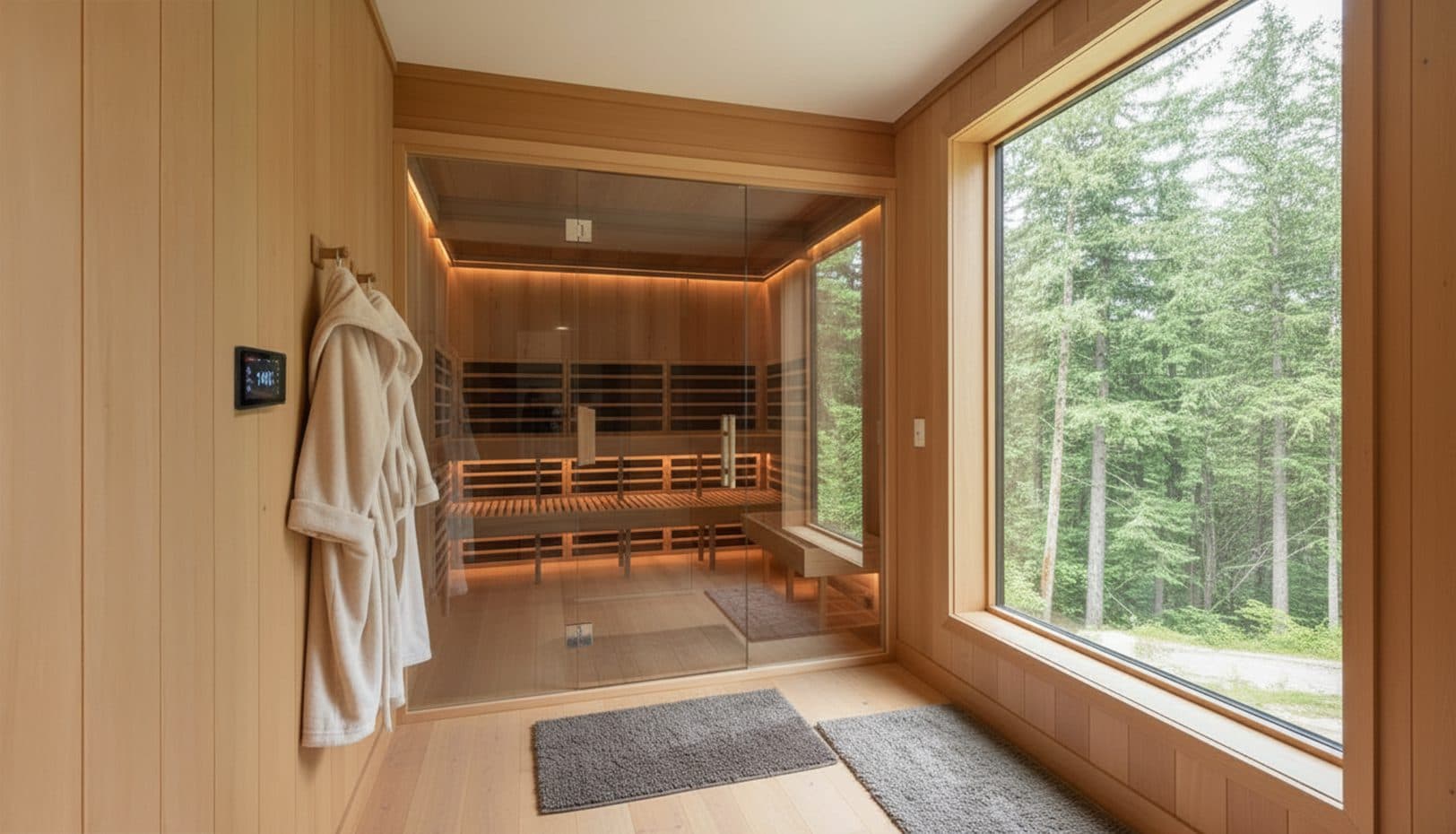
History of the Finnish Sauna: From 7000 B.C. Pits to Modern Culture
Key Takeaways
- Archaeological pit-structure precursors in Finland date to 7000 B.C., while the continuous Finnish smoke sauna (savusauna) tradition began around the fifth century and was first described in writing in 1112 AD.
- A traditional savusauna takes 6 to 8 hours of wood-burning to heat a ton-plus kiuas stone stove and log thermal mass for up to 12 hours of radiant heat, whereas a modern electric sauna warms up in 30 minutes and cools in 10.
- The Kuopio Ischemic Heart Disease Risk Factor Study tracked 2,315 middle-aged Finnish men over 20 years and found that 4 to 7 sauna sessions per week correlated with roughly 50% lower risk of fatal cardiovascular disease.
In This Article
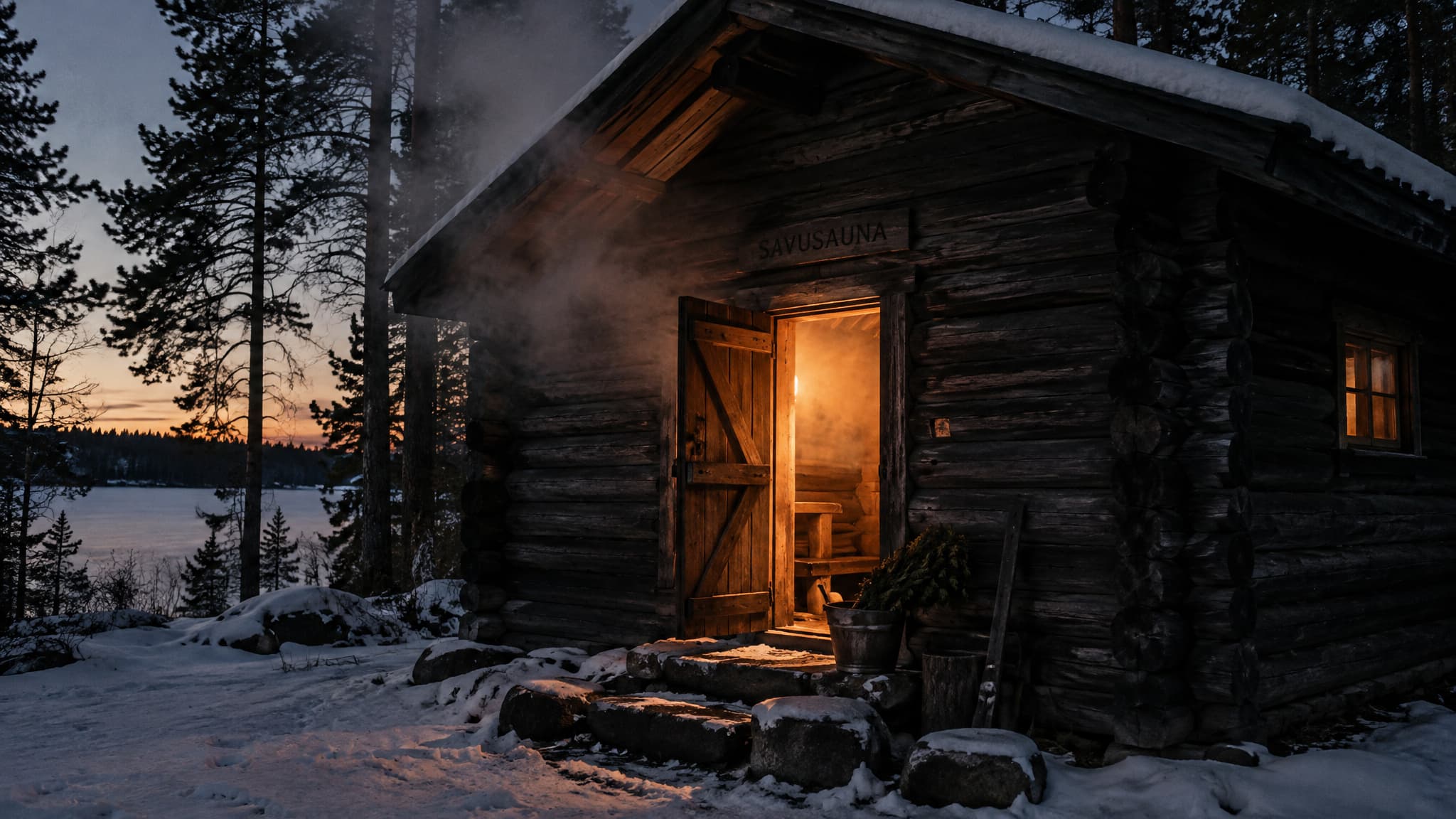
Search for the history of the Finnish sauna and you'll hit two conflicting origin dates: 7000 B.C. and the fifth century. Both are accurate because they measure different stages of the same build: 7000 B.C. marks archaeological pit-sauna precursors in the earth, while the fifth century marks the continuous, recognizable Finnish smoke sauna tradition. That traditional savusauna (smoke sauna) burned wood for 6 to 8 hours so its stones, log walls, and floor radiated heat for up to 12 hours, while wood-smoke phenols sterilized the room like hospital-grade antiseptics.
Who invented the sauna?
No single inventor or civilization can claim the sauna, because heat bathing emerged independently across continents under different names. Finland simply maintains the longest continuous build streak: over 7,000 years connecting Stone Age ground pits to modern national infrastructure. While parallel cultures developed the Russian banya, the Ottoman hammam, the Mayan temazcal, and Japanese cave baths, the Finns preserved an unbroken architectural and cultural streak that gave the world the word sauna itself.
Think of heat bathing like convergent evolution in software architecture: disconnected teams on different continents kept solving the same thermal problem with local hardware. As reported by Clare Dowdy at BBC Culture and Smithsonian, those parallel traditions took distinct regional forms:
- Russian banya: A parallel steam-bath tradition built around high humidity and communal bathing.
- Ottoman hammam: Steam-bathing complexes rooted in the ancient Islamic world.
- Mayan temazcal: Sweat lodges built across indigenous Mexico and Central America.
- Japanese mushi-buro and kama-buro: Natural caves first used as sweat baths that evolved into temple bathhouses.
- British and Irish Bronze Age sweat houses: Prehistoric stone sweat structures unearthed across the UK and Ireland.
- Native American sweat lodges: Ceremonial structures across indigenous North America that a Harvard University study notes centered on spiritual preparation and purification rites.
Across early Northern European builds, the core operating loop was simple and brute-force: burn wood for hours to heat a pile of stones, extinguish the fire, clear the smoke, and bathe in the residual radiant heat and steam.
Even the name encodes the original hardware spec. The Finnish word sauna (pronounced "SAUW-na" in official Finnish) is thought to derive from the Sámi word soudnje, meaning "pit in the ground." Long before anyone framed cedar walls or wired a digital thermostat, the name itself was a literal pointer to an excavated hole in the dirt.
Where did the sauna originate?
The sauna originated in Finland, where archaeological evidence shows pit-structure precursors as early as 7000 B.C., with roots thought to go back roughly 10,000 years. These earliest saunas were simple Stone Age pits dug into the ground or embankments and heated by throwing water on fire-hot stones. Reconciling the timeline is straightforward: 7000 B.C. dates those primitive pit precursors, whereas the fifth century marks the start of the continuous, recognizable Finnish smoke sauna tradition.
The 7000 B.C. pit sauna
The first-generation build was pure earthworks. Bathers dug a pit into the ground or a hillside, heated stones at the bottom over a fire, and covered the opening with wattle, thatch, peat, or animal skins before throwing water on the rocks to generate steam. Over millennia, these pits evolved into smoke-filled huts and eventually above-ground wooden rooms.
The fifth century and the first written record
Around the fifth century, the recognizable Finnish savusauna appeared as sweat baths dug into hillsides, where a wood fireplace heated stones and vented smoke out the door before bathers entered. The tradition ran for centuries before the first written description of a Finnish sauna appeared in 1112 AD.
Inside the savusauna: how the original sauna was built
A traditional Finnish savusauna is a small, chimney-less log cabin built around a central kiuas (a massive pile of fieldstones stacked over a firebox) that requires a 6-to-8-hour wood burn and a soot-clearing steam blast before anyone can step inside. Dedicated log savusauna structures appeared around 1000 CE and remained the standard across Finland and the Baltics until the 1930s.
The kiuas stone stove
The kiuas sometimes weighs over a ton. It looks crude, just large fieldstones stacked directly over a firebox with no flue, but that stone mass absorbs the fire's energy and drives the entire smoke sauna heating cycle.
The 6-8 hour burn and 12-hour heat battery
People encountering a traditional smoke sauna for the first time typically assume you light a fire, wait briefly, and step inside, and they're surprised to learn the fire must be completely out before bathing begins. Hosts start the burn 6 to 8 hours ahead while smoke fills the room. Once the fire dies, bathers perform the hakalöyly ritual, throwing water on the stones to blast out residual soot, then vent the room to enjoy up to 12 hours of passive heat retention at 70 to 90°C (158 to 194°F).
Materials and radiant heat
Built with thick Nordic spruce or cedar walls, a low ceiling, a single door, and stepped benches, the savusauna pairs high thermal mass with long heat retention. Stones, walls, and floor store energy and radiate it evenly. Modern wood-heated stoves with chimneys are slower than electric heaters, but they come far closer to that deep savusauna feel than any gym sauna.
Löyly, smoke chemistry and the vihta ritual
The soot-blackened savusauna was the most sterile room on the farm because wood smoke carries antimicrobial phenols in the same chemical class as hospital-grade antiseptics. Burning birch at low temperatures coats surfaces in guaiacol, syringol, and cresol, while the Swedish-Finn Historical Society confirmed the smoke's tannic acid sterilized the room and preserved the wood so a 50-year-old savusauna was structurally stronger than when built. Inside, bathers cast water onto heated stones to release löyly, the steam and spirit at the heart of the sauna.
Enthusiasts say a smoke sauna produces softer, deeper löyly than modern units. On special occasions, bathers also gently strike their skin with a vihta (bundled birch branches) to relax muscles, perk up skin, and relieve mosquito bites. As Harvey Barberg, former president of the Cokato Finnish-American Historical Society, explained, the vihta releases leaf resins and increases circulation.
Why the sauna was a sacred space in Finnish culture
Traditional Finnish culture treated the sauna as a sacred space, framed in UNESCO's nomination text as a "church of nature" for cleansing body and mind, because it united elemental worship, ancestral folklore, and life-or-death healing rituals under one roof. Ancient Finns worshipped the four elements (air, water, fire, and earth) inside a room that served as a microcosm of three cosmic levels: the sky world, Earth, and the underworld. Folklorist Dalva Lamminmäki notes that the sauna functioned as a liminal place between this world and the other world.
Etiquette inside was strict: calm, quiet, and respectful. A Swedish economist observed in 1776 that Finns treated the sauna like a shrine, and folklore enforced that peace through the Saunatonttu, a one-eyed guardian sauna elf who checked that bathers and children behaved properly. Sauna mythology also runs through runic songs and the Kalevala (Finland's national epic), with gods and goddesses carved into sauna doors and windows. In 1890, Finland declared folk healing illegal, driving supernatural sauna practices underground where elderly female bathers secretly kept the healing wisdom alive.
The sauna as everyday infrastructure
Once freestanding, ventilated wooden saunas replaced earth pits, the room became the ultimate domestic multi-tool and social equalizer.
Birth, healing and the multi-purpose sauna
Families used the sauna for the weekly Sabbath wash that marked the change of week, cooking, smoking meat, drying flax, rye, grain, and fishing nets, malting barley, making soap, laundry, pre-shrinking wool, sleeping, and secret meetings. Because the smoke-sterilized room was clean and warm, it doubled as an infirmary for bloodletting, cupping, minor operations, washing the dead before burial, and childbirth. A century ago, 95% of Finnish childbirths occurred in the home sauna, and most Finns still have their first sauna experience as babies. An old proverb sums up its medical authority: Jos ei viina, terva, tai sauna auta, tauti on kuolemaksi (if liquor, tar, or the sauna can't help, the disease is fatal).
A classless space
Naked on the same benches, bathers shed all social pretenses. Lamminmäki points out that the space welcomes all genders, sexualities, bodies, ages, and life situations, hosting courtship, politics, and business meetings on the premise that important decisions are made in the sauna.
Sauna-first settlement and the WWII field manual
Yes, Finnish soldiers built saunas during World War II: a Finnish military field manual required an 8-hour break for a battalion to build, warm, and bathe in saunas, and Finnish peacekeepers in Eritrea likewise erected a sauna among their very first buildings. Civilian settlers followed the same sauna-first homestead rule, building the sauna before the main house to live, cook, and sleep in because "you can use the sauna for everything, but not the house."
Finnish saunas in Minnesota: the 1860s diaspora
Finnish immigrants brought saunas to Minnesota in the 1860s by choosing a climate that felt like home and immediately applying their traditional homesteading sequence: build the sauna first as temporary shelter, bathhouse, and gathering space while constructing the main farmhouse.
The 1868 Barberg-Selvälä-Salmonson Sauna
Built in 1868 in Cokato Township per the Minnesota Historical Society and preserved at Finnish Pioneer Park at over 155 years old, the Barberg-Selvälä-Salmonson Sauna is a 10-by-12-foot smoke sauna that Harvey Barberg describes as possibly the oldest standing smoke sauna in the United States. Heating it to 180°F (82°C) took all Saturday, and its builders used dovetail log corners that drained water without rotting the wood.
The 1885 nudity lawsuit
In 1885, Cokato township officials sued to tear the sauna down after neighbors complained about Finns cooling off outdoors unclothed. The Selvala family countersued, won $30 in damages, and later moved the structure while adding a dressing room.
Cokato, 'Sauna City'
As CBS Minnesota's Finding Minnesota reported in 2023, Cokato is known as "Sauna City." Sauna 360, a manufacturer partially based in Finland, builds and sells saunas there; as Matt Bergstrom put it, Cokato is sauna central for probably the whole U.S.
From smoke sauna to electric heater: the modernization tradeoff
A savusauna is a chimney-less smoke sauna heated by a massive stone stove over 6 to 8 hours, whereas a modern electric sauna heats in about 30 minutes, trading high-mass radiant heat and self-preserving smoke chemistry for push-button urban speed. Wood-burning stoves with chimneys became common by the 20th century, followed by electric heaters introduced after World War II to fit urban apartments. While a savusauna holds radiant heat for up to 12 hours and strengthens its timbers with phenolic soot over 50 years, a modern electric sauna cools in 10 minutes, begins degrading within a decade, and requires chemical treatment to stay sanitary.
Electric convenience: 30 minutes versus 8 hours
First-time home sauna buyers typically encounter electric and infrared models first and only later discover the smoke-sauna lineage, creating an expectation gap between fast-heating modern convenience and the slow, high-mass traditional ritual. Pairing an electric heater with a 30-minute warm-up solved the weeknight scheduling problem, since nobody in a city apartment has 8 hours to tend a birch fire before dinner.
| Feature / Spec | Traditional Smoke Sauna (Savusauna) | Modern Electric Sauna | Modern Infrared Cabin |
|---|---|---|---|
| Warm-up time | 6-8 hours | About 30 minutes | Fast (direct emitter heating) |
| Heat retention | Up to 12 hours | About 10 minutes | Minimal (heats body directly) |
| Uses kiuas stone mass & löyly steam | Yes (ton-plus fieldstone stove) | Yes (stones on electric stove) | No (uses infrared emitters) |
| Self-sterilizing smoke phenols | Yes (guaiacol, syringol, cresol, tannins) | No (requires chemical sanitation) | No (requires manual cleaning) |
| Included in UNESCO 2020 inscription | Yes (no hierarchy among forms) | Yes (no hierarchy among forms) | Yes (no hierarchy among forms) |
Infrared: divergence from the löyly tradition
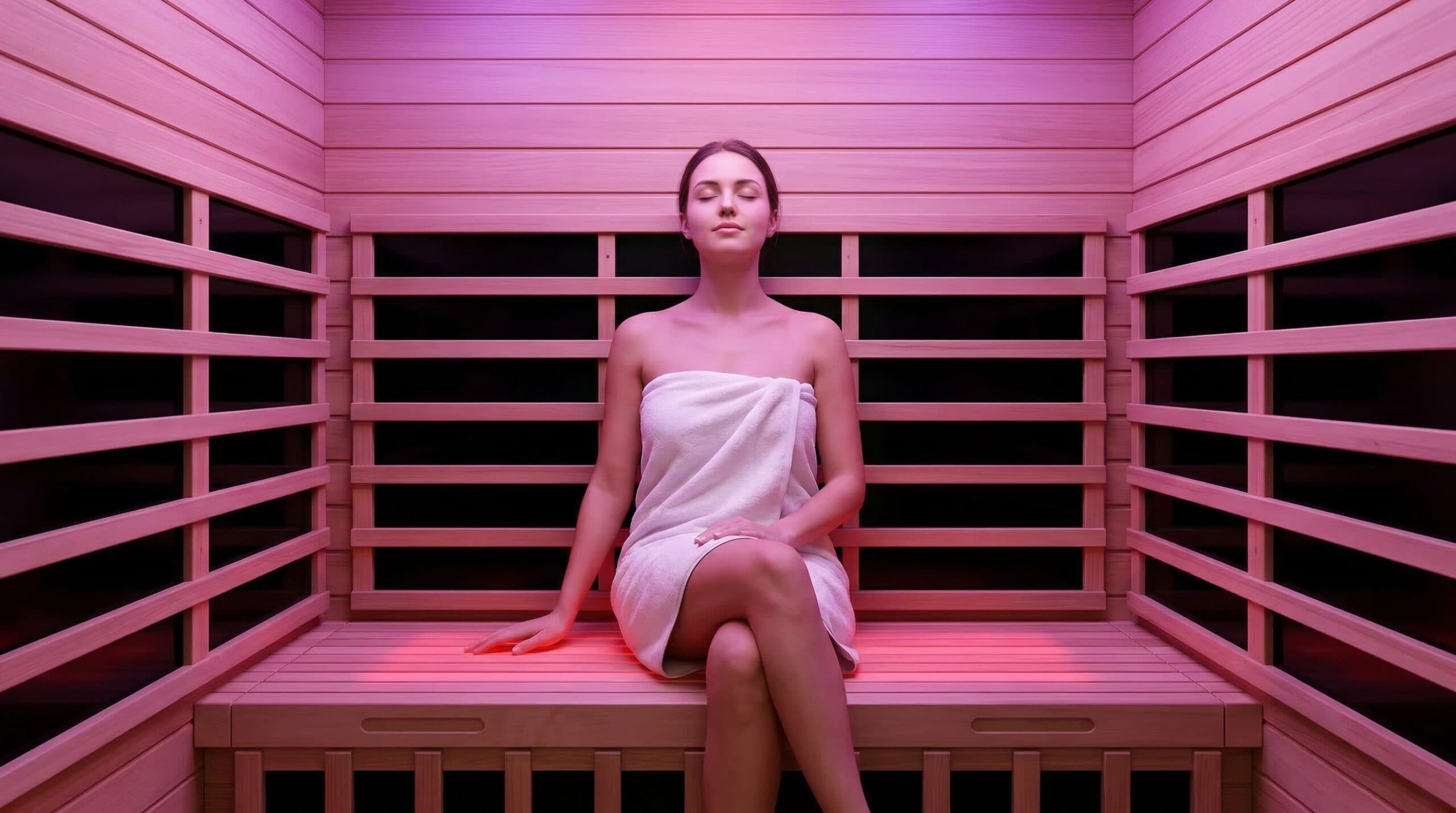
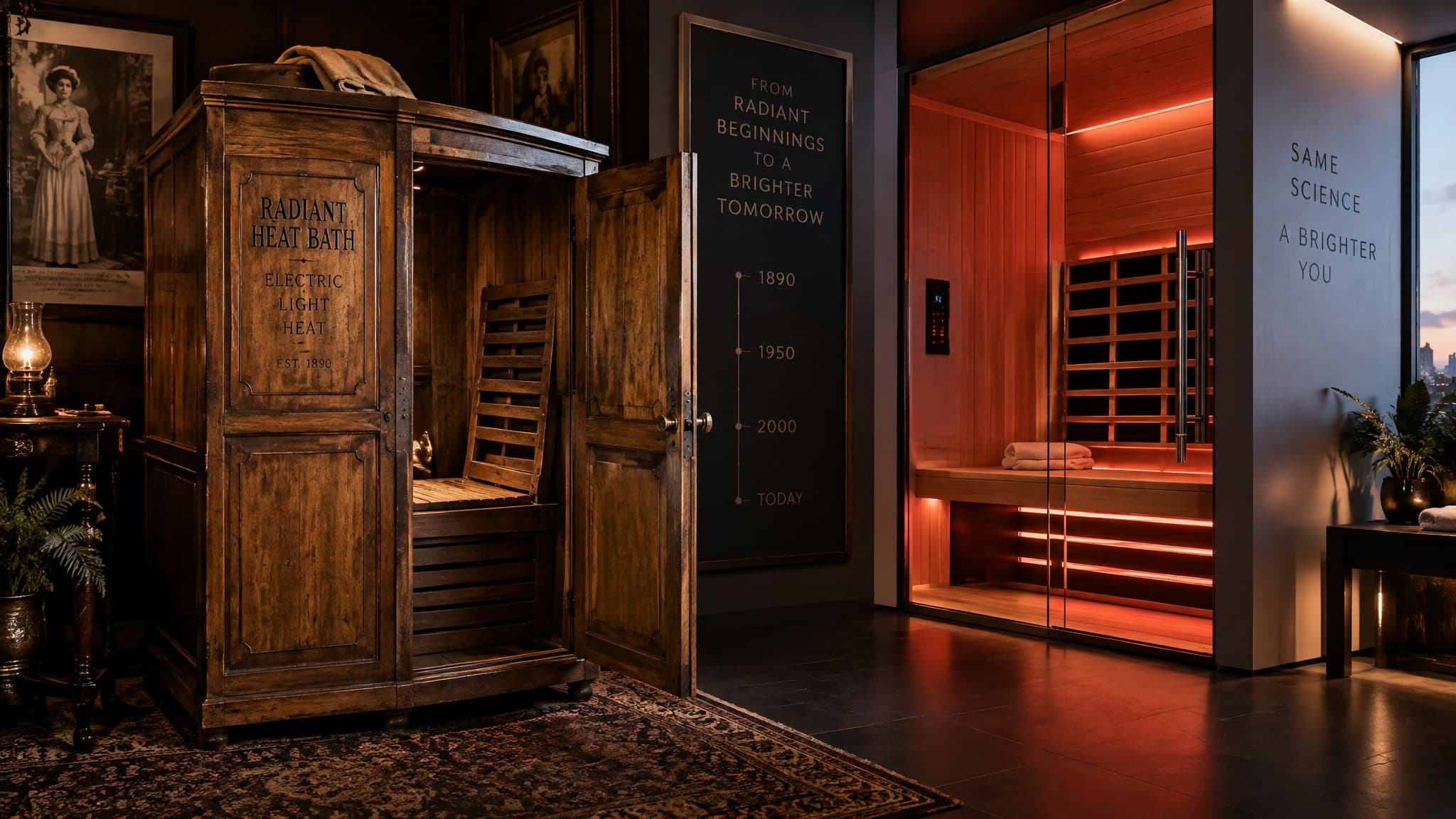
Infrared technology diverges from the 2,000-year stone-and-steam lineage by heating the body directly with radiant emitters rather than casting water onto a kiuas for löyly. Even so, UNESCO's 2020 inscription explicitly groups smoke, wood-heated, electric, and infrared saunas together with "no hierarchy among them." The UNESCO record doesn't establish the exact mid-20th-century invention year of the modern infrared cabin, but the broader timeline of radiant heat baths and the clinical development of Japanese Waon therapy trace a distinct engineering path that explains how low-EMF home infrared cabins took off.
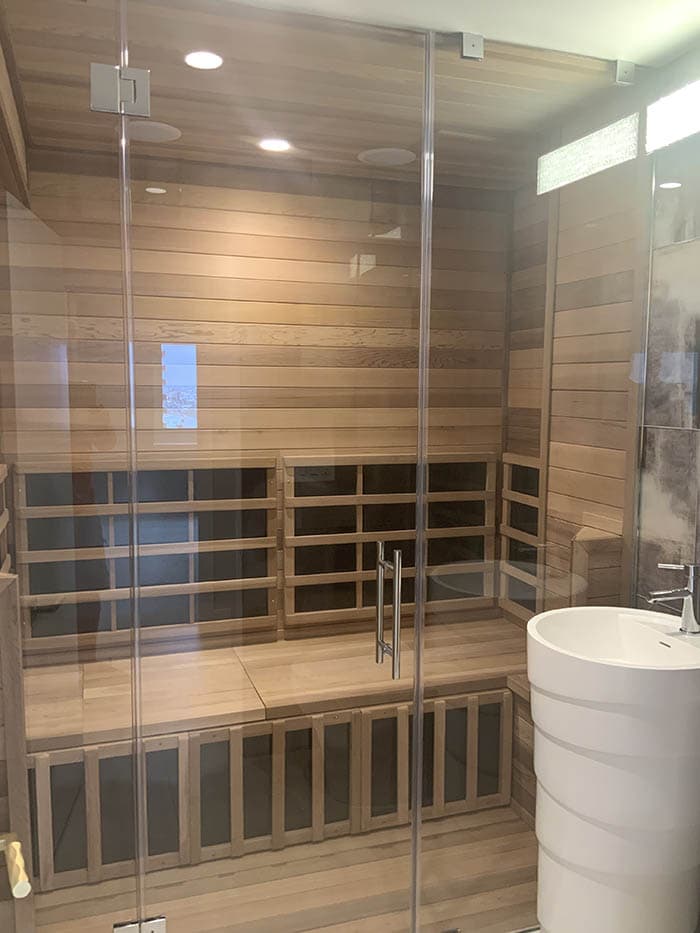
At SaunaCloud, the design logic across 3,000+ custom installations across North America since 2014 has been to bridge that divergence by pairing traditional wood craftsmanship with modern emitter engineering. Rather than pretending an infrared room is a smoke sauna, we build custom handcrafted cedar cabins outfitted with proprietary low-EMF VantaWave heaters and integrated red light therapy, keeping the natural cedar durability and deep radiant body heating while eliminating the 8-hour burn and 10-year cheap-cabinet degradation.
What research says about sauna health benefits
Yes, research links traditional sauna bathing to major cardiovascular and longevity benefits when practiced often, about 4 to 7 sessions a week. The landmark Kuopio Ischemic Heart Disease Risk Factor Study, published in JAMA Internal Medicine by researchers at the University of Eastern Finland, tracked 2,315 middle-aged Finnish men over 20 years and found that bathing 4 to 7 times weekly correlated with roughly 50% lower risk of fatal cardiovascular disease and significantly reduced all-cause mortality.
With commentary and reviews from Christopher Minson, Harvard University, and the Mayo Clinic, researchers point to hormesis (controlled heat stress) as the core mechanism: radiant heat from thermal mass triggers heat shock proteins that repair damaged proteins, clear cellular waste, and protect DNA. Mayo Clinic reviews also note improved circulation, muscle recovery, stress reduction, and lower hypertension risk, while Forbes Health-highlighted studies citing sauna makers Harvia and Metos Limited report respiratory support, pain reduction, and mental health benefits. The Kuopio cohort tracked Finnish sauna bathing without isolating stove types: it backs regular heat exposure, not the superiority of any one heater.
Decline, revival and UNESCO recognition
UNESCO inscribed sauna culture in Finland on the Representative List of the Intangible Cultural Heritage of Humanity in 2020 (Nomination file No. 01596, decision 15. COM 8.b.27), six years after Estonia's Võro smoke sauna culture earned its inscription in 2014.
Why public city saunas nearly vanished after the 1950s
Traditional public saunas in Finnish cities almost disappeared after the 1950s, though the specific socioeconomic causes of that urban decline aren't established in the UNESCO record; during this era, sauna architect and historian Risto Vuolle Apiala documented traditional sauna heritage before a recent wave of private initiatives sparked an urban revival.
Estonia listed first: the 2014 Võro inscription
Estonia beat Finland to the UNESCO intangible cultural heritage list in 2014 by nominating its Võro smoke sauna tradition, a revival driven by the Võro Institute and captured in Anna Hints' Sundance Award-winning documentary Smoke Sauna Sisterhood.
Finland's 2020 inscription and the revival
On March 12, 2016, the social innovations group Yhteismaa (founded by Jaakko Blomberg) organized the first Helsinki Sauna Day, where roughly 30 homes and businesses opened private saunas for free in yurts, on islands, on rooftops, and in an old castle. That same year, Helsinki's public venue Löyly opened, now drawing over 200,000 visitors annually as sauna tourism ranks as Finland's number one attraction and MPR News reports a parallel mobile and public sauna renaissance across Duluth and the Twin Cities.
Sisu and the sauna as Finnish identity
Finland has 3.3 million saunas for 5.5 million inhabitants, a density that gives nearly every household access to a sauna and anchors the practice across families, universities, and sauna clubs. After six centuries of Swedish rule and more than 100 years of Russian rule, Finland declared independence in 1917 and embraced the sauna alongside sisu (the 500-year-old philosophy of strength of will and determination not to give up, described by Katja Pantzar in Finding Sisu). Paired with Finlandia composer Jean Sibelius, they form the unofficial national motto: "Sisu, sauna and Sibelius." As Dalva Lamminmäki notes, the ritual acts as social glue that creates a shared basis for understanding what Finnishness is.
In Tampere, the self-declared sauna capital of the world, and across Helsinki, a typical session runs at 80 to 100°C (180 to 200°F) with customary nudity and cooling dips between rounds of löyly. City bathers usually run three rounds of heat with breaks, while country sessions add sauna makkara (sausage roasted on the stove), ice-hole plunges, and rolls in the snow.
Frequently Asked Questions
Who invented the sauna?
No single person or civilization can claim the invention of the sauna, because separated cultures across the globe independently figured out how to build sweat baths using local materials. Finland simply holds the longest unbroken development streak, over 7,000 years linking Stone Age dirt pits to modern domestic rooms, and gave the world the word sauna itself, which likely comes from the Sámi term soudnje for a pit in the ground.
Where did the sauna originate?
The sauna originated in Finland, where Stone Age bathers began digging earthen sweat pits into the ground or hillsides around 7000 B.C., with roots thought to trace back roughly 10,000 years. People heated rocks over a fire at the bottom of the excavation, covered the top with thatch, peat, or animal skins, and threw water onto the hot stones to create steam.
Why was the sauna considered a sacred space in Finnish culture?
Finns revered the sauna as a "church of nature" and a threshold between worlds where the four elements, earth, fire, water, and air, converged across three cosmic levels. Because wood-smoke phenols and tannic acid made it the most sterile room on a homestead, it served as the site for childbirth, folk healing, and washing the dead, while strict quiet etiquette was policed by folklore's one-eyed guardian elf, the Saunatonttu.
How did Finnish immigrants bring saunas to Minnesota in the 1860s?
Drawing on their homeland's sauna-first settlement rule, Finnish immigrants arriving in Minnesota during the 1860s built log smoke saunas before constructing their main farmhouses so they had an immediate structure for living, cooking, and bathing. That legacy includes Cokato Township's 1868 Barberg-Selvälä-Salmonson Sauna, a 10-by-12-foot dovetail-log smoke sauna that survived an 1885 township nudity lawsuit and still stands at Finnish Pioneer Park.

Founder & Lead Designer, SaunaCloud®
SaunaCloud: 3,000+ installations since 2014 · Author of The Definitive Guide to Infrared Saunas · Featured in Forbes, Inc., and MSN
Christopher designs every SaunaCloud sauna. His work brings the room, heaters, controls and installation plans together so you can review the project before committing. His professional expertise is sauna design and construction, not clinical medicine.
Custom 3D renderings and a proposal in 24-48 hours.
Ready to Design Your Sauna?
Every project starts with a conversation. Tell us about your space and we'll create your custom plan — free, no obligation.
Custom 3D renderings and a proposal in 24-48 hours.