Where Did Sauna Originate? The 10,000-Year Pit-Sauna Story Infrared Cabins Inherited
Key Takeaways
- Historical records confirm Finnish saunas for over 2,000 years, while some experts extend the practice past 5,000 years and folklorist Dalva Lamminmäki estimates Stone Age pit saunas go back roughly 10,000 years.
- Architecture evolved for fire safety and speed: medieval chimneyless savusauna cabins took up to 10 hours to reach about 60°C (140°F), whereas continuous-heating stoves warmed in roughly 30 minutes and 1960s electric heaters moved saunas indoors.
- Peer-reviewed research in journals including the European Journal of Epidemiology and Frontiers in Sports and Active Living links heat bathing to cardiovascular conditioning, lower respiratory disease risk, and post-exercise neuromuscular recovery, though causal proof varies by outcome.
In This Article
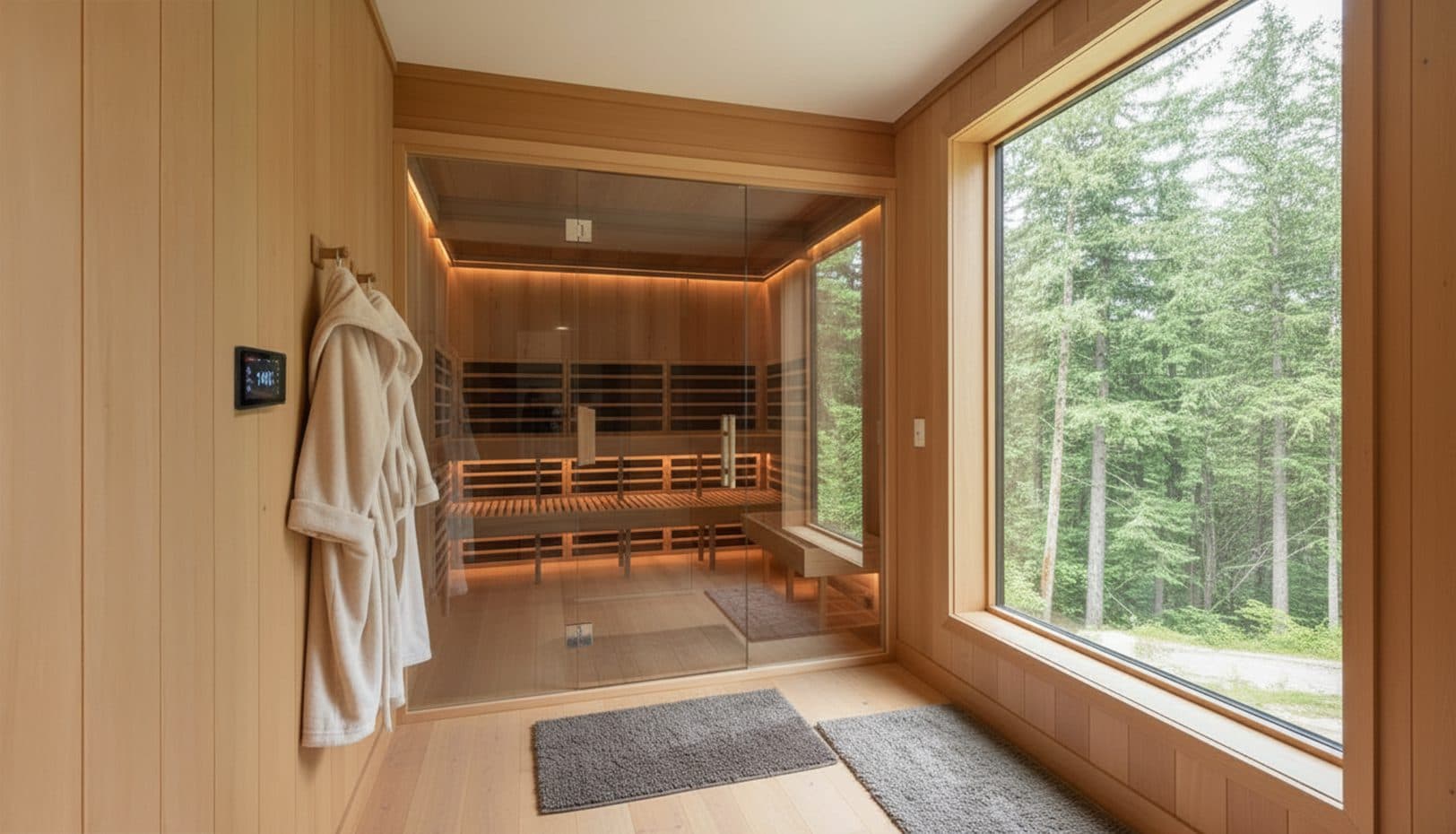
Step inside a modern cedar cabin, tap a digital thermostat, and feel your shoulders drop as the heat builds. It feels like a modern wellness invention, yet that quiet wooden room descends directly from covered pits dug into frozen Northern European earth thousands of years ago. At SaunaCloud, where we've designed and installed more than 3,000 custom infrared saunas across North America since our founding in California in 2014, we see modern low-EMF heaters and red light therapy as the latest engineering branch of a survival tool far older than a tidy "Finland invented it" headline.
Tracing the real sauna origin story means looking at three distinct tiers of evidence: over 2,000 years of written records, broader expert estimates, and folklore scholarship reaching back to the Stone Age. That lineage moved from mobile earth pits to chimneyless log smoke cabins, survived the 14th-century European plagues in the Nordic and Baltic belt, served as the cleanest workspace for childbirth and meat curing, and crossed the Atlantic with immigrants to the American upper Midwest long before electric and infrared units brought daily thermal recovery indoors.
Where did the sauna originate?
The sauna originated in Finland and Northern Europe as a covered pit in the ground heated with fire-warmed stones, and saunas have existed in Finland for over 2,000 years according to written historical records. If you want to define saunas in their classic form, a sauna is a heated wooden room where bathers throw water onto a stove of hot stones (kiuas) to release a wave of steam (löyly, the warmth that wraps your skin and opens your pores). While documented history anchors that 2,000-year baseline, some experts extend the practice to 5,000 years or more, and folklorist Dalva Lamminmäki at the University of Eastern Finland (reported via the BBC) estimates the earliest pit saunas date back roughly 10,000 years. The word sauna itself is Finnish, though linguists trace its sauna meaning to the ancient Sámi word soudnje, which translates literally to "pit in the ground."
Those age numbers span thousands of years because ancient earth pits and timber cabins decay, leaving written archives far younger than oral folklore. The Sámi root word also shows that while Finland is the documented heartland, Finns don't own the tradition alone; neighboring Estonia preserves its own deep saun heritage across the Baltic.
Stone Age pit saunas: the oldest form
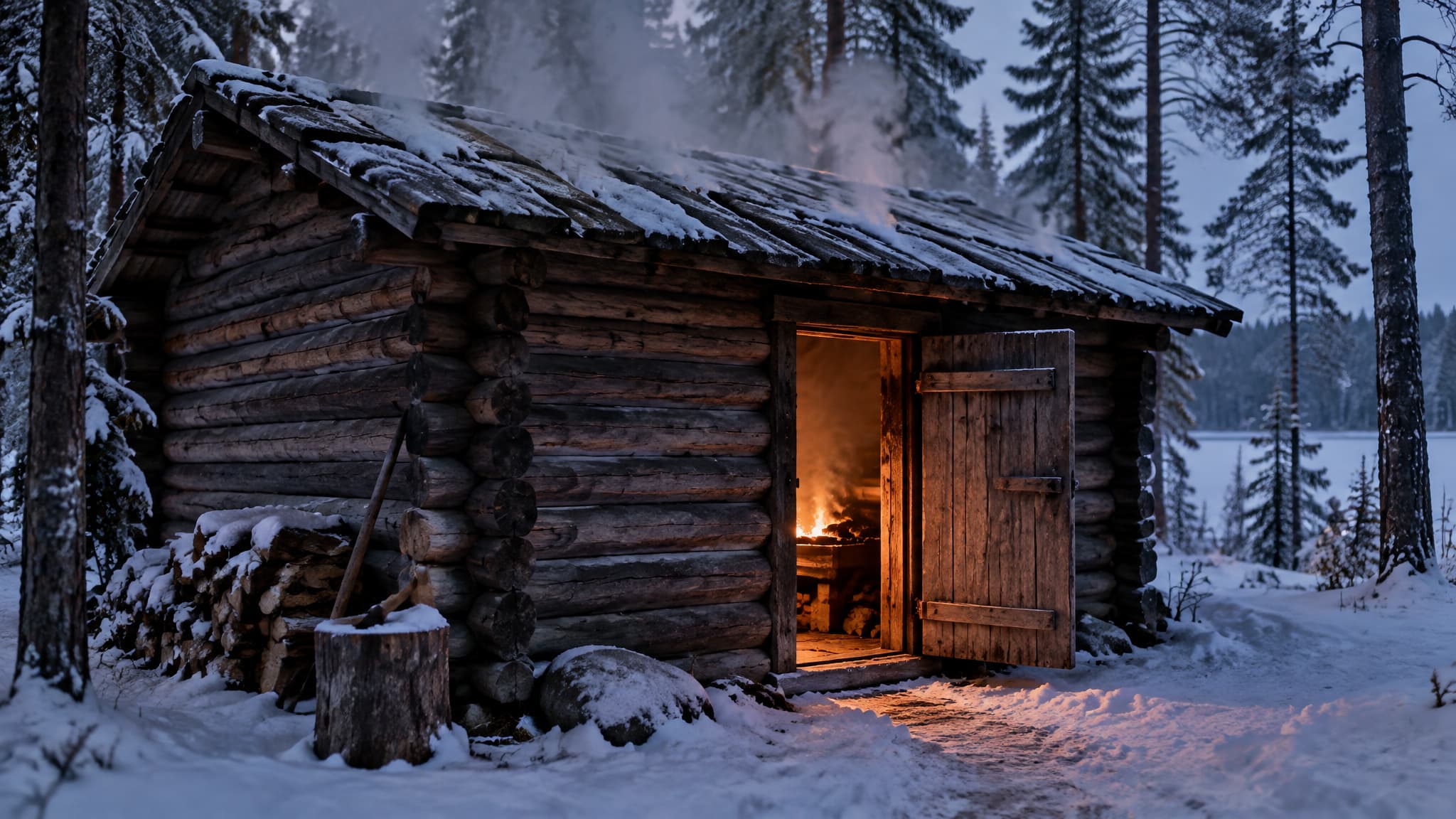
A Stone Age pit sauna was a practical, portable hole dug into the earth and warmed by heated stones from an outdoor campfire. Early hunter-gatherers hollowed out a pit in a slope or clearing, built a roaring fire to heat a pile of rocks, and pulled a temporary roof overhead to trap the rising heat.
"Once the stones had warmed up, the pit was covered with wattle, thatch or peat, and then water was thrown on the stones, to create steam,"
Bathers also draped animal skins or birchbark over the frame to seal in the moisture. Because those materials were light or gathered on the spot, a pit sauna matched a nomadic lifestyle: when a band packed up camp and moved to new hunting grounds, they simply dug and covered a fresh pit at the next site.
That mobile earth-pit model wasn't confined to one corner of the map. Archaeologists have unearthed early sweat houses dating to the Bronze Age across the UK and Ireland. As nomadic groups settled into permanent Bronze Age farming villages, temporary holes gave way to year-round ground saunas equipped with dedicated stone-pile stoves and wooden benches.
From smoke sauna to electric stove: why sauna architecture changed
The history of the sauna runs from Stone Age earth pits and Bronze Age ground structures to Iron Age log cabins, medieval smoke saunas, bricked chimney stoves, and the 1960 electric heater. As builders moved saunas above ground, every architectural shift solved a practical problem of fire risk, smoke inhalation, or the exhausting hours required to heat a massive pile of rocks. Across those eras, the core structure evolved through seven distinct stages:
- Stone Age pit saunas dug into the ground
- Bronze Age ground saunas with stone-pile stoves and benches
- Iron Age above-ground log cabins
- Medieval chimneyless smoke saunas (savusauna)
- Middle Ages bricked stoves vented with chimneys
- Continuous-heating wood stoves that warmed in roughly 30 minutes
- Electric stoves by 1960, followed by modern infrared and mobile tent saunas
The savusauna: cooler air, hotter feel
Finns stopped building the medieval smoke sauna (savusauna) as their daily standard because lacking a chimney created severe fire hazards and required up to 10 hours of heating time. In a savusauna, wood burned directly beneath a large rock pile, filling the log cabin with thick, aromatic smoke until the fire died down and the room was vented before anyone stepped inside.
Bathers who are used to modern 80-100°C dry heat typically notice an immediate contrast when stepping into a savusauna for the first time: the thermometer tops out around 60°C (140°F), yet the heavy humidity makes that cooler air feel intensely hot on the skin, especially knowing the fire had to be lit up to 10 hours earlier. Enthusiasts still prize that soft, enveloping steam today.
From chimney stoves to electric heat
Adding chimneys and bricked stoves in the Middle Ages vented soot outdoors and kept sparks from burning down the cabin. Later, engineers replaced single-heating rock piles with continuous-heating wood stoves that reached bathing temperature in roughly 30 minutes, a vital upgrade during post-war firewood shortages. By 1960, the electric stove emerged as a direct competitor to wood, eliminating firewood storage, fire tending, and complex venting so families could install saunas inside urban apartments and homes.
Why the sauna survived in the North
Sauna culture survived in the Nordic and Baltic countries because household saunas were already built into daily winter survival when the 14th-century Black Death shut down most European public bathhouses over fears of contagion. Drawn from abundant birch and cedar forests, the sauna was often the first building erected in a new northern settlement, serving as a warm community hub where families gathered through brutal winters. That surviving belt stretches across the Baltic: Estonia's communal smoke-sauna tradition, captured in Anna Hints's Sundance Award-winning documentary Smoke Sauna Sisterhood, features multi-hour sessions with meals, while Latvian and Lithuanian bathers weave in local herbs and folk healing.
The sauna as pre-industrial infrastructure
Far from a weekend luxury room, the pre-industrial sauna operated as a sterile, heated household workshop for cooking, making soap, doing laundry, sleeping, holding secret meetings, tending the sick, and drying grain, flax, rye, and meats, according to folklorist Dalva Lamminmäki. Families cured meat in smoke saunas kept below 100°C (200°F) and washed there every Saturday before church while much of medieval Europe masked body odor with perfume. That utilitarian rhythm still survives at Finland's Siskola household, where the family washes in their sauna nearly every day using rainwater for löyly.
Birth, death, and the sacred sauna
For centuries, the sauna anchored Finnish birth, death, and daily life because its soot-lined timber walls, boiled water, and high heat made it the cleanest, warmest room on any rural property. Before rural hospitals and indoor plumbing became standard, families relied on the sauna's sterile benches for life's hardest transitions and treated the room itself as a sacred space governed by strict spiritual rules.
Life and death in the sauna
Because it offered warmth and running hot water away from drafty living quarters, Finnish women widely gave birth in the sauna until the end of the 1930s. Traditional healers brought the sick there for treatment, and when a family member died, relatives washed the body on the sauna benches to prepare them for burial.
Löyly, spirits, and the sauna elf
In ancient Finnish religion, löyly meant the breath, spirit, or soul itself. Throwing water on the stones was a sacrificial offering to Auteretar (or Auterinen), the goddess of haze, whom bathers honored with spoken spells before stepping inside. Whoever lit a new sauna's very first fire was believed to become its guardian spirit, while the resident sauna tonttu, a one-eyed sauna elf, rewarded quiet, church-like behavior with good luck and safety. Like Native Americans, ancient Finns revered air, water, fire, and earth inside the room, viewing the sauna as a liminal doorway between the upper, middle, and underworld realms, a cosmology preserved in the Kalevala and Finnish runic songs. After Finland outlawed folk healing in 1890, elderly female bathers kept this spiritual sauna knowledge alive in secret, as author Emma O'Kelly has documented.
Seasonal rituals and folk magic
Calendar milestones revolved around the stove. The Christmas sauna predates Christianity with winter solstice roots, while Midsummer bathers walked backwards toward woodpiles to predict a future spouse. Bridal saunas seated the bride on rose petals while friends shouted paha pois ("evil away"), a custom that still turns up at modern bachelorette parties. Even courtship had its own sauna folklore: hopeful suitors peeled damp birch leaves stuck to their skin after a session, dried and ground them into powder, and slipped the charm into a crush's food or drink.
Nobody invented the sauna: heat bathing's independent rise
No single person or culture invented the sauna; instead, ancient cultures across multiple continents independently developed their own sweat-bathing traditions while Finland refined its timber-and-stone household model. Long before global trade connected them, communities from the ancient Islamic world to indigenous Mexico discovered that enclosed heat and steam eased sore muscles, cleaned skin, and brought people together. That independent rise spans Ancient Roman thermae, Greek gymnasium laconica, the Russian banya, the Turkish hammam, Japanese temple baths, the Mesoamerican Mayan temazcal (noted by O'Kelly), and the Native American sweat lodge.
Each culture engineered heat bathing around its own landscape and rituals. Roman thermae paired heated rooms and cold plunges in sprawling civic centers for politics and business, while Greek athletes sweated in heated laconica after training, inspiring medieval Europe's bathhouses. In the Americas, Native American sweat lodges used dome-shaped willow frames covered with hides or blankets to unite physical healing with ceremonies of preparation, prayer, and purification, as noted in a Harvard University study. Japan's tradition moved from natural caves and mushi-buro or kama-buro sweat baths to temple bathhouses, purification-focused onsen (hot springs), and sento (public bathhouses). Technically, Turkish hammams pioneered ventilation architecture and graduated temperature zones, Germany developed systematic spa therapy and heating engineering, and the wood-fired Russian banya combined high-humidity steam and contrast therapy with the venik, a bundle of birch or oak leaves struck against the skin to boost blood flow and exfoliate, directly paralleling the Finnish birch whisk.
Why Finland has so many saunas per person
Finland has roughly 3 to 3.3 million saunas for a population of about 5.5 million people because Finns treat the sauna as a basic daily necessity on par with sleeping or eating rather than an occasional luxury. While total estimates range from 2 million to 3.3 million, with Guinness World Records citing over 3 million, saunas sit in nearly every hotel, condo, gym, and country lot, including properties where the sauna is the only structure standing. Nearly 90% of Finns take a sauna at least once a week, traditionally on Saturday night (sauna päivä), and many go several times a week or daily year-round. Inside, titles disappear: the president and prime minister maintain official saunas, and the naval academy on Suomenlinna houses the world's largest wood-stoved sauna, seating up to 200 bathers on equal footing.
UNESCO recognition of sauna culture moved from the Estonian smoke sauna being placed on UNESCO's Representative List in 2013 to the Finnish sauna being added to the UNESCO Intangible Cultural Heritage Lists in 2020 (period: 2013 to 2020), noting that most Finns experience their first sauna as babies. That ritual ties directly to sisu, a 500-year-old philosophy of resilient Finnish identity and grit described by Katja Pantzar in Finding Sisu, captured in the unofficial national motto "Sisu, sauna and Sibelius" and Kalevala gods carved into sauna doors. Even the chores carry pride: heating the stove is a badge of honor for Finnish men today, though historically that heavy labor belonged to women.
Sauna in power and war
Whether saunas are hygienic enough to stop disease depends on the target: historical records prove that wartime saunas effectively controlled disease-carrying lice on soldiers and clothing, though clinical germ-kill rates for microscopic viruses or bacteria on the skin aren't established here. During World War II, Finnish troops used regular mobile and field saunas to delouse their ranks, sparing them the severe outbreaks of lice-spread spotted fever that struck Soviet troops.
A decade after the war, President Urho Kekkonen turned the official sauna at Tamminiemi (completed in 1956) into a Cold War backchannel. His inner "sauna society" debated national policy on the benches, Soviet leader Nikita Khrushchev famously sweated and negotiated there until 4 a.m. in 1957, and both the CIA and MI6 allegedly tried to bug the Tamminiemi sessions during the 1970s.
When that culture of heat endurance turns into a contest, however, the body hits a hard wall. The World Sauna Championships in Heinola ran from 1999 to 2010 over the strong opposition of the Finnish Sauna Society, ending permanently in 2010 after sisu was pushed too far, killing one finalist and nearly killing another.
How Finnish immigrants brought the sauna to the upper Midwest
Finnish immigrants brought the sauna to America by building backyard and lakeside cabins across the upper Midwest, specifically in Michigan, Minnesota, and Wisconsin, where Finnish-American communities still keep the heritage alive through local cultural centers, festivals, and educational programs. Arriving in logging and mining towns with brutal winters and abundant timber that looked remarkably like home, these settlers built the sauna first, adapting their stone-pile stoves and cedar or birch framing to North American materials.
Instead of fading out after a generation, that regional upper Midwest tradition formed the living American bridge between Baltic prehistory and today's home wellness market. Long before commercial gyms or urban spas caught on, families across Michigan's Upper Peninsula, northern Minnesota, and Wisconsin passed down the Saturday night wash, the lake plunge, and the craft of cabin building, laying the cultural groundwork that made North Americans receptive to indoor electric and infrared cabins decades later.
How a sauna works: kiuas, löyly, and the hot-cold cycle
A traditional sauna regulates heat on your body through the interplay of a stone-filled stove, bench height, steam humidity, and an icy plunge outside. Built as a separate lakeside or seaside wooden cabin to keep fire risk away from the main house, the room lets you dial in your own thermal dose depending on where you sit and how much water hits the rocks.
The kiuas, löyly, and birch whisk
Every sauna stove (kiuas), whether fired with birch logs or heated by electricity, exists to superheat a pile of stones, and you must never ladle sea water onto a kiuas, because salt rapidly rusts the stove metal. Wood and electric rooms typically run between 80°C and 110°C (176-230°F), though many bathers dial the room down to 70-100°C depending on personal preference. Because heat rises, climbing to the upper benches intensifies the temperature, while sprinkling fresh water onto the kiuas creates löyly humidity that actually makes the hot air feel gentler on your skin. To boost circulation, exfoliate, and ease tight muscles, bathers gently tap their skin with a vihta (or vasta), a fragrant whisk of fresh birch twigs best bundled at Midsummer whose leaves release natural saponins that lather like a mild soap.
The hot-cold cycle and etiquette
Proper Finnish sauna etiquette for first-time visitors starts with two basic rules: showering thoroughly before you step inside and asking your fellow bathers (saunoja) before throwing water on the stones. First-time visitors often hesitate at the door over whether to wear a swimsuit or touch the ladle, quickly finding that regulars simply expect a quiet voice, a quick spoken check before making steam, and respect for local dress norms, where full nudity is ordinary and strictly non-sexual in private or gender-separated rooms, while swimsuits are required in public mixed saunas.
A classic contrast therapy routine pairs 10 to 20 minutes on the hot benches (or 5 to 10 minutes if you're a beginner) with a cold plunge into an icy lake or a roll in the snow, repeated across several rounds with plenty of drinking water in between. Cycling through heat, cold, and rest triggers totonou, the Japanese term for a state of deep physical relaxation and clear-headed calm documented by researchers in PLOS One.
Infrared and the modern branch of a 7,000-year-old principle
No, an infrared sauna is not the same as a traditional Finnish sauna: an infrared sauna uses radiant heat emitters to warm your body directly at much lower air temperatures, whereas a traditional Finnish sauna heats the room air to 80-110°C via a stone-filled kiuas. Because infrared cabins don't use water-splashed stones to generate löyly steam, sauna purists still debate whether they count as authentic saunas, even as millions of North American bathers rely on their energy efficiency and gentler ambient air. Today's commercial landscape also stretches far beyond the home cabin: corporate wellness programs increasingly offer sauna access, wellness tourism drives demand for destination saunas, and wellness-industry facilities often layer in aromatherapy, chromotherapy, and sound healing alongside prefabricated modular units and cylindrical barrel saunas that need minimal foundation preparation. Yet the newest formats also circle straight back to prehistory: modern mobile tent saunas pitch a weatherproof fabric shelter over a portable stove of heated stones, replicating the exact mechanical principle of a Stone Age pit sauna.
Infrared cabins warm your body directly at lower air temperatures, no fire tending or stones required.
| Sauna format | Heats room air to 80-110°C | Generates löyly steam from stones | Requires chimney or outdoor venting | Typical preheat time |
|---|---|---|---|---|
| Medieval smoke sauna (savusauna) | No (tops out around 60°C) | Yes | No (vents through door before entry) | Up to 10 hours |
| Continuous wood-stove sauna | Yes | Yes | Yes | Roughy 30 minutes |
| Electric kiuas sauna | Yes | Yes | No | 30 to 45 minutes |
| Modern infrared sauna | No (warms body via radiant heat) | No | No | 10 to 15 minutes |
| Mobile tent sauna | Partial (depends on stove and weather) | Yes | Yes (stove pipe through tent roof) | roughly 30 minutes |
Infrared versus traditional löyly
When homeowners and clinic operators compare formats today, the choice usually comes down to site constraints and how the heat feels on the lungs. A wood-fired cabin belongs by a lake where you can stack birch logs and vent a chimney, while electric stoves and the physics of radiant infrared heating remove fire management and wood storage entirely.
At SaunaCloud, the engineering behind our custom cedar infrared cabins, low-EMF VantaWave heaters, and integrated red light therapy is built to honor that 7,000-to-10,000-year thermal recovery ritual for indoor spaces where 100°C steam and heavy structural venting aren't practical. Digital thermostats, programmable timers, and automatic shut-offs mean you get a repeatable daily sweat without tending a firebox, a big reason infrared cabins gained their foothold in American homes.
Formats, revival, and the loop back to the pit
Across the estimated several million saunas operating worldwide, modern builders have multiplied the ways people step into the heat. Prefabricated modular cabins click together indoors without carpentry skills, while outdoor cylindrical barrel saunas use curved walls, often crafted by specialty makers like Bear Naked Saunas from sustainably harvested cedar, to circulate heat efficiently on minimal foundations with big glass doors. Commercial wellness studios and biohacking spaces frequently layer in aromatherapy, chromotherapy, and sound healing.
At the same time, a massive surge in cold-water swimming has sparked a public sauna revival in the Nordics. Although most of the 150 public saunas operating in Helsinki at the end of World War II closed during the late 20th century, bathers now pack modern architectural waterfront venues like LÖYLY and Allas Sea Pool alongside the traditional wood-heated Kotiharju Sauna (Kotiharjun Sauna), with public admission running roughly 7 to 27 euros. Whether you're zipping shut a backcountry tent sauna or stepping into a cedar infrared room, the goal, heat, calm, and human connection, hasn't changed since the Stone Age.
What the science supports
Research supports several health benefits of sauna use, including improved cardiovascular health, stronger circulation, reduced arterial stiffness, immune support, and stress relief, though the strength of clinical evidence varies by outcome. Sitting in sauna heat raises your heart rate to a pace similar to moderate physical exercise, dilating blood vessels and training the vascular system without mechanical impact on your joints. While popular wellness marketing often treats every benefit as settled law, a close read of the research shows that some findings come from large observational studies, strong associations, not proven cause and effect, while others come from targeted sports-medicine or clinical protocols like Japan's clinical Waon therapy protocol. For example, observational research published in the European Journal of Epidemiology found that frequent sauna bathing is associated with significantly lower risks of pneumonia and chronic lung disease, even as researchers note that broader causal trials remain limited.
When you break down the published journals by specific bodily systems, the findings give a clear picture of why this ancient habit feels so restorative:
- Cardiovascular and vascular conditioning: Heat exposure elevates heart rate to moderate-exercise levels, improving blood flow and reducing arterial stiffness (how rigid your blood vessels become with age).
- Respiratory resilience: Frequent sauna sessions correlate with lower rates of pneumonia and chronic respiratory disease in long-term cohort tracking (European Journal of Epidemiology).
- Post-exercise neuromuscular recovery: Stepping into an infrared sauna after a workout can enhance neuromuscular performance (how efficiently your brain and nerves fire your muscles) over time, according to sports medicine research in Frontiers in Sports and Active Living, which is why competitive athletes use heat for conditioning and recovery.
- Mental well-being and sleep: Most everyday bathers use the sauna to unwind and sleep better, and a study in Complementary Therapies in Medicine found that moderate-frequency sauna users scored slightly higher on mental wellness metrics.
- Cold-plunge mood synergy: Winter swimmers who combine regular sauna sessions with icy water dips self-report better mood, less daily fatigue, and higher overall well-being, echoing the totonou clarity measured in PLOS One.
A tradition doesn't survive for 7,000 to 10,000 years across frozen forests, plagues, and ocean crossings unless people feel an immediate difference in their bodies when they step out into the cool air. Modern peer-reviewed studies are finally measuring on a chart what Stone Age pit builders, Baltic families, and upper Midwest immigrants already knew by feel.
Frequently Asked Questions
What is a sauna and where does the word come from?
In its classic form, a sauna is a timber room heated by a rock-filled stove called a kiuas, where bathers ladle water over the stones to send up a wave of steam known as löyly. Although the word sauna is Finnish, linguists trace its roots to the ancient Sámi term soudnje, which literally translates to a pit in the ground. That etymology points straight back to the covered earth trenches used by early northern hunter-gatherers.
How long have saunas existed in Finland?
Written historical archives confirm that saunas have existed in Finland for over 2,000 years. Because ancient timber and earthen pits decay without leaving simple paper trails, many experts place the true age past 5,000 years, and folklorist Dalva Lamminmäki estimates the earliest Stone Age pit saunas go back roughly 10,000 years. Today, the country houses roughly 3 to 3.3 million saunas for a population of about 5.5 million people.
Who invented the sauna?
No single inventor or nation can claim credit for heat bathing, because ancient societies across the globe developed sweat traditions independently. While Finland perfected the household wood-and-stone cabin, separate cultures engineered Roman thermae, Greek laconica, Russian banyas, Turkish hammams, Japanese temple baths, Mayan temazcals, and Native American sweat lodges. Even within Northern Europe, Bronze Age sweat houses have turned up in the archaeological record across the UK and Ireland.
What is the history of the sauna?
Sauna architecture evolved across seven stages to solve smoke inhalation, fire danger, and grueling heating times. It started with nomadic Stone Age earth pits and permanent Bronze Age ground structures before moving into Iron Age log cabins and medieval chimneyless smoke saunas. Later builders added bricked chimney stoves in the Middle Ages, 30-minute continuous-heating wood stoves, 1960s electric heaters, and modern radiant infrared cabins like the custom cedar units we have built at SaunaCloud since 2014.
What was a smoke sauna and why did Finns stop building them?
A smoke sauna, or savusauna, was a chimneyless log cabin where wood burned directly under a massive pile of stones, filling the room with smoke that had to be vented out the door before anyone could bathe. Finns phased them out as their everyday standard because lighting the stove took up to 10 hours and the unvented fire posed a constant threat of burning the structure down. Even though the air inside only reached around 60°C (140°F), the heavy steam created an intensely hot sensation that enthusiasts still seek out.
What is the ideal temperature for a sauna?
Traditional wood-fired and electric saunas typically run between 80°C and 110°C (176-230°F), with most bathers dialing their sessions in around 70-100°C. Medieval savusauna smoke cabins top out much cooler at roughly 60°C (140°F) while relying on heavy steam for heat, and infrared cabins operate at much lower ambient air temperatures because radiant emitters warm your body directly. Inside any traditional room, you can adjust your thermal dose simply by moving between the cooler lower benches and the intense heat near the ceiling.

Founder & Lead Designer, SaunaCloud®
SaunaCloud: 3,000+ installations since 2014 · Author of The Definitive Guide to Infrared Saunas · Featured in Forbes, Inc., and MSN
Christopher designs every SaunaCloud sauna. His work brings the room, heaters, controls and installation plans together so you can review the project before committing. His professional expertise is sauna design and construction, not clinical medicine.
Custom 3D renderings and a proposal in 24-48 hours.
Continue Reading
Sauna Design & Technology
Infrared Sauna Maintenance & Repair Guide: Troubleshooting, Wood Care, and When to Call for Help (2026)
Read article
Sauna Design & Technology
Is Cedar Safe for Infrared Saunas? The Material Science Behind Your Sauna Wood (2026)
Read article
Sauna Design & Technology
Why Comfort Is the Most Overlooked Feature in Infrared Saunas (And Why It Determines Whether You'll Actually Use Yours)
Read articleReady to Design Your Sauna?
Every project starts with a conversation. Tell us about your space and we'll create your custom plan — free, no obligation.
Custom 3D renderings and a proposal in 24-48 hours.