How Long Have Infrared Saunas Been Around? From 1800 Physics to Modern Cabins
Key Takeaways
- Infrared saunas combine 1800 physics (William Herschel's prism experiment) and 1891 medical hardware (John Harvey Kellogg's radiant heat baths), though consumer timber cabins only popularized in the late 20th century.
- Far-infrared emitters operate at 6 to 12 microns to penetrate 1 to 2 cm into skin at 110 to 140°F while drawing 1 to 2 kW of power, compared to roughly 6 kW and 45 to 60 minutes of preheating for a traditional Finnish electric stove.
- The landmark 20-year University of Eastern Finland mortality study tracked 2,300+ men using traditional Finnish saunas, whereas clinical evidence for infrared cabins is newer and focuses on specific outcomes like chronic pain, vascular function, and sleep.
In This Article
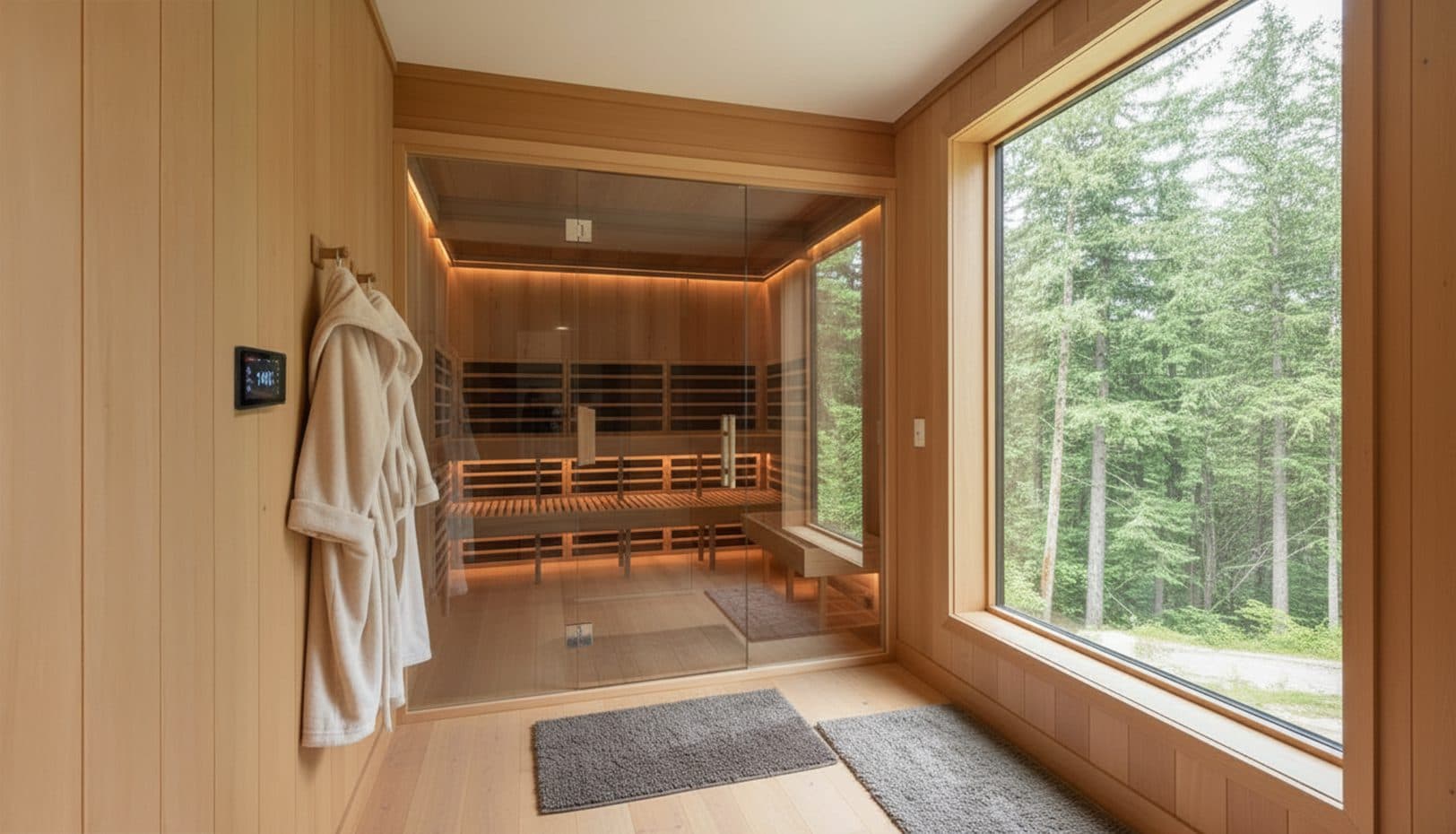
A modern cedar cabin with digital temperature controls and a standard wall plug looks like a recent wellness gadget, yet the core architecture behind infrared saunas runs on antique physics. Tracing their real age requires separating three distinct birthdays: the physics, the medical therapy, and the residential cabin. British astronomer William Herschel discovered infrared radiation in 1800 during a prism experiment when a thermometer placed just past the red edge of the visible spectrum registered the highest heat. American inventor John Harvey Kellogg began experimenting with radiant heat therapy in 1891, a clinical milestone Field Mag dates as the first introduction of infrared saunas.
Consumer infrared sauna cabins, however, only became popular in the late 20th century. That gap makes more sense alongside the wider sauna hardware stack, which moved from the Finnish savusauna around 500 AD and Minnesota's 1868 Barberg-Selvälä-Salmonson Smoke Sauna to the first electric sauna stove built by Metos in 1938.
How long have infrared saunas been around?
Infrared saunas are enclosed radiant-heat cabins in the thermal therapy category that became popular as consumer products in the late 20th century, even though their medical hardware dates to 1891 and their underlying wave physics to 1800. Traditional steam bathing spans millennia, and historians corroborate that William Herschel identified invisible infrared light in 1800 before John Harvey Kellogg built incandescent radiant heat baths in the 1890s, whereas the exact year, inventor, and company behind the first commercial infrared sauna cabin aren't established in the historical record. Finland is the country famous for inventing the traditional sauna, and its company Metos introduced the first electric sauna stove in 1938, bridging ancient wood-fired rooms and modern plug-in cabins.
- Ancient Northern Europe (~500 AD): Pit sweat lodges evolved into the chimneyless Finnish savusauna (smoke sauna).
- Centuries of parallel global rituals: The Russian banya, Turkish hammam, and Native American sweat lodges developed alongside Nordic traditions.
- 1800: British astronomer William Herschel discovered infrared radiation beyond visible red light.
- 1868: Finnish immigrants built the Barberg-Selvälä-Salmonson Smoke Sauna in Minnesota.
- 1891: John Harvey Kellogg tested the first clinical radiant heat baths.
- 1938: Finland's Metos shipped the first electric sauna stove.
- Late 20th century: Enclosed timber cabins with electric radiant heaters reached mainstream consumer homes.
1800: William Herschel discovers infrared radiation
William Herschel discovered infrared radiation in 1800, and American inventor John Harvey Kellogg first applied radiant heat for medical therapy in 1891. Standard physics histories, including NASA's account of the electromagnetic spectrum, credit Herschel's 1800 optical measurements with proving that invisible heat rays exist beyond visible light, nine decades before Kellogg adapted radiant energy for clinical bathing. During his experiment, Herschel directed sunlight through a glass prism to measure the temperature of each separated color band and noticed his control thermometer sitting just past the red end of the visible spectrum registered the highest heat of all.
Before anyone bolted radiant emitters inside a timber cabin, Herschel's invisible heat rays beyond red light spent nearly two centuries maturing as a scientific and industrial tool. Researchers and engineers pushed the wavelength through spectroscopy, observational astronomy, thermal imaging, industrial heating, and clinical medicine. Every one of those fields exploited the same physical property: radiant energy travels in waves and warms an opaque object directly on contact without needing to heat the surrounding air first, running on the exact same physics as sunlight hitting your jacket on a freezing day.
Before infrared: the sauna tradition Finland gave the world
Finland is the country famous for inventing the sauna, developing an ancient Northern European thermal bathing tradition that evolved from stone-lined earthen pits into the timber savusauna by roughly 500 AD. Before electric panels existed, Finland's smoke sauna tradition established the architectural and cultural template that modern cabins inherited.
From pit lodges to the savusauna around 500 AD
Early Northern Europeans dug pits into the ground, covered them with animal hides or branches, and rolled in rocks heated over an open fire to douse with water for steam. By roughly 500 AD (an approximate archaeological estimate), Finns had refined this into the savusauna, a chimneyless log cabin where a wood fire burned for hours to heat hundreds of stones before the smoke was vented out, leaving behind wood aroma and lingering heat. Similar heat rituals developed globally over hundreds of years to cleanse, relax, detoxify, and boost vitality, including the Russian banya (using birch branches to massage and stimulate circulation), Turkish hammams (combining steam, marble, and social gathering), and Native American sweat lodges built for spiritual purification.
Löyly, births, and burials: what the sauna meant
When water hits those superheated stones, the rising steam is called löyly, a Finnish word that also translates to "spirit" or "breath of life." Because the sauna had sterile, soot-lined walls and reliable warmth, families treated it as a sacred lifecycle room for giving birth, healing the sick, weekly washing, and washing bodies before burial. Finnish immigrants carried this architecture worldwide in the 19th and early 20th centuries, constructing North America's first saunas in the late 1800s, including the still-standing 1868 Barberg-Selvälä-Salmonson Smoke Sauna in Minnesota.
1891-1938: radiant heat enters medicine and saunas electrify
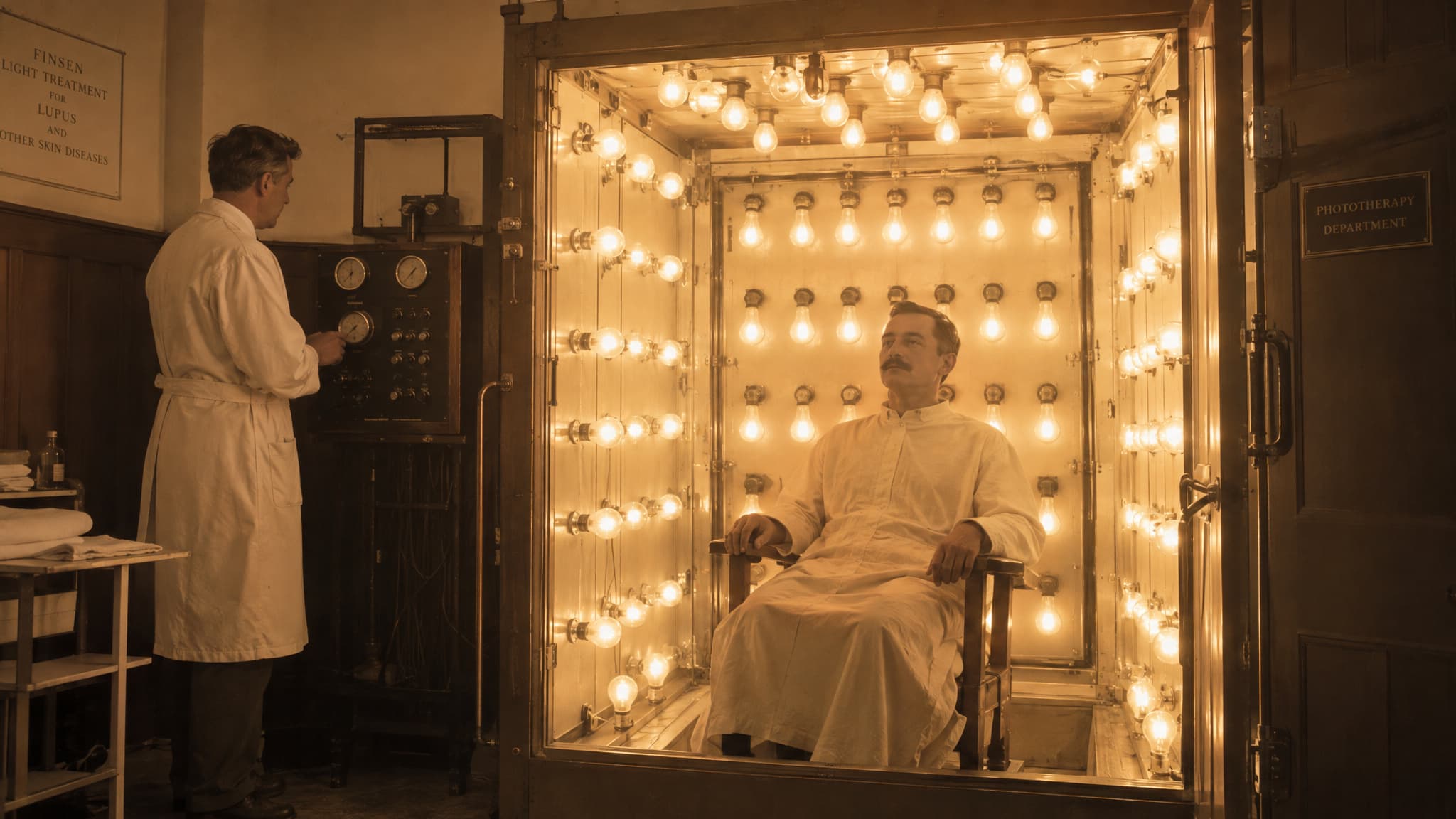
Radiant-heat therapy entered clinical medicine 47 years before the traditional sauna was ever electrified. In 1891, American inventor John Harvey Kellogg began experimenting with incandescent radiant heat baths, placing patients inside enclosures lined with early electric light bulbs to warm tissue directly via radiation rather than steam. While Kellogg's 1891 radiant heat bath proved the therapeutic mechanism, those early setups stayed confined to hospitals, sanitariums, and institutional clinics because residential heating hardware didn't exist yet.
Kellogg's 1891 light baths put radiant heat into medicine decades before anyone wired a home sauna.
Traditional saunas made their own leap toward urban apartments in 1938, when the Finnish company Metos introduced the first electric sauna stove. Instead of chopping timber and tending a fire for hours, city dwellers without wood supplies or outdoor yard space could heat a stone stove over the electrical grid. That 1938 release split sauna culture into two camps: wood-fired tradition and electric convenience. Once saunas were wired into building circuits, the stage was set for residential radiant panels to replace the rock stove entirely.
Late 20th century: the engineering that made the home cabin viable
Infrared sauna cabins became popular consumer products in the United States during the late 20th century, though the historical record provides only broad timing rather than an exact launch year or founding company. Shoppers looking at sleek digital cabins are often surprised to learn that the shift from clinical heat baths to consumer home cabins relied on physics that predates the electric stove.
The clinical detour through Japan's Waon therapy
Before residential units scaled in North America, Japan's clinical Waon therapy revival in the 1970s re-embraced far-infrared heat in hospital settings. That medical validation bridged the gap between early institutional light baths and modern timber enclosures fitted with electric radiant heaters, simple controls, and lower air temperatures. At SaunaCloud, founded in 2014 in California by UC Berkeley graduate Christopher Kiggins and built across 3,000+ North American home and clinic installations, that clinical lineage takes the form of custom cedar cabins and proprietary low-EMF VantaWave heaters engineered around therapeutic output.
Power draw, preheat, and the threshold that moved infrared home
Electrical efficiency unlocked the home market. An infrared sauna draws 1 to 2 kW and needs 10 to 15 minutes (or zero) preheat time, whereas a traditional Finnish electric sauna draws roughly 6 kW (three times the electricity) and takes 45 to 60 minutes to preheat (while wood-fired stones take 1 to 3 hours). Skipping the high humidity and steam of Finnish saunas also prevents bacteria, germs, and mold from thriving on cabin surfaces, improves skin complexion, and lets users mount moisture-sensitive electronics like red light therapy towers and salt therapy generators inside configurations ranging from storable personal sauna domes to hot-yoga-scale rooms.
What an infrared sauna is and how it works
- What an infrared sauna is: An infrared sauna is an enclosed heated cabin in the thermal wellness category that warms the bather's body directly using invisible light waves rather than heating the room's air first.
- How the radiant mechanism works: While traditional saunas rely on convective heat (warming the air via a wood, gas, or electric stove and using löyly steam to transfer heat to the skin), the radiant heating mechanism inside an infrared sauna skips the air medium altogether, operating as a different heat philosophy where neither approach is inherently superior.
- Wavelengths and skin penetration: Far-infrared emitters output wavelengths measuring 6 to 12 microns that penetrate 1 to 2 cm into the skin, raising core body temperature from within and warming muscles and joints directly.
- Operating temperatures: Because dry radiant heat targets the body directly instead of the room, infrared saunas run at much lower cabin air temperatures of 110-140°F (43-57°C).
Because the cabin air doesn't need to carry the thermal load, the hardware and operating numbers look completely different from a traditional Finnish setup.
- Wavelength and tissue penetration: Far-infrared waves measure 6 to 12 microns (a band suited for human tissue absorption) and reach 1 to 2 cm beneath the skin's surface.
- Infrared operating temperatures: Cabins run dry at 110 to 140°F (43 to 57°C). Specific sources narrow that window slightly, with Field Mag citing 110 to 130°F and Cleveland Clinic citing 110 to 135°F.
- Traditional Finnish operating temperatures: Sources report varying ranges depending on regional convention. ResearchGate cites 80 to 110°C (175 to 230°F) with 10 to 40% humidity, Cleveland Clinic cites 150 to 195°F (66 to 91°C), Field Mag cites 160 to 200°F with humidity, and experts recommend 180 to 190°F with added steam.
- Wood-fired thermal battery mechanics: A traditional wood-fired stove (kiuas) is packed with dense stones that charge over 1 to 3 hours of burning before releasing löyly steam when doused with water.
- Physiological response ("passive cardio"): As Dr. Melissa Young, MD, at Cleveland Clinic explains, both sauna styles make you sweat, though infrared cabins tend to feel gentler and more comfortable. Infrared heat triggers sweating, vasodilation, and an elevated heart rate similar to moderate physical exercise ("passive cardio"), proving that hotter cabin air doesn't automatically produce a better sweat or cardiovascular response.
Is the science as old as the technology?
Yes, infrared saunas are backed by clinical studies on specific conditions like chronic pain, vascular function, and sleep, when separated from the 20-year mortality data collected in traditional Finnish saunas. Wellness writers frequently conflate all heat therapy datasets, so evaluating the medical literature requires separating multi-decade Scandinavian population studies on traditional hot-air saunas from the newer, smaller clinical trials conducted in infrared cabins. For example, the landmark University of Eastern Finland cohort study tracked the weekly traditional Finnish sauna habits of more than 2,300 middle-aged men for roughly 20 years, establishing the long-term cardiovascular mortality benchmarks that infrared researchers haven't yet replicated at a population scale.
Look closely at the numbers from that University of Eastern Finland dataset (attributed via the Global Wellness Institute) and you can see why marketers love quoting them, even when selling a totally different heater architecture.
- 2 to 3 traditional sessions per week: Correlated with a 24% lower risk of all-cause mortality compared to a single weekly session.
- 4 traditional sessions per week: Correlated with a 40% lower risk of all-cause mortality.
- 4 to 7 traditional sessions per week: Correlated with a 63% lower risk of sudden cardiac death, a 62% lower stroke risk, a 78% lower psychosis risk, and significantly longer overall lifespans.
Readers skimming general wellness articles often walk away assuming those 20-year mortality reductions were measured inside plug-in infrared cabins. They weren't. That longitudinal cardiovascular dataset covers traditional Finnish hot-air saunas exclusively, whereas infrared-specific clinical studies are newer, smaller, and still require broader heart-health investigation. As the Global Wellness Institute also notes, sauna bathing doesn't replace physical exercise.
Where clinical literature (including PMC and Cleveland Clinic sources) supports all sauna use across the board is in immediate physiological regulation: improving cardiovascular health, lowering blood pressure and stress-related cortisol, supporting muscle recovery, and activating heat shock proteins that assist cellular repair and immune resilience. Dr. Young notes that frequent sessions reduce oxidative stress and improve sleep because the body's post-sauna cooling phase aligns with its natural pre-sleep temperature drop.
Safety across the timeline
Evaluating infrared sauna safety comes down to separating electromagnetic wave physics from everyday thermal stress on the cardiovascular system.
Can infrared saunas cause cancer? The IR-versus-UV distinction
No, infrared saunas don't cause UV-like carcinogenic damage, though users still face thermal risks like dehydration and overheating if sessions run too long. As Dr. Alex King, D.O. (Cleveland Clinic) explains, infrared radiation sits below visible light and doesn't damage DNA the way excess ultraviolet (UV) radiation from the sun does, instead positively affecting cellular mitochondria.
A 2018 systematic review confirms the real hazards are heat-related: overheating, dehydration, dizziness, nausea, heat exhaustion, and heat stroke. Patients with heat-sensitive multiple sclerosis (MS), anyone in early pregnancy (per the American College of Obstetricians and Gynecologists, ACOG), those trying to conceive (due to temporary sperm-count drops), and anyone febrile or ill should avoid use, and bathers must exit immediately if lightheaded, nauseated, or feeling heart palpitations.
How long to sit in an infrared sauna safely
Consistent therapeutic benefits require 15 to 30 minutes per session, 3 to 4 times per week (or 15 minutes daily for chronic pain relief), per Dr. King, provided users hydrate with water and electrolytes, avoid alcohol, and shower afterward. Beginners should start around 110°F for 5 to 10 minutes and build tolerance gradually, while experienced users should cap home sessions at 20 to 30 minutes. An Ivanhoe Web report by Nancy Alvarez notes some commercial infrared sessions run about 40 minutes to raise core temperature for cellular-level sweating.
Infrared sauna vs Finnish sauna: which is better for health
Infrared saunas and traditional Finnish saunas are suited to different health and home priorities, with traditional Finnish saunas holding the stronger long-term cardiovascular mortality data and infrared cabins winning on residential electrical efficiency, lower-temperature comfort, and targeted pain relief. Choosing whether an infrared cabin is worth it at home or how the two compare for detoxification requires weighing verified clinical findings against home wiring constraints and unverified marketing claims. While the University of Eastern Finland's 20-year study of 2,300+ men backs traditional saunas for longevity, an infrared cabin's 1 to 2 kW draw and 10 to 15 minute warm-up fit standard household routines without a 6 kW stove installation.
- Targeted clinical benefits: Clinical sources (Mayo Clinic, Cleveland Clinic, Dr. Young, and Dr. King) link infrared use to reduced arthritis and fibromyalgia pain and stiffness, improved vascular function in heart failure patients, increased circulation and mitochondrial ATP and oxygen production for tissue healing, relief for depressive symptoms and seasonal affective disorder (SAD), and a dopamine and endorphin flood when paired with cold plunges.
- Footprint and social capacity: Traditional Finnish saunas seat 10 to 15 people for communal sessions but lose significant floor space to the heater and require 45 to 60 minutes of preheating; infrared units scale from compact 2-person cabins to hot-yoga spaces with no preheat required.
- Detox and calorie claims: Widely repeated figures claiming infrared sweat is roughly 20% toxins and 80% water versus 3% toxins and 97% water in a traditional sauna, along with MiHigh's claim of burning 300 to 600 calories per blanket session, are unverified manufacturer claims.
The format explosion: how a mature technology fragments
An infrared sauna can take up most of a room or fold away on a shelf. In a timber cabin, several people can share a bench with heaters built into the walls around them. A portable infrared tent gives one person an enclosed space that packs away after use. A sauna blanket takes up even less room. You lie inside it, then fold it up when you're done.
Even cabins that look alike can use different heaters. Some use far-infrared panels throughout, while full-spectrum designs combine near-, mid-, and far-infrared wavelengths. Tents vary, too. Some use infrared panels, while others use a wood-burning stove to heat the air inside.
Ritual versus therapy: how the 200-year arc ends
Infrared technology ended up carving out a quiet, solitary therapy role ("therapy, not ritual") rather than replacing the communal sensory ritual of the wood-fired sauna. Where a wood stove delivers wood smoke aroma, fire crackle, the hiss of löyly steam, and social hot-cold cycles, an infrared cabin is ready in about 10 minutes at the press of a button for a dry, silent solo session. Field Mag author Katherine Englishman, who owns a traditional outdoor sauna, notes that lower infrared temperature settings feel more tolerable on some days, underscoring body awareness as the real key to safe use.
What to check before buying a home infrared sauna
When buying a home infrared sauna, focus on verified hardware, build, and support specifics, heater type (far-infrared versus full-spectrum and verified low-EMF/ELF output), front-and-side heater layout, electrical supply requirements, heat-tolerant wood construction, warranty coverage, installation support, after-sales service, and total ownership cost, rather than supplier marketing copy or location keywords that don't prove local support. Because heater architectures feel noticeably different on the skin, an in-person trial is the most reliable way to judge a cabin's heat character before committing.
Before ordering, measure your room dimensions, access and delivery path, and total ownership cost beyond the sticker price. Check that the cabin uses heat-tolerant timber construction like cedar, eucalyptus, pine, or spruce rather than ultra-cheap wood builds, and treat add-ons like color light therapy or Bluetooth speakers as secondary perks. That exact engineering-first checklist is what we built SaunaCloud around in 2014, pairing direct designer-to-customer planning with custom cedar builds and proprietary VantaWave heaters across a platform that holds a 4.8-star #1 Trustpilot ranking and an A+ BBB rating.
Frequently Asked Questions
What is the temperature in a Finnish sauna?
Traditional Finnish saunas run much hotter than infrared cabins, with reported operating ranges spanning 150 to 195°F (66 to 91°C) per Cleveland Clinic, 160 to 200°F per Field Mag, and up to 175 to 230°F (80 to 110°C) with 10 to 40% humidity in ResearchGate data. By comparison, an infrared cabin runs dry between 110 and 140°F (43 to 57°C) because its emitters warm your tissue directly rather than superheating the room air.
How long have infrared saunas been around?
The residential timber cabins people plug into their homes only took off in the late 20th century, bolstered by Japan's clinical Waon therapy revival in the 1970s. However, the medical hardware goes back to 1891, when American inventor John Harvey Kellogg built incandescent radiant heat baths for sanitarium patients. The underlying wave physics is even older, dating to British astronomer William Herschel's 1800 prism experiment.
Who discovered infrared radiation and when was it first used for therapy?
British astronomer William Herschel discovered infrared radiation in 1800 while passing sunlight through a glass prism, noticing that a thermometer placed just past the visible red band recorded the highest temperature. Nine decades later, in 1891, American inventor John Harvey Kellogg put that invisible heat to clinical use by placing patients inside enclosures lined with early incandescent bulbs to warm their tissue directly.
What is a infrared sauna and how does it work?
An infrared sauna is a dry thermal cabin that heats your body directly with invisible electromagnetic waves instead of relying on a stove to heat the surrounding air. Far-infrared emitters output wavelengths of 6 to 12 microns that penetrate 1 to 2 cm beneath your skin, raising your core temperature and warming muscles and joints while the cabin air stays at a mild 110 to 140°F. Because it skips heating the room air and needs only 1 to 2 kW of power, it triggers heavy sweating and vasodilation with just 10 to 15 minutes of preheating.
Infrared sauna vs Finnish sauna: which is better for health?
Neither heat philosophy is universally superior; traditional Finnish saunas hold the 20-year population data showing lower cardiovascular and all-cause mortality, while infrared cabins excel at targeted pain relief, vascular support, and lower-temperature comfort. For home buyers, the practical tiebreaker is usually electrical efficiency: an infrared cabin draws 1 to 2 kW and warms up in 10 to 15 minutes, whereas an electric Finnish stove demands roughly 6 kW and 45 to 60 minutes of preheating. Just ignore unverified marketing claims that infrared sweat contains 20% toxins compared to 3% in a traditional sauna.
Can infrared saunas cause cancer or other health risks?
Infrared wavelengths sit below visible light on the electromagnetic spectrum, meaning they stimulate cellular mitochondria rather than causing the DNA damage or cancer risks linked to ultraviolet (UV) rays. The real dangers are strictly thermal, dehydration, dizziness, heat exhaustion, and heat stroke if you stay in too long. Anyone in early pregnancy, trying to conceive, running a fever, or living with heat-sensitive multiple sclerosis (MS) should stay out of the cabin.

Founder & Lead Designer, SaunaCloud®
SaunaCloud: 3,000+ installations since 2014 · Author of The Definitive Guide to Infrared Saunas · Featured in Forbes, Inc., and MSN
Christopher designs every SaunaCloud sauna. His work brings the room, heaters, controls and installation plans together so you can review the project before committing. His professional expertise is sauna design and construction, not clinical medicine.
Custom 3D renderings and a proposal in 24-48 hours.
Continue Reading
Sauna Design & Technology
Infrared Sauna Maintenance & Repair Guide: Troubleshooting, Wood Care, and When to Call for Help (2026)
Read article
Sauna Design & Technology
Why Comfort Is the Most Overlooked Feature in Infrared Saunas (And Why It Determines Whether You'll Actually Use Yours)
Read article
Sauna Design & Technology
Why Premium Materials Matter: The Italian Ingredient Philosophy Applied to Infrared Saunas (2026)
Read articleReady to Design Your Sauna?
Every project starts with a conversation. Tell us about your space and we'll create your custom plan — free, no obligation.
Custom 3D renderings and a proposal in 24-48 hours.