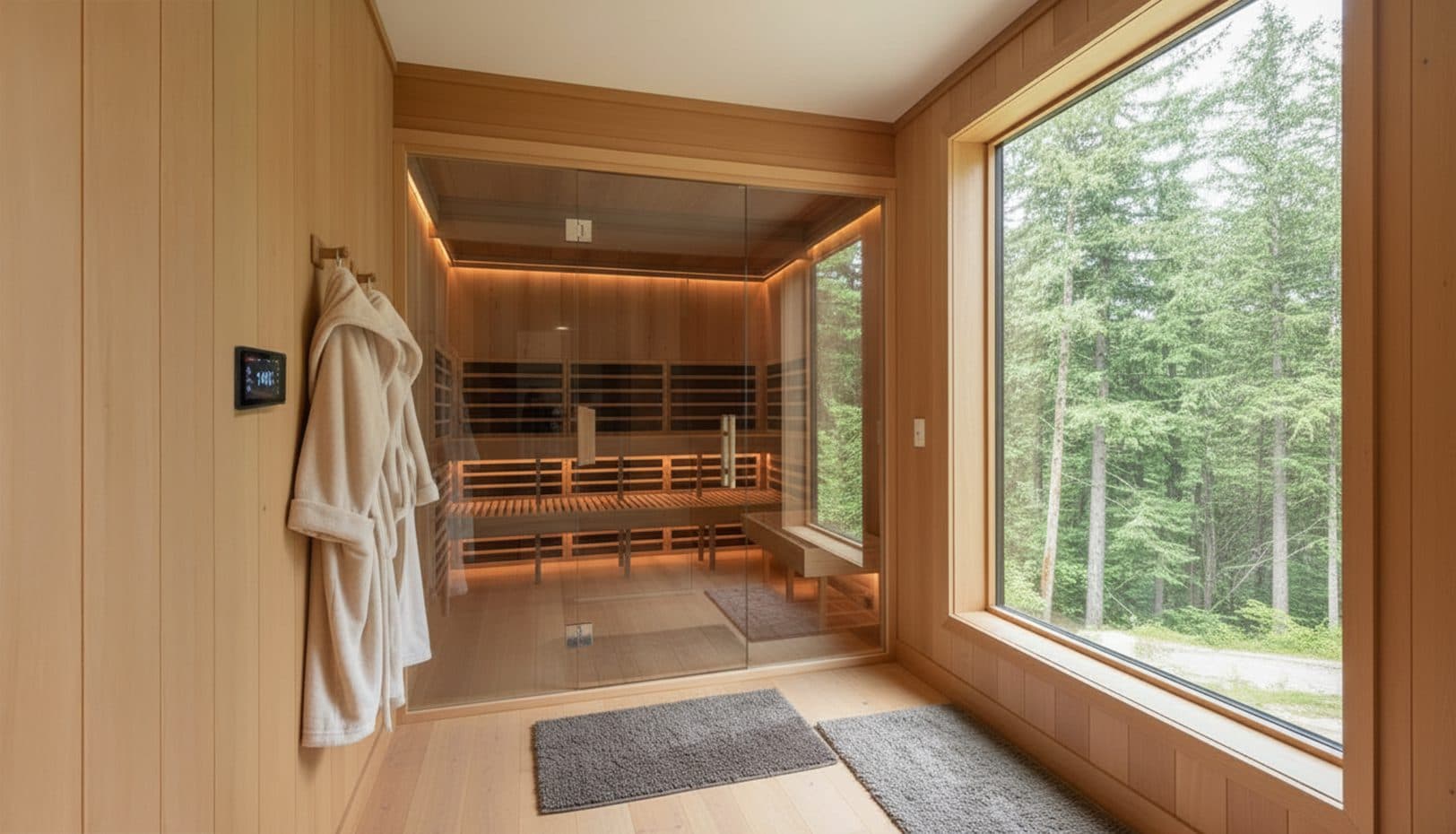
Infrared Sauna Installation, Delivery, and Setup Costs
Key Takeaways
- Budget infrared sauna units may cost $1,000 to $5,000 upfront; premium and custom cabins can cost considerably more. Electrical setup can add $0 when an existing circuit meets the manufacturer’s requirements, while new dedicated circuits need a local electrician’s quote.
- Monthly electricity depends on wattage, total running time, and your utility rate. For example, a 1.75 kW cabin at an illustrative $0.15/kWh costs $3.41 for 13 one-hour uses or $7.88 for 30 one-hour uses, including preheating within that hour.
- Swapping a 15-amp wall receptacle for a 20-amp outlet doesn't upgrade the circuit’s wiring, and an adapter does not increase circuit capacity. Use the manufacturer-specified power connection.
In This Article
Two home sauna boxes can leave the warehouse at the same $1,000 checkout price, and one will plug into your bedroom wall that afternoon while the other sits dark until an electrician pulls a new circuit through your drywall. The checkout number buys the wood and heaters, not a working room. Here at SaunaCloud, the pattern we see is that infrared sauna installation, delivery, and setup costs beyond the sticker price are where bargain cabins turn expensive. Once you factor in freight access through tight hallways, flooring and ventilation prep, and a 240-volt electrical upgrade, a $1,000 unit can end up costing $1,500 or more before you ever sweat in it. That is an illustrative budget, not a minimum installed price.
Brand names and cabin footprints don't predict that final bill nearly as well as the electrical class printed on the spec sheet. If you budget by amperage tier first, you can confirm what your wiring can handle before a pallet hits your driveway.
What an infrared sauna costs to install and set up
Infrared sauna installation and setup costs start with the cabin: $1,000 to $5,000 is a budget-cabin planning range, with premium and custom models costing more. Electrical work is separate and depends on the circuit your model requires. Total setup expenses break across four core blocks: purchase prices by cabin size and build quality, freight delivery, physical assembly, and electrical wiring. A 120-volt, 15-amp cabin may need no electrical work if the existing circuit meets its installation requirements. Cabins that need a new dedicated circuit require a licensed electrician. A short, accessible circuit run may cost a few hundred dollars; panel work, long runs, trenching, permits, and drywall repairs can raise the bill substantially.
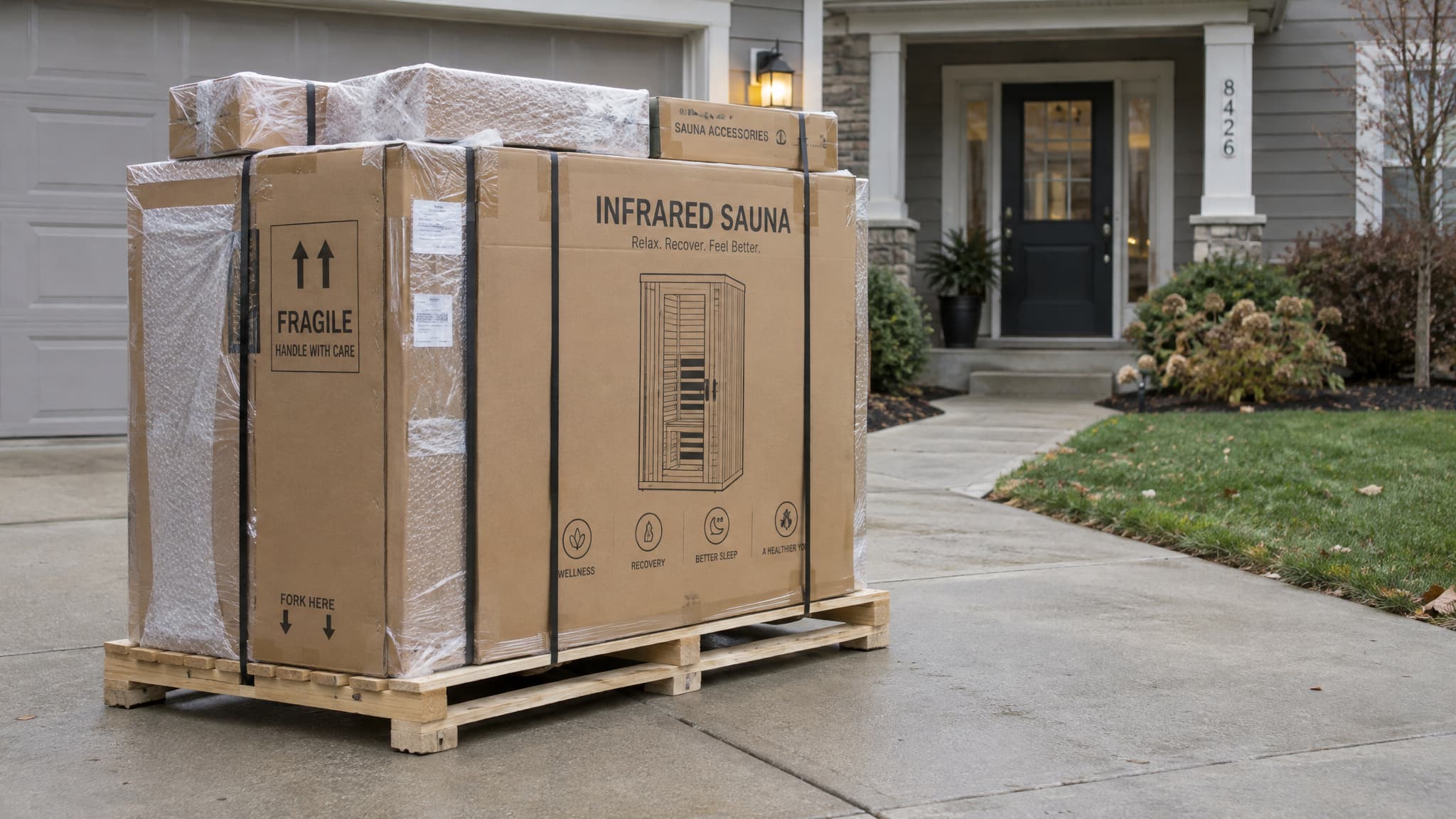
Freight is the first hidden line item: with curbside delivery, hauling the pallet’s contents inside is on you.
Infrared heaters transfer radiant heat to your body while also warming the cabin. Compact models can use less energy per session than larger traditional rooms, but post-purchase bills still stack up fast if you don't budget by electrical tier. A 15-amp plug-in tier fits renters and spare bedrooms where an existing circuit already meets the installation requirements, whereas the 20-amp and 240-volt tiers fit dedicated home gyms or outdoor patios where you're ready to hire a pro (and if your first electrician quote seems high, get a second one).
Budget for electrical work, site prep, and annual upkeep on top of the cabin's sticker price, especially if you add optional heaters or red light therapy that change the electrical requirements. Confirm the complete configuration before your electrician prices the circuit. Even on a standard circuit, replacing a worn wall outlet adds parts and labor costs, and preparing your room's flooring and ventilation adds upfront site costs before delivery. Once the cabin is running, cleaning supplies, service calls, and replacement parts depend on use and warranty coverage; there is no fixed annual maintenance fee.
- Sauna unit price: $1,000 to $5,000 for budget cabins; more for premium or custom models
- 120V, 15-amp plug-in electrical setup: $0 if the existing circuit meets all installation requirements
- Dedicated circuit installation: Quote required; panel capacity, cable route, voltage, and amperage affect cost
- Receptacle replacement: Parts and electrician labor, if needed
- Site preparation: Flooring protection and room ventilation adjustments prior to delivery
- Annual upkeep and cleaning: Supplies and any service or repairs outside warranty coverage
Infrared vs traditional, steam, and electric sauna costs
Infrared saunas can be cheaper to run than traditional saunas, but compare actual wattage and running time. Using illustrative heater loads of 1.5 to 6 kW for infrared and 3 to 9 kW for traditional electric rooms, monthly costs overlap rather than following a fixed ratio. Traditional Finnish and electric sauna categories overlap: many Finnish saunas use electric heaters. Meanwhile, UAE market reporting from The National (republished by UA.NEWS on 19 September 2026) groups the home market into three main types, traditional Finnish, infrared, and steam, noting that compact personal steam units offer a lower upfront entry price. A budget infrared sauna dome is another format to compare with a full cabin.
Running cost depends on heater wattage, preheating, session length, and your electricity rate.
| Sauna Type | Indicative Purchase Budget | Monthly Running Cost | Heater Draw & Mechanism | Space & Upkeep Requirements |
|---|---|---|---|---|
| Infrared sauna | $1,000-$5,000 for budget cabins; premium/custom higher | $2.93-$11.70* | 1.5-6 kW; warms body directly | Some compact models are movable; clean as the manual directs |
| Traditional Finnish sauna | $3,000-$6,000 | $5.85-$17.55* with a 3-9 kW electric heater | Heated rocks warm the air | Needs a well-insulated space; replace rocks and do occasional repairs |
| Steam sauna | $2,000-$7,000 | Generator electricity + water; calculate by model | Steam generator heats moisture | Needs a well-sealed room; clean mineral buildup regularly |
| Wood-burning sauna | $2,500-$8,000 | Depends on firewood price and consumption | Wood stove heats cabin | Usually outdoors with weather-resistant materials; clean chimney, ash, and soot |
| Electric sauna | $2,000-$5,000 | $5.85-$17.55* | 3-9 kW electric heater | Electrical installation required where specified; inspect heater and stones |
Electricity examples assume 13 hours per month at full rated power and $0.15/kWh, with preheating included in those hours. These are calculations, not market averages. Purchase ranges are rough planning figures, not installed quotes; room construction and local trades can cost substantially more.
Electrical requirements for an infrared sauna
Electrical requirements for a 2- or 3-person infrared sauna depend on the heater configuration and accessories, not just the number of seats. Before buying, confirm the required voltage, circuit amperage, and whether the sauna needs a dedicated circuit or hardwired connection.
- 120V, 15-amp models: Some compact cabins can use an existing household circuit, provided it meets the manufacturer’s requirements. A standard plug does not automatically mean the sauna can share that circuit with other appliances.
- 120V, 20-amp models: These need a suitable circuit and matching receptacle. If your installation location does not already have them, include electrical work in your setup budget.
- 240V models: Circuit requirements vary with the sauna’s size and equipment. Have an electrician review the specifications and your available panel capacity before quoting the installation.
Additional infrared heaters or integrated red light therapy can change the electrical requirements, so get specifications for the complete configuration you plan to order. For a custom infrared sauna, include the electrical plan in the design process so your contractor can price the work before delivery.
The 5-minute outlet check before you buy
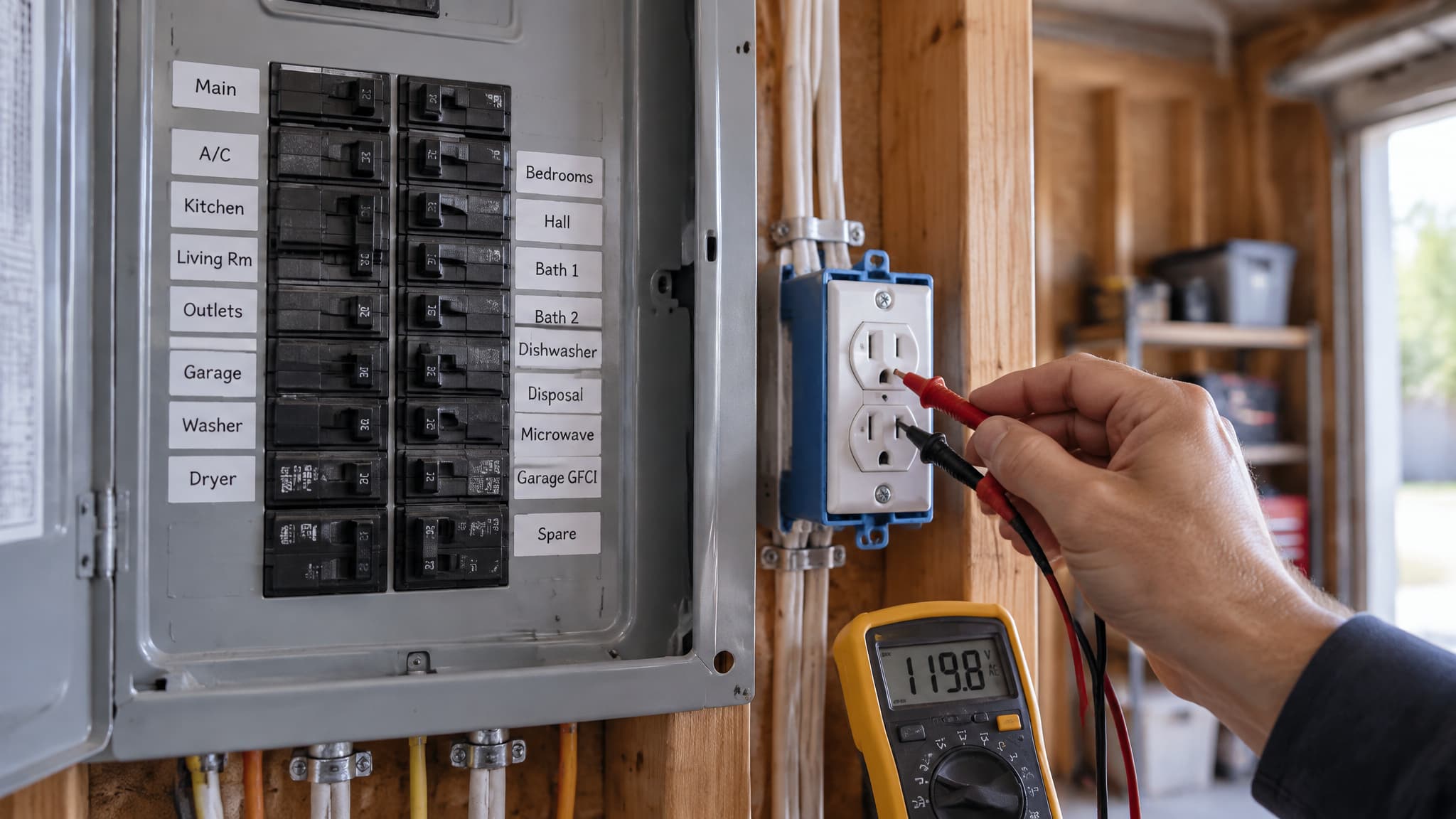
Checking your breaker panel takes five minutes and helps identify the circuit serving your target room. It does not verify wire size, grounding, outlet condition, or whether the circuit is dedicated.
How to verify a 20-amp circuit
You can identify the breaker’s marked rating by reading the amperage number on its handle. An electrician must confirm that the wiring and receptacle match that rating and the sauna’s requirements.
- Plug a lamp or phone charger into the exact wall outlet you plan to use.
- If you can safely operate the panel’s normal breaker handles, have a helper watch the lamp while you switch off the relevant breaker. Avoid interrupting essential equipment and do not remove the panel cover.
- Read the number on the handle of the breaker that cuts power to the lamp (15 or 20). Note what else loses power, then have an electrician confirm suitability if anything is uncertain.
Why a $7 adapter is not an electrical upgrade
If your breaker switch reads 20 amps but the wall outlet has a standard 15-amp face, do not use an adapter to connect a sauna with a 20-amp plug. An adapter does not upgrade the receptacle or verify the wiring. Have a licensed electrician check the circuit and install the manufacturer-specified receptacle where appropriate.
Why breaker trips happen and outlet swaps fail
When an infrared sauna keeps tripping your breaker, an overloaded shared circuit is one possible cause. Wiring faults, ground faults, or equipment problems can also cause trips; stop using the sauna until recurring trips are diagnosed. You can't fix a 15-amp line just by swapping a 20-amp wall receptacle into the box. The existing wiring may not support a higher rating. An electrician must verify the conductors, breaker, grounding, and receptacle together; never increase the breaker rating without that assessment.
Extension cords and hospital-grade receptacles
Plug a cord-connected infrared sauna directly into the correctly rated wall receptacle specified in its manual, without an extension cord or power strip. A hardwired model needs its specified permanent connection. If an outlet is worn, loose, or discolored, stop using it and have an electrician inspect it. A hospital-grade receptacle may be specified or recommended for some installations, but it does not increase circuit capacity or replace correct wiring.
Plug-in or electrician: DIY vs professional setup
An infrared sauna is a plug-in appliance when its design provides for a cord-and-plug connection. A licensed electrician is needed whenever a new circuit, receptacle, or hardwired connection is required, including for some 15-amp installations. Sequencing your purchase backwards from your wall outlet helps establish your setup bill: a compatible existing circuit can avoid new wiring costs, while higher-capacity models may need professional circuit work. With more than 3,000 installations here at SaunaCloud, we always advocate proper electrical infrastructure and professional circuit work over cut-corner DIY wiring.
Budget for a licensed electrician if your 240-volt cabin needs a new circuit or a hardwired connection.
Plug-and-play 15-amp cabins
If your existing circuit meets the installation requirements, you may avoid new wiring costs with a compatible 120-volt, 15-amp infrared sauna. Check the complete installation manual before assuming you can unbox, assemble, plug in, and use the cabin the same day.
DIY kit carpentry vs professional heater wiring
DIY kit installation vs hiring a professional splits cleanly between woodwork and wiring: building the wood cabin yourself makes sense if you have basic carpentry skills, while wiring the heater or circuit belongs to a licensed electrician. Some home sauna kits ($1,500 to $5,000) may take 8 to 12 hours to assemble with basic tools, depending on the kit and site readiness, making a hybrid approach the smartest budget move: you put the softwood walls and benches together over a weekend, then bring in a pro for the power connection. Choose a licensed and insured electrician, verify their coverage, and confirm permit and inspection requirements before work starts.
Where to find local installation and delivery help
Local infrared sauna installation and delivery service rates vary because labor pricing depends on your local electrical market and site access. To line up reliable help, vet a local licensed and insured electrician, getting a second quote if the first bid seems steep, and use manufacturer support resources before your pallet ships. For a SaunaCloud project, use the project-specific plans and electrical drawings to get comparable quotes from local installers before delivery.
Delivery day: access, freight, and return terms
Checking delivery access and return freight terms before entering your payment details helps keep a curbside pallet from turning into an expensive mistake.
Measuring the delivery path before checkout
Yes, you must verify how much space and hallway clearance your infrared sauna needs and confirm the seller's freight rules before buying online, or you risk getting stuck with hundreds of pounds of crated wood at the end of your driveway. In our experience, many flat-packed prefab and kit cabins ship on multi-box freight pallets for curbside delivery, leaving you to haul heavy panels through doorways, tight stair turns, and across finished floors. Confirm whether your order includes curbside-only drop-off or inside room-of-choice delivery, ask about stair-carry surcharges, and run through this five-point pre-purchase checklist.
- Delivery feasibility: Measure every doorway, hallway corner, and stairwell along the carry path.
- Electrical requirements: Confirm the specified voltage, circuit rating, receptacle or hardwired connection, and panel capacity.
- Installation space: Confirm the footprint and ceiling clearance.
- Ventilation: Check that the room can clear heat and fresh air properly.
- Surrounding conditions: Account for flooring protection and ambient moisture.
The return-policy trap on cheap cabins
Read the fine print on returns before a unit arrives damaged or fails to heat properly. Returning a multi-hundred-pound sauna cabin can mean repacking a freight pallet and paying commercial return shipping, depending on the reason for return and the seller’s terms. Check damage-reporting deadlines, restocking fees, and who pays freight for defective goods versus change-of-mind returns.
Indoor or outdoor: how placement changes the bill
Installing an infrared sauna indoors is generally cheaper and easier than installing one outdoors because your indoor room already has shelter and nearby electrical utilities, whereas an outdoor setup requires an outdoor-rated design, a suitable base, weather protection, and electrical work rated for the location. That baseline can flip on complex indoor builds: when an interior room needs structural modifications, custom ventilation, and home integration work, indoor projects can cost more than a straightforward outdoor setup; compare site-specific quotes. For standard cabins, though, going outside stacks electrical labor onto weatherproofing costs. Outdoor infrared saunas have different circuit requirements depending on their heater configuration, so confirm the voltage, amperage, and connection type before pricing exterior electrical work.
GFCI protection depends on the installation location and applicable electrical code, not simply on whether the sauna uses water. Bathrooms, garages, basements, and outdoor locations commonly require it. Have your electrician confirm GFCI and any AFCI requirements for the circuit and equipment; do not bypass required protection. The Electrical Safety Foundation’s GFCI guidance lists common locations requiring protection.
Kits, prefab, or custom: the hidden cost of each path
For a home gym, a prefabricated infrared sauna ($3,000 to $10,000) can be good value when you want minimal assembly and preset features, while a custom build ($6,000 to $20,000 or more) can make sense when you need custom room dimensions, heater placement, accessibility, or particular materials. These are broad planning ranges, not SaunaCloud quotes. Regardless of which path you pick, budget for flooring and ventilation prep before delivery. Confirm what is included in the purchase price, especially shipping, glass, assembly, electrical work, and site preparation.
Home sauna kits ($1,500-$5,000)
Kits bundle softwood walls, benches, lighting, and an electric heater for DIY builders. Some kits can be assembled in 8 to 12 hours with basic carpentry skills, while custom room builds take longer, and your main hidden cost is hiring a licensed electrician to wire the heater.
Prefabricated saunas ($3,000-$10,000)
Prefab cabins usually arrive as factory-made panels or modules with preset layouts and varying assembly requirements. Available lighting and ventilation options depend on the model. For a private home gym or a larger wellness space, check the cabin’s assembly and electrical requirements before budgeting. Models requiring a new circuit still carry the cost of professional electrical wiring.
Custom builds ($6,000-$20,000+)
Broad custom-sauna budgets range from $6,000 to $20,000 or more to fit indoor or outdoor spaces, climbing in price with site-specific installation labor, wood selection, and add-ons. Hemlock offers a sturdy, cost-effective timber, redwood offers a distinctive appearance, and cedar provides natural decay resistance and a pleasant aroma. At SaunaCloud, we pair Western Red Cedar with our low-EMF VantaWave heaters for custom projects. Your proposal should distinguish the sauna system from room preparation, glass, local labor, and electrical work. Adding Bluetooth speakers, specialty lighting, or plumbing for a shower or water feature can raise the overall project budget. A shower or water feature is separate from the infrared sauna itself.
What it costs to run an infrared sauna monthly
Monthly infrared sauna running costs depend on heater wattage, total running time, and your electricity rate. For a 1.75 kW cabin at $0.15 per kWh, 13 one-hour uses cost about $3.41 per month, while 30 one-hour uses cost about $7.88. These examples include preheating within the hour and assume full rated power throughout; $0.15/kWh is an illustrative rate, not a claimed national average.
Two usage baselines: 3x/week vs daily
Published operating estimates look contradictory when sources do not show their session math. Using the same 1.75 kW cabin and $0.15/kWh rate, three sessions per week works out to about 13 uses per month: 1.75 × 13 × $0.15 = $3.41. Daily use over a 30-day month is 1.75 × 30 × $0.15 = $7.88. Longer preheating, a higher-wattage cabin, or a higher utility rate increases both totals.
How to calculate your exact power bill
You can figure out an estimated cost per session with a simple formula: multiply your heater's kW draw by the hours used, then multiply by your local utility rate per kWh. Include preheating and any powered drying time. This follows the kilowatt-hour calculation explained by Hawaiian Electric. Rated power gives a full-load estimate; thermostatic cycling can reduce actual energy use. Check measured consumption for a more exact figure. Wood-burning heaters require a separate firewood budget, and gas heaters use a different fuel-cost calculation.
Annual maintenance beyond electricity
Routine care primarily involves cleaning the wood as the manufacturer directs and inspecting accessible components with the power off. Budget for cleaning supplies and any service calls or replacement parts excluded from the warranty. There is no standard $150 to $200 annual maintenance charge for infrared sauna ownership.
Health outcomes behind the infrared sauna surge
According to reporting from The National republished by UA.NEWS on 19 September 2026, rising home sauna demand in the UAE has been driven by preventive health interest, advances in infrared technology, and post-pandemic home workout habits.
The same report describes customers using home infrared saunas and tracking their sleep with wearables, with some reporting higher deep or REM sleep after evening sessions. These are customer reports, not proof that a particular sauna improves sleep. Inside your body, passive heat raises your heart rate, widens blood vessels (dilation), and increases blood flow.
Priyanka Porwal, an internal medicine specialist at Aster Clinic, describes potential cardiovascular benefits of heat exposure. Research results vary: a 2025 review of randomized trials found no significant pooled effect for most of the cardiometabolic and vascular outcomes studied. Results from different heat therapies should not be treated as guaranteed benefits of a home infrared cabin. For healthy adults, Sigma Clinic founder Mark Boyes suggests starting with 10- to 20-minute sessions several times a week with plenty of water, especially in hot climates, while Porwal advises anyone with low blood pressure or existing medical conditions to check with a doctor first.
Buy vs rent: the breakeven test
Whether buying beats renting, or paying per visit at a local sauna studio, comes down to how many times a week you'll actually sit in the cabin. The September 2026 UAE reporting cited above included infrared sauna rental prices of 3,900 dirhams a month or 7,500 dirhams for a three-month trial (excluding VAT), alongside installed infrared cabin purchase prices of 20,000 to 30,000 dirhams. Dividing a 20,000- to 30,000-dirham purchase price by the 3,900-dirham monthly rental rate puts the breakeven point at roughly five to eight months of renting (or about eight to 12 months if the 7,500-dirham three-month rate were repeatable), before accounting for VAT, delivery, repairs, financing, or resale value. Those UAE prices are historical examples, not US installation quotes. Buying becomes more attractive when you know you'll keep up several sessions a week beyond that window, while a three-month rental lets you test your weekly habit first.
Warranty, property value, and long-term cost protection
Protecting your budget after installation comes down to warranty depth, resale appeal, and insured electrical work. Some manufacturers offer extended or lifetime warranties, but coverage may exclude labor, diagnosis, shipping, wood, or accessories. Read the actual terms. A well-maintained sauna may appeal to some buyers, but there is no guaranteed increase in property value. Before you enter a credit card, confirm that your electrical system can support the sauna you choose, verify the warranty and return freight policy, and confirm your electrician carries liability insurance.
Frequently Asked Questions
How much does an infrared sauna cost to install and set up at home?
Budget roughly $1,000 to $5,000 for a budget infrared sauna cabin, with premium and custom models costing more. Electrical work may cost $0 if an existing circuit meets every installation requirement; otherwise, get a licensed electrician’s quote. A basic $1,000 box can become a $1,500+ project after delivery, site preparation, and wiring, but that is an illustration rather than a minimum. For electricity, a 1.75 kW cabin used for one hour including preheating costs about $3.41 for 13 uses or $7.88 for 30 uses at $0.15/kWh.
What electrical requirements does a 2 or 3 person infrared sauna have?
A 2- or 3-person infrared sauna may need a 120V/15A supply, a dedicated 120V/20A circuit, or a dedicated 240V circuit, depending on its heater configuration. Seating capacity alone does not determine the electrical requirements. Additional infrared heaters or integrated red light therapy can change the load, so confirm the specifications for the complete system before ordering. Have your electrician check the circuit, receptacle or hardwired connection, and available panel capacity.
How do I know if my outlet is a 20 amp line for an infrared sauna?
Identify the breaker serving the target outlet and read the rating on its handle. A marking of 20 amps identifies the breaker rating; it does not prove that the wiring, receptacle, grounding, or shared loads are suitable for your sauna. Have an electrician verify those details and any dedicated-circuit requirement. Do not use an adapter to connect a 20-amp sauna plug to a 15-amp receptacle.

Founder & Lead Designer, SaunaCloud®
SaunaCloud: 3,000+ installations since 2014 · Author of The Definitive Guide to Infrared Saunas · Featured in Forbes, Inc., and MSN
Christopher designs every SaunaCloud sauna. His work brings the room, heaters, controls and installation plans together so you can review the project before committing. His professional expertise is sauna design and construction, not clinical medicine.
Custom 3D renderings and a proposal in 24-48 hours.
Continue Reading
Buying & Comparison Guides
Outdoor Infrared Sauna vs Indoor Garage Sauna: Voltage, Cost, and Weather Math That Actually Decides It
Read article
Buying & Comparison Guides
Red Light Sauna vs. Sauna with a Red Light Panel: What's the Difference?
Read article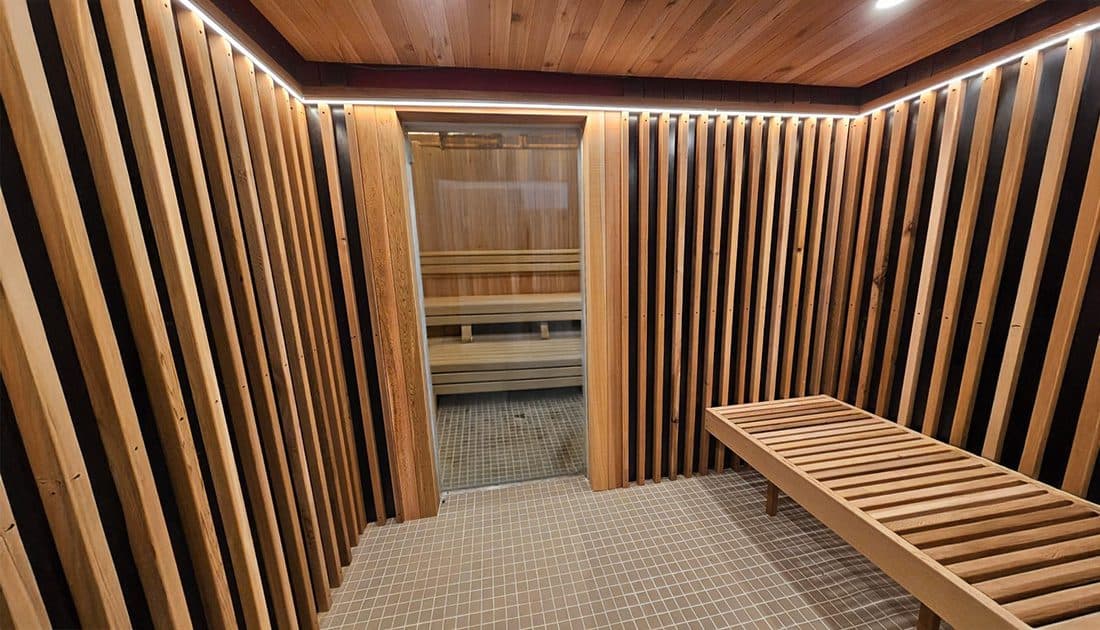
Buying & Comparison Guides
SaunaCloud Models Compared: Atlas, Sierra, Atlas One, and Outdoor
Read articleReady to Design Your Sauna?
Every project starts with a conversation. Tell us about your space and we'll create your custom plan — free, no obligation.
Custom 3D renderings and a proposal in 24-48 hours.