How Much Do Infrared Sauna Sessions Cost (Studio vs Owning)? One Missed Session a Week Flips the Answer
Key Takeaways
- Compare the complete installed cost with the studio or membership spending you would actually avoid. Use your package rate and attendance history rather than an advertised drop-in price.
- Frequent use spreads the home sauna's purchase cost across more sessions. If you pay a fixed gym membership, using that membership more often also lowers its cost per visit.
- Include electrical work, site preparation, delivery, assembly, electricity, and a reasonable allowance for maintenance and repairs.
- For a custom infrared sauna with red light therapy, compare the space, seating, heat, and light features you want. A shared gym sauna may provide a different experience.
In This Article
A home infrared sauna is a substantial purchase, so it makes sense to compare it with the studio visits or gym fees you already pay. The useful comparison starts with your actual routine: how often you go, what each visit costs, and whether owning would replace those payments.
There is no universal number of weekly sessions that makes owning cheaper. A household replacing frequent paid studio visits can reach break-even much sooner than someone whose existing gym membership already includes a sauna. Privacy, convenience, room design, and integrated red light can also make ownership worthwhile even when it isn't the lowest-cost option.
What an infrared sauna session costs at a studio
Studio pricing depends on location, session length, private or shared access, and the package you buy. The most useful number is your effective cost per visit: total spending divided by visits you actually complete.
A hypothetical $200 package covering eight visits works out to $25 per visit if you use all eight. If only five visits are used before the package expires, the effective cost rises to $40. A membership with unused monthly credits can have the same effect.
Check cancellation terms, booking availability, expiration dates, guest charges, and whether red light is included or billed separately. Include travel and parking costs where they affect your budget.
Gym access needs a different calculation
If you already pay for a gym and would keep the membership for its weights, pool, or classes, its included sauna may have little or no additional membership cost. Buying a home sauna doesn't eliminate those dues unless you actually cancel or downgrade the membership.
If you would join a second facility solely for sauna access, the full additional membership cost belongs in the comparison. If access requires a more expensive tier at your existing gym, use the difference between the two tiers.
Confirm the sauna experience before comparing prices
Ask the facility whether it offers infrared heat, a traditional sauna, a steam room, or a separate light-based amenity. Check session availability and whether red light therapy is included. Those services aren't interchangeable simply because they appear in the same wellness area.
A shared traditional sauna can be a good fit for someone who enjoys that experience. A private infrared cabin with integrated red light serves a different set of preferences. Compare the alternatives you would realistically use.
What a home infrared sauna costs to buy
Home options range from portable equipment to prefabricated cabins and custom rooms. A single market-wide "average installed price" doesn't capture the differences in space, construction, electrical work, or included equipment.
Start with a written quote that states what the seller supplies and what your contractor or electrician must provide. Our guide to infrared sauna purchase and installation costs covers the main budget categories.
Portable options
A blanket or portable enclosure can suit a buyer who has limited space or wants equipment that can be put away. Look closely at body position, ease of entry, cleaning, storage, and the type of heat it provides.
A steam tent and an infrared enclosure use different heating methods. A blanket also provides a different experience from sitting or reclining in a wood cabin. Our custom versus portable infrared sauna comparison explores those differences.
Prefabricated cabins
A prefabricated cabin offers a defined footprint and equipment package. Check the internal dimensions, bench depth, door swing, assembly clearance, and electrical requirements before ordering.
Listed capacity is only a starting point. A cabin that accommodates several people sitting upright may not provide the reclining space one person wants. Ask for usable bench measurements rather than relying on a person-count label.
Custom infrared saunas
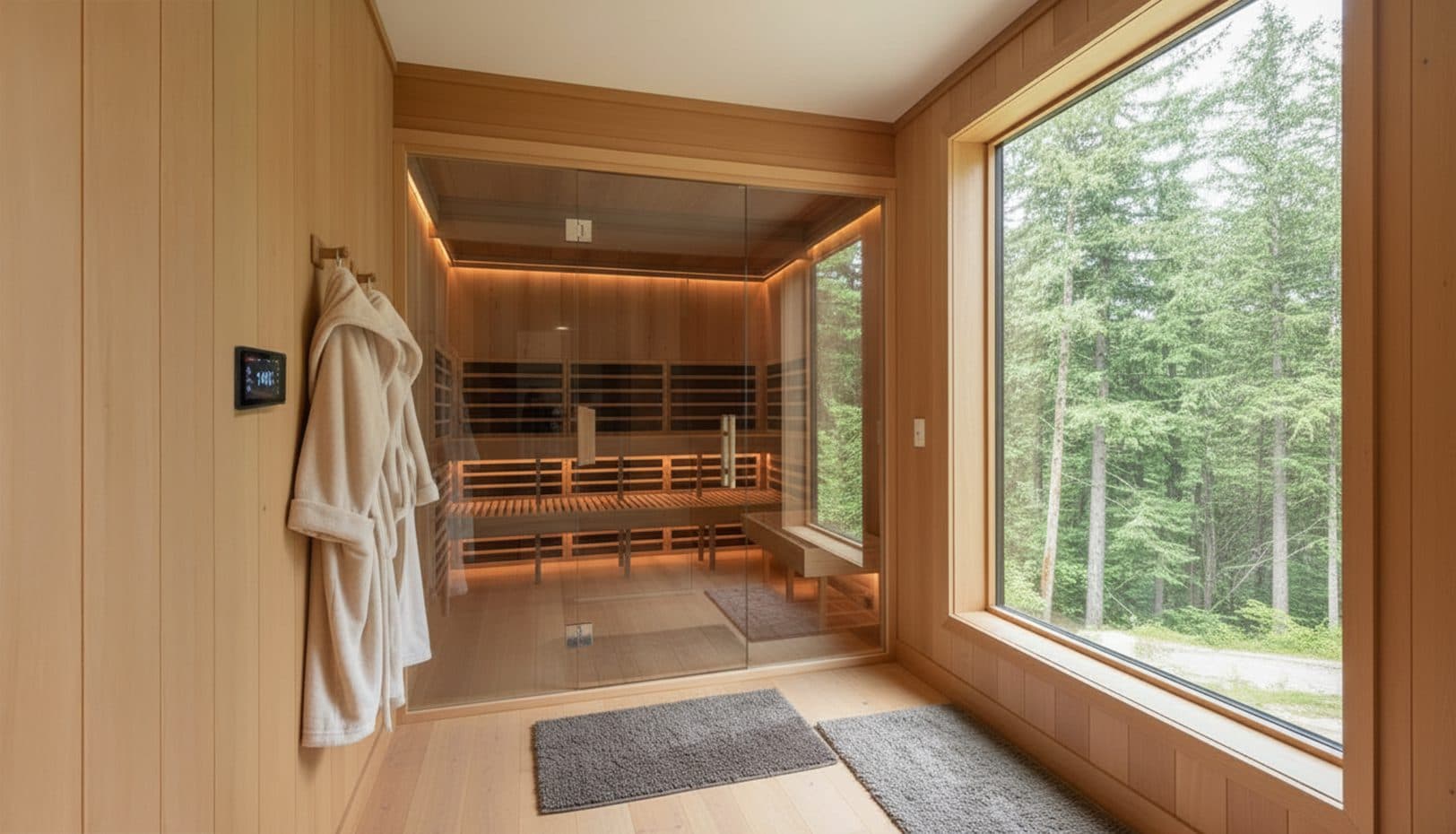
A custom sauna lets you plan the room around your available space and how you want to use it. Seating layout, access, glass, heater placement, and integrated red light can be considered together before construction.
At SaunaCloud, we design custom infrared saunas around the room and planned seating, with VantaWave® heaters and project electrical plans. Confirm the responsibilities for site preparation, glass, assembly, and electrical installation in your proposal.
For buyers who want room to recline, comfortable seating for a household, or a sauna incorporated into a renovation, that fit can matter as much as the cost per session.
| Home format | What to compare | Ownership considerations |
|---|---|---|
| Blanket or portable enclosure | Body position, heat type, materials, entry and exit | Cleaning, storage, setup time, and component support |
| Prefabricated cabin | Internal dimensions, bench size, heater layout | Delivery access, assembly space, and specified electrical supply |
| Custom infrared sauna | Room fit, seating, heater placement, and red light configuration | Project scope, trade work, service access, and installation planning |
| Outdoor installation | Weather protection, enclosure design, and climate suitability | Base preparation, electrical routing, exterior care, and seasonal warm-up |
Where integrated red light fits
If you already pay for both infrared sauna sessions and red light sessions, a combined home setup may replace some of that spending. Include only the services you would actually stop buying, and compare the light system's coverage, placement, controls, and intended use.
SaunaCloud's red light infrared saunas place red and near-infrared LEDs within the bench and let you operate heat and red light separately or together. Ordinary colored cabin lighting doesn't establish that the sauna includes a comparable red light system.
If you plan to keep using a dedicated red light panel, don't count its cost as a saving from buying the sauna. The integrated system can still add convenience to your sauna routine.
Financing changes the total
If you finance the purchase, add interest and fees to the ownership calculation. Compare the total amount payable as well as the monthly payment. Don't reduce the budget for a possible tax or benefit-account reimbursement until you've confirmed that it applies to your purchase.
What an infrared sauna costs to run
Electricity cost depends on total energy consumed, your local utility rate, and how often you use the system. Include warm-up and any red light or other accessories that aren't already included in the measured total.
Electricity cost per use = kWh for the complete use × price per kWh.
For example, 2.5 kWh at $0.20/kWh costs $0.50. At three uses per week, that is $78 over a 52-week year, or $6.50 per month on average.
The figures below are calculation examples, not measured results or guaranteed consumption ranges for particular sauna types. Dollar amounts throughout this article are in USD.
| Energy per complete use | Cost at $0.20/kWh | Average monthly cost at 13 uses | Annual cost at 156 uses |
|---|---|---|---|
| 1.5 kWh | $0.30 | $3.90 | $46.80 |
| 2.5 kWh | $0.50 | $6.50 | $78.00 |
| 4.0 kWh | $0.80 | $10.40 | $124.80 |
| 6.0 kWh | $1.20 | $15.60 | $187.20 |
Use the input specifications or appropriate meter readings for your own system. Larger custom rooms need their own estimates, and voltage alone doesn't tell you the cost of running them. Our infrared sauna electricity cost guide explains how warm-up and heater controls affect the calculation.
Ownership costs beyond the cabin
A useful quote makes installation responsibilities clear before delivery. Ask about:
- Site preparation, flooring, and any structural or weatherproofing work.
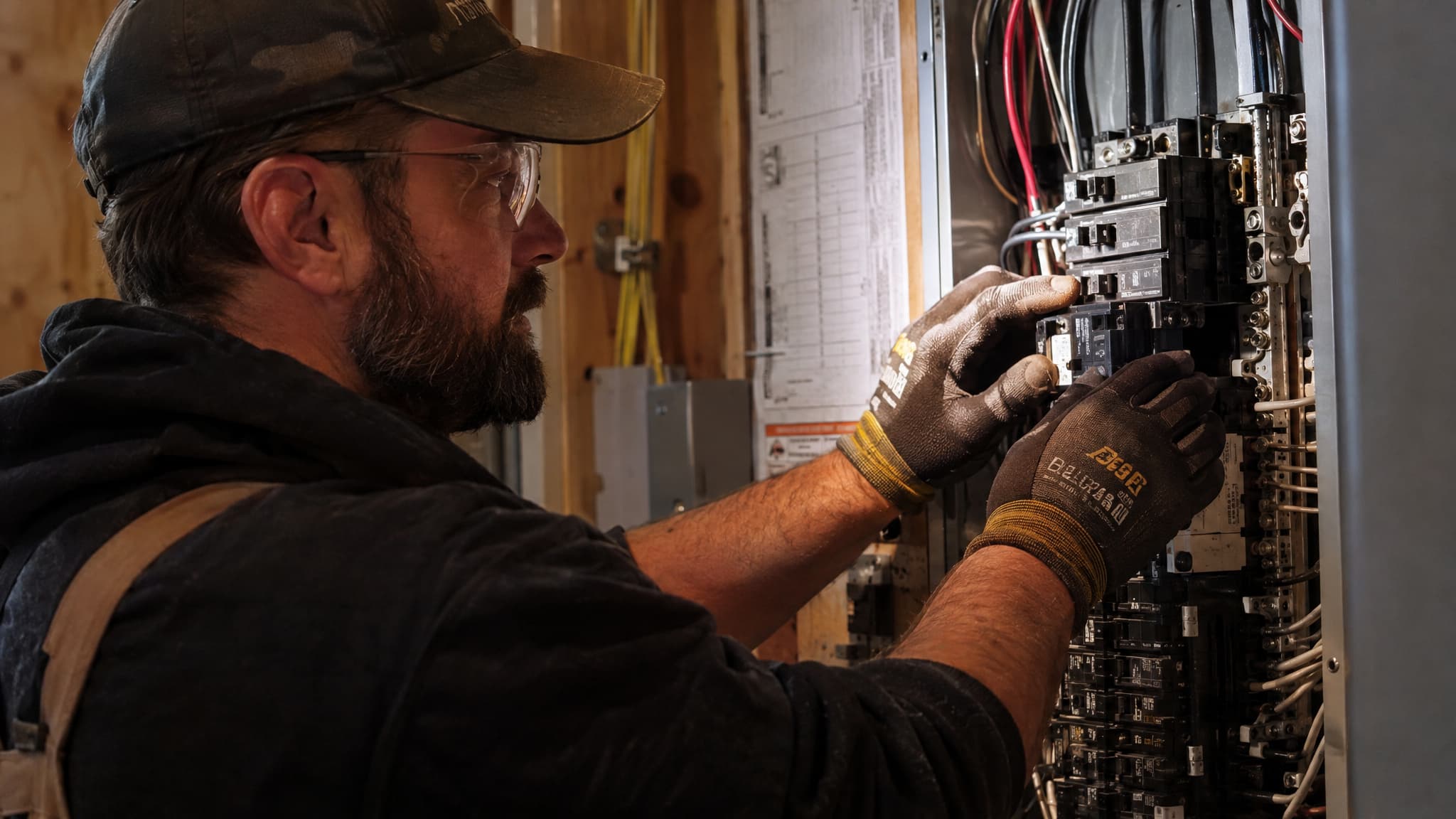
- Electrical circuits, permits, and any required service or panel work.
- Freight, unloading, access to the installation area, and assembly.
- Glass, doors, ventilation provisions, and other items outside the supplied package.
- Ongoing care, replacement components, and service labor.
Our guide to infrared sauna installation, delivery, and setup costs covers these planning questions in more detail.
Electrical work depends on the project
Some compact cabins use 120V service, while other installations need 240V or a different circuit arrangement. A familiar plug does not guarantee that an existing outlet is suitable, and a 120V sauna may still need a dedicated circuit.
Have an electrician assess the manufacturer's requirements and your home's electrical capacity. Visible spare breaker spaces alone don't establish whether the system can support another load.
Maintenance, repairs, and warranty coverage
Separate routine care from unexpected repairs. Cleaning supplies and exterior upkeep are different expenses from replacing a control board, power supply, heater, or red light component. Ask about access to parts, service procedures, and costs that remain the owner's responsibility.
For SaunaCloud, review the current written warranty alongside your agreement. Residential coverage includes seven years on heaters and three years on power supplies and controls. The red light system has one-year coverage for agreements signed from October 30, 2026; earlier agreements exclude it. Labor, diagnosis, electrician costs, and replacement-part freight are excluded, and commercial terms differ.
A warranty period isn't a promise that every component will last for the full period you use in a cost projection. Include a repair allowance and consider what happens if significant service or replacement is needed sooner than planned.
The break-even math: studio sessions versus owning
For a simple comparison against paid visits, use:
Annual net saving = avoided studio spending − annual home electricity, maintenance, and repair allowance.
Simple payback in years = complete installed cost ÷ annual net saving.
If the annual net saving is zero or negative, the purchase doesn't pay for itself through avoided fees under those assumptions. You may still value the private space and convenience, but those are separate reasons to buy.
A worked example
Assume the following hypothetical budget:
- Complete installed home sauna cost: $15,000.
- Studio price actually paid: $25 per visit.
- Use: three times per week, or 156 times per year.
- Home electricity: $0.50 per use.
- Annual allowance for maintenance and repairs: $150.
These figures illustrate the method. They aren't a SaunaCloud quote, a market-average purchase price, or a prediction of repair costs.
The studio costs $3,900 per year. Home electricity is $78, and the maintenance and repair allowance adds $150, leaving $3,672 in annual net savings. Dividing $15,000 by $3,672 produces a simple payback of about 4.1 years.
That estimate assumes every home use replaces a paid studio visit. It also holds prices constant and excludes financing, the time value of money, resale value, and repairs beyond the allowance. If you keep attending the studio, or use the home sauna less often, adjust the avoided spending.
What changes when you use it less often?
Using the same assumptions, twice-weekly use produces about $2,398 in annual net savings and a payback of roughly 6.3 years. Once-weekly use produces about $1,124 in annual net savings and a payback of roughly 13.3 years.
Those longer projections need more caution about service life and future repairs. They also show why occasional use doesn't automatically make ownership a poor choice: the result depends on the installed cost and the alternative spending.
Comparing ten-year cost per session
For the home sauna, calculate:
Cost per session = (installed cost + operating and maintenance costs over the period) ÷ completed sessions.
The comparison below uses the same hypothetical $15,000 installed cost, $0.50 electricity per use, and $150 annual maintenance and repair allowance. The studio costs $25 per visit, and the gym costs $60 per month solely for access you would otherwise cancel. Each option assumes the same attendance over ten 52-week years.
| Weekly uses | Uses over ten years | Home cost per use | Studio cost per visit | Gym cost per visit |
|---|---|---|---|---|
| 1 | 520 | $32.23 | $25.00 | $13.85 |
| 2 | 1,040 | $16.37 | $25.00 | $6.92 |
| 3 | 1,560 | $11.08 | $25.00 | $4.62 |
| 4 | 2,080 | $8.43 | $25.00 | $3.46 |
The home costs assume the equipment remains usable for the full ten-year period and that the allowance covers maintenance and repairs. Ten years is a modeling horizon, not a guaranteed product lifespan or warranty term. Gym initiation and annual fees, studio price changes, travel, financing, and resale value are excluded from this example.
Why a cheap gym membership can remain cheaper
At three visits a week, the hypothetical home sauna costs $17,280 over ten years, while the gym costs $7,200. The home sauna is less expensive than the $39,000 studio total, but it doesn't beat the gym on spending alone.
Using the home sauna more often doesn't automatically reverse that ranking. The gym's fixed membership cost is also spread across more visits. Compare annual totals first, then use cost per visit to understand how much use you get from each option.
If you would retain the gym membership anyway, its fees cannot be counted as savings from buying a home sauna.
Household use changes the comparison
A home cabin can serve more than one person without another purchase, but distinguish between a heating session and a person using it.
If two people share the same heated session, record two person-visits and one operating cycle. If they use it separately, include the electricity for both cycles, allowing for any warm-up saved by consecutive use.
Likewise, compare the home cabin with the studio fees or household membership the two people would actually pay. Don't assume a gym charges two full individual memberships if a cheaper household plan is available.
Custom seating can help a household use the room comfortably. Bench dimensions, the ability to recline, and heater placement at each seat are practical design choices to settle before committing to a person-count label.
What if you're an occasional user?
Occasional use spreads the purchase cost over fewer sessions, which makes financial payback slower. It doesn't settle the whole decision.
Someone who values privacy, has limited local access, or wants a sauna incorporated into a renovation may reasonably choose ownership without expecting it to beat every membership price. Another buyer may prefer to keep paying per visit until a routine is established.
Use your recent attendance as a starting point, then run a lower-use scenario. A budget that only works if you use the sauna every day for a decade is sensitive to changes in your routine.
Convenience deserves consideration, too. Booking, travel, changing facilities, and opening hours can make a studio visit harder to fit into the day. A home sauna removes some of those obstacles, although it still needs warm-up, cleaning, and space.
Does the health case justify the purchase?
Health research doesn't establish a purchase price or a financial break-even schedule. The widely cited 2015 Finnish cohort study in JAMA Internal Medicine followed 2,315 middle-aged men and found associations between more frequent sauna bathing and lower cardiovascular and all-cause mortality. It was observational, so it doesn't prove that sauna use caused the differences or establish equivalent outcomes for a home infrared sauna.
There is no "magic" three-session threshold that simultaneously guarantees health benefits and makes a purchase economical. Keep your financial assumptions separate from health claims, and avoid assigning dollar savings to promised medical outcomes.
If relaxation and an enjoyable routine are your main reasons for buying, those are reasonable preferences to consider. Questions about medical suitability or a treatment routine belong with a clinician who knows your circumstances.
When buying a home infrared sauna makes sense
Ownership becomes more compelling when several practical factors line up:
- You already use paid sauna sessions regularly and would replace a meaningful share of that spending.
- More than one household member wants to use the room.
- Privacy, scheduling freedom, and avoiding travel matter to you.
- Your available space can accommodate the seating and installation you want.
- You want integrated red light or a custom layout that your local facilities don't offer.
- The complete installed cost fits your budget, including an allowance for future repairs.
A custom installation doesn't need to be the cheapest way to access heat to be worthwhile. Its value can include a comfortable room that fits your home and the way your household uses it. Be clear about which parts of the decision are financial savings and which are features you're willing to pay for.
Verify your costs before you buy
Start with your recent studio receipts or membership statements. Calculate what you actually pay and how many visits you complete. Then request a complete home-installation proposal and have the required trade work assessed.
Use your local electricity rate, the specified system input, and a realistic warm-up and session routine to estimate operating costs. If measured data are available, check that the cabin, environment, settings, and accessories resemble your proposed setup.
Finally, compare three scenarios: your current attendance, a lower-use year, and shared household use. For a SaunaCloud project, bring your room dimensions, seating preferences, and red light requirements into the design consultation so the proposal reflects the sauna you would actually use.
Frequently Asked Questions
How many sessions per week does it take to break even on a home infrared sauna?
There is no universal threshold. Break-even depends on the complete installed cost, the paid visits or memberships you would replace, and ongoing home costs. In the hypothetical example above, three weekly visits replacing $25 studio appointments produce a simple payback of about 4.1 years. Different assumptions produce a different result.
Is a home infrared sauna worth it if I use it once a week?
It can be, particularly if privacy, convenience, or limited local access matters to you. Financial payback is usually slower because fewer paid visits are avoided. Compare your actual alternatives and check whether the purchase still feels worthwhile without assuming frequent use.
Is owning cheaper than a gym membership?
Sometimes, but a low-cost membership with suitable sauna access can remain cheaper for many years. If you would keep that membership anyway, buying a home sauna doesn't save the membership fee. Ownership adds privacy, access at home, and control over the room and equipment.
What is the ten-year cost per session at home?
Divide the complete purchase, installation, electricity, maintenance, and repair costs by the number of sessions you expect to complete. In the hypothetical $15,000 installed-cost example, three weekly uses work out to about $11.08 each over ten years. That figure assumes continued operation throughout the period and the stated repair allowance; it isn't a product quote or lifespan guarantee.
How much electricity does a home infrared sauna use?
Use the specifications or measured consumption for the complete installation. As an illustration, a use consuming 2.5 kWh costs $0.50 at $0.20/kWh, or $6.50 per month at 13 uses. Include preheating and integrated red light if they aren't already included in the energy total.
Does integrated red light improve the value of ownership?
It can add convenience and may replace separately purchased sessions if the home configuration meets your needs. Count only spending you would actually avoid, and compare the light system's coverage, placement, controls, and warranty. If you'll continue using a separate panel or attending a studio, keep those costs in the budget.
What should be included in a custom sauna quote?
The proposal should identify the supplied equipment and materials, room and bench layout, electrical requirements, red light configuration, delivery terms, and work assigned to your local trades. Review component warranty coverage and service costs before comparing the proposal with studio spending.

Founder & Lead Designer, SaunaCloud®
SaunaCloud: 3,000+ installations since 2014 · Author of The Definitive Guide to Infrared Saunas · Featured in Forbes, Inc., and MSN
Christopher designs every SaunaCloud sauna. His work brings the room, heaters, controls and installation plans together so you can review the project before committing. His professional expertise is sauna design and construction, not clinical medicine.
Custom 3D renderings and a proposal in 24-48 hours.
Continue Reading

Buying & Comparison Guides
Infrared vs Traditional Saunas: An Engineer's Honest Breakdown of Which Actually Works Better
Read article
Buying & Comparison Guides
Near Infrared vs Far Infrared Saunas: The Physics-Based Guide to Choosing (2026)
Read article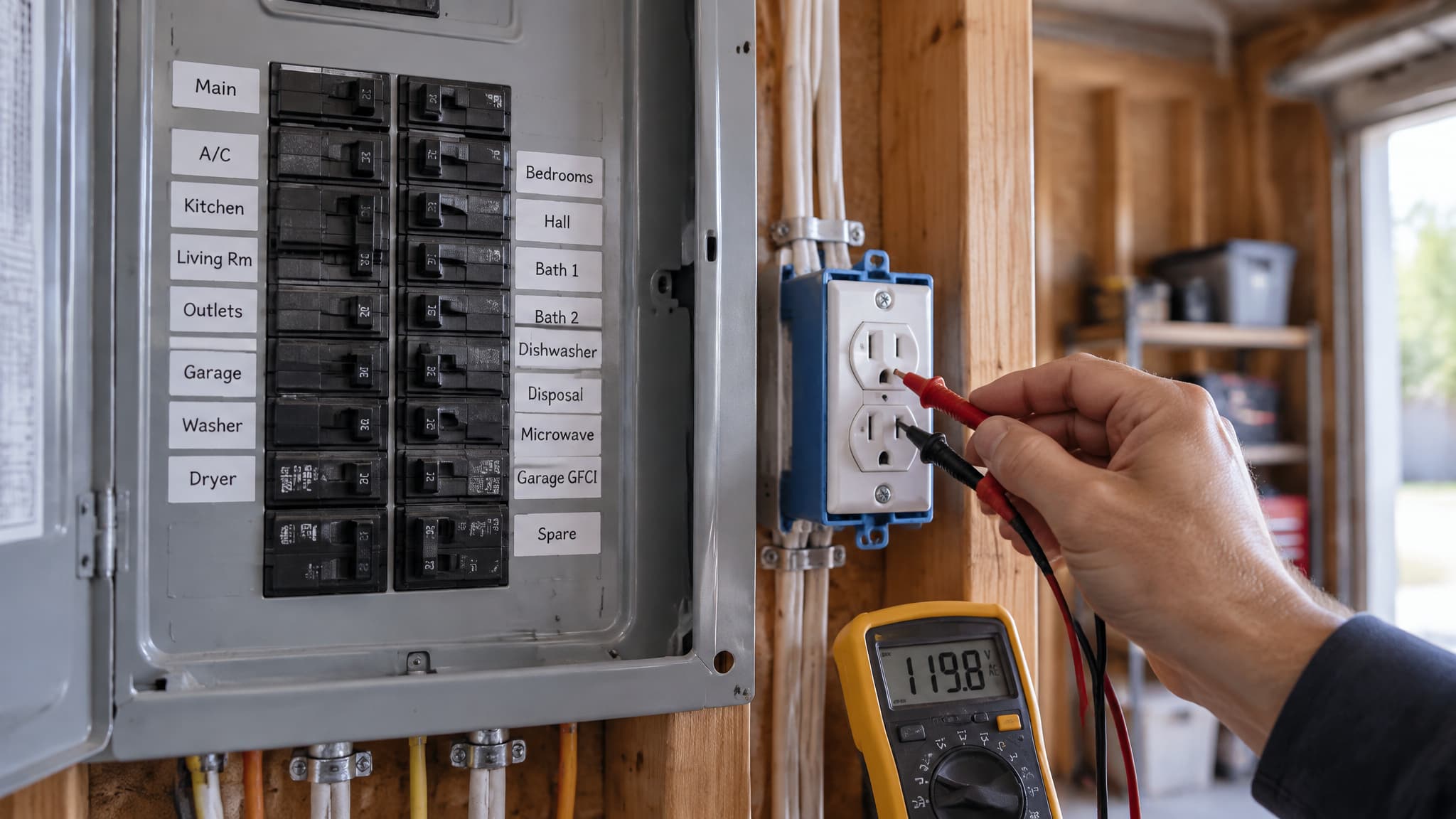
Buying & Comparison Guides
Outdoor Infrared Sauna vs Indoor Garage Sauna: Voltage, Cost, and Weather Math That Actually Decides It
Read articleReady to Design Your Sauna?
Every project starts with a conversation. Tell us about your space and we'll create your custom plan — free, no obligation.
Custom 3D renderings and a proposal in 24-48 hours.