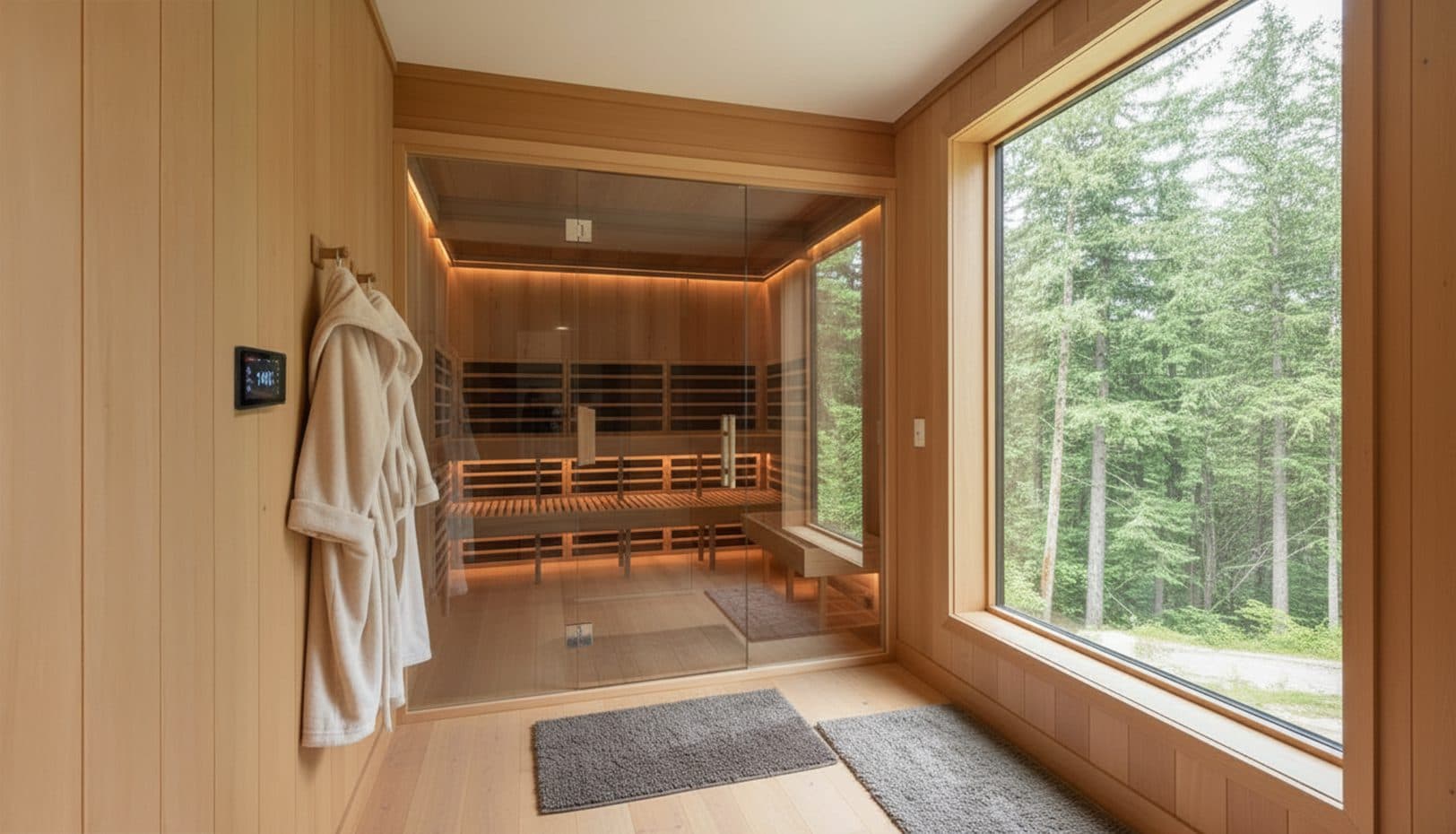
Infrared Sauna at Costco and Home Depot vs Custom-Built: What the Price Difference Buys — From Measured EMF to Floor Heat

Key Takeaways
- Heater placement deserves a close look. Check coverage around your back, sides, calves, and feet. Floor heat varies between cabins and should be confirmed on the actual plan.
- Ask for measured EMF results from the assembled sauna. A reading from one isolated heater doesn't describe the entire cabin, and price alone doesn't establish low-EMF performance.
- Separate the seller's service from the sauna's construction. A retailer, specialist dealer, and custom builder may offer different help with delivery, installation, and warranty claims.
In This Article
Two browser tabs can make you feel like you're losing your mind: one shows an affordable infrared sauna at Costco or Home Depot, and the other is a considerably higher custom-build quote. You're looking at two separate price gaps. Buying the same prefab cabin through a specialist dealer can change the service you receive. Moving from a standard cabin to a custom-built sauna can change the dimensions, heater layout, materials, and installation itself.
The useful question is what those differences will mean when you sit down for a session, need a replacement part, or try to fit the sauna into your home.
Big-box vs custom-built sauna cost: two separate gaps
A big-box infrared sauna usually starts with a fixed design manufactured in volume. A custom-built sauna adds work specific to your space, from drawings and bench dimensions to heater placement and installation planning. That helps explain the higher quote, but you still need to check what it includes.
The main equipment categories are:
- Sauna blankets and portable tents: Compact formats that take up less room and offer a different experience from a walk-in wooden cabin.
- Entry and mid-tier prefab infrared cabins: Standard sizes and layouts, usually supplied as panels for assembly at home.
- Upper-tier prefab infrared cabins: Fixed designs that may add more heating coverage, different materials, upgraded controls, or more detailed testing.
- Custom-built infrared saunas: Rooms or cabins designed around your dimensions, seating preferences, and installation requirements.
Traditional and barrel saunas are separate comparisons because their heating systems and installation needs differ. Including them in the same price list can obscure what you're paying for in an infrared sauna.
When comparing an infrared sauna at Costco or Home Depot with a specialist dealer's listing, first establish whether the underlying cabin and included accessories are identical. If they are, the difference may come down to delivery terms, returns, financing, and support.
A dealer's higher price is only useful if the additional service matters to you. Ask whether someone will help troubleshoot a fault, coordinate replacement parts, or explain installation requirements. Get those commitments in writing.
With custom work, compare the full project scope. The quote should explain who supplies the sauna components, who prepares the room, and who handles electrical work, glass, assembly, and finishing.
| Feature | Big-box prefab: Costco or Home Depot | Specialist dealer: prefab cabins | Custom-built infrared sauna |
|---|---|---|---|
| Price structure | Standard cabin with separately listed delivery or setup costs | Standard cabin, sometimes with added service or accessories | Project quote based on dimensions, specifications, and scope |
| Size and layout | Fixed configurations | Fixed configurations across the dealer's selection | Dimensions and seating planned for the space |
| Lower-body and floor heat | Check the specific heater layout | Depends on the cabin selected | Can be addressed during design; confirm what is included |
| EMF documentation | Request assembled-cabin measurements | Ask the dealer for the manufacturer's testing | Request testing details for the proposed system |
| Electrical requirements | Check the installation manual and circuit requirements | Same requirements as the cabin being sold | Planned around the room and selected equipment |
| Warranty support | Confirm the retailer's and manufacturer's roles | Confirm whether the dealer manages claims | Confirm the builder's coverage and service responsibilities |
Heater layout: where budget prefab can compromise
Heater placement affects how comfortable the sauna feels. A cabin can reach its displayed temperature while leaving your lower legs noticeably cooler than your back. Before comparing controls or decorative lighting, look at where the panels sit relative to your body.
Check three areas:
- Floor and lower-leg coverage: An unheated floor or side panels that stop above your ankles may leave your feet and calves cooler.
- Coverage in every seat: A layout that works for one person in the middle may feel different with two adults sitting side by side.
- Distance from the panels: Bench depth, backrests, and the space around your legs determine how close you sit to the heating surfaces.
Heater layouts vary between cabins sold by the same retailer. Some prefab designs include lower-body or floor heating, and some custom proposals need those features specified separately.
Ask for a heater diagram before buying. If floor heat matters to you, confirm whether the floor has an active heater, how it is controlled, and what surface you will stand on.
Aftermarket changes can add expense and complicate warranty coverage. Discuss cold spots with the manufacturer before adding heaters or changing the controls.
What "low EMF" on a big-box listing actually means
A "low EMF" label needs supporting measurements. It doesn't tell you which fields were measured, where the meter was placed, or whether the test covered one heater or the fully assembled sauna.
Request a report that identifies:
- The field being measured, with magnetic and electric readings reported separately.
- The units, such as milligauss or microtesla for magnetic fields and volts per meter for electric fields.
- The distance from the heaters and measurements at normal seated positions.
- Which heaters, controls, and accessories were powered during testing.
- The meter, test method, and person or laboratory responsible.
A low magnetic-field reading doesn't establish that electric fields are also low. Likewise, a result from one tested cabin cannot establish the performance of every sauna in the same price tier.
Keep health claims separate from product comparisons. The World Health Organization's guidance on EMF exposure standards states that exposures below the recommended international limits do not appear to have known health consequences. Lower readings can be a purchasing preference, but they don't establish that a sauna produces better health outcomes.
Why a basic meter and a single panel test don't tell the whole story
Different instruments measure different fields and frequency ranges. A warning light on a handheld meter is not enough to interpret a sauna's performance without knowing what it measures and how its alarm threshold is set.
For a meaningful comparison, use the same measurement method and positions in each cabin. Ask for the full report when a listing quotes only its lowest reading.
What to ask about shielding
Ask the builder how the heater system, wiring, grounding, and controls are designed, and how performance is checked after assembly. Shielding details should be supported by measurements.
A premium price or the word "custom" doesn't guarantee a particular EMF result. The documentation needs to support the claim.
Assembly, sizing, and build friction
A sauna can look spacious in a listing and still be awkward to assemble or uncomfortable for two adults. Review the installation manual before ordering, especially if the cabin will sit in an alcove or a tight corner.
Floor assembly and access
Some prefab cabins use a separate floor panel and exterior fasteners that require space around the walls during assembly. Check the assembly sequence, rear access requirements, ceiling clearance, and whether the finished cabin can be moved.
Measure the delivery route too. Doorways, stairs, and turns may limit which panels or crates can reach the intended room.
For a custom installation, establish how the components will enter the house and how trades will access the room. Design flexibility still requires a practical installation plan.
"Two-person" sizing and wall construction
Advertised capacity doesn't tell you how comfortably two people will sit. Ask for interior bench width, bench depth, usable legroom, and clearance around the heaters.
If you prefer to recline, include that in the brief. A cabin that seats two upright may be too short for one person to lie down comfortably.
Wall construction deserves the same scrutiny. Ask what is included in the stated thickness, whether insulation is present, and what installation environment the sauna is designed for. Exterior dimensions and a broad capacity label won't answer those questions.
Sauna wood and off-gassing across price tiers
Wood selection affects appearance, scent, and maintenance. If you react to fragrances or particular woods, request samples before committing to a cabin.
Common choices include:
- Western Red Cedar: An aromatic wood used in sauna interiors. Its scent is part of the appeal for some buyers and a reason to choose something else for others.
- Hemlock: A common option in prefab cabins, often selected for its appearance and comparatively mild scent.
- Basswood and poplar: Options to discuss when you prefer less aromatic wood. No species is a universal guarantee against sensitivity.
- Other woods: Ask how the selected species is prepared and whether it is suitable for the proposed sauna environment.
Look beyond the visible boards. Request details about adhesives, backing materials, finishes, and any indoor air quality testing performed under heated conditions. "Natural wood" alone doesn't describe everything inside the wall or bench.
If timber sourcing matters to you, ask for documentation supporting any FSC or PEFC certification claim.
Who actually makes the sauna: understanding private-label products
Different retail names can lead back to the same manufacturer. That can make apparently separate listings harder to compare, particularly when the photographs, dimensions, and controls look similar.
Ask who manufactures the cabin, who supplies replacement parts, and which company is responsible for the written warranty. Country of manufacture alone doesn't establish construction quality, emissions, or service reliability.
Independent reviews can help, especially when they show assembly, measurements, and extended use. Check whether the reviewer sells the product or receives affiliate commissions, and look for the test methods behind rankings.
Sauna warranty repairs: who answers after the return window
The seller's return policy and the manufacturer's warranty are separate promises. A straightforward return process doesn't tell you who will troubleshoot a failed controller several years later.
Before buying, confirm:
- Component coverage: Heaters, controls, electrical parts, and wood may have different warranty periods.
- Labor and shipping: A covered replacement part may still leave you responsible for diagnosis, freight, or installation.
- Ownership and location: Check whether coverage transfers to a new owner or remains valid if the sauna is moved.
- Repair conditions: Find out which repairs require authorization and how modifications affect coverage.
A specialist dealer may help manage a claim, but that service should be confirmed. The same applies to a custom builder: ask who answers technical questions and which tasks require your local installer.
Keep the invoice, installation documents, and warranty together. Before ordering, ask a practical question: if a heater stops working, who do I contact, and what happens next?
Total cost of ownership: delivery, setup, and maintenance
Budgeting only for the cabin leaves out work between checkout and your first session. Compare complete installed costs before deciding how large the price gap really is.
Costs between checkout and installation
Ask whether delivery is curbside, inside the home, or into the room where the sauna will be installed. Confirm who unloads the shipment, removes packaging, and handles damaged components.
Electrical requirements vary. Even a cabin with a household-style plug may require a dedicated circuit. Have the installation requirements checked before assuming an existing outlet is suitable.
Allow for assembly labor, room preparation, and any access challenges. For custom work, clarify whether the proposal includes glass, electrical hookup, and surrounding finishes or whether those are supplied locally.
Returns can also carry costs. Read the conditions for assembled products, return freight, and restocking before placing the order.
Comparing home ownership with paid sauna sessions
The financial comparison depends on how often you currently pay for sessions and how often you would use a sauna at home.
Start with the complete installed cost. Add electricity, expected maintenance, and a reasonable allowance for repairs. Compare that with the spending you would actually replace, including memberships you intend to cancel.
Avoid assuming a guaranteed resale value or a fixed break-even date. A lightly used home sauna and one used several times a week produce very different results.
Longevity and maintenance
Warranty length is one part of the durability picture. Replacement-part availability, access to electrical components, and the ability to repair a bench or panel also matter.
For outdoor installations, ask about the foundation, weather protection, drainage, and exterior maintenance. Follow the manufacturer's instructions for finishes and upkeep; an indoor cabin should not be assumed suitable for outdoor use.
Health benefits: what a higher price does and doesn't establish
A higher price doesn't establish greater health benefits. Evaluate the premium through the features you can inspect: seating comfort, heating coverage, materials, controls, and support.
If a seller makes a medical claim, ask for the study and check whether it examined the type of sauna being sold. Testimonials and broad promises about detoxification or weight loss aren't enough to justify a more expensive purchase.
A comfortable setup that fits your home and routine is a practical reason to spend more. Any claim of superior health outcomes needs its own evidence.
When a budget prefab sauna is the right choice
A prefab infrared sauna can be a sensible purchase when its fixed dimensions and heater layout suit your needs. Buying through Costco or Home Depot may also appeal if you already know the retailer and are comfortable with the applicable delivery and return terms.
A warehouse or home-improvement-store purchase makes sense when:
- The interior dimensions work for the people who will use it.
- The heater layout includes the coverage you care about.
- The electrical and assembly requirements fit your home.
- You understand who provides technical support and replacement parts.
You may have no need for custom sizing or architectural integration. In that case, paying for those services adds little value.
Choose the cabin on its documented features. A lower price doesn't automatically mean poor performance, just as a higher price doesn't guarantee a comfortable layout.
What the custom-built premium can buy
Custom work becomes useful when a standard cabin leaves you compromising on the room, seating, or heating layout.
The premium can cover:
- Dimensions designed for an alcove, renovation, or dedicated wellness room.
- Benches planned around how many people will sit, recline, or share the space.
- Heater placement coordinated with those seating positions, including lower-body coverage where specified.
- Selected wood, glass placement, and finishes that fit the surrounding home.
- Electrical and installation documentation for the people completing the work.
- A defined support relationship with the company supplying the system.
Ask the builder to show those details on drawings and list them in the proposal. Floor heating, insulation, shielding, and accessibility features should be explicitly specified if they matter to your project.
If a general contractor is building the enclosure around a separately purchased heater system, establish who is responsible for the complete installation. The heater supplier and contractor need a clear division of work and warranty responsibilities.
How upper-tier prefab and specialty designs bridge the gap
There are options between an entry-level flat-pack and a fully custom room. A better-equipped prefab cabin may provide the seating, heater coverage, and controls you want without the cost of an individually designed installation.
Specialty designs may address a particular need, such as easier entry, reclining space, or a compact footprint. Check actual dimensions and specifications before assuming a category label guarantees those features.
If a standard configuration already meets your requirements, it deserves consideration. Custom work earns its premium when adapting the sauna to your room or routine solves a problem that the available configurations cannot.
Where our custom builds at SaunaCloud fit
At SaunaCloud, we design custom infrared saunas around the room and the people using it. Our work includes planning dimensions, bench layouts, heater placement, and installation requirements, with solid-wood interiors and integrated red light options.
The process starts with the space you have and how you want to use it. We coordinate the sauna design and documentation so you and your installer can review the layout before construction.
That approach suits homeowners and commercial clients who need a sauna planned for a particular setting. You can see what goes into the process in our guide to how we build custom infrared saunas.
What to check before purchasing an infrared sauna
Use the same questions for a retailer's listing and a builder's quote:
- What are the usable interior and bench dimensions?
- Where are the heaters, including any floor or lower-leg heating?
- Are EMF measurements available for the assembled system, with test conditions explained?
- What electrical supply and circuit does the installation require?
- What woods, adhesives, backing materials, and finishes are used?
- Is heated-cabin air quality testing available?
- What does delivery include, and how is freight damage handled?
- Who performs assembly and any room preparation?
- What does the warranty cover, including labor and shipping?
- Who provides technical support and replacement parts?
A useful quote lets you answer those questions before placing a deposit.
Frequently Asked Questions
How does the cost of a custom-built infrared sauna compare with a Costco or Home Depot cabin?
A prefab cabin usually has a lower upfront cost because its dimensions and construction are standardized. A custom sauna includes project-specific design and fabrication, with the final quote shaped by room size, materials, heating layout, and installation scope. Compare the complete installed costs and the features included in each.
How do heater layout and heater quality differ between prefab and custom saunas?
Prefab cabins have a fixed heater arrangement, so you need to check how it serves each seat and whether it includes lower-body or floor heat. A custom design allows heater placement to be planned around the benches and room. At SaunaCloud, seating and heater layout are considered together during design. Either way, ask for the specifications and a clear layout drawing.
Are inexpensive infrared saunas actually low EMF?
Price alone doesn't answer that. Ask for electric and magnetic measurements from the assembled, powered sauna, including the testing distance and conditions. An isolated heater test or a "low EMF" badge is insufficient to compare complete cabins.
What are the drawbacks of budget infrared saunas from Costco and Home Depot?
Potential compromises include fixed dimensions, limited seating space, gaps in heating coverage, and assembly or service requirements that aren't obvious from the product photos. These vary by cabin. Read the installation manual, check the interior measurements, and confirm the support arrangements before buying.
Who handles warranty repairs on a sauna bought at Costco or Home Depot?
Check both the retailer's return terms and the manufacturer's warranty. Technical support and replacement parts may come directly from the manufacturer, while some dealers offer help managing claims. Confirm the process and any labor or shipping costs in writing.
Is a custom-built sauna worth the extra money over a prefab infrared cabin?
It can be if a standard cabin doesn't fit your room, seating preferences, or heating requirements. The value should be visible in the proposed dimensions, layout, materials, and support. If a prefab cabin already meets those needs, custom work may offer less practical benefit.
What should I look for when purchasing an infrared sauna?
Start with interior fit and heater coverage, then review electrical requirements, materials, EMF documentation, and installation scope. Confirm who handles repairs and whether replacement parts will be available. Those details are more useful than a long accessories list or a broad wellness claim.

Founder & Lead Designer, SaunaCloud®
SaunaCloud: 3,000+ installations since 2014 · Author of The Definitive Guide to Infrared Saunas · Featured in Forbes, Inc., and MSN
Christopher designs every SaunaCloud sauna. His work brings the room, heaters, controls and installation plans together so you can review the project before committing. His professional expertise is sauna design and construction, not clinical medicine.
Custom 3D renderings and a proposal in 24-48 hours.
Continue Reading
Buying & Comparison Guides
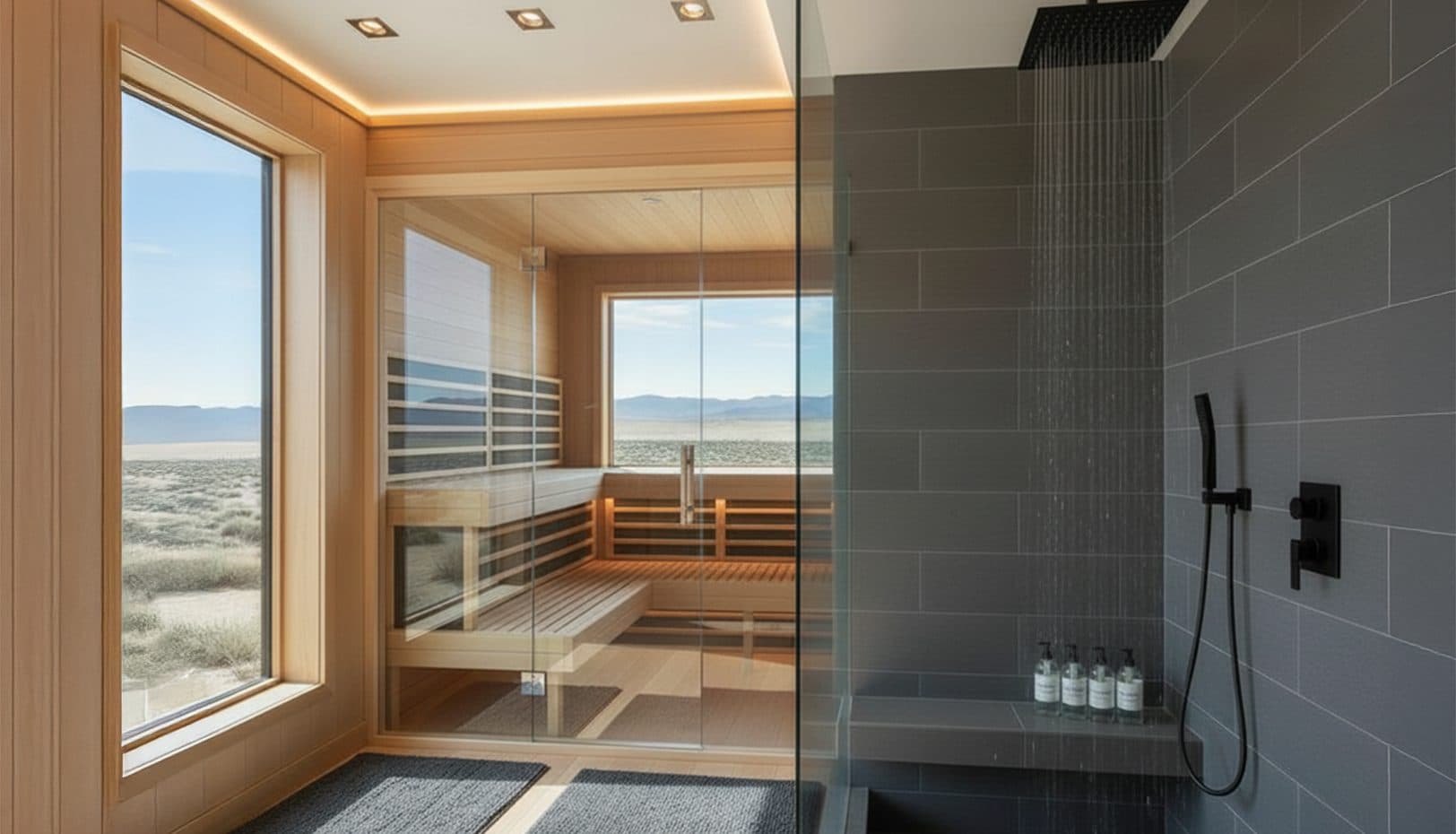
Infrared Sauna Heater Comparison: Carbon vs Ceramic vs Halogen vs VantaWave® (2026)
Read article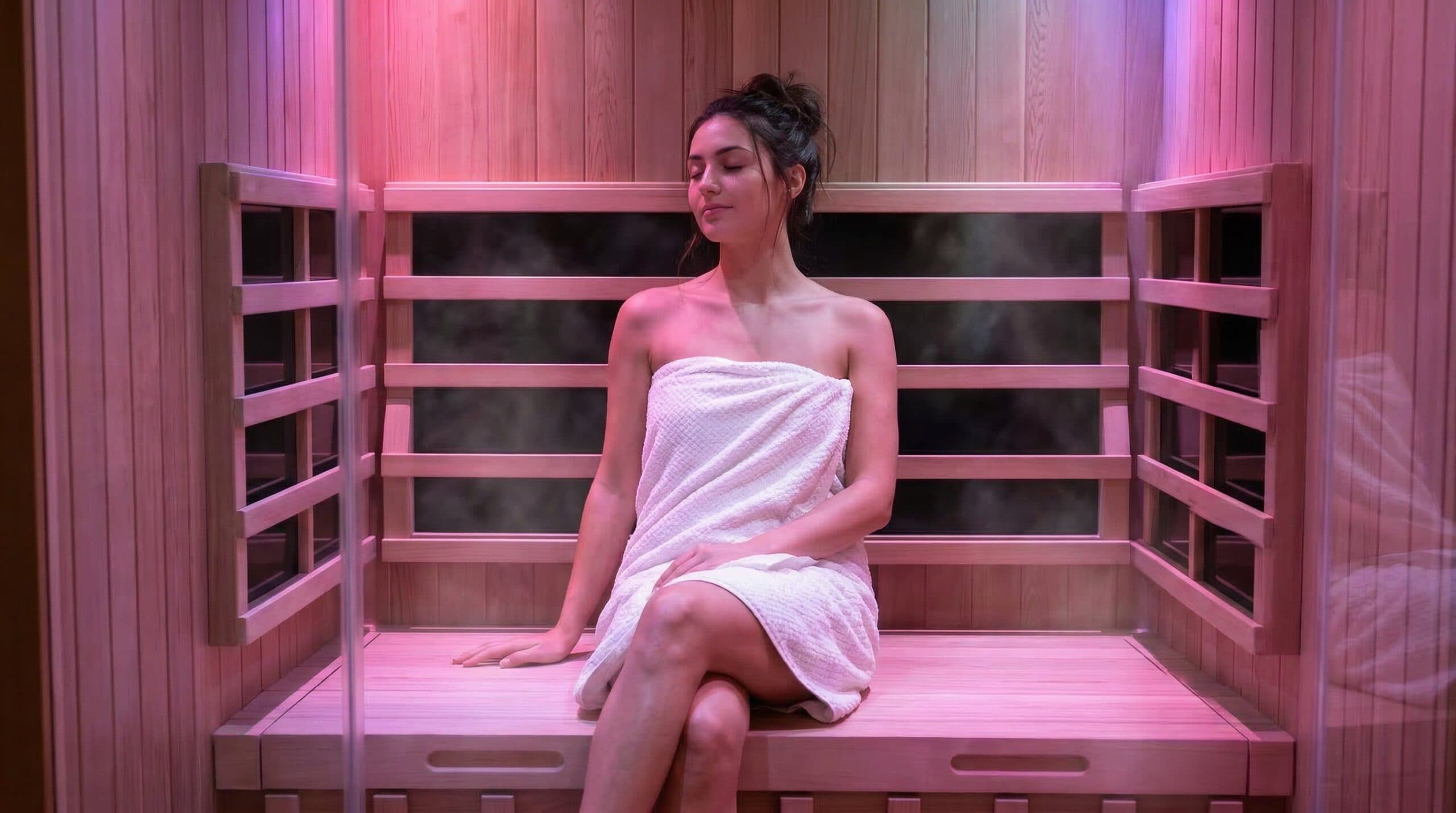
Buying & Comparison Guides
Infrared Sauna Industry Statistics: $3.64B Growth by 2033
Read article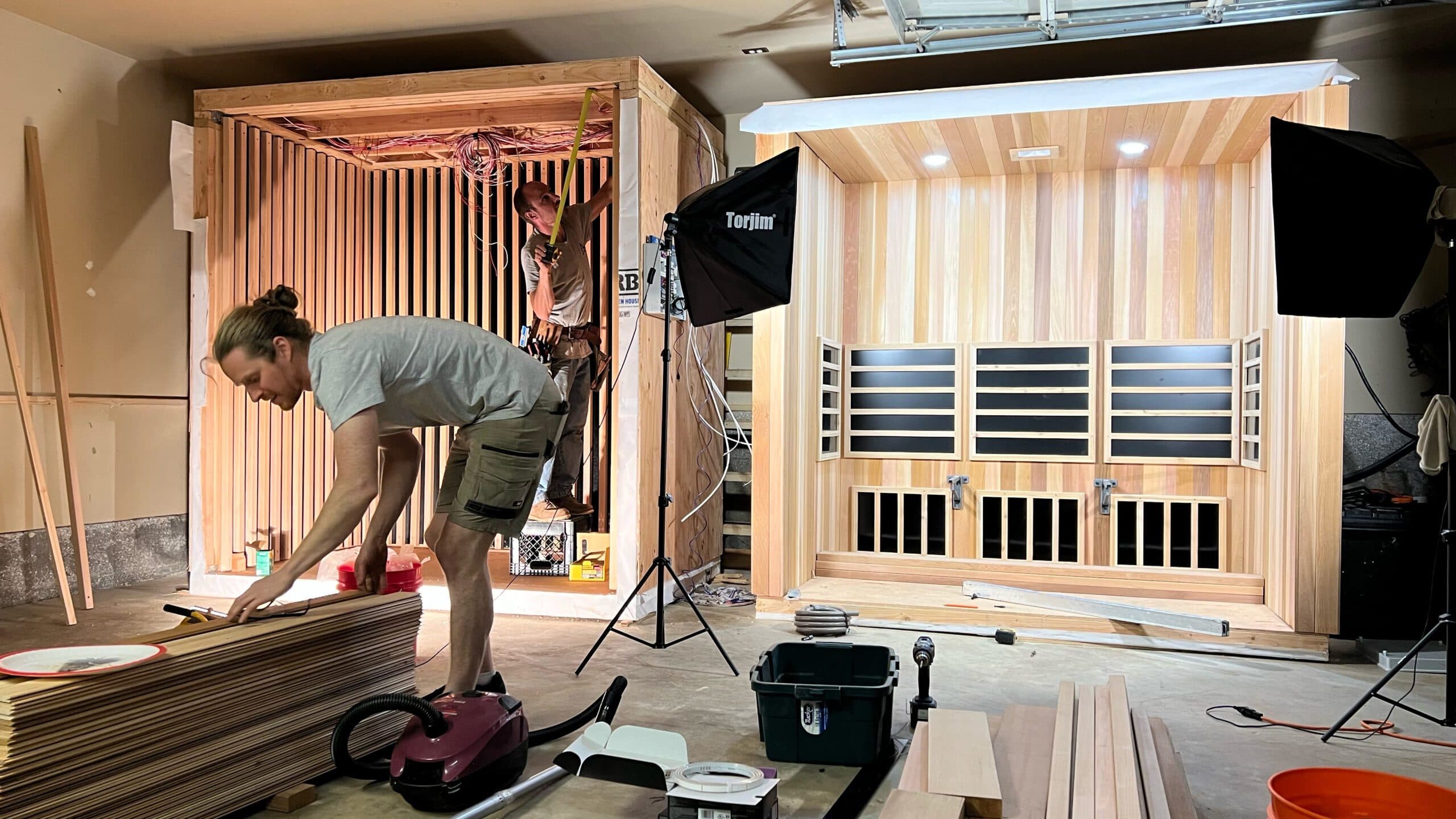
Buying & Comparison Guides
Infrared Sauna Kits: The 6-Inch Rule for Real Therapy
Read articleReady to Design Your Sauna?
Every project starts with a conversation. Tell us about your space and we'll create your custom plan — free, no obligation.
Custom 3D renderings and a proposal in 24-48 hours.