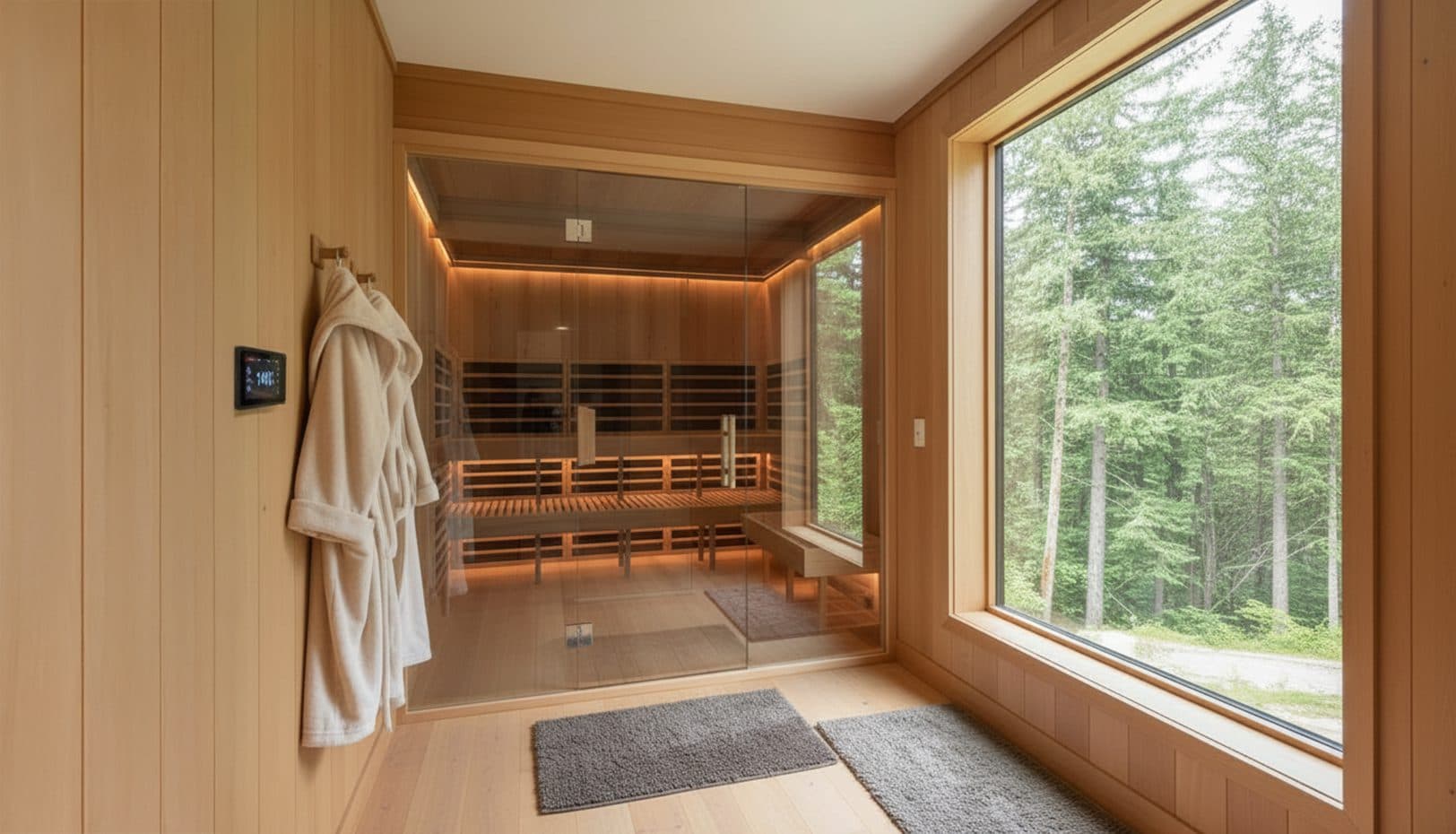
Infrared Sauna Kits: The 6-Inch Rule for Real Therapy
Key Takeaways
- Red light panels mounted 18 to 30 inches away on a wall fail to reach the 1-6 inch proximity required for full cellular absorption.
- Pushing surface temperatures to the 190°F range needed to actively mobilize heavy metals demands a hardwired 240V circuit, rendering 120V models thermally underpowered.
- Stacking deep infrared heat with targeted light therapy cuts a traditional 90-minute routine down to a single 30-minute session.
In This Article
If you are evaluating an infrared sauna kit right now, the first thing you need to know is that most of the options on the market are aesthetically pleasing wooden boxes that fail basic physics. Buyers routinely drop thousands of dollars on home setups that look great on Instagram but lack the physical proximity and thermal output to deliver clinical benefits.
To get real recovery benefits—like flushing heavy metals, improving circulation, and accelerating tissue repair—you are going to face a core tradeoff. True functionality requires a dedicated electrical footprint and highly intentional engineering. The convenience of a standard 120V plug-and-play unit limits deep thermal penetration, restricting results like detoxification and circulation improvement. At SaunaCloud, we step in to fix these exact design failures all the time. After overseeing over 3,000 custom installations, we know what separates a unit built for mood lighting from one engineered for human recovery.
The Red Light Illusion: Why Wall-mounted Panels Fail
Identify the difference between saunas built for mood lighting and those engineered for clinical recovery by auditing their proximity metrics and thermal power limits before purchasing. Proximity is everything.
The 1-6 Inch Cellular Absorption Rule
Measure the precise distance between where your body will rest and the exact placement of the LED diodes, and reject any kit where this gap exceeds six inches. True red light therapy is an invisible, proximity-based protocol. If you can see the red light panel glowing from across your sauna room, it is useless for recovery.
The physics of light degradation dictate that effectiveness drops as distance increases. This relies entirely on the Inverse Square Law, which proves that light intensity diminishes exponentially with distance, meaning that at 18 to 24 inches away, your cellular absorption approaches placebo levels. To achieve photobiomodulation, you need full therapeutic irradiance, which clinical research validates primarily within a 1-6 inch window from your skin.
Bench-integrated Vs. Wall-mounted Layouts
Choose a layout that places the light source directly under or against your body. Over 90% of mass-market infrared sauna kits rely on wall-mounted panels that only provide an ambient glow. A bench-integrated design, conversely, embeds the diodes directly into the wood where you lay or sit. This immediate skin proximity is the only way to treat large surface areas—like your shoulders, back, and hamstrings—constructively.
"If you can see the red light panel glowing from across your sauna room, it is useless for recovery."
Thermal Output and Wiring: the 200°F Requirement
Avoid units that run on standard 120V outlets if your goal is deep thermal therapy; budget instead for the installation of a 240V, 30-amp hardwired circuit. You cannot trick standard household wiring into safely producing professional-grade heat.
Power Limitations of 120V Plug-and-play Kits
Standard household convenience comes at the cost of stunted heat thresholds, inherently limiting the unit's ability to trigger heavy metal detoxification. Plug-and-play kits do not draw enough power to push the ambient heat to levels that force your heart to work comparably to moderate aerobic exercise. Without that deep thermal penetration, your circulation and sweat volume remain lower than the 240V, 30-amp standard required to force systemic physiological shifts.
The 240V High-performance Standard
You need a 240V circuit combined with a properly installed spa disconnect to safely drive the wattage required for high-level recovery. This is a mandatory barrier to entry. While budget buyers often debate between standard flat carbon panels and basic ceramic heaters, specialized proprietary elements bypass those limits. High-wattage VantaWave heaters break the 130°F barrier of standard kits, comfortably pushing the surface temperature toward 190°F or more. By drawing on a dedicated 30-amp breaker, these heaters deliver the continuous, deep infrared heat necessary to reduce soreness.
Material Integrity, EMFs, and Spatial Footprints
Request the third-party average EMF output metric from the manufacturer, settling only for units that reliably measure under 0.5mG.
Hidden Downgrades in Flat-pack Builds
Limit your search to solid, heat-treated wood to prevent the off-gassing that occurs when unverified materials face extreme thermal stress. Quality manufacturers insist on clear-grade Western Red Cedar that is completely kiln-dried, bypassing the cheap veneers and MDF core boards often smuggled into overseas flat-packs. Solid cedar naturally resists bacteria and warping. Cheaper composites break down over time and release irritants into the environment where you are trying to detoxify.
Mitigating Radiation With Ultra-low EMF Builds
You must verify the structural safety standard of the wiring itself, which requires shielded, grounded cables throughout the entire enclosure. A cheap, mass-produced flat-pack build rarely meets this standard, exposing you to fields between 3mG and 10mG. A properly verified, ultra-low EMF system protects you by operating at 0.5mG or lower with zero ELF (Extremely Low Frequency) output.
A 1-2 person enclosure optimizes heat retention compared to larger 3-4 person designs, which increase the duration required to reach therapeutic heat targets.
The Biological Multiplier: Stacking Heat and Light
Seek out kits with validated dual-wavelength (660nm and 850nm) therapy systems combined directly with heat to safely reduce a notoriously time-consuming 90-minute daily recovery habit down to a dense 30-minute session.
The physiological multiplier effect of concurrent environments means that deep thermal stress actively primes human cells to absorb targeted light frequencies faster and deeper. A 2020 paper from the University of Jyväskylä found that combining this thermal stress with light therapy nearly doubled ATP output. Related research by Michael Hamblin in 2017 similarly showed that gentle heat increases cellular responsiveness to the light.
To stimulate collagen, improve tone, and aid deep tissue repair simultaneously, the wavelength combinations matter. You need the visible red 660nm and 850nm near-infrared spectrum delivered through a precise dual-wavelength array. This treats surface-level skin conditions while penetrating deeply enough to reach muscles and joints, making it effective for chronic conditions like fibromyalgia.
Market Options: DIY Upgrades Vs. Premium Integration
Bypass risky standalone panel integrations in favor of fully grounded, precision-built premium kits manufactured to North American electrical codes.
The DIY Conversion Kit Limitations
Hanging aftermarket light panels inside an older sauna violates spatial proximity rules and risks severe safety hazards. Buyers often attempt to save money by mounting generic towers 24 inches away from their traditional sauna bench. Because electrical safety codes for standard lights rarely match the extreme heat ratings required for an enclosed thermal box, this is a flawed workaround that creates fire hazards while failing the 1-6 inch physical proximity test.
Fully Integrated Indoor Systems
Purchase premium tier, hand-built units that holistically manage code compliance, continuous heat grounding, and precise therapy bench alignment. The Atlas One by SaunaCloud is an excellent example of this zero-compromise approach—it is built entirely around an integrated red light bench so that lying down naturally places you millimeters from the light source. Fully integrated models handle the load safely, operating under one controller so the user focuses on healing.
"Fully integrated models handle the load safely, operating under one controller so the user focuses on healing."
Adapting Clinical Therapy for Outdoor Environments
If you place a fully engineered unit outside, you must require heavy wall thickness and weather-resistant exteriors to prevent heat loss in colder months. Adapting the clinical therapy to an exterior setting means adding vertical black cedar for weather resistance and at least 5-inch thick insulated walls to maintain efficiency. Systems like the Atlas Outdoor model translate the same bench-integrated clinical specs into a rugged shell, allowing you to run a 240V therapy protocol on a patio without bleeding heat into the surrounding air.
Frequently Asked Questions
Is there a downside to an infrared sauna?
The primary downside is that many consumer-grade infrared saunas are essentially 'wooden boxes' that lack the power and design necessary for clinical benefits. Most mass-market units are limited by 120V power, preventing them from reaching the higher temperatures required for deep tissue repair or heavy metal detoxification.
What is the difference between bench-integrated and wall-mounted infrared panels?
Wall-mounted panels are typically too far from the body to provide anything beyond ambient mood lighting. Bench-integrated designs place LED diodes directly against your skin, which is the only way to satisfy the 1–6 inch proximity requirement needed for true photobiomodulation and cellular absorption.
Why does a home infrared sauna require a 240V circuit?
Standard 120V plug-and-play kits lack the wattage to push ambient heat toward the 190°F range necessary for deep thermal therapy. To mobilize heavy metals and induce a systemic physiological shift comparable to moderate aerobic exercise, you need the dedicated power of a 240V, 30-amp hardwired circuit.
Can I upgrade a standard sauna with DIY light panels?
Attempting to mount aftermarket light panels in an existing sauna is both dangerous and largely ineffective. Most DIY solutions cannot pass the 1–6 inch proximity rule and often violate electrical safety codes, creating a significant fire hazard when exposed to high thermal stress.
How does stacking heat and light therapy change recovery sessions?
Stacking allows you to achieve the same therapeutic results in 30 minutes that would otherwise take 90 minutes. Thermal stress primes your cells to be more responsive to light frequencies, effectively doubling ATP output when deep infrared heat is combined with a precise 660nm and 850nm dual-wavelength array.
Are there specific materials I should avoid when buying a sauna kit?
You should avoid units constructed with cheap veneers or MDF core boards, which can release toxic irritants when subjected to extreme heat. Always insist on solid, kiln-dried Western Red Cedar, which naturally resists bacteria and stays stable under the intense humidity and thermal pressure of a recovery session.
Founder & Lead Designer, SaunaCloud®
SaunaCloud: 3,000+ installations since 2014 · Author of The Definitive Guide to Infrared Saunas · Featured in Forbes, Inc., and MSN
Christopher designs every SaunaCloud sauna. His work brings the room, heaters, controls and installation plans together so you can review the project before committing. His professional expertise is sauna design and construction, not clinical medicine.
Custom 3D renderings and a proposal in 24-48 hours.
Continue Reading
Buying & Comparison Guides
Should You Build Your Own Custom Infrared Sauna? 10 Years of Lessons and the Three Paths Forward (2026)
Read article
Buying & Comparison Guides
Custom vs Portable Infrared Sauna: The Complete 2025 Buyer’s Guide
Read article
Guides
Where to Put an Infrared Sauna: 7 Placement Questions Answered With Floor Load Data
Read articleReady to Design Your Sauna?
Every project starts with a conversation. Tell us about your space and we'll create your custom plan — free, no obligation.
Custom 3D renderings and a proposal in 24-48 hours.