What Are Infrared Sauna Sessions? A Science-Backed Guide to Benefits, Safety, and What to Expect

Key Takeaways
- Infrared saunas heat your body directly at 110-170°F, compared to traditional saunas at 150-195°F, and the heat penetrates 3-4 cm into your tissues.
- A typical session is 15-45 minutes, 1-3 times per week; hydration is non-negotiable because you’ll lose fluids and electrolytes.
- Early research points to cardiovascular benefits (a 2009 Journal of Cardiology study found 84% survival after five years in heart failure patients), but detox claims remain unproven, the body’s main cleaning crew is your liver and kidneys, not your sweat.
In This Article
You’ve probably seen the ads or heard a friend rave about their “far-infrared sauna” session, something about heat that gets into you without the air being scorching. Here’s the short version: an infrared sauna uses light to make heat, and it warms your body directly rather than heating the air around you. That one difference changes the experience.
Because the lamps skip the air-warming step and focus penetrating warmth straight onto your skin, your core temperature rises more efficiently at much lower ambient temperatures, roughly 110-170°F compared to a traditional sauna's 150-195°F. The heat goes about 3-4 centimeters into your tissues (a 2015 study measured that). So it’s not just a cooler sauna; it’s a different mechanism with different practical implications.
What an Infrared Sauna Is (and How It’s Different)
The core idea: instead of heating the air around you and then waiting for that hot air to warm you up, infrared saunas use light, specifically the part of the spectrum you can’t see, to deliver heat straight to your body. You’ll often hear them called “far-infrared” saunas, which means the light falls in the far part of the infrared spectrum (3,000-100,000 nanometers). But there’s also near-infrared (700-1,400 nm), mid-infrared (1,400-3,000 nm), and full-spectrum models (700-100,000 nm) that cover everything. You don’t need to memorize those numbers, but it explains why some saunas advertise “full-spectrum”, they try to give you a bit of each range, and early research suggests near-infrared may be better for skin while far-infrared has more data on chronic pain and heart health.
The difference you’ll notice first is the temperature. Traditional saunas feel like walking into a blast furnace, 150-195°F, with dry air that hits you instantly. An infrared sauna at 110-170°F feels more like a warm hug. Because the heat goes directly into your body, your core temperature rises just as effectively (researchers compare the cardiovascular response to walking at a moderate pace), but the air stays comfortable enough to breathe easily.
How an Infrared Sauna Session Actually Works
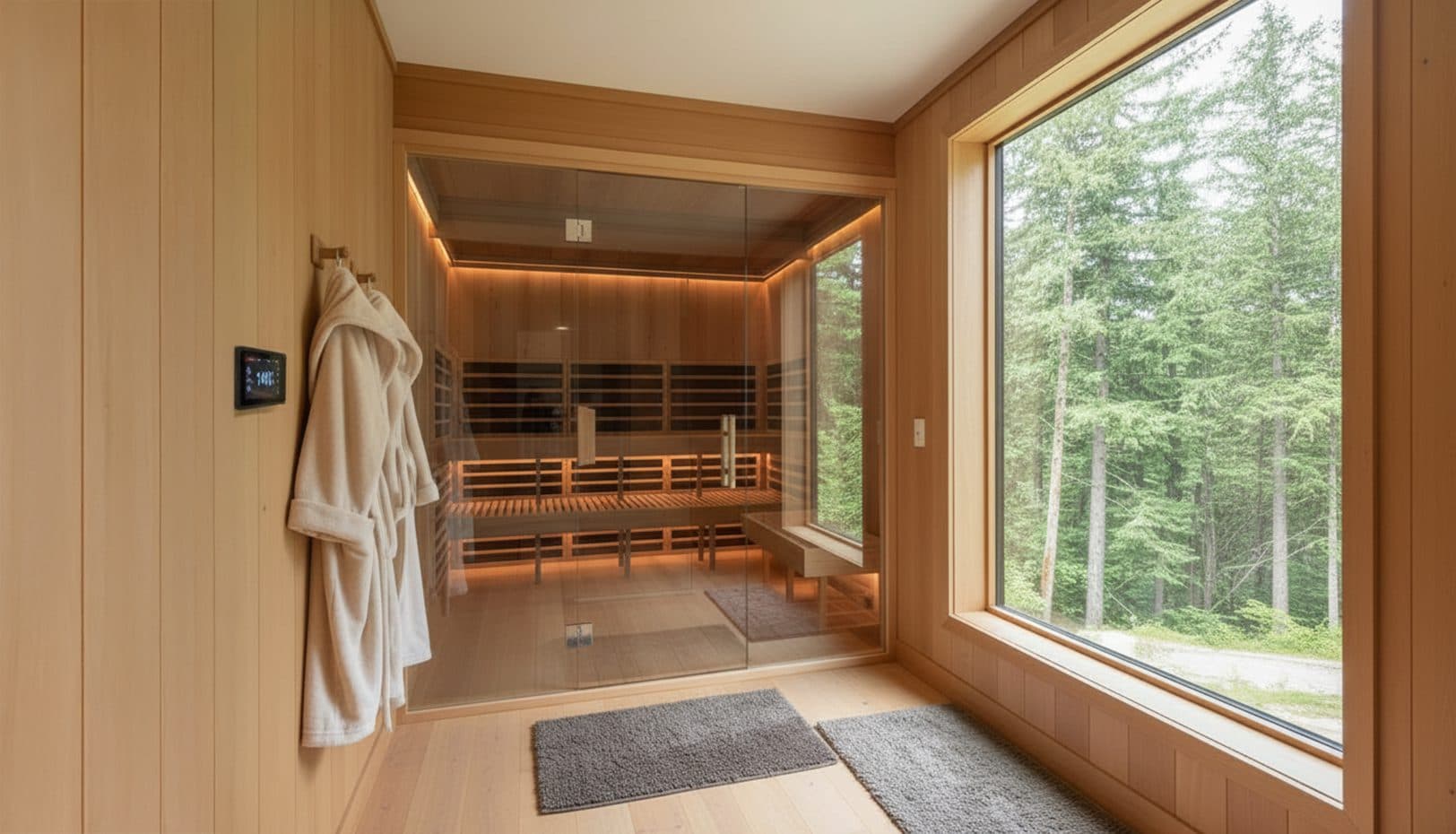
Most places give you a private room with a sauna unit that looks like a small cedar box or a larger cabin. You’ll get towels, and you can wear comfortable clothing or undress to whatever feels right, your choice. Many studios have Bluetooth speakers so you can play a podcast or music. A trained staff member sets the time and temperature for you, so you don’t have to figure it out yourself.
The Session Experience
The sauna takes 10-30 minutes to reach temperature. Once you’re inside, you’ll start sweating within a few minutes. Your heart rate goes up. Blood vessels widen.
Your body releases endorphins, that’s the “feel-good” rush people talk about. Heat shock proteins get activated, which we’ll circle back to in the benefits section.
After your session, you can cool down with a shower or a cold eucalyptus towel if the studio provides one. Some people like to let the sweat keep coming for a few minutes; either way, wear loose clothing afterward.
Session Duration and Frequency
If you're a beginner, start with 15-20 minutes. That's enough to feel the effects without overdoing it. Experienced users often go 30-45 minutes. The sweet spot for most people is 1-3 sessions per week, and longevity studies that tracked long-term benefits used 3-4 sessions per week.
Red flag: because the air doesn’t feel as hot as a traditional sauna, first-timers can underestimate the heat and stay too long. Your body is still getting the same cardiovascular stress — lower ambient temperature doesn’t mean lower strain.
Big practical warning: because the air doesn’t feel as hot as a traditional sauna, first-timers can underestimate the heat and stay too long. Your body is still getting the same cardiovascular stress, lower ambient temperature doesn’t mean lower strain. Pay attention to how you feel, not just the thermostat.
Hydration and Post-Session Care
You’ll sweat a lot, so hydration is non-negotiable. Drink water before and after, general guidelines say about 8 glasses (2-3 liters) per day, but you’ll need more on sauna days.
If you had a particularly sweaty session, consider replenishing electrolytes. Water is usually enough unless you’re doing very long or frequent sessions.
Health Benefits: What the Research Actually Says
The buzz around infrared saunas borrows from traditional sauna studies, and the infrared-specific research is still catching up. That doesn’t mean the benefits aren’t real, we should separate what’s solid from what’s hopeful, starting with a basic fact: microwaves and infrared are both electromagnetic radiation but at completely different wavelengths with different physics, as explained in this infrared sauna vs. microwave safety comparison.
Cardiovascular Benefits
This is the area with evidence from a 2009 Journal of Cardiology study. Infrared sauna therapy may improve endothelial function (how well your blood vessels dilate and contract) and reduce arterial stiffness, both markers of heart health. More than half (51%) of the sun's energy reaching Earth's surface is infrared radiation, and the warmth you feel from sunlight is the same physics that supports normal blood pressure.
A 2009 study in the Journal of Cardiology followed 129 chronic heart failure patients for five years. The group using infrared therapy had an 84% survival rate. That’s one study, and it wasn’t a large trial, but the result is notable. There’s also a specific Japanese treatment called Waon therapy that uses far-infrared at 60°C (140°F) for chronic heart failure, it’s been used in clinical settings for years.
Long-term observational studies in eastern Finland tracked thousands of people over decades and found that regular sauna users had better circulatory health and lower risk of stroke and heart disease. Most of those people were using traditional Finnish saunas, not infrared, but the underlying mechanism, heat stress on the cardiovascular system, is similar.
Pain Relief and Mental Health
A two-year study on chronic pain found infrared sauna therapy “promising” for improved outcomes. The heat triggers endorphins, which can boost mood and relaxation. Setting aside sauna time may help with depression and anxiety, not as a replacement for medical treatment, but as a supportive practice.
Cellular Mechanisms
This is where it gets geeky. The dry heat activates heat shock proteins, molecules that help repair damaged proteins in your cells and support brain function. Infrared sessions may also trigger autophagy, your body’s cellular “clean-up” process (the same one triggered by exercise and fasting).
The Big Caveat
Benefits attributed to infrared saunas come from traditional sauna research. Larger, more exact studies are needed. The hype is ahead of the science in some areas, especially for curing specific diseases. Think of it as a tool for recovery and resilience, not a miracle box. An infrared sauna heats your body through electromagnetic radiation, the same physics as feeling warmth from a campfire, which is how infrared saunas work.
Safety and Who Should Be Cautious
No adverse effects have been documented for infrared saunas. Still, are infrared saunas safe? For most healthy adults, yes, when used properly.
The main concerns are dehydration, overheating, dizziness, and increased heart rate and blood pressure. Again: lower temperature does not mean lower cardiovascular stress. You can still push your heart rate up significantly, and the cooler air can trick you into staying too long.
If you feel dizzy or nauseated, get out immediately. That’s non-negotiable.
You should check with a healthcare provider before starting if you have heart conditions, low blood pressure, an active infection or fever, or if you’re pregnant, or if you are taking medications that affect heart rate or blood pressure. Also skip the sauna if you’ve been drinking alcohol or are dehydrated.
The Detoxification Debate and Common Myths
This is the most controversial claim, and the one most likely to show up in marketing.
Detoxification: Fact or Fiction?
The idea that sweating in an infrared sauna flushes out heavy metals like cadmium and lead is common, but Cleveland Clinic’s Dr. Melissa Young says the research is “still in its infancy.” Mayo Clinic notes that no harmful effects have been reported, but also no proof that sweating reliably removes toxins in meaningful amounts. Your body’s primary detox pathways are your liver and kidneys, not your sweat glands.
That doesn't mean sweating is useless, it supports general health and thermoregulation. But if someone is selling an infrared sauna as a “detox device,” be skeptical.
Myth: Hotter Is Better
Not for infrared. Lower temperatures allow deeper heat penetration (3-4 cm) and are safer for long-term use. You don’t need to feel like you’re in a blast furnace to get results.
Myth: Saunas Are Just for Losing Water Weight
Some people believe saunas only help shed water weight. However, the lasting benefit comes from your body's adaptation to consistent heat exposure, which enhances cardiovascular function, metabolism, and immune resilience. The weight you lose in a session is temporary water loss. The lasting benefits come from the cellular and cardiovascular adaptations.
Myth: Infrared Saunas Cause Cancer
Infrared saunas use non-ionizing radiation, not the kind associated with cancer risk. There’s no evidence that infrared sauna use causes cancer. If you’re worried about electromagnetic fields (EMF), look for saunas with low-EMF heaters, but the risk is minimal.
Practical Considerations for Home Use
Thinking about buying one? Here’s what you need to know.
Cost Range
Prices vary enormously. You can get a portable sauna tent for about $199, a decent two-person unit for $2,000, $5,000, or a large five-person room that costs over $7,000. The high end of the market goes up to $14,499. So there’s an entry point for almost any budget, but you get what you pay for in terms of build quality, heater type, and warranty. Some models also include chromotherapy lighting for enhanced relaxation.
Electrical Requirements
Many smaller models plug into a standard 120V outlet, literally plug-and-play. Larger units often require a 240V outlet, which may mean hiring an electrician (installation costs can run around $1,600). Check the specs before you buy, not after.
Heater Types and EMF
Two main heater types: carbon and ceramic. Both work, but if you’re concerned about EMF, look for saunas explicitly labeled “low-EMF.” Some people also like that carbon heaters distribute heat more evenly; others find ceramic models heat up faster.
Maintenance
Bacteria and mold can grow in saunas that aren’t cleaned and ventilated properly. Regular wiping, letting the unit dry out between uses, and occasional deep cleaning are essential. Cedar wood is a popular choice because it’s naturally antimicrobial and low-resin.
Red Light Therapy and HSA/FSA
Many infrared saunas now include red light therapy (photobiomodulation) as a built-in feature. This may be eligible for HSA or FSA reimbursement, depending on your plan, worth checking if you have a flexible spending account. It’s essentially two treatments in one unit.
Conclusion
Infrared saunas are a different way to heat your body, light-based, deeper-penetrating, and comfortable enough that you can breathe easily while your cardiovascular system gets a gentle workout. A 2009 Journal of Cardiology study and other research suggest benefits for heart health, pain relief, mood, and cellular repair, but the evidence isn’t as settled as some marketing claims. The detox hype is overblown, and lower temperatures don’t mean lower risk, hydrate, start short, and listen to your body.
If you’re curious, try 15-20 minutes at a studio near you. Drink water before and after. See how you feel. Infrared saunas are a tool for relaxation and recovery, don’t believe everything you read on the internet about them.
Frequently Asked Questions
What is the downside to an infrared sauna?
The main downside is that the lower ambient temperature can trick first-timers into staying too long, leading to dehydration or overheating. The cardiovascular stress is still significant even though the air feels milder, so you need to monitor how you feel rather than relying on the thermostat.
Why should you not shower after an infrared sauna?
There's no strict rule against showering, but some people prefer to let their body cool down naturally to prolong the relaxation and endorphin effects. If you do shower, it's fine, just make sure you rehydrate afterward since you've lost fluids and electrolytes through sweating.
What happens to your body after an infrared sauna?
Your heart rate stays elevated for a while as your body cools down, blood vessels remain dilated, and endorphins keep circulating, which can leave you feeling relaxed and mildly euphoric. Heat shock proteins and autophagy, cellular repair processes, are also activated during the session and continue working afterward.
Is an infrared sauna actually good for you?
Yes, for most healthy adults, it offers benefits like improved cardiovascular function, pain relief, and mood enhancement, backed by studies including a 2009 Journal of Cardiology trial showing an 84% survival rate in heart failure patients. However, the evidence is stronger for heart health than for detox claims, which remain unproven, your liver and kidneys handle detox, not your sweat.
How does an infrared sauna differ from a traditional sauna?
An infrared sauna uses light to heat your body directly at 110-170°F, while a traditional sauna heats the air around you to 150-195°F. The infrared heat penetrates about 3-4 centimeters into your tissues, making the experience feel like a warm hug rather than a blast furnace, even though your core temperature rises just as effectively.
How long should an infrared sauna session last for a beginner?
Start with 15-20 minutes to feel the effects without overdoing it. Experienced users often go 30-45 minutes, and the sweet spot for most people is 1-3 sessions per week, just make sure you hydrate before and after.
Can infrared saunas help with weight loss?
The weight you lose during a session is mostly water weight from sweating, which is temporary. The lasting benefits come from your body's adaptation to consistent heat exposure, which can enhance cardiovascular function and metabolism, but it's not a direct weight loss tool.
Are infrared saunas safe for people with heart conditions?
You should check with a healthcare provider before starting if you have heart conditions, low blood pressure, or other medical issues. While infrared saunas are generally safe for healthy adults, the cardiovascular stress is real, your heart rate goes up and blood vessels widen, so medical guidance is important.

Founder & Lead Designer, SaunaCloud®
SaunaCloud: 3,000+ installations since 2014 · Author of The Definitive Guide to Infrared Saunas · Featured in Forbes, Inc., and MSN
Christopher designs every SaunaCloud sauna. His work brings the room, heaters, controls and installation plans together so you can review the project before committing. His professional expertise is sauna design and construction, not clinical medicine.
Custom 3D renderings and a proposal in 24-48 hours.
Continue Reading
Guides
Can I Put an Infrared Sauna in My Garage? Yes — If You Clear These 5 Checks
Read article
Guides
Can You Convert a Traditional Sauna to Infrared? Yes — Here's Exactly How
Read article
Guides
Can You Put an Infrared Sauna in an Uninsulated Garage? The 60°F and 45°F Thresholds That Decide Everything
Read articleReady to Design Your Sauna?
Every project starts with a conversation. Tell us about your space and we'll create your custom plan — free, no obligation.
Custom 3D renderings and a proposal in 24-48 hours.