
What to Bring to a Sauna: A First-Timer's Checklist with Pro Tips from a Helsinki Regular
Key Takeaways
- Bring two separate towels: one that stays on the sauna bench as your barrier between you and the wood, and a second one for drying off after your shower.
- For water, use an insulated metal bottle with a sleeve, a Yeti-style tumbler, or a cycling water bottle—leave glass, bare metal, and plastic at home.
- Don’t forget a padlock for the locker. And remember that private Finnish saunas are usually nude, but most mixed or public saunas expect swimwear, so check ahead.
In This Article
If you’ve booked your first sauna session and suddenly realized you have no idea what to bring, you’re not alone. In Ireland alone, there are more than 200 public saunas, and 90% of them have opened since 2020. More than half of those popped up in just the past 15 months. So the question of what you can bring into a sauna isn’t niche anymore; it’s what thousands of first-timers are asking this week.
The practice itself is ancient. Finns have been doing this for centuries, and Finnish immigrants in the US built saunas as the first structure on their rural property—before their house. But most newcomers today aren’t stepping into a backyard smoke sauna. You’re likely heading to a commercial resort or spa with a specific set of rules. This guide covers what to bring, what to leave behind, and why every choice matters.
The Essentials: What to Pack for a Sauna Day
These are the non-negotiables. Some are obvious, but a few come with specific rules that most articles gloss over.
Reservation confirmation
Show it on your phone at check-in, then the phone goes straight into the locker. That’s its last job for a few hours.
Bathrobe
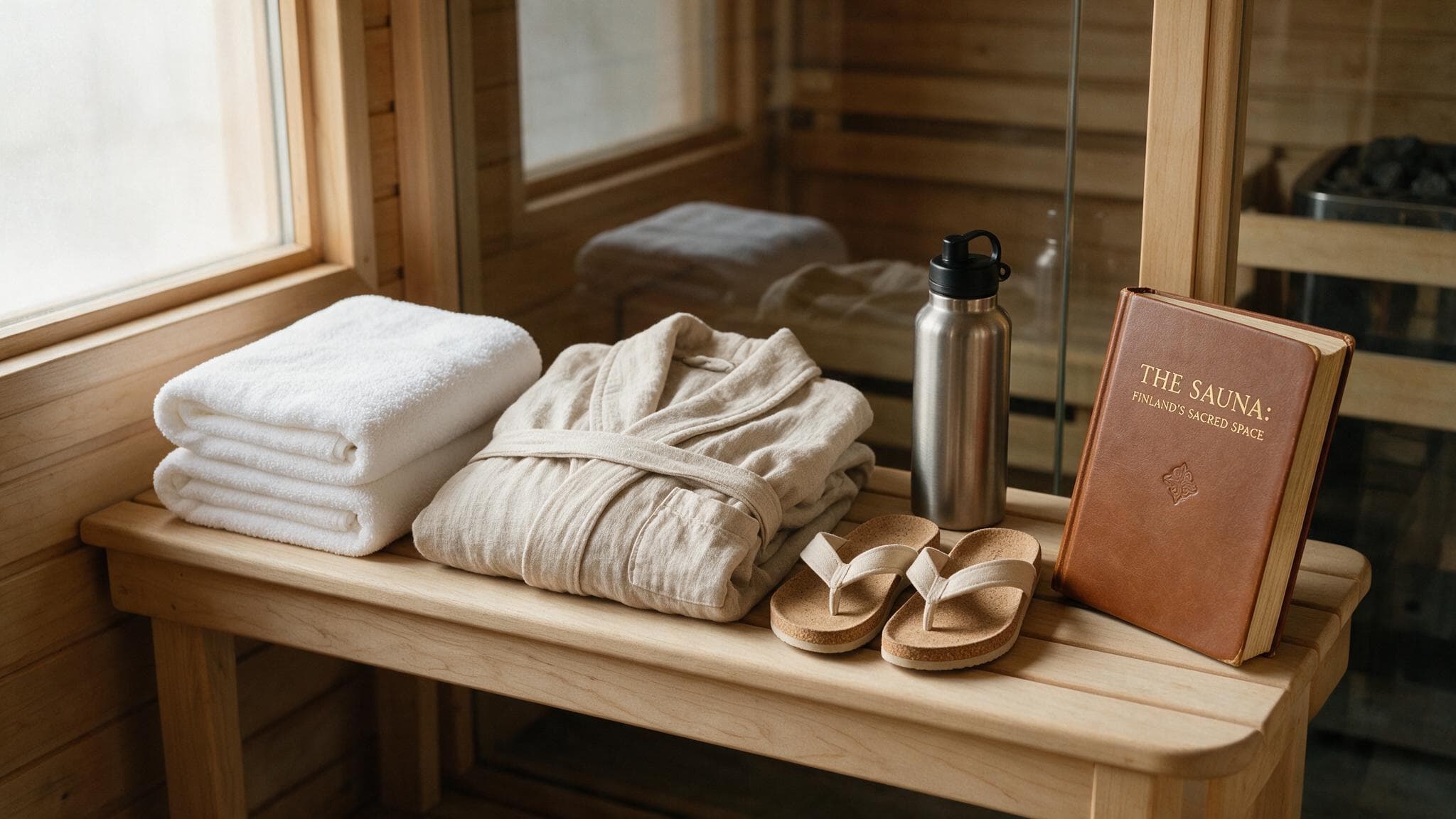
Some resorts, like Thermen, require a bathrobe in certain areas. A linen or cotton robe is best—breathable, absorbent, and it won’t make you feel like you’re wearing a plastic bag. Plus, if you don’t want to sit on a towel, a robe works as a cover-up inside the sauna too.
Large towel (plus a second one)
You sit on it, wrap in it, lie on sunbeds with it. That towel between you and the bench isn’t just for comfort—it keeps you off whatever’s been on that wood. High-thread-count linen or cotton is the way to go.
Bring two towels. One stays on the sauna bench and never touches the floor. The other is for drying off after your shower. The same towel can’t do both jobs hygienically.
Bath slippers or flip-flops
Mandatory in hallways and common areas at many resorts, but you take them off before stepping into the sauna itself. They’ll save your feet from wet locker-room floors and the athlete’s foot risk that comes with them. Earth Runners sandals are a solid choice—they came up in a real Helsinki packing list. Just give them a rinse first.
Water bottle (the resolved conflict)
This is where most sources contradict each other, so here’s the settled answer.
Unsafe in a sauna: bare metal bottles (they get hot enough to burn you), glass bottles (sweaty hands plus a hot room equals broken glass), and plastic bottles (heat can cause chemical leaching). But can you use an infrared sauna while on medication? Many medications can safely be paired with sauna sessions, while others interact dangerously with heat. That said, if you drink quickly and don't leave the bottle in the sauna, the risk is minimal.
Safe in a sauna: insulated metal with a sleeve, a Yeti-style tumbler, or even a cycling water bottle.
You’re going to sweat—a lot—so hydration is critical. Drink before, take small sips during, and drink more after. A squeeze of fresh lemon and a pinch of sea salt can help replace electrolytes.
Something to read
Phones and tablets are banned in most sauna areas, so a book or magazine is your best bet for entertainment that actually survives the heat. If you’re weighing paper against an e-reader, I’ve got more on bringing a book into a sauna and whether a Kindle can handle the heat.
Swimwear (when you actually need it)
You don’t need a swimsuit in most Finnish private saunas. Nudity is the norm, and it’s more hygienic. But commercial reality is different. Some resorts have designated swimwear days—check ahead. Mixed-gender or public saunas usually expect swimwear.
If you do bring one, material matters. Cotton or organic cotton, ideally undyed or plant-dyed, is the right call. Skip polyester, spandex, and PVC—heat can make synthetics leach stuff you don’t want on your skin, and PVC doesn’t breathe, so you’ll be uncomfortable fast. Loose-fitting natural fibers like linen or cotton let your skin breathe. Wash your swimsuit after every session.
Toiletries and washing items
A small waterproof pouch made of natural fibers keeps your soap, shampoo, and brush organized and dry. Frantsila Organics natural shampoo, found in Helsinki, is a great pick. Unscented Dr. Bronner’s works as body wash, hand soap, and even cleans your glasses. Charcoal soap is also a solid non-toxic option.
Finns often wash during or after the sauna session. Washing is part of the ritual, so bring your own if the place doesn’t provide it—though if you’re thinking about upgrading, can you convert your pre-existing sauna to infrared? Yes, and it costs 40–60% less than a new build.
Optional Accessories: Comfort, Safety, and Tradition
These aren’t gimmicks. Each one solves a specific problem—usually something you won’t realize you have until you’re sitting in the heat wondering why you feel dizzy.
Sauna hat (wool felt)
A wool felt hat protects your head and ears from the heat. Wool felt insulates without trapping heat against your head, which can help you avoid that dizzy, nauseous feeling and let you stay in longer.
Sauna sand timer
Fifteen minutes is the most common duration—long enough to feel the benefits, short enough to avoid overheating. It’s easy to lose track of time when you’re deeply relaxed, and many people wonder can you bring a kindle into a sauna while unwinding. A wood-and-glass sand timer survives the sauna environment, unlike plastic timers that melt or off-gas.
Birch whisk (vihta or vasta)
A bundle of flexible birch twigs tied to a handle is the classic sauna whisk. The tapping is said to boost circulation and ease muscle tension. It’s tradition—bathers used these in the savusauna back in the 1860s. Let it sit in lukewarm water for a minimum of 35 minutes before use to soften the leaves and twigs.
Then tap and brush gently. It’s not a beating; it’s light stimulation.
Wooden sauna pillow
A small, heat-resistant wooden pillow supports your neck so you can relax while lying down.
Sauna bench mat
A bench mat adds a layer of grip, a softer surface, and another barrier between you and whatever’s been on that bench before you. Wet benches can get slippery, so the extra traction is valuable too.
After use, rinse your birch whisk with clean water and let it air dry. Bench mats can be wiped down with a mild soap solution.
Dry brush
Dry brushing before your session exfoliates your skin and gets your circulation going. Use it before you hit the sauna, not during. A copper-and-horsehair brush is the traditional choice, but a regular dry brush works just fine.
Bottom line: A dry brush before your session gets circulation going, but use it before you enter the sauna, not while you’re inside — and if you’re wondering can you bring a book into a sauna, the answer depends on the material and the sauna’s rules.
What to Leave at Home: Prohibited and Unsafe Items
When you understand why each item is banned, it goes from annoying to completely sensible.
Electronics: phones, cameras, headphones
Many resorts, like Thermen, ban phones and cameras from reception onward—not even in the changing room. The reason is about preserving a quiet, private atmosphere for every guest. The no-phone rule isn’t about protecting your device; it’s about protecting the space through respect for others’ privacy. If you’re tempted to sneak it in for a photo, read up on the risks of bringing a phone into a sauna first.
Even in places that allow them, standard Bluetooth headphones don’t survive heat and sweat well. If you want music, you need water-resistant models with an IPX rating, and they still might not last.
Outside food and drinks
Commercial resorts have a flat ban on outside food. They’ve got a restaurant or cafe for that. The only exception is your own water bottle.
Unsafe materials
Everything in this category fails differently in high heat, and it’s worth knowing how:
If you have a heart condition, consult your doctor before using a sauna. Fitness trackers and smartwatches are generally safe if kept in a waterproof case, but check with your resort as policies vary.
- Glass slips, cracks, and breaks.
- Plastic can leach chemicals like BPA when heated.
- Bare metal gets hot fast and can cause burns.
- Synthetic swimwear (polyester, spandex, PVC) can leach substances through your pores in high heat. PVC fabric doesn’t breathe at all, so it traps heat and moisture against your skin, making you uncomfortable fast.
- Metal hair ties and headbands heat up rapidly and can burn your scalp.
Stick with fabric or plastic hair ties, natural-fiber swimwear, and a proper insulated bottle.
Sauna Etiquette: What You Need to Know Before You Go
You know what to pack. Now here’s how to act once you’re inside.
Nudity norms
In private Finnish saunas, naked is standard and more hygienic. In public or mixed settings, a swimsuit or towel wrap is usually expected. This was a genuine cultural flashpoint back in 1885, when a Finnish family in Cokato, Minnesota, was taken to court over sauna nudity. The community found their habits strange, but the family proved their sauna use was purely for hygiene—they were good Lutherans, not oddballs. They won damages of $30 and were ordered to move the sauna to a more private spot, with an additional $40 for the trouble.
That’s the 1885 Cokato court case, and it’s the reason the history matters: Finns have defended this ritual before, and they won.
Quiet and atmosphere
Finnish saunas are quiet spaces. Silence is normal, not awkward, and you shouldn’t feel pressured to make conversation. Light chat is fine if the vibe is right—just read the room. Shower before and after every session.
The history behind the etiquette
The Barberg-Selvälä-Salmonson sauna itself is a story worth telling. Built in 1868 in Cokato, Minnesota, it’s the oldest smoke sauna still existing in the US. Three Finnish families built it together as a shared sauna on the boundary separating the Barberg and Selvälä farms.
It’s a savusauna: a wood building with a hearth covered with rocks that could be heated to high temperatures. A fire burned during the day, then it was put out, and the smoke was allowed to dissipate before anyone bathed. The heated rocks kept the room warm for hours. Bathers sat on wooden platforms near the roof to maximize the heat, or used steps and lower benches for less.
They stayed long enough to sweat, then cooled down by stepping outdoors or splashing themselves with cold water or snow, repeating as needed. Whisks made of flexible birch branches were part of the routine back then too.
Non-Finns were suspicious of all this, which led to that 1885 court case. Afterward, the family moved the original sauna but used it as a shed while they put the court winnings toward building a bigger, nicer one. The 1868 structure was relocated for the final time to Cokato’s Temperance Corner in 1979 and restored in 2008.
First-Timer Tips: The Items Everyone Forgets
Here’s what I wish someone had told me before my first sauna trip.
The padlock problem (and other small misses)
The single most overlooked item in sauna packing is a padlock. Most places don't provide them, or the lockers don't have built-in locks.
You’ll also want a charged smartphone—for navigation and check-in, then it goes in the locker. Cash or card for entry and food. A tote bag or small backpack to carry everything. And a change of underwear plus comfortable clothes for after your session.
Cotton or linen, something soft and loose that feels good against warm, clean skin. You’ll feel good, and you’ll be glad you didn’t have to climb back into what you wore to get there.
Your Sauna Packing Checklist: Bring, Optional, Leave Behind
Here’s the whole thing on one page. Screenshot this before you leave.
Bring:
- Reservation confirmation (digital is fine)
- Bathrobe (linen or cotton)
- Two towels (one for the bench, one for drying)
- Bath slippers or flip-flops
- Water bottle (insulated metal with sleeve, Yeti-style, or cycling bottle)
- Book or magazine
- Swimwear if needed (cotton or linen, not synthetic)
- Toiletries in a waterproof pouch: shampoo, soap, dry brush
- Padlock
- Cash or card
- Tote bag
- Change of clothes for after
Optional:
- Sauna hat (wool felt)
- Sand timer (15-minute)
- Birch whisk (soak for at least 35 minutes before use)
- Wooden sauna pillow
- Bench mat
- Protective case for electronics
- Water-resistant Bluetooth headphones
Do Not Bring:
- Phones, cameras, or tablets (from reception onward)
- Outside food or drinks
- Glass bottles
- Bare metal bottles
- Plastic bottles (BPA risk)
- Synthetic swimwear (polyester, spandex, PVC)
- Metal hair ties
The best sauna session is the one where you don’t have to think about any of this once you’re inside. Pack smart, respect the space, and let the heat do its job. You’ve got everything you need now.
Frequently Asked Questions
What should I bring with me to a sauna?
The essentials are two towels (one for the bench, one for drying), a water bottle (insulated metal with a sleeve or a cycling bottle), bath slippers or flip-flops, and a padlock for the locker. If you're going to a public or mixed sauna, bring swimwear made of natural fibers like cotton or linen. Optional items include a sauna hat, a sand timer, and a book or magazine.
Can you bring your cell phone into a sauna?
Most saunas, especially commercial resorts, ban phones from the sauna area entirely to protect guest privacy and maintain a quiet atmosphere. Even where allowed, the heat and humidity can damage your phone, and standard Bluetooth headphones won't survive. Leave your phone in the locker and enjoy the downtime.
Why do you need two towels in a sauna?
One towel is for sitting on the bench to create a hygienic barrier between you and the wood, and it should never touch the floor. The second towel is for drying off after your shower. Using the same towel for both defeats the purpose of hygiene and leaves you with a wet, dirty towel to dry off with.
Is it okay to wear a swimsuit in a sauna?
It depends on the setting. In private Finnish saunas, nudity is the norm and considered more hygienic. In public or mixed-gender saunas, swimwear is usually expected. If you do wear a swimsuit, choose one made of cotton or linen, not synthetic materials like polyester or spandex, which can leach chemicals in high heat.
What should you not bring into a sauna?
Leave electronics like phones and cameras at home or in your locker, as they're often banned and can be damaged by heat. Also avoid glass bottles, bare metal bottles, plastic bottles, outside food and drinks, and synthetic swimwear. Metal hair ties and headbands can heat up and burn your scalp, so stick with fabric or plastic ones.

Founder & Lead Designer, SaunaCloud®
SaunaCloud: 3,000+ installations since 2014 · Author of The Definitive Guide to Infrared Saunas · Featured in Forbes, Inc., and MSN
Christopher designs every SaunaCloud sauna. His work brings the room, heaters, controls and installation plans together so you can review the project before committing. His professional expertise is sauna design and construction, not clinical medicine.
Custom 3D renderings and a proposal in 24-48 hours.
Continue Reading



Ready to Design Your Sauna?
Every project starts with a conversation. Tell us about your space and we'll create your custom plan — free, no obligation.
Custom 3D renderings and a proposal in 24-48 hours.