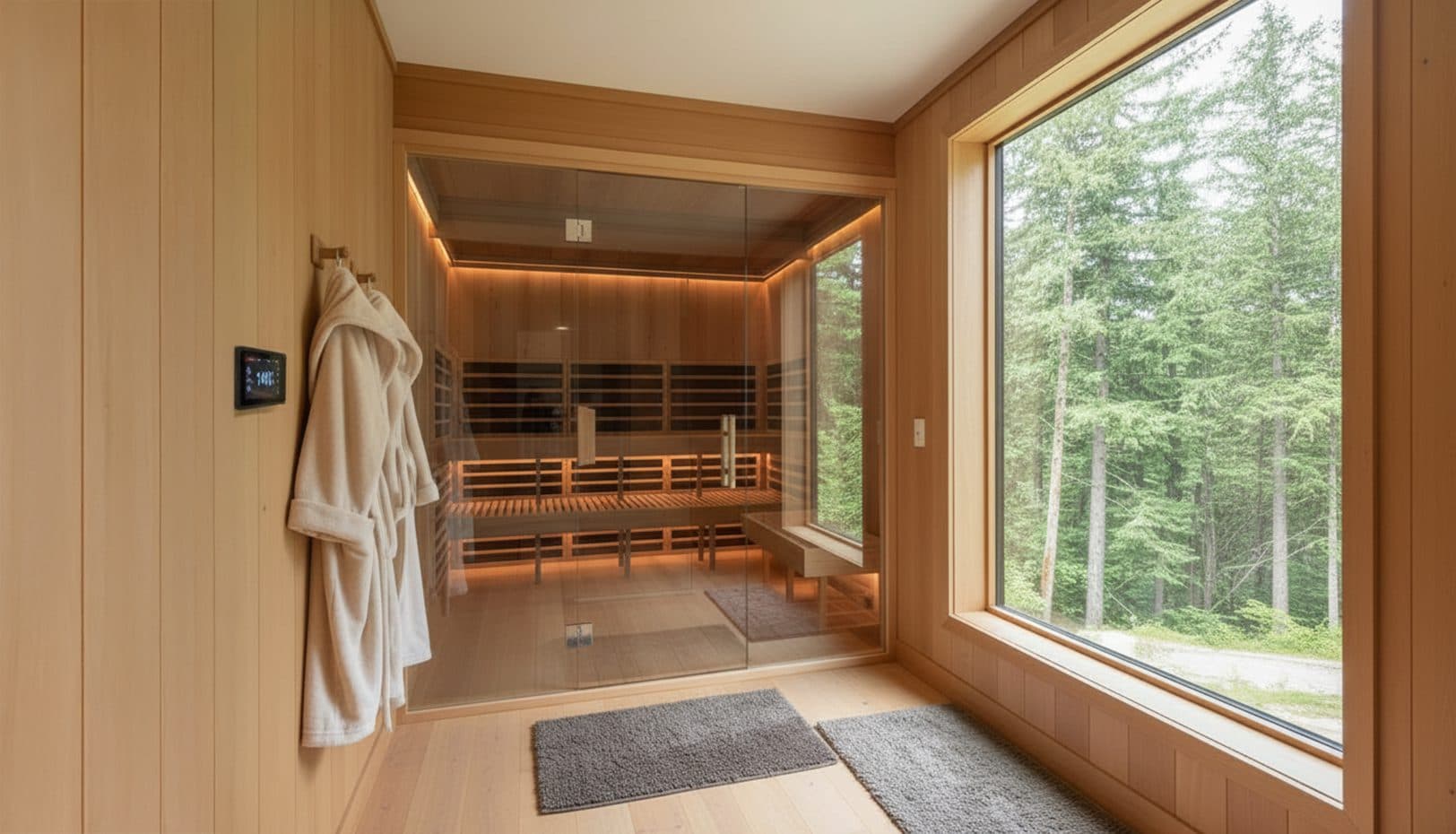
Benefits of Sweating in an Infrared Sauna: What a Doctor Says
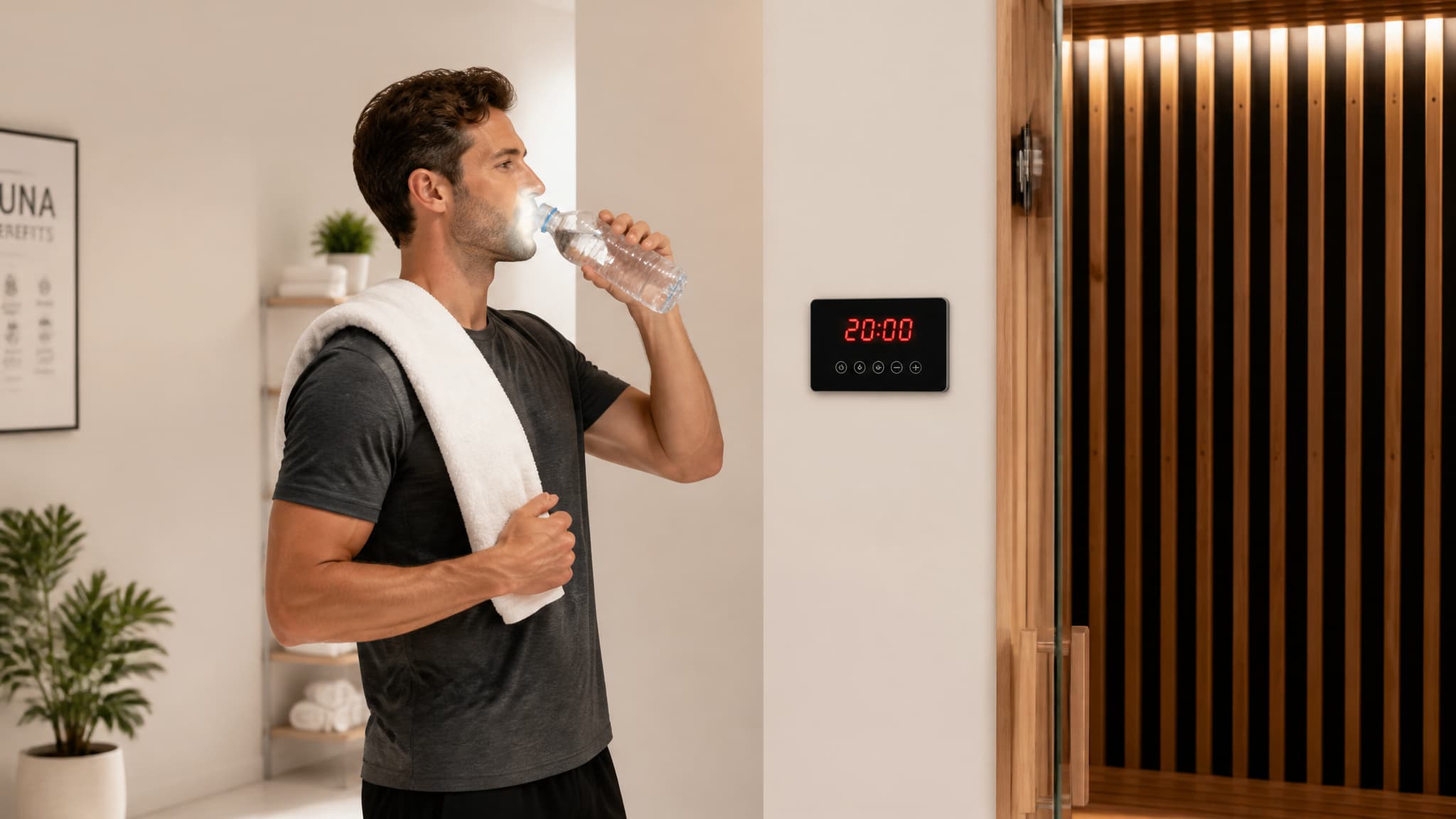
Key Takeaways
- Infrared saunas run comfortably at 110 to 135 degrees Fahrenheit, far cooler than a traditional sauna’s 150 to 195 degrees, yet a session still raises your heart rate and gets you sweating, a response researchers have compared to walking at a moderate pace.
- The strongest evidence points to circulation, recovery, and pain: a two-year study concluded infrared sauna therapy “may be a promising method for treatment of chronic pain,” and consistent use is also linked to better sleep, less stress, and easier muscle recovery.
- The detox claims are the least supported part of the pitch. Your body’s actual detox organs, the liver and kidneys, do the heavy lifting, which is why experts like Dr. Melissa Young of Cleveland Clinic say the research on sauna detox is “still in its infancy.”
In This Article
You’ve probably noticed them at your gym, wood-paneled boxes with warm light glowing from inside, usually occupied by someone who brought their phone in despite every rule. Infrared saunas have gone from niche wellness gadget to standard locker-room feature in a few short years, and the claims that follow them around are loud: better sleep, clearer skin, faster recovery, and the one you hear most often, “it detoxes you.”
Before you shell out for a home unit or start booking sessions, there’s something worth knowing: an infrared sauna doesn’t work the way most people assume. It’s not a steam room, and it doesn’t blast you with suffocating heat. A typical session runs at 110 to 135 degrees Fahrenheit, a fraction of the 150 to 195 degrees you’d find in a traditional sauna, and yet your body responds the way it does to a mild workout. Researchers have compared the cardiovascular response of a session to walking at a moderate pace.
So what does that actually buy you? Here’s the honest breakdown of the benefits of sweating in an infrared sauna, the claims with real evidence behind them, the gentle “maybes,” and the ones the science hasn’t caught up with yet.
What is an infrared sauna?
An infrared sauna is, at its core, a sauna that uses light to make heat, no steam, no open flame, no electric coils reddening in the corner. You’ll sometimes hear it called a far-infrared sauna. That “far” isn’t marketing fluff; it refers to where the emitted warmth sits on the light spectrum. The energy passes through the air and warms your body directly, rather than heating the air around you.
This is an engineering choice, not a slogan. Because your body absorbs the heat directly, the cabin air can stay far cooler than in a traditional sauna, that’s why you can sit comfortably at 110 to 135 degrees inside one, while a traditional sauna needs 150 to 195 degrees to do the same job. And it’s why people who can’t tolerate the heavy, oppressive air of a classic sauna often find infrared genuinely pleasant.
There’s a tradeoff worth understanding, too. Dr. Christopher Minson, a professor of human physiology at the University of Oregon who has studied saunas directly, put someone in a far-infrared sauna and measured the response. His finding: the heat doesn’t penetrate as deep into muscle tissue as the manufacturers claim, more on that later.
What happens to your body during a session
The first thing that happens is the thing you came for: you sweat. Within a few minutes of sitting down, your blood vessels widen, blood flow increases, and your heart rate climbs. It’s the same sequence of events that kicks in during a light workout, which is exactly why researchers describe sitting in one as physically similar to going for a brisk walk. So in a 10-minute session, you can expect that same moderate-exercise response, vigorous sweating and a higher heart rate, just at a lower temperature than a traditional sauna.
Yes, you do actually sweat in an infrared sauna, and usually faster than people expect, you can dig into the details in our guide on whether infrared saunas make you sweat. And because the heat hits your body directly instead of you sitting in a fog of hot, steamy air, the sweat tends to show up quickly and at a temperature your body tolerates better than in a traditional sauna. If you’re wondering how long it typically takes, it’s usually a matter of a few minutes, not an eternity, here’s our breakdown of how long it takes to sweat in an infrared sauna.
That sweat and the heart-rate bump are where pretty much every other benefit on this list comes from. So let’s go through them one by one.
The cardiovascular and circulation benefits
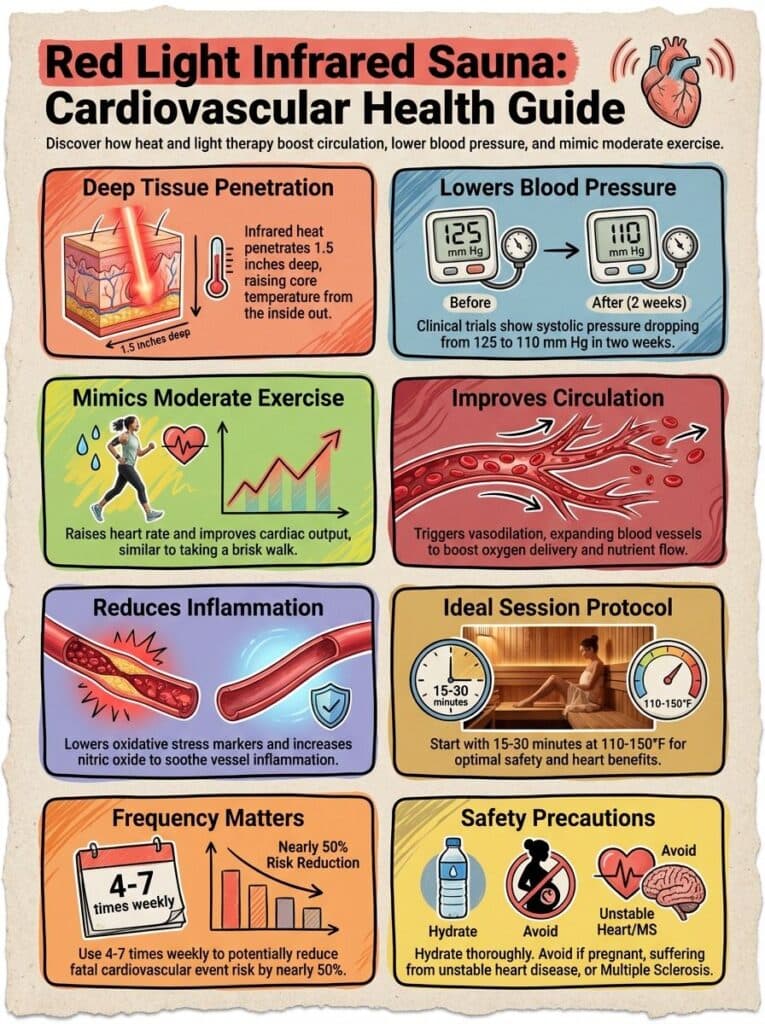
The heat causes your blood vessels to expand, which increases circulation and can nudge blood pressure down during and after a session. That's the most respectable claim on the infrared list. Your heart is working harder, that’s the “like a brisk walk” part, which is why studies have looked at infrared saunas for high blood pressure and heart failure.
Two honest caveats. First, more study is needed; the research is promising rather than definitive. Second, this is not a treatment, and it doesn’t replace medical care for any heart condition. The phrase researchers use is consistently careful: regular use may reduce risk of heart disease.
Also note the word “consistent.” Like actual walking, the cardiovascular benefit shows up when use becomes a habit, a few sessions a week, over weeks, not a single heroic drench.
Muscle recovery and athletic performance
If you train hard, the recovery pitch is what gets your attention. The mechanism is simple: more blood flow means more oxygen and nutrients delivered to tired muscles, and the gentle heat helps muscles relax instead of staying chronically tight. Regular use may speed recovery between sessions and support performance, a “may,” but a reasonably grounded one.
Here’s where the honest engineering note belongs. Some infrared manufacturers claim their heat penetrates deep into muscle tissue, which is part of the recovery marketing. Dr. Minson’s own research found that simply wasn’t the case. As he put it: We just published a study where a participant sat in a far-infrared sauna, and the thermal stimulus from the far infrared didn’t penetrate as deeply into muscle tissue as manufacturers claim. What it did do was drive blood flow to the surface layers of the body, where a lot of everyday muscle tension actually lives.
In practice, that means: use it for recovery and relaxation after workouts, not as a substitute for rest, sleep, and hydration, the actual recovery tools.
Chronic pain relief
One two-year study of infrared sauna therapy concluded it “may be a promising method for treatment of chronic pain,” and the people who used it consistently reported meaningful improvement. If you live with chronic pain, that's about as good as it gets for a sauna.
Part of that is mechanical: heat and increased circulation ease inflammation and help muscles relax, which matters for arthritis and recurring headaches. Part of it is simply that heat feels good and lets sore joints move with less protest.
The honest caveat: promising is not the same as proven. Larger, more rigorous studies are still needed, and sauna therapy isn’t a replacement for pain management from your doctor. But for many people, it earns a real place in their routine.
Relaxation and stress reduction
You don’t need a study to tell you that twenty minutes of quiet heat changes your mood, but there are studies anyway. Regular sauna use is associated with lower stress and improved mood, and the warmth triggers a relaxation response that may help lower your cortisol levels. Dr. Melissa Young, the functional medicine specialist at Cleveland Clinic, describes saunas as a kind of meditation session in warmer temperatures.
That framing is worth holding onto. The stress benefit isn’t just about heat, it’s about twenty minutes where you’re not looking at a screen, not answering anything, not doing anything except sweating and breathing. That’s legitimately rare in a normal week.
Better sleep
The relaxation doesn’t stop when you step out. Regular sauna use is linked to better sleep quality, the post-session drop in body temperature, plus the wind-down effect, makes it easier for your system to settle into sleep mode, an outcome explored among the infrared sauna health benefits covered in a definitive guide.
And this is one place where infrared genuinely edges out the traditional kind. Because it runs at a much lower temperature, it’s realistic to sit in one an hour before bed without the shock-to-the-system feeling you’d get stepping out of a 195-degree room. For anyone whose sleep is habitually rough, that’s not a small thing.
Immune support
There’s evidence that people who use saunas regularly catch fewer colds. The theory is that raising your body temperature, mildly and briefly, the way exercise does, supports a few of your immune responses, and the circulation boost helps your system move what it needs to when it needs to. Regular sauna use is also linked to lower oxidative stress, which matters for long-term health given its connection to heart disease and other conditions.
The research here is encouraging rather than bulletproof, and nobody should be using a sauna in place of actual immune support, sleep, nutrition, and exercise do that job. But as a habit layered on top of good basics? It’s a reasonable one.
Weight loss: the honest number
You’ll sometimes see infrared saunas pitched as a weight-loss tool. The honest version of that is worth knowing. Because a session elevates your heart rate and circulation the way a moderate workout does, you do burn calories. The estimate researchers commonly cite is 300 to 600 calories per session, depending on your body size and how long you stay in, though traditional saunas heat the air to 195°F, which limits endurance to strict 15-minute sessions, while infrared units bypass the air to keep you comfortable longer.
But there’s a catch. A good chunk of the weight you lose right after a session is water weight from sweating, which comes right back when you rehydrate, and you absolutely should rehydrate. Regular use may support your metabolism and even help your body break down fat deposits, and some people also report that a session blunts appetite, though that one is more anecdote than evidence.
The honest bottom line: think of it as a helpful addition to actual exercise and a decent diet, not a replacement for either.
The detox claim, and the controversy
This is the claim you’ve definitely heard, because it’s the one infrared sauna marketing leads with: sit in the heat, sweat profusely, and flush toxins out of your body.
Here’s the problem. Your body doesn’t detox through sweat in any meaningful way. It has dedicated detox organs, the liver and the kidneys, and that’s where the actual filtering happens. Sweat is your body’s cooling system, not its waste department.
As Dr. Young puts it, the research on sauna-based detox is “still in its infancy.” Some evidence suggests saunas might mildly support liver and kidney function through improved circulation, and that’s worth taking seriously. But the idea that you’re sweating out accumulated heavy metals and environmental pollutants? The evidence isn’t there.
So file “detox” under least-supported claims. The session will leave you feeling rinsed out and clear-headed, that part’s real. Just know the actual rinsing is your liver’s job, and it’s been handling it all along.
What infrared saunas do for your skin
The heat drives blood flow toward the surface, which is why people step out with that flushed, “glowing” look. That's the basis for the second-most-popular claim: better skin.
The heat drives blood flow toward the surface, which is why people step out with that flushed, “glowing” look. Blood flow to the second layer of skin carries nutrients that support cell regeneration and collagen production, which is the basis for the claim that regular use may improve skin tone, minimize fine lines, and help with things like acne over time. The sweating part does meaningful work too, it opens pores and helps loosen dirt and oil from the surface.
A few honest caveats. First, the skin benefits are driven by circulation and sweat, not by the heat penetrating deep into your skin, it doesn’t. Second, acne is a double-edged sword: if you sweat and don’t cleanse afterward, that same sweat mixed with skin oils can clog the pores you just opened. Third, if you have rosacea or very reactive skin, extra heat can trigger flare-ups and redness, for some people, infrared time is exactly the wrong thing. That said, the benefits of infrared saunas lie in how radiant energy heats muscles while keeping the air breathable, and how that heat increases tissue extensibility, real physiology worth weighing against those caveats.
The red light connection is worth mentioning here, since many modern infrared saunas bundle in red light therapy. The pairing makes sense on paper: the light stimulates the cells responsible for collagen production, while the heat drives blood flow to the same area, the combination is where people notice the most visible skin benefits.
Skin-type practicalities: if your skin is dry or sensitive, keep sessions shorter, heat is dehydrating, and moisturize afterward. If you’re oily or acne-prone, make cleansing after a session non-negotiable. And whatever your skin type, that post-sauna rinse is the difference between “glowing” and “gritty.”
The pre- and post-sauna skincare protocol
If you want to actually get the skin benefits, and not the clogged-pore version, the routine matters more than which machine you use.
Before a session, cleanse your face properly. A clean slate lets the heat and sweat do their thing without trapping the day’s dirt, sunscreen, or makeup under a layer of heat. Gentle options include micellar waters like La Roche-Posay Toleriane or Koh Gen Do Cleansing Spa Water, balms like Elemis Pro-Collagen Naked Cleansing Balm, and cleansing cloths like Hydropeptide’s micellar wipes, anything that removes the day without stripping your skin.
After a session, focus on hydration. Your face just lost moisture, so a hyaluronic acid serum, something in the iS Clinical or Skinceuticals family works well, followed by a ceramide-rich moisturizer like those from Skinmedica or EltaMD will help lock the water back in. Drink water too. The moisturizer hydrates the surface; the glass of water hydrates the rest of you.
Infrared vs. traditional saunas: the temperature tradeoff
Let’s settle the comparison once and for all. Both will make you sweat and raise your heart rate, triggering the same general family of benefits. The difference is in how they do it.
A traditional sauna heats the air around you to 150 to 195 degrees Fahrenheit, and your body warms up as it breathes that hot air. An infrared sauna runs at 110 to 135 degrees and heats your body directly with light energy, leaving the air itself comfortable. If you want the deeper mechanics, our comparison of infrared vs. steam sauna sweat differences walks through the details.
The comfort difference is real. As Dr. Minson put it: Infrared saunas are often more comfortable for users while still providing comparable benefits. If the heavy heat of a traditional sauna has kept you away, infrared is genuinely a better on-ramp.
But there’s a tradeoff. The same research that found infrared comfortable also found it gentler in one specific way. As Minson summarized: In short, the far-infrared sauna produced the smallest increase in core body temperature and thus the least cardiovascular strain. What that means practically: infrared is more comfortable and more accessible, but it’s a milder cardiovascular stimulus than a traditional sauna. If your goal is specifically to stress your cardiovascular system, and you don’t have a condition that makes that risky, a traditional sauna may give you more per session.
How to use one safely
No harmful effects have been reported with infrared sauna use, and for generally healthy adults it’s a mild, pleasant stressor. That's the reassuring bottom line on safety. If you’ve heard scaremongering, this is the part to remember, the research simply doesn’t show harm.
The real risk is dehydration. You are losing fluid, sometimes a lot of it. Drink water before and after a session. If you feel dizzy or nauseated while you’re in there, get out immediately, that’s your body telling you it’s overheated or under-hydrated, and pushing through it is how you earn an unpleasant afternoon.
Keep sessions to 10 to 20 minutes, a few times a week. Start at the shorter end and work up. If you have any pre-existing health conditions, especially anything heart-related, since your heart rate will climb, check with your healthcare provider before you start. People with cardiac conditions absolutely should not assume a sauna is safe for them without a doctor’s sign-off.
And if you’re shopping for a home unit, one engineering note from someone who thinks about this too much: quality units use low-EMF heaters, which keep electromagnetic-field exposure minimal during sessions. Worth asking about before you buy.
What the research actually supports
Let's look at the evidence. Clinical studies have looked at saunas for high blood pressure, heart failure, dementia and Alzheimer’s risk, headaches, arthritis, and type 2 diabetes. In several of those areas, the early results are genuinely promising.
But hold a reasonable amount of skepticism, because two caveats apply across the board. Larger and more rigorous studies are needed before any of this moves from “promising” to “proven.” And a significant share of the famous sauna research was done with traditional saunas, not infrared ones. When you hear that sauna use is linked to lower heart-disease risk, part of that evidence was gathered at 180-plus degrees. Infrared-specific research exists and is growing, but it’s thinner, because the technology is newer and the studies are smaller.
That doesn’t mean the evidence doesn’t apply at all, the underlying mechanism, heat driving blood flow, is the same. It just means what’s true about traditional saunas shouldn’t be blindly assumed about infrared ones, and vice versa. The honest position: infrared has real, respectable evidence for comfort, accessibility, recovery, and pain. Beyond that, the research is still catching up.
At-home options: sauna blankets
If you want the benefits at home without installing a wood-lined room, there’s a middle path finding more and more fans: the sauna blanket. The best-known version is the HigherDose Infrared Sauna Blanket, a wrap designed to deliver infrared warmth while you lie flat. It works the way a cabin does, using the heat to increase circulation and promote that temporary blood-flow boost you’d get from a session, just without the room.
Using one properly matters. Pre-heat the blanket before you get in, a cold start muffles the experience. Start on a lower temperature setting, around 4 or 5, and let your body acclimate before turning it up to 6 or 7. Wear loose cotton clothing inside, or go in nude with the blanket’s insert layer so you’re not pressed directly against the material. Keep sessions to 10 to 20 minutes, and have water nearby, blankets sweat you out faster than you expect.
And if the question in your head is “is the blanket worth it?”, yes, for a lot of people, purely because it makes the habit easy. A blanket doesn’t replace a cabin’s experience, and it delivers a gentler stimulus than a full unit. But if the choice is “blanket every few nights” or “cabin once a month,” the blanket often wins on consistency, and consistency is where the benefits actually live.
The bottom line
Infrared saunas have become popular for a reason: they’re comfortable, accessible, and the core benefits, better circulation, faster recovery, meaningful pain relief for some people, lower stress, better sleep, and genuine skin perks when you pair them with the right routine, have real research behind them. The benefit you hear most often, the detox story, is the weakest claim of the lot. Your liver and kidneys do the detoxing; the sauna just makes you sweat.
How long until you notice anything? Like any habit, benefits compound over weeks of consistent use, not in a single session. Ten to twenty minutes, a few times a week, with water before and after, that’s the formula.
And that’s comforting, really. A health habit that points you in the right direction, even gently, is probably worth keeping. If twenty quiet, sweaty minutes a few nights a week earns you better sleep, easier recovery days, and a calmer brain, that’s a pretty good trade.
Maybe turn the phone off first. You’re about to sweat anyway.
Frequently Asked Questions
How many days a week should you sit in an infrared sauna?
For most people, a few sessions per week is a good starting point. Keep each session to 10 to 20 minutes, and start at the shorter end if you're new. Consistency matters more than intensity, so aim for a regular routine that fits your schedule. That said, everyone's tolerance is different, so listen to your body and adjust as needed.
What is an infrared sauna and how does it differ from a traditional sauna?
An infrared sauna uses light to heat your body directly, rather than heating the air around you. It runs at a cooler 110 to 135 degrees Fahrenheit, compared to a traditional sauna's 150 to 195 degrees, making it more comfortable for many people while still producing similar benefits like sweating and increased heart rate.
Does an infrared sauna actually detox your body?
The detox claim is the least supported by evidence. Your liver and kidneys are your body's main detox organs, and sweat is primarily a cooling mechanism, not a waste removal system. Research on sauna-based detox is still in its infancy, so while you may feel refreshed, the actual detoxing is your liver's job.
Can an infrared sauna help with muscle recovery and pain?
Yes, there's reasonable evidence that infrared saunas can aid muscle recovery and chronic pain relief. The heat increases blood flow to the surface layers of the body, which helps relax muscles and ease inflammation. A two-year study found it 'may be a promising method for treatment of chronic pain,' though it's not a replacement for medical care.
Is an infrared sauna blanket worth it?
For many people, yes, because it makes the habit easy and consistent. A blanket delivers a gentler stimulus than a full cabin, but if you're choosing between a blanket every few nights and a cabin once a month, the blanket often wins on consistency, which is where the benefits actually accumulate.

Founder & Lead Designer, SaunaCloud®
SaunaCloud: 3,000+ installations since 2014 · Author of The Definitive Guide to Infrared Saunas · Featured in Forbes, Inc., and MSN
Christopher designs every SaunaCloud sauna. His work brings the room, heaters, controls and installation plans together so you can review the project before committing. His professional expertise is sauna design and construction, not clinical medicine.
Custom 3D renderings and a proposal in 24-48 hours.
Continue Reading
Infrared Sauna Benefits
Infrared Sauna and Heart Health: From Prevention to Treatment — What the Cardiology Research Shows (2026)
Read article
Infrared Sauna Benefits
Infrared Saunas and Growth Hormone: The 2-5x Boost in Context (2026)
Read article
Infrared Sauna Benefits
Infrared Sauna and Your Immune System: The Science of Immune Resilience vs 'Immunity Boosting' (2026)
Read articleReady to Design Your Sauna?
Every project starts with a conversation. Tell us about your space and we'll create your custom plan — free, no obligation.
Custom 3D renderings and a proposal in 24-48 hours.