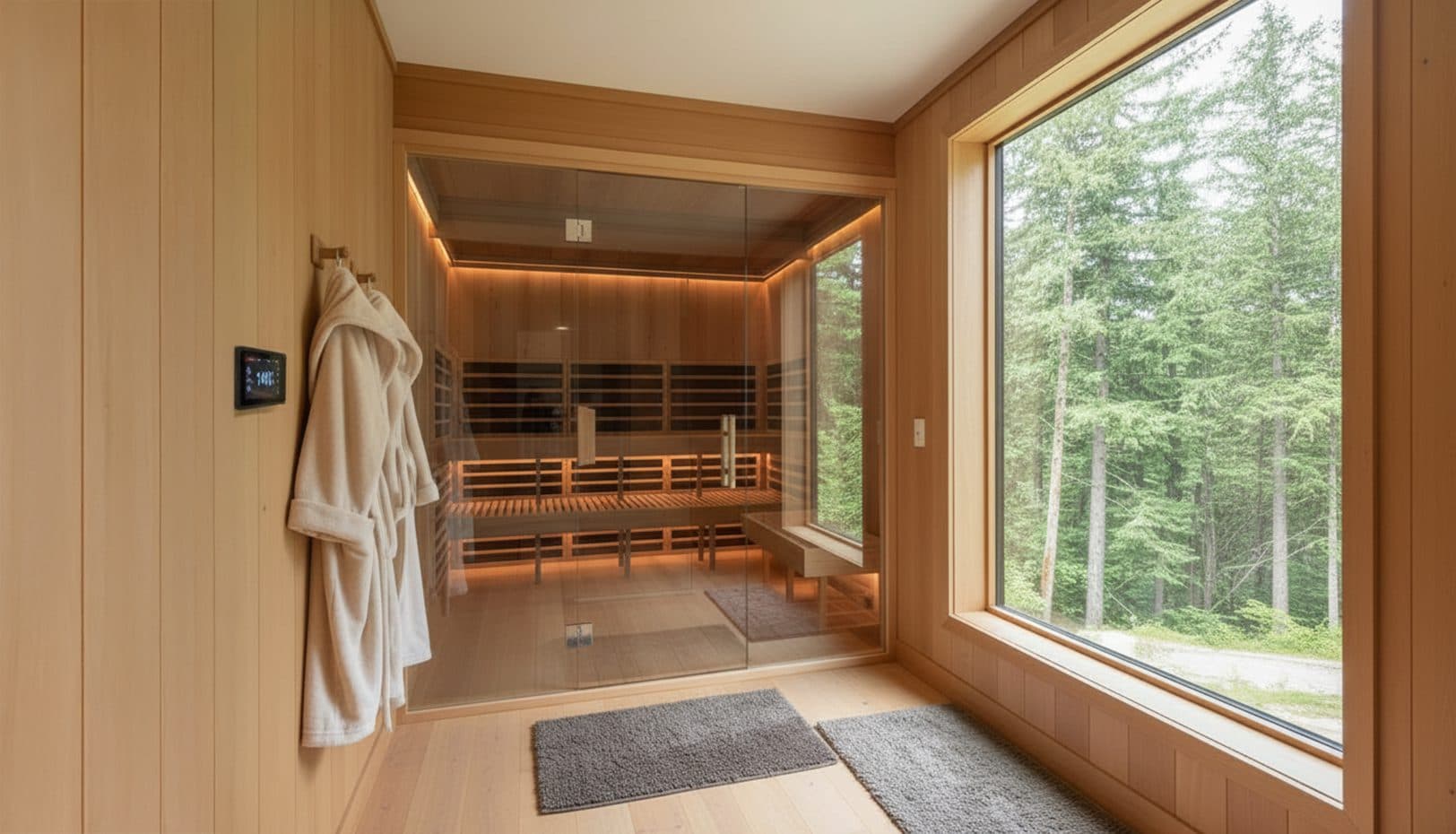
Senior-Safe Sauna Design: Features That Prevent Falls

Key Takeaways
- The landmark 20-year Laukkanen study of 2,315 participants shows that regular thermal sessions (4 to 7 times a week) correlate with a 65% reduction in Alzheimer's risk and a 50% drop in heart-related mortality.
- Gentle, low-heat seated stretching (115°F to 120°F) in an infrared environment delivers significantly greater joint flexibility and pain relief than unheated stretching, without creating slippery floor hazards.
- True clinical safety for older adults requires built-in, structurally anchored grab bars, a low-entry threshold, and precise digital climate controls like the CORE 5 system starting at a mild 115°F.
In This Article
The physical reality of an aging body can make traditional aerobic exercise feel more like a hazard zone than a health boost. When joint pain, stiff hips, or balance issues make impact-heavy equipment like treadmills feel unsafe, finding ways to maintain cardiovascular health becomes a challenge. That's where far-infrared heat changes the equation. Instead of forcing you to run or lift, far-infrared waves act as a passive "aerobic simulator." They gently warm you, widen your blood vessels, and elevate your heart rate while you sit comfortably.
If you're setting up a sauna to stay active, look past the flashy spa aesthetics and focus on structural safety. Over our ten years of handcrafting medical-grade saunas at SaunaCloud, we’ve learned that the best infrared saunas for senior fitness programs are those designed specifically to protect physical independence, eliminate trip hazards, and deliver precise climate control.
The Science of Sauna Longevity: Clinical Neuroprotection and Systemic Benefits
Cognitive decline and the risk of a sudden stroke are some of the most stressful worries that families face as they look toward the future. The biological defense against these issues doesn't have to come from intense, exhausting regimes. Instead, some of the most compelling longevity research of the last few decades focuses on the consistent habit of thermal bathing.
The benchmark for this research is the Laukkanen studies, a massive 20-year longitudinal safety project that tracked 2,315 middle-aged and older men. The researchers discovered that frequent sessions (undergoing heat therapy 4 to 7 times per week) stacked the odds in favor of the participants. Regular users saw a 40% reduction in all-cause mortality, a 50% reduction in cardiovascular mortality, a 60% lower risk of stroke, and a stunning 65% reduction in the risk of developing Alzheimer's disease or dementia.
When you sit in an infrared cabin, the heat stimulates the release of Brain-Derived Neurotrophic Factor (BDNF). It's a protein that acts like a fertilizer for your brain, promoting neuroprotection, supporting memory, and helping to keep your mind sharp. At the same time, this thermal conditioning systemically lowers neuroinflammation and activates heat shock proteins. Think of these proteins as a cellular clean-up crew that roams your body, repairing and stabilizing damaged proteins before they can gather and cause cognitive harm.
Passive Cardiovascular Conditioning: How Thermal Therapy Mimics Moderate Exercise
If you're dealing with balance issues or muscle loss, sitting in a warm cabin is a great way to give your heart a safe, daily workout. This passive conditioning matches what your body experiences during a moderate walk or a light cycling session.
This approach is validated by clinical research, most notably a protocol called Waon Therapy. Developed in Japan, Waon Therapy is a gentle, specialized infrared protocol designed specifically to improve heart health in elderly heart failure patients. Rather than putting mechanical pressure on weak knees or hips, it uses deep-penetrating far-infrared wavelengths to dilate and widen blood vessels.
This heat helps your blood vessels open up, which means your heart doesn't have to work as hard to pump blood through them. As a result, your heart rate safely rises to between 100 and 150 beats per minute passively. Your heart is working, your blood is circulating, and your body is burning energy, all with zero impact on your skeletal frame. Over several weeks, this low-stress conditioning improves endothelial function—the delicate inner lining of your blood vessels—making them naturally more elastic and responsive, which gradually assists in lowering resting blood pressure.
Seated Stretching and Mobility: Safe Physical Therapy in a Warm Cabin
Adding movement to your wellness session doesn't mean doing high-intensity exercises. Combining gentle stretching with a low-heat infrared environment is one of the best ways to safely restore range of motion in your stiff joints.
How Dry-Heat Environment Adjustments Improve Flexibility Over Age 60
The reason stretching in an infrared environment feels so different comes down to how dry heat changes the pliability of your body's tissues. Warmth increases local blood circulation, altering the viscosity of the fascia and connective tissues that surround your joints.
The National Institutes of Health (NIH) tracked these changes by comparing older adults performing seated chair yoga inside a warm environment against a group doing the identical postures in a standard, unheated room. The results were clear: the warm-environment group experienced far superior joint flexibility, cleaner posture improvements, and lasting relief for the elderly suffering from osteoarthritis and general joint pain.
To use this safely in your home, you'll want to practice a modified, low-impact "chair yoga" routine. By keeping all postures seated on the bench, you eliminate the risk of slipping or taking a tumble. Focus on basic movements—like holding a gentle chest opener or mild seated torso twists—and hold each posture for 4 to 5 deep, slow breaths.
Crucially, you must keep the sauna's temperature low, ideally between 115°F and 120°F. If you try to run the cabin at a typical athletic setting of 140°F or more, you'll sweat, turning the wooden floor and bench into a slick, dangerous slip hazard. Always check with your doctor before starting any physical routines inside the cabin, move slowly, and back off immediately if you feel pain.
Buyer’s Guide: Accessibility-First Features
When integrating infrared therapy for senior use, ignore luxury aesthetic marketing and prioritize structural safety. If you're building a routine, skip the luxury marketing and focus on structural safety and accessibility.
When you're comparing models—whether you're looking at a custom infrared sauna, the best 2-person infrared sauna for home, or popular options from other brands—look for the following engineering details:
- Integrated Structural Grab Bars: Stay completely away from aftermarket, suction-cup grab bars. Standard home saunas are built with thin tongue-and-groove cedar paneling that cannot hold human body weight if someone starts to fall. Safely designed saunas feature integrated, factory-anchored grab bars backed by dense wood framing.
- Low Entry Thresholds & Adjustable Benches: Choose a model with an ultra-low or zero step-over threshold so you aren't tripping over a high wooden ledge as you carry towels inside. The benches should be at an ergonomic height that makes rising from a seated position natural.
- 2-Person Cabin Layouts: We always recommend choosing at least a 2-person layout over a tiny 1-person cabin. This has nothing to do with luxury space; it ensures there is plenty of room for a family member or caregiver to sit inside with you, assist with movements, or keep a close eye on you.
- Precise Control Hardware: Look for medical-grade systems utilizing clean, modern heating networks like VantaWave panels coupled with a CORE 5 Control interface. These specialized systems allow you to set the cabin’s climate starting at 115°F, preventing the spikes in temperature common in standard hot boxes.
Sauna Risks for Older Adults: Pharmaceutical Interactions and Physiological Hazards
Before you start, consider how heat might interact with your specific health conditions and medications. Your body's response to heat is unique to you. Before you begin using a sauna, you should run your full list of medications past your physician.
The first major intersection involves blood pressure and diuretic medications. Because heat causes your blood vessels to expand, it naturally lowers your blood pressure. If you are already taking blood pressure medication, this combined effect can cause rapid drops in pressure, leaving you dizzy. Similarly, diuretic medications throw off your hydration levels; when combined with sweat, they can cause sudden, compounded dehydration.
A low-entry threshold is essential for keeping your daily wellness routine accessible and free from trip hazards.
There is also a critical, rarely discussed risk for diabetic seniors: insulin sensitivity. Heat significantly increases the local blood flow to your subcutaneous tissues—the fat layer right under your skin. If you have injected insulin into this layer, the increased blood flow accelerates its absorption into your bloodstream. This poses a risk of hypoglycemic shock (a rapid drop in blood sugar).
Finally, electronic pacemakers or metallic joint implants require cardiologist clearance. While high-quality models offer ultra-low EMF ratings to prevent interference, a cardiologist must give the final green light before an individual with a cardiac implant steps into any heated cabinet.
Phased Geriatric Acclimatization: An 8-Week Thermal Roadmap
Our natural ability to regulate internal temperature—the body’s built-in thermostat—becomes a bit slower and less sensitive as we age. Because of this, jump into a session and rely on the cabin's digital display rather than how warm you "feel." Instead, it's much safer to follow a step-by-step plan to let your body adjust gradually.
We recommend tracking your vascular response by checking your blood pressure before and after your sessions during the first few weeks. Always monitor the cabin’s external digital display rather than your own subjective feelings to keep your climate accurate and safe.
- Phase 1 (Weeks 1 to 3): Getting Started
- Temperature: Maintain strictly at 115°F to 120°F.
- Duration: Keep sessions brief, between 10 to 15 minutes.
- Frequency: 2 to 3 sessions per week.
- Phase 2 (Weeks 4 to 8): Intermediate Progression
- Temperature: Gently increase to 120°F to 130°F.
- Duration: Increase to 15 to 20 minutes.
- Frequency: 3 to 4 sessions per week.
- Phase 3 (Weeks 9 and beyond): Clinical Longevity Target
- Temperature: Settle into 125°F to 135°F.
- Duration: Settle into 20 to 30 minutes.
- Frequency: 4 to 5 sessions per week to match the long-term clinical safety data.
Setting Up a Safe, Low-Heat Senior Physical Therapy Routine
Building a safe routine is as much about the environment outside the sauna as it is about the temperature inside. To keep your daily routine safe, you want a pre-session and post-session checklist.
Because our internal thirst signals naturally decline over the years, you cannot wait until you feel thirsty to drink. Treat hydration like a medication: drink precisely 20 ounces of electrolyte-rich water shortly before you step inside. This maintains your fluid balance and helps you avoid the fatigue that dehydration causes.
The highest risk during any session happens when you stand up to exit. As the body’s blood vessels expand in the heat, standing up too quickly can cause orthostatic hypotension—the sudden drop in blood pressure that leads to a head rush, dizziness, or fainting. To prevent this, follow these steps to exit safely: 1. When the session ends, sit completely upright on the bench for a full 60 seconds. 2.
Rise slow, keeping at least one hand anchored to your sauna’s structural grab bar. 3. Stand completely still at the grab bar for 15 seconds to allow your blood pressure to normalize before you take your first step out of the door.
To finish your setup, lay thick, heavy duty rubber mats with non-slip textures both immediately inside and outside the threshold. Keep your cell phone or a dedicated emergency call button on a small table right outside the glass door—close enough to reach if you need it, but protected from the internal heat that can damage electronic devices. Finally, if you have known balance, weakness, or blood pressure issues, ensure someone else is always in the home when you are using the sauna.
Frequently Asked Questions
Are infrared saunas good for seniors?
Yes, they can serve as a passive cardiovascular simulator that provides exercise-like benefits without the impact stress of traditional workouts. By gently elevating heart rate and increasing blood flow, they help improve vascular elasticity and mobility, provided the cabin is equipped with structural safety features like grab bars and precise low-temperature controls.
Can a person with a pacemaker use an infrared sauna?
You must obtain explicit clearance from your cardiologist before using a heated cabin if you have a pacemaker or other metallic implants. While some manufacturers offer low-EMF technology, a professional medical evaluation is the only way to ensure the device won't be impacted by the sauna's operating environment.
How does an infrared sauna act as a passive cardiovascular conditioner?
The deep-penetrating heat dilates and widens blood vessels, which reduces resistance and allows your heart to pump blood more efficiently. This process mimics the physical demands of a moderate walk or light cycling, raising your heart rate to between 100 and 150 beats per minute without any mechanical stress to your joints.
Why does the temperature setting matter for senior safety?
High temperatures—typically above 130°F—can cause excessive sweating, which turns wooden floors into dangerous slip hazards, and increase the risk of rapid blood pressure drops. Maintaining a precise, lower range of 115°F to 120°F provides the therapeutic benefits of heat while keeping the environment stable and accessible for movement.
What's the difference between standard and medical-grade grab bars for saunas?
Standard grab bars often use suction cups that frequently fail on the thin wood paneling found in typical residential saunas. Medical-grade, safe configurations use factory-anchored bars attached directly to the sauna’s dense internal framing, ensuring they can support full human body weight to prevent falls.
Can I perform physical therapy or stretches in an infrared sauna?
Yes, gentle chair yoga or seated stretches are highly effective in a heated environment because the warmth increases the pliability of fascia and connective tissues. To remain safe, all movements should be performed while seated on the bench to prevent potential balance issues, and the room temperature should be kept strictly between 115°F and 120°F.
How much water should I drink before a sauna session?
You should consume 20 ounces of electrolyte-rich water before entering the cabin to account for fluid loss through heat exposure. Because natural thirst signals often decrease with age, it is important to treat this hydration step as a scheduled necessity rather than waiting until you feel thirsty.

Founder & Lead Designer, SaunaCloud®
SaunaCloud: 3,000+ installations since 2014 · Author of The Definitive Guide to Infrared Saunas · Featured in Forbes, Inc., and MSN
Christopher designs every SaunaCloud sauna. His work brings the room, heaters, controls and installation plans together so you can review the project before committing. His professional expertise is sauna design and construction, not clinical medicine.
Custom 3D renderings and a proposal in 24-48 hours.
Prefer to talk? A free 30-minute consultation with Christopher Kiggins.
Continue Reading

Ready to Design Your Sauna?
Every project starts with a conversation. Tell us about your space and we'll create your custom plan — free, no obligation.
Custom 3D renderings and a proposal in 24-48 hours.
Prefer to talk? A free 30-minute consultation with Christopher Kiggins.