
Can You Bring a Phone Into a Sauna? The Real Risks (Heat, Battery, Warranty)
Key Takeaways
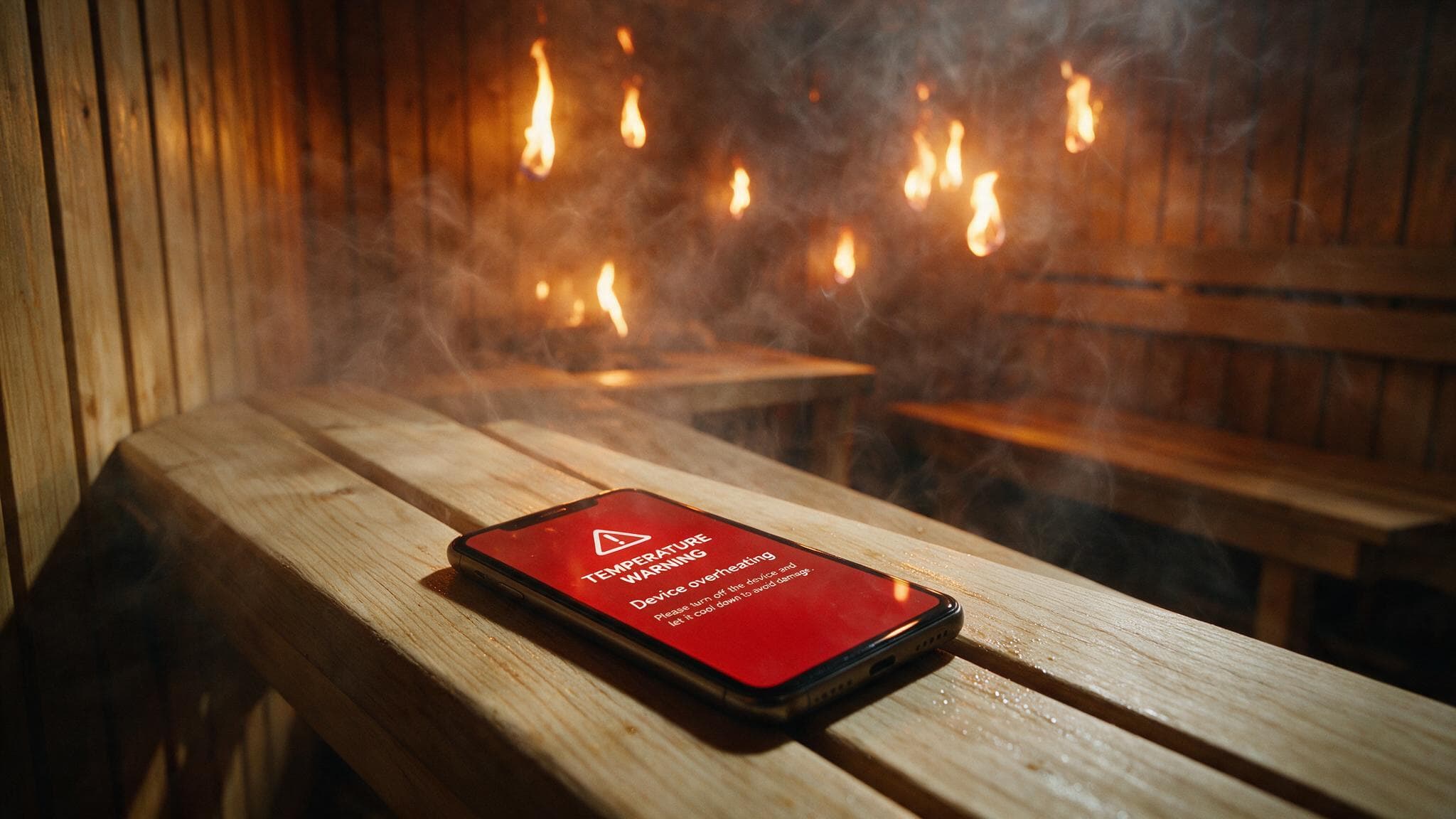
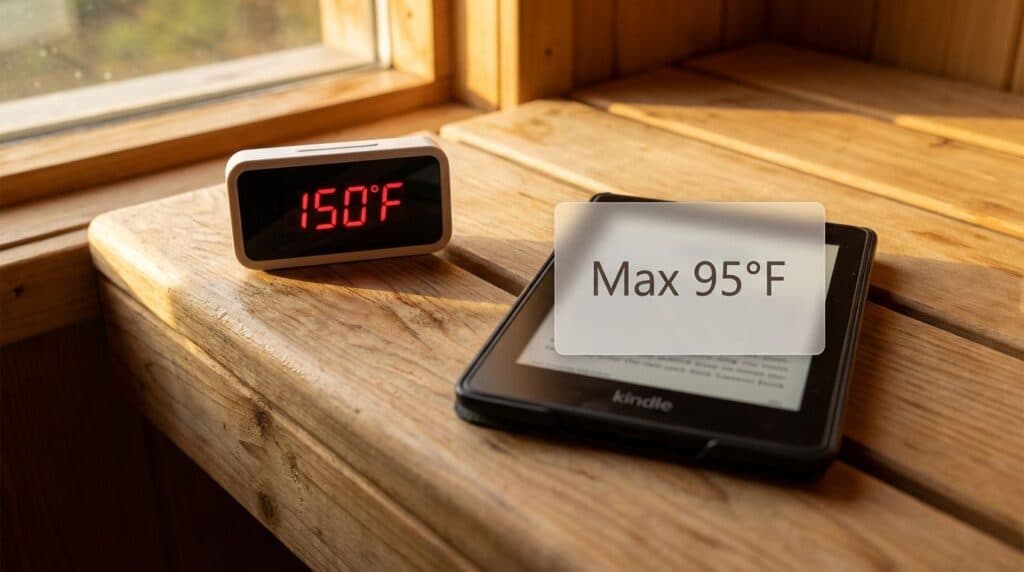
- Most phones max out at 35°C (95°F) operating temperature; saunas typically hit 70–100°C (150–195°F) — a gap of at least double the phone’s limit
- Lithium-ion batteries degrade permanently above 35°C, and repeated sauna exposure accelerates cumulative damage to the battery, screen, and internal seals
- IP68 water resistance is tested in fresh water only, not steam or high heat — and both Apple and Samsung have faced legal action over misleading water-resistance claims
In This Article
You can physically bring your phone into a sauna. You shouldn’t. Here’s why, and here’s what happens if you do.
Most smartphones are designed to operate safely only up to 35°C (95°F). A traditional sauna runs at 70–100°C (150–195°F). That’s more than double the limit, and often triple it. Even storage tolerance — the range where a phone can sit turned off without damage, tops out at 45°C (113°F), which is still well below sauna temperatures.
No mainstream consumer phone is engineered for prolonged, direct exposure to that kind of heat or humidity. Let’s walk through what you’re risking, what the manufacturers actually say, and what to do instead.
What sauna heat actually does to your phone
The first thing you’d notice is your phone trying to protect itself. Most modern phones have thermal throttling built in: the processor slows down, the screen dims, charging slows or stops, and eventually the phone shuts down entirely.
Here’s what’s happening inside:
Battery damage is the biggest risk. Lithium-ion batteries degrade rapidly above 35°C (95°F). In a sauna, that threshold is exceeded within seconds of exposure. The battery chemistry starts breaking down, which means permanent capacity loss.
In worst-case scenarios, the battery can swell, leak, or — rarely, cause a fire.
Physical damage to the phone itself. The adhesives that hold your phone together — bonding the screen to the frame, sealing the back panel, securing internal components, begin to weaken above 35°C. Repeated heat exposure can cause the screen to lift, create gaps where moisture can enter, and warp the touchscreen. Ghost touches and display blackouts are possible. The phone might feel fine coming out of the sauna, but the structural integrity has been compromised. Heat weakens adhesives and warps touchscreens, as noted in expert-backed guides on device risk factors.
One session might not kill your phone. You could take it in for ten minutes, feel it get warm, leave it to cool, and have it work perfectly for months. But every session adds hidden wear.
The battery capacity drops a little more. The adhesives weaken a little further. The charging port corrodes a little faster.
Warning signs after exposure: faster battery drain than usual, unreliable charging (the phone keeps connecting and disconnecting), distorted audio from compromised speakers, intermittent performance where apps crash or stutter. If you see any of these after a sauna session, you’ve probably accelerated the phone’s aging process.
Steam and condensation — the moisture risk phones ignore
The air temperature is lower than a dry sauna, typically around 40–50°C (104–122°F). That’s still above the phone’s operating limit, but the real problem is humidity.
Steam condenses on cooler surfaces — and your phone’s metal frame is much cooler than the air around it. That means water droplets forming inside charging ports, speaker grilles, microphone openings, buttons, and along the seams where the screen meets the body. Even phones with IP68 water resistance aren’t safe here, because water resistance is tested in fresh water, not steam. Steam can penetrate seals that intact liquid wouldn’t.
The liquid damage indicator inside the SIM card tray is the tell. It’s a small white or pink strip. If it turns red, the manufacturer considers the phone liquid-damaged, and your warranty is void. Steam exposure can trigger that indicator even if the phone never touched a drop of standing water.
Moisture also accelerates corrosion on charging contacts and internal connectors. A phone might work fine after one steamy session, but the corrosion builds up over time. The charging port becomes intermittent. The speaker sounds muffled.
The microphone cuts out.
Does the sauna type matter? Traditional vs infrared vs steam
Each sauna type presents a different risk profile, but none is safe for your phone.
Traditional saunas: 150–195°F (65–90°C)
The classic setup. Wood-fired, electric, or stove-heated, these saunas run hot and dry. The temperature is far above any phone’s operating guidance, and the heat is direct and intense. This is the worst environment for electronics.
Infrared saunas: 110–135°F (43–57°C)
Infrared saunas run cooler than traditional ones, which creates a false sense of safety. The ambient temperature is lower, so your body feels comfortable for longer sessions — 30 minutes or more. But even at 110°F (43°C), the phone is still above its 95°F limit. Sustained warmth over a longer session stresses the battery and internal components just as much as a shorter blast of higher heat.
The trap with infrared saunas is that body comfort encourages longer exposure. Your phone might not trigger a temperature warning immediately, but the cumulative heat load over a 40-minute session is measurable. Repeated exposure will degrade the battery and weaken adhesives just as surely as a traditional sauna would.
Steam rooms: lower air temperature, high humidity
As covered above, steam rooms add moisture risk on top of the heat. The air temperature is lower — typically 40–50°C (104–122°F), but still above phone limits. The condensation that forms on the phone can penetrate ports and seals regardless of IP rating.
Bottom line: no sauna type is phone-safe. The coolest option (infrared) still exceeds operating limits. The driest option (traditional) is the hottest. Steam rooms add moisture to the equation. Every type presents a risk.
Why IP68 won’t save your phone in a sauna
This is a common misconception, and it needs to be addressed.
What IP68 actually means
IP68 is a two-part rating. The first number (6) means full dust protection. The second number (8) means the device can be immersed in fresh water beyond 1 meter. That’s it.
Fresh water. Not steam. Not salt water. Not sauna humidity.
The specific test conditions matter: iPhone 12 is rated for immersion up to 6 meters for 30 minutes. Samsung Galaxy S21 is rated for 1.5 meters for 30 minutes. Both tests are done in fresh, still water at room temperature. Manufacturers do not test in steam, hot water, or high-humidity environments.
Water resistance also degrades over time. Drops, repairs, worn seals, and everyday wear all reduce the phone’s ability to keep water out. A phone that was perfectly water-resistant when new might have compromised seals after a year of pocket carry and minor drops.
The liquid damage indicator
Inside the SIM card tray, there’s a small strip that changes color when it detects moisture. If it’s pink or red, the manufacturer considers the phone liquid-damaged. Steam exposure can trigger this strip even if the phone never got wet in any conventional sense. Once that strip is discolored, the standard manufacturer warranty is void — even if the phone works fine.
Apple’s fine and Samsung’s lawsuit
The legal record makes the limits of water resistance very clear.
In 2019, the Australian Competition and Consumer Commission (ACCC) took Samsung to federal court for false and misleading advertisements about Galaxy phone water resistance. Samsung Australia had been denying warranty claims for damage caused by liquid exposure — the same exposure their ads suggested was safe.
Apple was fined €10 million (about A$15.5 million) by Italy’s antitrust authority for misleading claims about water resistance and for refusing to cover liquid damage under warranty. The Italian authority found that Apple’s marketing gave consumers the impression their phones were water-resistant in ways the warranty didn’t support.
If there’s a legal record of companies being penalized for overstating water resistance, you should be cautious about trusting it in an environment far hotter and more humid than any test condition.
Phone vs Kindle — are e-readers safer in the heat?
This is a question we get a lot at SaunaCloud. People want something to read during a longer session, and an e-reader feels less risky than a phone. So, can you bring a kindle into a sauna?
E-ink screens generate very little internal heat compared to phone displays. They lack the glass touchscreen layers and adhesive-heavy display stacks that are vulnerable to heat warping. So the screen itself might handle the heat better than a phone’s OLED or LCD panel.
But Kindles still contain lithium-ion batteries, charging ports, and adhesive seals. The battery degrades above 35°C like a phone’s does. The charging port is vulnerable to humidity just like a phone’s. The adhesives holding the case together can weaken with repeated heat exposure.
The manufacturer operating-temperature guidance applies the same way.
iPhone and Android — manufacturer heat guidance
Go to Apple’s or Google’s support pages right now. Here’s what they say.
iPhone temperature limits
Apple states that iPhones operate best in an ambient temperature range of 32°F to 95°F (0°C to 35°C). Storage range is wider — -4°F to 113°F (-20°C to 45°C), but that’s for storing a turned-off device, not for active use. Sauna temperatures, whether traditional (150–195°F) or infrared (110–135°F), far exceed both the operating and storage limits.
Apple’s guidance specifically notes that high heat can affect performance, charging, and long-term battery life.
Android heat behavior
Google Pixel phones — and Android devices generally, behave the same way. The phone will show a temperature warning, then begin thermal throttling. Features get disabled. Charging stops. Eventually the phone shuts down to protect itself.
Both platforms exclude misuse from warranty coverage. Taking a phone into a sauna qualifies as misuse. If the liquid damage indicator is triggered or the battery swells, the manufacturer is not covering that repair.
No mainstream phone model is engineered for sauna-level heat. The model doesn’t matter. The temperature gap is universal.
The case for bringing your phone in — and why it falls flat
Look, I get the reasons. We hear them from customers all the time.
Music and podcasts. A sauna session is a perfect time to catch up on an audiobook or zone out to music. The problem is that your phone is the source of that audio, and the phone can’t handle the environment, which raises the question: can you bring AirPods into a sauna?
Guided meditation apps. Saunas are great for mindfulness, and guided sessions can help you get into the right headspace. But again, the phone is in the heat.
Emergency contact. Some people want to be reachable during a session, especially if they have health concerns or are using a public sauna alone.
Music can come from a heat-rated Bluetooth speaker placed outside the sauna. Meditation tracks can be preloaded and played through the same speaker. Emergency contact can be handled by telling someone you’ll be in the sauna for 20 minutes, or by keeping the phone outside the hot room but within earshot—but the question of can you bring your phone in comes with important caveats.
The risks to a $1,000+ device outweigh the convenience. Every time. There’s no good argument for taking the phone into the heat.
What phone use does to your sauna session
Here’s the positive case for leaving the phone behind. The sauna works better without it.
Research on thermoregulation and autonomic balance shows that sauna immersion increases endorphin release and triggers a nervous-system reset. It lowers stress, improves circulation, and promotes mindfulness. Constant phone use — checking notifications, switching tracks, glancing at the screen, disrupts the body’s natural relaxation response. You’re preventing yourself from getting the full therapeutic window.
Clinical guidelines support the use of sauna sessions as an intentional break from daily digital routines. The Cleveland Clinic has published on the health benefits of saunas, including mental detachment and stress reduction. Medical professionals consistently recommend leaving devices outside sauna environments and have clear guidance on what can you bring into a sauna? Typically, items like towels and water are safe, while electronics should be left out.
The sauna is one of the few environments where you can be completely unreachable for a short period, and that’s actually the point.
Phone overheated or wet? What to do now
If you’re reading this section because your phone already got cooked or steam-damaged, here’s the immediate response.
For heat exposure: Take the phone out of the hot area immediately. Unplug it if it’s charging. Move it to a cooler, dry place. Remove the case if it’s safe to do so — the case traps heat.
Let it cool gradually. Do not put it in a refrigerator or freezer. A sudden temperature change can cause condensation inside the phone, making things worse. Let it cool at room temperature.
For moisture or condensation exposure: Do not put the phone in rice. This is a persistent myth and it doesn’t work. Rice doesn’t absorb moisture effectively from inside a sealed device, and the dust can get into ports. Use silica gel packets in an airtight container if you have them.
Or simply let the phone air-dry with gentle airflow from a fan. Use a fan to create gentle airflow over the phone to speed up drying. Charles Arthur has noted that a compressed aerosol air duster can help dislodge moisture from ports, and a fan provides steady, gentle airflow to aid drying.
If a water-resistant phone has been exposed to a liquid other than fresh water — sweat, steam condensate, or anything else. Apple and Samsung recommend rinsing it by submerging in still tap water, not under a running tap. Running water can force liquid into openings.
Wait at least five hours after the phone appears dry before charging it. Recent iPhones and Samsung phones have a moisture-detection feature that shows an alert if there’s liquid in the charging port. If that alert is showing, don’t try to charge. Wait until it clears, and wait five hours after it looks dry.
Do not use a hot blow dryer to speed things up. Heat can wreck the rubber seals and damage the screen. Do not open the phone yourself if standard steps fail. Take it to a professional.
If you must bring your phone — a quick safety checklist
I can’t recommend this, but if you’re going to do it anyway, here’s how to minimize the damage. Remember: none of this makes it safe. This is damage control, not safety.
Limit exposure to 5–10 minutes max.
Placement matters. Store the phone near the sauna entrance, on a lower bench where it’s cooler. Never on the floor — it’s hotter down there. Never wrap it in a towel. A towel traps heat and adds moisture risk if the towel is damp.
Do not charge near the sauna. Charging generates additional heat. Let a warm phone cool completely before plugging it in.
Avoid heavy apps during the cool-down period. Don’t try to use the camera, play games, stream video, or use hotspot features while the phone is still warm from sauna exposure. Give it a break.
Watch for heat exhaustion in yourself, not just your phone. Symptoms include headache, nausea, dizziness, weakness, thirst, heavy sweating, and feeling unusually uncomfortable. This is general information, not medical advice — but if you feel any of these, step out immediately. Your health is more important than any device. The CDC NIOSH provides reference for heat-related illnesses, including these warning signs.
AirPods, smartwatches, and fitness trackers in the sauna
The same rules apply to every device with a battery.
Earbuds like AirPods are small electronics with batteries, seals, and speakers. Heat, sweat, and steam can degrade sound quality, battery life, charging, and long-term performance. The battery in wireless earbuds is tiny and degrades just as fast above 35°C as a phone battery does.
Smartwatches are often water-resistant, but water resistance doesn’t automatically mean heat-safe. Check your manufacturer’s guidance. Most smartwatches are not rated for sauna-level heat. The seals that keep water out can degrade under sustained heat, and the battery faces the same chemistry risks.
Fitness trackers may tolerate sweat during a normal workout, but a sauna is hotter and more intense than exercise conditions. The same cumulative heat risk applies.
General rule: any small device with a battery faces the same problem as a phone. If you wouldn’t trust your phone in the sauna, don’t trust your earbuds or watch either.
Safer alternatives for music, timing, and tracking
Here’s what actually works.
Bluetooth sauna speakers. Choose a speaker that’s rated for heat and humidity, not just waterproof. Many modern Bluetooth speakers are designed for high-humidity environments. Leave your phone outside the sauna, start the playlist before you enter, and keep the speaker outside the hot room. Your phone stays safe, and the music comes through.
Smartwatches with heat resistance — limited functionality. Some smartwatches are built for extreme conditions. Check your manufacturer’s guidance specifically for sauna or steam room exposure. If it’s not explicitly rated for it, don’t trust it.
Sauna-friendly timers. A wall clock, a sand timer, or the sauna’s built-in control timer. No electronics required. You don’t need your phone to track a 15-minute session.
Standalone heart rate monitors. Medical-grade wearable devices rated for extreme conditions can store data locally and sync after the session. No live phone connection needed.
Do Not Disturb mode. The simplest software fix. Turn it on before your session. Your phone stays outside, but you won’t be interrupted.
Mindful alternatives. Silence, breathwork, visualization, pen and paper for post-session journaling. The sauna works better without a screen in your face.
Waterproof pouches — with a major caveat. If you absolutely must bring the phone in, use a high-temperature-rated waterproof pouch. Understand that this does not make the phone safe. It protects against splashes but doesn’t solve the heat problem. A sealed pouch can actually trap heat and make the phone hotter, especially if you’re running any active apps.
Premium setups with integrated storage. At SaunaCloud, we can design custom saunas with integrated safe storage and Bluetooth audio that keeps the phone physically outside the hot room. LÜTSAUNA also offers custom models with this approach. The design logic we use: the sauna should make your routine feel easy without forcing electronics into heat, steam, sweat, and humidity.
Shared saunas — etiquette, selfies, and the phone ban
If you’re using a gym, spa, hotel, or wellness center sauna, know that many facilities discourage or ban phones in the sauna and steam areas. These policies exist for privacy and safety reasons.
Don’t take photos or videos in a shared sauna. It’s a privacy violation for other users. The sauna selfie is discouraged in public or shared spaces. If you want a photo, take it before or after the session.
Don’t play audio from your phone speaker. It disrupts the environment for others who are there to relax.
Silence notifications before entering. It’s a simple courtesy and it helps you disconnect.
Respect posted rules. Many facilities have them posted for good reason — heat and humidity damage is real, and facilities don’t want to deal with electronics failures in their sauna spaces.
The bottom line — leave the phone outside
Decide before you undress.
Your phone has a hard temperature ceiling of 35°C (95°F). A sauna, regardless of type, exceeds that limit — often by a wide margin. Water resistance does not cover heat. Your warranty does not cover sauna exposure. No workaround changes the fundamental mismatch between what your phone can handle and what the sauna delivers.
The best setup: phone outside. Heat-rated Bluetooth speaker outside the sauna for music. A non-phone timer for session tracking. Treat the sauna as a protected, device-free wellness block. That’s where the real value lives.
There are premium sauna options with integrated safe storage and Bluetooth audio for those who want the convenience of technology balanced with the tradition of a heat session. Even then, the phone stays outside the hot room.
You can physically bring your phone into a sauna. You shouldn’t. The gap between what your phone can handle and what the sauna delivers is too wide, and the risks — to your device and your experience, aren’t worth the convenience. Leave it outside. Your battery, your screen, and your nervous system will thank you.
Frequently Asked Questions
Do saunas help lower cortisol?
Yes, research shows sauna immersion can lower cortisol and trigger a nervous-system reset. But bringing your phone in undermines that benefit — constant notifications and screen use disrupt the body's natural relaxation response, preventing you from getting the full therapeutic window.
What should I do if my phone overheated in a sauna?
Take it out immediately, remove the case, and let it cool gradually at room temperature. Do not put it in a refrigerator or freezer — sudden temperature changes cause internal condensation. If there's moisture, don't use rice; use silica gel packets or let it air-dry with gentle fan airflow.
Is an infrared sauna safer for my phone than a traditional sauna?
Infrared saunas run cooler (110–135°F) than traditional ones, but that's still above the phone's 95°F limit. The lower temperature creates a false sense of safety, encouraging longer sessions that expose the phone to sustained heat. Cumulative damage to the battery and adhesives happens just as surely.

Founder & Lead Designer, SaunaCloud®
SaunaCloud: 3,000+ installations since 2014 · Author of The Definitive Guide to Infrared Saunas · Featured in Forbes, Inc., and MSN
Christopher designs every SaunaCloud sauna. His work brings the room, heaters, controls and installation plans together so you can review the project before committing. His professional expertise is sauna design and construction, not clinical medicine.
Custom 3D renderings and a proposal in 24-48 hours.
Continue Reading
Safety & Best Practices
Is It Safe to Use a Kindle in a Sauna? (Battery & Screen Safety Guide)
Read article
Safety & Best Practices
Can You Bring Your Phone in an Infrared Sauna? The Device-by-Device Safety Guide (2026)
Read article
Safety & Best Practices
Sauna Safety for Kids: Age-Specific Guidelines, Temperature Limits, and Why Infrared Is Safer (2026)
Read articleReady to Design Your Sauna?
Every project starts with a conversation. Tell us about your space and we'll create your custom plan — free, no obligation.
Custom 3D renderings and a proposal in 24-48 hours.