
Can You Bring a Book Into a Sauna? What a Real Sauna Book Club Taught Me
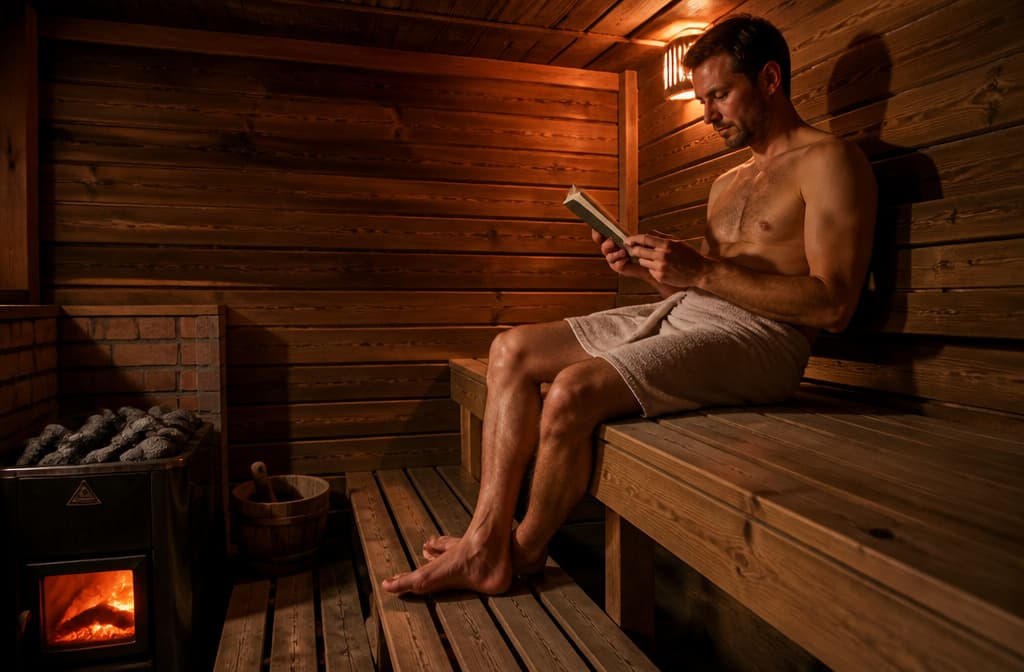
Key Takeaways
- A paper book will survive a brief session in a cooler infrared sauna (120–140°F) but risks warped pages and softened spine glue in a traditional sauna at 170–200°F or any high-humidity environment.
- Most e-readers have an operating temperature limit of 95–113°F; using one in a sauna above that range can cause battery swelling, screen fogging, or permanent damage.
- Phone-free event attendance jumped 121% globally between 2024 and 2025 (Eventbrite), and UK adults now spend 4.5 hours online per day, mostly on phones (Ofcom 2025) — the desire to disconnect is real, and saunas are becoming part of that movement.
In This Article
Kelly Wickson organizes a sauna book club that meets monthly at the Nomadic Sauna on Kingston Beach. Her rule: phones go in waterproof tubs outside. Books come in.
It depends on the type of sauna, the format of the book, and where you're sitting. A traditional Finnish sauna at 190°F with steam hitting the rocks is a different world from a 130°F infrared cabin. And your paperback? It has a different story to tell in each one.
Here's what the science, the real-world examples, and a few years of designing saunas have taught me about bringing a book into the heat.
Can you bring a book into a sauna?
Let’s start with the heat. Traditional saunas run between 170°F and 200°F. When you pour water on the stones — that burst of steam called löyly, the humidity spikes. That combination is brutal on paper. Pages warp, covers curl, and the glue in a paperback spine softens enough that the book may never close flat again.
Infrared saunas are a different story. They operate at 120°F to 170°F with dry heat. No poured water, no steam burst. That lower temperature and lack of humidity makes them more forgiving — but "more forgiving" doesn't mean safe. At 140°F, paper still dries out, and the glue starts to soften over time.
Steam saunas (the kind you find in spas) sit around 122°F but with near-100% humidity. That's the worst environment for a paper book: moisture seeps into every page, ink can bleed, and bindings fail fast.
So here's the line: if you're in a traditional sauna or steam room, leave the book outside. In an infrared sauna at the lower end of its range (120–130°F), a short session with a paperback is plausible — but you're accepting some risk of wavy pages. The "200 rule", temperature plus relative humidity should stay under 200 for human safety, works as a rough analogy for material stress. The further you are from that threshold, the longer your book lasts.
What happens to a paper book in a sauna?
Heat comes first. Paper fibers expand unevenly, so pages get wavy and the cover may curl toward the heat source. Then humidity kicks in — even in dry infrared heat, your own sweat adds moisture. The paper absorbs it, pages stick together, and ink can smudge or bleed.
The binding is the weak point. Most paperback spines use a heat-sensitive adhesive. At 140°F, that glue starts to soften.
Magazines with coated pages resist moisture better, but the binding still fails. Hardcovers fare worse — the cloth or paper covers often warp faster than the pages.
Real-world example: Kelly Wickson requires books to be 250 pages or less for her sauna book club. The sessions are an hour long, but they include dips in the sea — the book isn't sitting in heat the whole time. And the sauna is portable, so it probably runs cooler than a fixed traditional unit. That's a controlled, shorter exposure. For most home saunas, a full novel will show damage after a few uses.
Can you use a Kindle in a sauna?
Most e-readers list an operating temperature range of 95°F to 113°F. An infrared sauna at 120°F exceeds that limit, which makes public sauna etiquette: footwear and hygiene barriers a relevant concern for anyone using a shared space. A traditional sauna at 180°F is a no-go.
The risks: lithium-ion batteries swell or fail when overheated; LCD or e-ink screens can fog up from internal condensation; the plastic casing may warp. Even if it survives one session, you're cutting its lifespan. Kelly Wickson's warning applies here too: phones left in waterproof tubs because "it will ruin your phone" — and a Kindle is the same electronics.
Rory Evans, a writer who's been using a Kindle for a decade, has a detailed protocol — but it's for reading in bed, not in a sauna. She uses a strap for tired hands, inexpensive reading glasses, and the warm-light setting (24 steps between white and warm yellow on the Paperwhite).
If you must bring an e-reader into an infrared sauna, keep it below 120°F, limit the session to 10 minutes, and put the device in a sealed plastic bag to block humidity. But can you bring a book into an infrared sauna? Paper books handle heat and humidity differently from e-readers, though you'll still be rolling the dice on battery health with electronics. A better option: read between sauna sessions, not during them.
Is it rude to read in a sauna?
Traditional sauna culture — from Finland to public bathhouses, values silence, presence, and openness to interaction. Reading signals "don't talk to me." In a communal sauna, that can feel antisocial.
Ryan Haynes, 34, who goes to Community Sauna Baths (five London locations), puts it: Every one of his best ideas in recent years came while sitting in a sauna. People need to slow down to hear what is happening in their own minds. That's the counterpoint. The sauna is for unplugging, not for another screen or page.
But context matters: a private home sauna? Go ahead — it's your space. A public sauna with a book club?
That's a structured exception. Kelly Wickson's group is explicitly social and book-focused; reading is the activity. In a general-use sauna with strangers, you're better off leaving the book outside.
Why this question matters now
Phone-free event attendance grew 121% globally from 2024 to 2025, according to Eventbrite. Silent Book Club now has about 2,000 chapters in 60 countries, nearly 150 in the UK and Ireland alone. The motto: Put down your phone and pick up a book.
Meanwhile, UK adults spend 4.5 hours per day online, mostly on phones (Ofcom 2025). For the first time in 2025, UK adults spent more time on their phones than watching TV (IPA TouchPoints survey). Spa policies are catching up: Bothy at Heckfield Place banned phones in 2023. Bath Thermae Spa uses lockable pouches.
The sauna book club is a symptom of the same impulse: people want analog leisure in a hot, quiet room. The question "can I bring a book?" is "can I have a place where I'm unreachable and still engaged?" The answer is yes — but you might need to adjust the format.
What to do instead
Here's what works:
- Read between rounds. Go in, sweat, cool off with a cold plunge or a shower, then sit outside with your book for 20 minutes. Best of both worlds.
- Use the downtime for presence. Close your eyes. Stretch. Breathe. As Ryan Haynes found, the quiet is where ideas show up.
- Join a sauna book club. If that's your scene, find one. Kelly Wickson's club on Kingston Beach is a model: short books, hour-long session with sea dips, phones locked away. It's social, intentional, and the book survives.
- Switch to a phone-free event. Offline Project, Offline Club, Digital Detox Club, and dozens of local groups host device-free events with painting, collage, supper clubs, or just silent reading. The phone goes in a lockbox — the "phone spa" or "tech motel", and you get a few hours of actual disconnection.
The goal isn't to read in the heat. It's to read instead of scrolling. The sauna can help you get there — keep the book outside until you're done sweating.
Frequently Asked Questions
Can a book be in a sauna?
It depends on the sauna type. In a traditional sauna (170–200°F) or steam room, paper books will warp, pages will curl, and the spine glue will soften. In a cooler infrared sauna (120–130°F), a short session is possible but still risks wavy pages and eventual binding damage.
What to not bring into a sauna?
Phones, e-readers, and any electronics with lithium-ion batteries should stay out — most have operating limits around 95–113°F, and overheating can cause battery swelling, screen fogging, or permanent damage. Paper books are also risky in traditional or steam saunas due to heat and humidity.
What is the 200 rule for saunas?
The 200 rule is a safety guideline that says temperature plus relative humidity should stay under 200 for human comfort and safety. It also works as a rough analogy for material stress — the further you are from that threshold, the longer your book or device will last in the heat.
Can I read a book while in the sauna?
You can in a low-temperature infrared sauna for a short session, but you're accepting some risk of wavy pages and softened glue. In a traditional sauna or steam room, the heat and humidity will damage the book quickly. Many sauna-goers find it's better to read between rounds rather than during.
Is it rude to read in a public sauna?
In traditional sauna culture, reading can signal 'don't talk to me,' which may feel antisocial in a communal space where silence and openness are valued. In a private home sauna or a structured book club, it's fine — but in a general-use public sauna, you're better off leaving the book outside.
What happens to a paperback book in a sauna?
Heat causes paper fibers to expand unevenly, making pages wavy and covers curl. Humidity — even from your own sweat, makes pages stick together and ink smudge. The binding is the weak point: most paperback spines use heat-sensitive adhesive that softens around 140°F, so after a few sessions the book may never close flat again.

Founder & Lead Designer, SaunaCloud®
SaunaCloud: 3,000+ installations since 2014 · Author of The Definitive Guide to Infrared Saunas · Featured in Forbes, Inc., and MSN
Christopher designs every SaunaCloud sauna. His work brings the room, heaters, controls and installation plans together so you can review the project before committing. His professional expertise is sauna design and construction, not clinical medicine.
Custom 3D renderings and a proposal in 24-48 hours.
Continue Reading

Safety & Best Practices
What Not to Do After an Infrared Sauna: 7 Post-Session Mistakes That Ruin Your Recovery
Read article
Safety & Best Practices
Will Red Light Therapy Fade Tattoos? Science Says No – Here’s Why
Read article
Safety & Best Practices
Are Infrared Saunas Bad for Your Skin? The Dermatological Risks
Read articleReady to Design Your Sauna?
Every project starts with a conversation. Tell us about your space and we'll create your custom plan — free, no obligation.
Custom 3D renderings and a proposal in 24-48 hours.