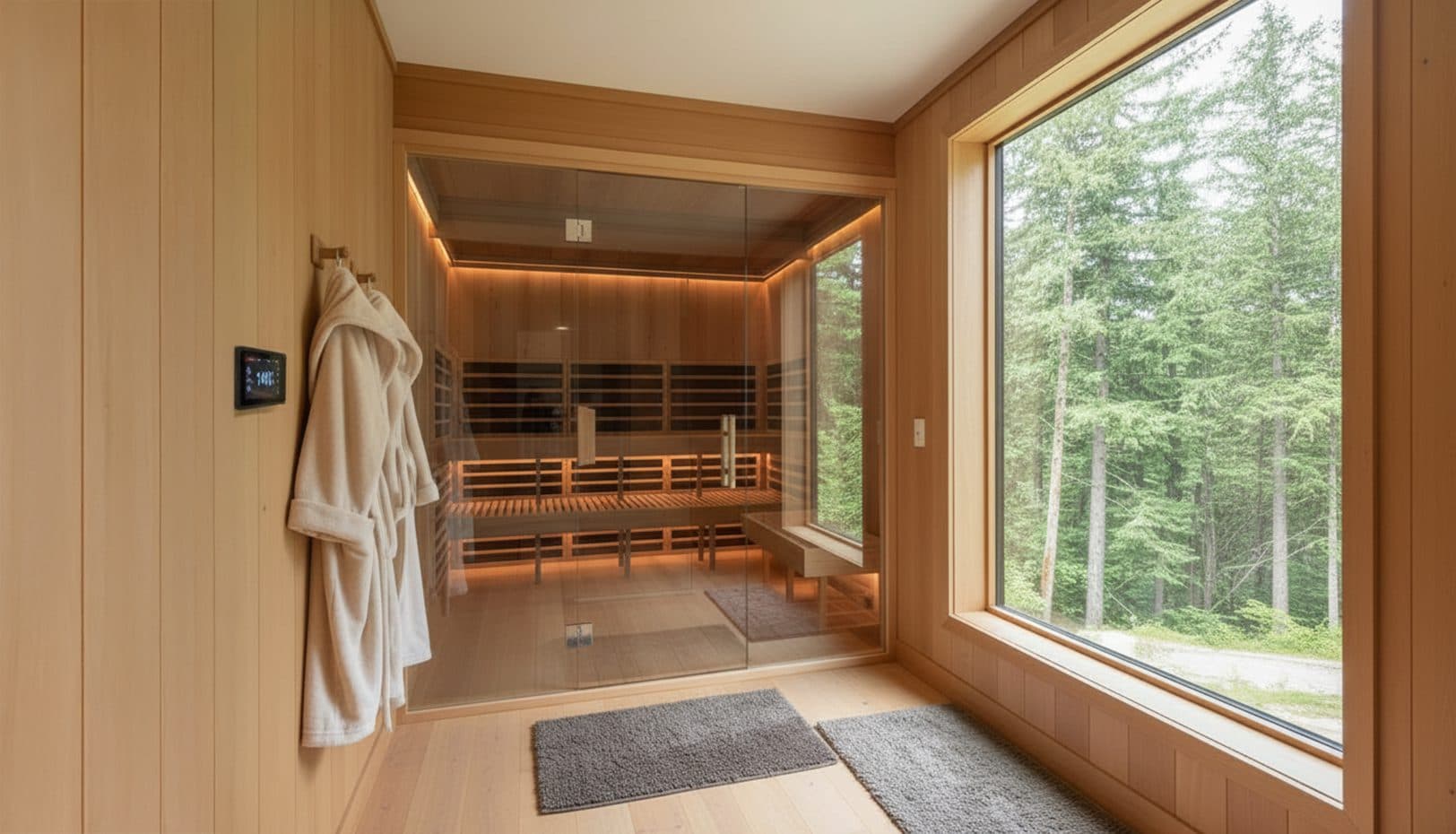
How to Entertain Yourself in an Infrared Sauna: A Phase-by-Phase Guide
Key Takeaways
- Infrared sessions run 30–45 minutes at 110–130°F, with a predictable sweat timeline: minutes 0–10 light warming, 10–20 perspiration begins, 20–30 full sweat, 30+ steady.
- Controlled breathing techniques — box breathing (4-4-4-4), 4-7-8 breathing, or rhythmic 6-6, are ideal for the first 10-minute warm-up window.
- A randomized controlled trial in the International Journal of Environmental Research and Public Health found that heated sauna yoga improved flexibility 83% more than the same stretches at room temperature.
In This Article
If you’ve ever settled into your infrared sauna, closed the door, and thought… now what? — you’re not alone. The session stretches for 30–45 minutes, and the temperature sits at a manageable 110–130°F. That’s a long time to just stare at the cedar walls.
Traditional saunas run much hotter (160–194°F), so you’re in and out in 10–15 minutes. Infrared is a different animal. The heat is gentler, which means you stay longer to get the same benefit. But passive sitting for nearly an hour is boring, and boredom kills the habit.
Here’s the fix: Infrared sauna sessions have a predictable physiological arc. The first 10 minutes are warm-up (barely any sweat). Minutes 10–20 are when perspiration starts. Minutes 20–30 are full-sweat territory. By matching activities to those phases, you stay engaged and get more out of the heat.
This guide breaks down what to do in each phase, backed by specific protocols and numbers. No vague advice — just what works and when to do it.
Phase 1: The First 10 Minutes — Your Warm-Up Window
You’ve just closed the door. The air is warm but comfortable. You aren’t sweating yet, and that's normal. The first 10 minutes are pure warm-up — your core temperature needs to rise before the main benefits kick in.
This is the worst time to grab your phone or start an intense podcast. You’re not fully engaged yet, and scrolling kills the mental reset. Instead, use this window for low-effort activities that set the tone.
Start with breathwork. Controlled breathing tells your nervous system it’s safe to relax. You’ve got three solid options, all with exact counts:
- Box breathing (4-4-4-4): Inhale for 4 seconds, hold for 4, exhale for 4, hold for 4. Navy SEALs use this to stay calm under pressure.
- 4-7-8 breathing: Inhale for 4, hold for 7, exhale for 8. Dr. Andrew Weil popularized this one — the longer exhale signals your body to wind down.
- Rhythmic 6-6: Inhale for 6 counts, exhale for 6. Joe Rogan’s a fan. It’s simple and easy to remember when you’re already warm.
Commit to at least 5 minutes of whichever pattern you choose. That’s enough to get the benefit. Don’t overthink it.
Or simply do nothing with intention. “Doing nothing” is a valid option. Set an intention — I’m going to feel the heat for 10 minutes, close your eyes, and let the warmth be your focal point. The heat gives your body something tangible to focus on, which makes staying present easier than it is in a quiet room.
Phone scrolling is the opposite of this. Leave it outside.
At SaunaCloud, we design our saunas with continuous-mode heaters that stay on at 110–130°F. That's why the first 10 minutes matter — the panels are delivering consistent infrared right from the start, even if you don’t feel it yet.
Phase 2: Minutes 10–20 — Engage Your Mind and Body
You’ll notice a change around minute 10. Perspiration appears on your forehead, then your upper lip. Your body is adapting. This is the window to move from settling into active engagement.
You’ve got three solid paths here. Pick one, not all three.
Guided meditation or mindfulness. The heat makes meditation easier because it gives your body a concrete focus. Try a simple body scan: close your eyes, move your attention from your head down to your toes, noticing where you feel warmth and where you hold tension. Apps like Headspace, Calm, and Insight Timer all have 5–15 minute guided sessions that work great here.
Many infrared saunas have built-in Bluetooth speakers, so you can play a session without bringing your phone into the heat. (Heat damages electronics above 100°F — don’t bring your phone inside.)
Listen to audio content. Podcasts, audiobooks, or music work well in this phase. The key is choosing content length to match the remaining session. A 20-minute podcast episode is perfect for the sweat peak that’s about to hit. Play it through the sauna’s speakers and leave your phone outside.
Do gentle stretching. Heat makes your muscles, tendons, and connective tissue more pliable — that’s why stretching in the sauna feels so good. A randomized controlled trial published in the International Journal of Environmental Research and Public Health found that heated sauna yoga improved flexibility 83% more than doing the same stretches at room temperature.
Field note: Stick to one activity per phase. Trying to stretch, listen to a podcast, and meditate simultaneously usually means you do none of them well.
Stick to gentle seated stretches: neck rolls, a seated spinal twist (hold 15–30 seconds each side), shoulder stretch, forward fold. Nothing that requires balance. A common failure here is trying to do everything at once — jumping into a stretch while listening to a podcast while attempting meditation. Pick one activity per phase. Use the sweat timeline as your guide.
Phase 3: Minutes 20–30 — The Peak Engagement Zone
Full sweat is established. This is the window of maximum therapeutic benefit — your core temperature is elevated, and the infrared is working consistently. Your body is warmed up, so you can shift to sensory engagement.
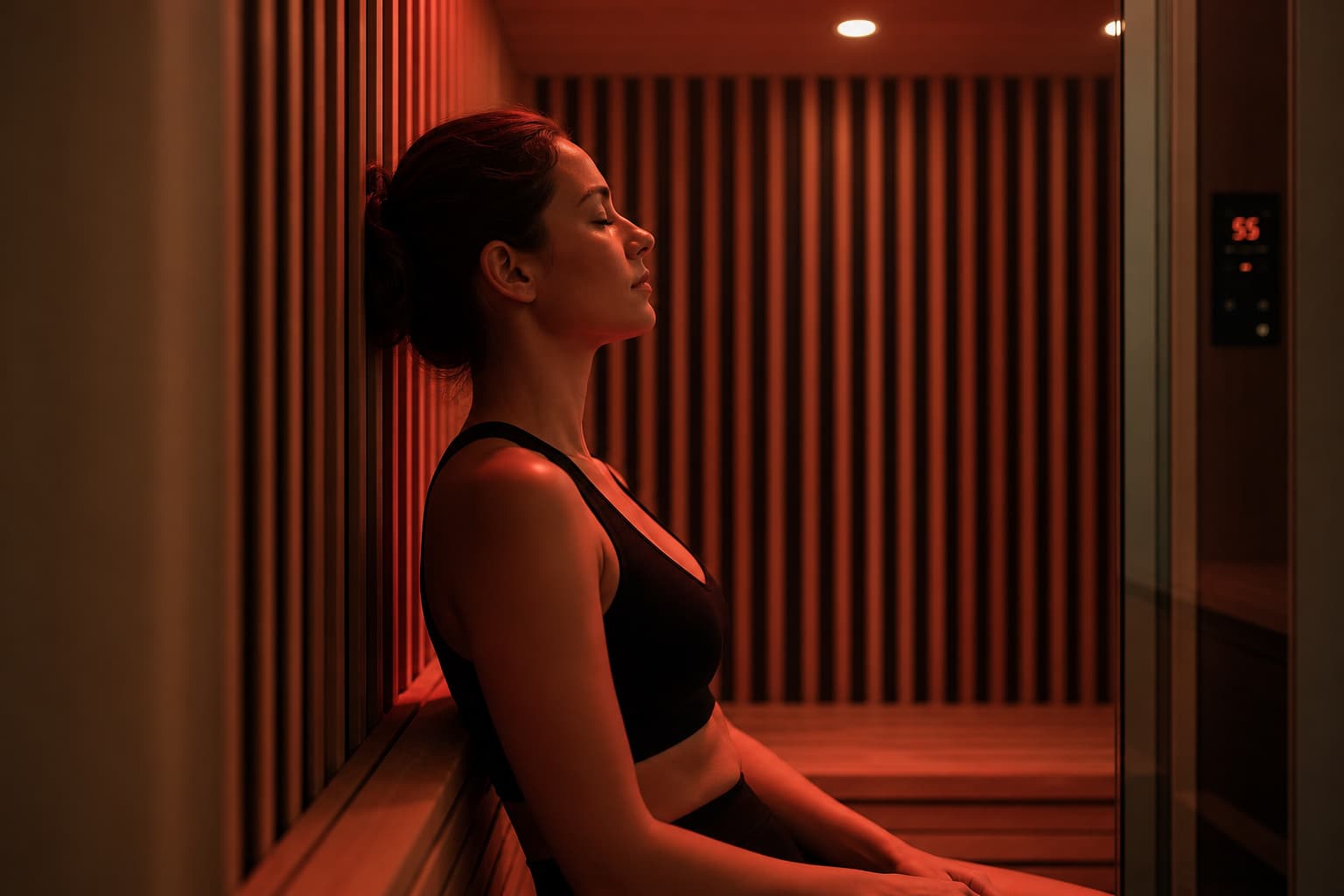
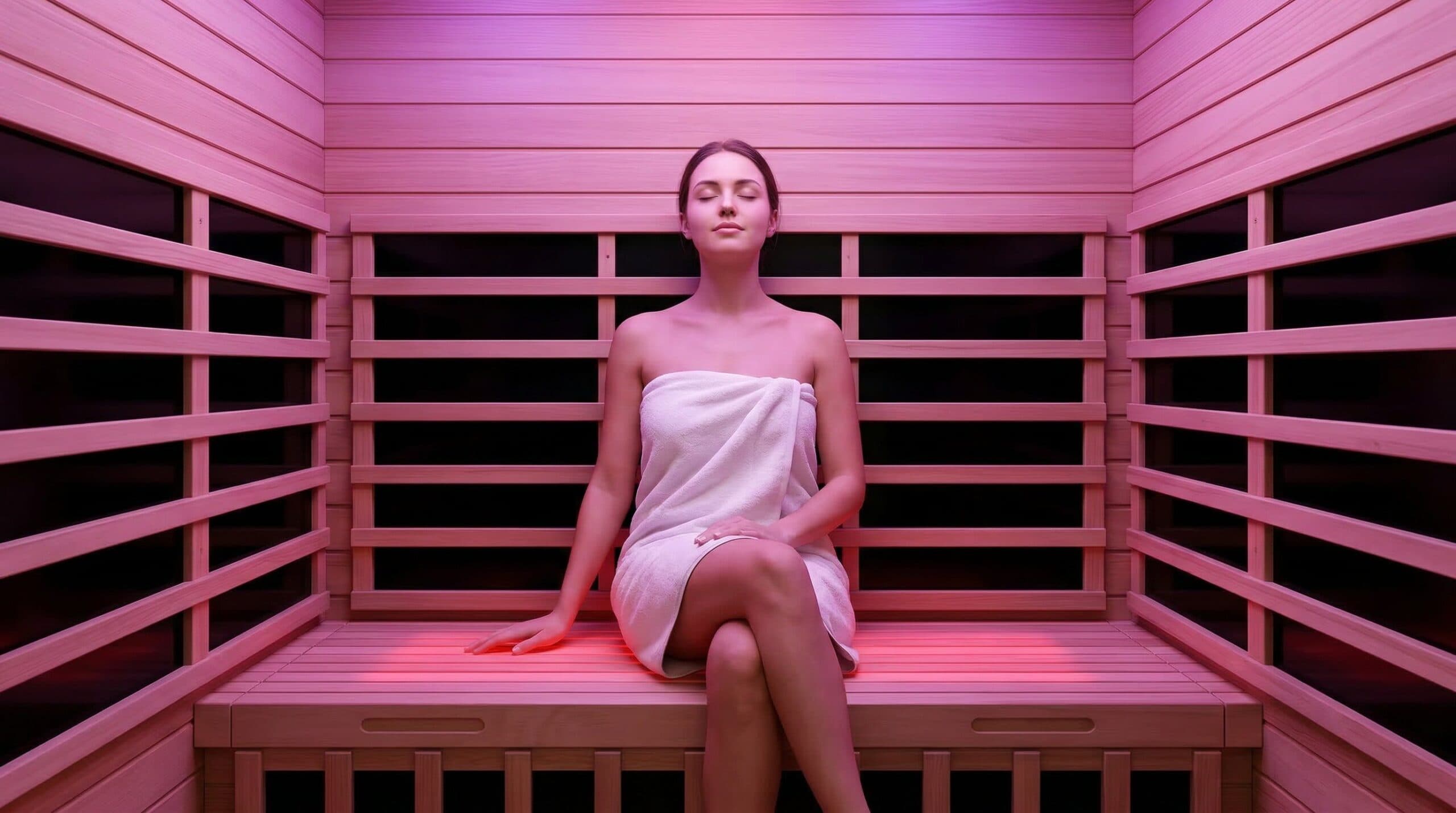
Use chromotherapy lights. Many infrared saunas have colored lights built in. They're not for ambiance. Red light feels warming — good if you want to lean into the heat.
Blue light feels cooling — a nice contrast when you're fully sweating. Green is neutral and balanced, a solid default. Chromotherapy addresses the mental and spiritual side of the session while the infrared handles the physical. Two sides of the same experience.
Use aromatherapy. Put a small dish of water with a few drops of essential oil somewhere safe — away from the heating panels. Eucalyptus and lavender are the classics. Pine, birch, and peppermint oils work well too (think forest bath vibes). Avoid synthetic oils; they don't hold up in the heat.
Adapt Finnish sauna traditions. Finland has been doing this for centuries. Löyly is the burst of steam when you throw water on hot rocks — considered the soul of the sauna. Infrared doesn't produce steam, so you can simulate it with a spray bottle of water mixed with a few drops of essential oil.
Vihta (or vasta) is a bundle of birch branches used to gently tap the skin — it stimulates blood flow and exfoliates. Adapt it with a dry brush or exfoliating mitt. You don't need to jump into a frozen lake afterward, but the core idea, using the sauna as a full-sensory ritual, translates perfectly to infrared.
If your sauna has chromotherapy lights, SaunaCloud models let you control the color to match your mood. Pick red for a deep-heat feel, or blue to create a cooler atmosphere during that full-sweat phase.
What Not to Do: The Entertainment Killers
Adding activities is half the equation. Subtracting the wrong ones matters as much.
Don’t bring your phone or tablet inside. Heat damages electronics above 100°F, and you miss the mental benefits of disconnecting. I get it — the phone is right there. But the sauna is one of the few places you can disconnect. Let that be the treat.
Don’t apply lotions or oils before your session. They block your pores, which defeats the purpose of sweating. Enter the sauna with clean, chemical-free skin.
Don’t exercise vigorously inside. The sauna is for heat, not cardio. Save movement for after your session. Your body is already working hard to cool itself; adding burpees doesn't help.
Don’t wear synthetic fabrics. They don't breathe in the heat and trap warmth against your skin. Wear nothing, a cotton towel, or loose cotton clothing if you prefer coverage. Your choice.
Red flag: If you feel dizzy, nauseous, or faint at any point, exit immediately. Pushing through isn't toughness — it's a safety risk.
Phase 4: The Post-Session Ritual
The timer goes off. You're done, right? Not quite. The cool-down is when relaxation sinks in, and skipping it is the fastest way to feel dizzy or get a headache later.
The cool-down sequence. Follow this 10-minute window:
- First 3 minutes: Sit outside the sauna. Let your body start to cool naturally.
- Minutes 3–5: Take a lukewarm shower, gradually cooling the water. A cold shower afterward is essential to close your pores and rinse away sweat.
- Minutes 5–10: Dry off fully and put on loose, dry clothes.
Rehydrate and refuel. Drink 20–30 ounces of water over the next hour. For sessions over 40 minutes, add electrolytes — a pinch of sea salt in your water works, or use a quality supplement. Wait 30 minutes before eating anything substantial. Good options after that: fresh fruit, a light salad, a smoothie, or nuts and seeds.
Post-sauna stretching. Your muscles are still warm and pliable, making this the time for 5–10 minutes of gentle stretching. This is where the 83% flexibility improvement from the study shows up — you're capitalizing on the heat's effect while it lasts.
A typical oversight is treating the sauna session as over when the timer goes off. The 10-minute cool-down is when the mental benefits crystallize. Many people skip it, then wonder why they crash later.
Getting the Most Out of Your Session
Before you pick your activities, get the basics right.
Set the right temperature. The optimal range for continuous infrared exposure is 110–130°F. Beginners should start at 105–115°F for the first couple of weeks. Regular users can run 115–125°F. Maximum effective is 120–130°F. Above 130°F, the panels cycle on and off, which reduces the consistent therapeutic benefit.
Choose your session length. Standard is 30–45 minutes. Minimum effective dose is 20 minutes. Maximum recommended is 60 minutes — after that, you're hitting diminishing returns and risking dehydration. Beginners should start at 10–15 minutes and build gradually.
Hydrate before. Drink 16–20 ounces of water 30 minutes before your session. Avoid large meals within 2 hours. A light snack like fruit or a handful of nuts 45–60 minutes before is fine.
Sample weekly routines:
- The Beginner: Monday 20 min at 110°F, Wednesday 25 min at 110°F, Saturday 25 min at 115°F.
- The Regular User: Monday 35 min at 120°F, Wednesday 35 min at 120°F, Friday 40 min at 115°F, Sunday 30 min at 125°F.
- The Wellness Focused: Every other day, 35–40 minutes at 115–125°F.
Consistency matters more than intensity. Three to four sessions per week is ideal for most people. Daily is fine once you're adapted, but not necessary.
Safety and When to Stop
This is the most important section. Listen to your body.
Warning signs that mean exit immediately: dizziness, nausea, headache, or feeling faint. Don't try to push through. If you can't stay in comfortably for at least 20 minutes, reduce the temperature next time. You're not being weak — you're being smart. The sauna will still be there tomorrow.
Consistency Over Intensity
The best activity in your sauna is showing up regularly. Three sessions a week beat one marathon session every time. The mental benefits — relaxation, mindfulness, intentional disconnection, are as important as the physical ones.
The sauna doesn't require a perfect routine. It requires showing up. Match your activities to the phases, keep it simple, and let the rest follow.
Frequently Asked Questions
What do 10 minutes in an infrared sauna do?
The first 10 minutes are a warm-up phase where your core temperature rises but you're barely sweating yet. This window is ideal for breathwork or intentional stillness, setting the stage for the deeper benefits that kick in after minute 10.
What not to do in an infrared sauna?
Don't bring your phone or tablet inside — heat damages electronics above 100°F and kills the mental reset. Don't apply lotions or oils before your session because they block pores and reduce sweating. Don't exercise vigorously inside, and don't wear synthetic fabrics that trap heat against your skin.
What's the difference between infrared and traditional sauna sessions?
Traditional saunas run much hotter (160–194°F) so sessions last only 10–15 minutes. Infrared saunas operate at 110–130°F with gentler heat, requiring 30–45 minutes to get the same benefit. That longer session creates a predictable sweat timeline — warm-up for the first 10 minutes, perspiration starting at 10 minutes, and full sweat by 20 minutes.

Founder & Lead Designer, SaunaCloud®
SaunaCloud: 3,000+ installations since 2014 · Author of The Definitive Guide to Infrared Saunas · Featured in Forbes, Inc., and MSN
Christopher designs every SaunaCloud sauna. His work brings the room, heaters, controls and installation plans together so you can review the project before committing. His professional expertise is sauna design and construction, not clinical medicine.
Custom 3D renderings and a proposal in 24-48 hours.
Continue Reading

Ready to Design Your Sauna?
Every project starts with a conversation. Tell us about your space and we'll create your custom plan — free, no obligation.
Custom 3D renderings and a proposal in 24-48 hours.