How to Clean an Infrared Sauna with Red Light Therapy: A Surface-by-Surface Guide
Key Takeaways
- Use a dry microfiber cloth only on red light therapy panels — no liquids, no sprays, no exceptions.
- A towel on the bench and under your feet during sessions catches at least 80% of sweat, cutting your deep-cleaning work in half.
- The safest all-purpose cleaner for wood surfaces is 2 cups warm water mixed with 2 tablespoons white distilled vinegar — rinse with water afterward since vinegar is acidic over time.
In This Article
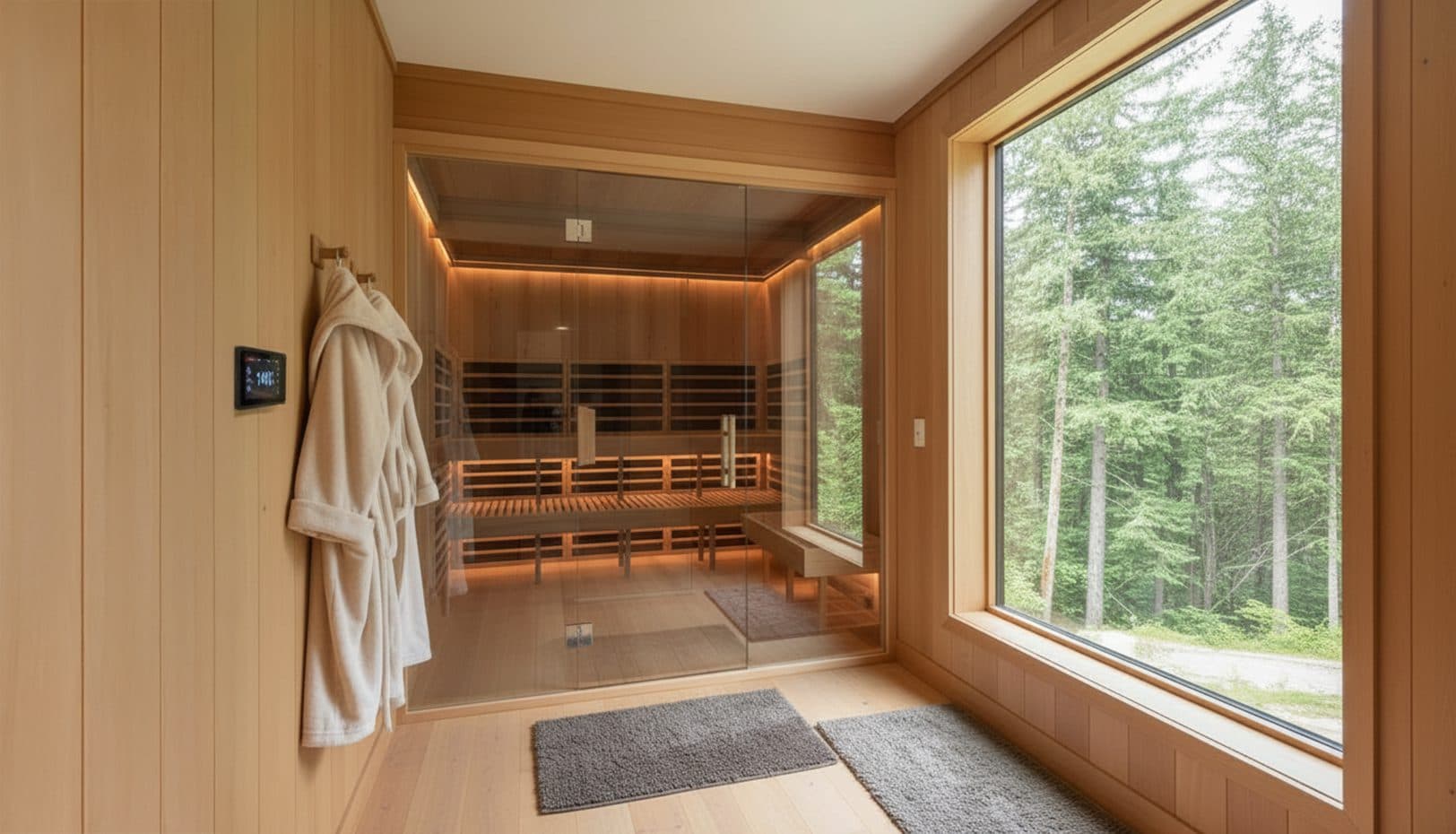
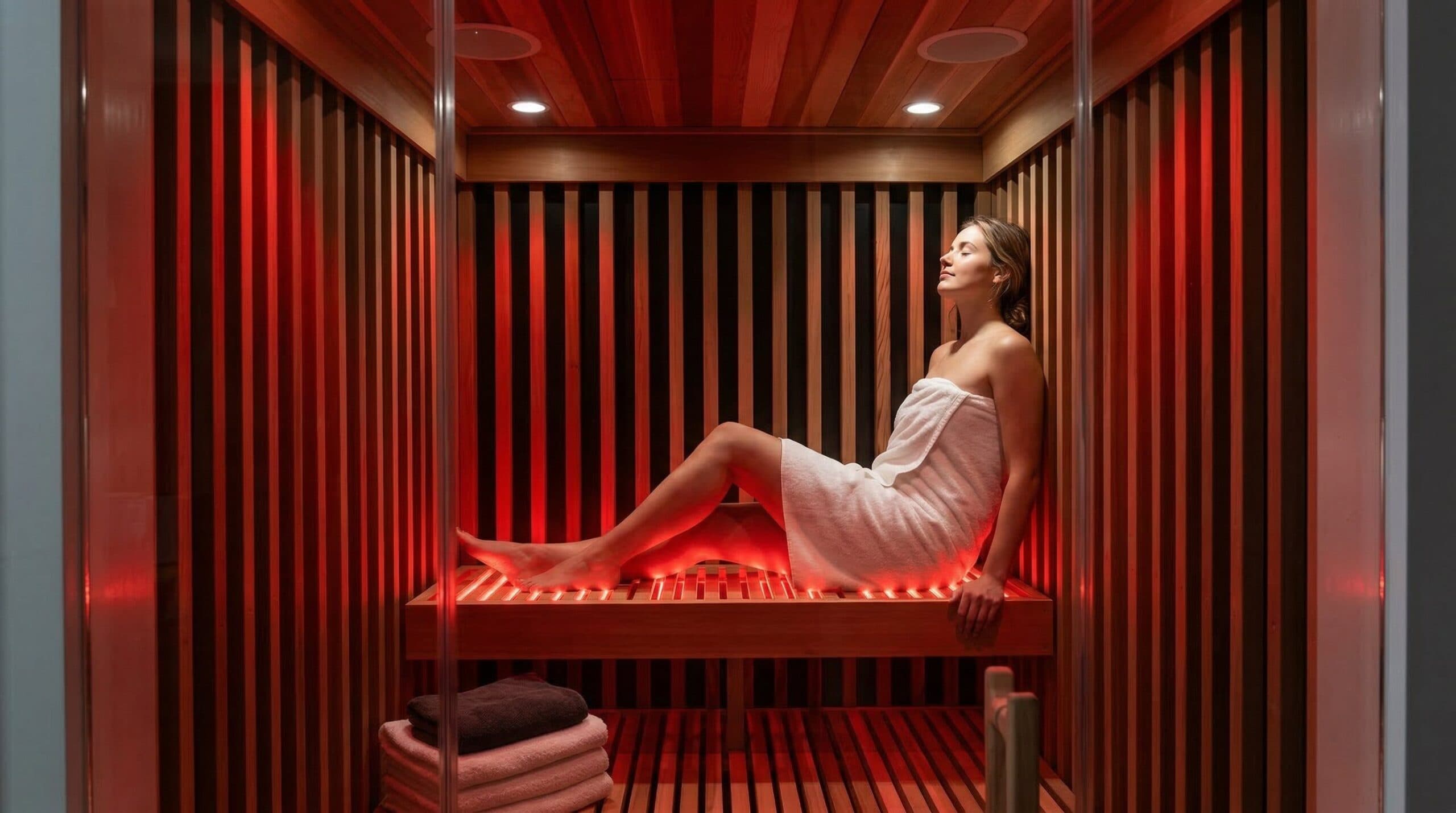
If you’ve invested in a combination infrared sauna with built-in red light therapy panels, you’ve already figured out one thing: cleaning it differs from cleaning a regular sauna. The infrared heat gets you sweating deep — that’s the whole point, but that sweat ends up on the cedar wood, and the red light panels next to that wood are moisture-sensitive electronics. Treat them the same way and you’re either leaving residue on the wood or risking damage to the panels—which is why many owners instead go with a custom infrared sauna designed for easy maintenance and built-in therapy features.
At SaunaCloud, we custom-build these combo units, and the most common mistake we see from owners is wiping the red light panel with a damp cloth like it’s a bench seat. It’s an easy mistake, but it’s one you can avoid with a clear protocol for each surface.
Here’s the surface-by-surface routine that keeps your wood and electronics in top shape.
Why your combo sauna needs a different cleaning approach
Infrared saunas make you sweat deeply, which means oils, skin cells, and impurities end up on the wood surfaces. That’s normal. The problem is that most people reach for the same cleaners they use on kitchen counters or bathroom tiles. Bleach, ammonia, and multi-surface sprays can damage the wood finish, leave harmful residues that vaporize when the sauna heats up, and void your warranty.
But the bigger issue is the split inside the sauna itself. The cedar benches, walls, and floor can handle a damp cloth and mild natural cleaners. The red light therapy panels integrated into the walls or ceiling are electronics — they need completely different care. You can’t treat them like wood, and you can’t treat them like glass either. The rule is simple: dry cloth only.
This article gives you a routine that protects both, so you don’t have to wonder whether today’s wipe-down is the one that causes trouble.
Preventive habits that cut cleaning time in half
The most effective thing you can do to keep your sauna looking fresh is also the easiest: sit on a towel during every session. Place it under your buttocks and under your feet — that’s where sweat pools, and it captures at least 80% of what would otherwise soak into the wood. Wash the towel after each use, because sitting on a damp, bacteria-laden towel defeats the purpose.
Leaving the door open for 10–15 minutes after each session prevents moisture buildup and mold.
After your session, leave the sauna door open for 10 to 15 minutes. That’s enough time for the wood to dry out completely, which prevents moisture buildup, mold, and the musty odor that comes from a closed, damp space. It’s preventive maintenance that costs zero effort.
If you want to go one step further, a quick rinse before you enter — or a shower if you’ve worked out, cuts down on the body oils and dead skin cells that end up on the surfaces. None of these habits are complicated, but together they cut down how often you need to deep-clean.
Approved cleaners: DIY recipes & commercial options
You don’t need a shelf of specialty products. Most of what works is already in your pantry. Here’s what’s safe, and what to avoid.
The vinegar solution (standard batch)
Mix 2 cups warm water with 2 tablespoons white distilled vinegar. For a smaller batch, use 1 cup water plus 1 tablespoon. This solution is safe for wood and glass, breaks down sweat residue, and neutralizes odors. Important: if you use it on wood, rinse the area with a damp cloth afterward — vinegar is acidic and can affect the wood over time if you leave it on.
Alcohol and hydrogen peroxide
70% isopropyl alcohol is an effective disinfectant that evaporates quickly without leaving residue. That’s the right concentration — higher percentages evaporate too fast to kill germs properly. You can also mix a 50/50 solution of water and alcohol as an alternative. Either way, spray onto the cloth first, never directly onto surfaces.
10% hydrogen peroxide (about 1 part peroxide to 9 parts water) can be added to your cleaning solution for an extra boost. It’s optional, not necessary, but useful if you want a bit more cleaning power.
Natural soap option
A natural non-toxic soap mixed with water works fine on wood seats, backrests, and the exterior. The key is to avoid synthetic toxins — you’re breathing deeply and sweating in a closed space. Whatever you use, it should be mild enough that you wouldn’t mind getting it on your skin in a hot room.
Commercial cleaner options
If you’d rather buy a ready-made kit, the Sunlighten Natural Cleaning Kit comes with plant-based sauna cleaner, glass cleaner, and a microfiber cloth, a sanding sponge, and both wood and glass natural cleaners. It’s vegan, fragrance-free, and antibacterial. Another option is Clean Spa Professional Sauna Wood Cleaner — formulated for woods like Okoume Mahogany and Basswood, and it targets perspiration odors specifically; for day-to-day cleaning and cedar care, see our dedicated cleaning guide.
What to avoid
- Bleach and ammonia – damage wood finish, leave harmful residues, void warranties, and can produce unhealthy fumes when heated
- Steel wool and abrasive tools – scratch the wood and ruin the smooth finish
- Excessive water – warps wood, causes cracks, and can seep into electrical components
- Baking soda for stain removal – some users report it can actually darken stains on sauna wood; better to avoid it
- Painting interior wood – prevents the wood from breathing, causing deterioration over time
- Spraying liquids directly on heater panels or electrical components – always spray onto cloth first
Tools you’ll need
Here’s what to grab so you have the right tool for each job — including a can of compressed air for blowing dust out of tight spots:
- Microfiber cloths – lift sweat and oils without scratching wood or leaving lint. Works on wood, glass, and stainless steel.
- 150-grit sanding sponge – for removing sweat stains from wood. Light sanding along the grain with low pressure.
- Vacuum with hand attachment – sweep the floor weekly or bi-weekly; use the hand attachment monthly for dust on walls and corners.
- Compressed air – blow dust out from inside the heater guard and other hard-to-reach spots.
- Lint roller – surprisingly useful for pulling dust off the heater guard on full-spectrum heaters.
- Detail brushes – access tight corners, control panels, and seams without causing damage.
- Soft sponges – gentle cleaning only; no steel wool or hard-bristled brushes.
- Spray bottle – for mixing and applying cleaning solutions. Remember: spray onto the cloth, not the surfaces.
- Cotton cloth – an alternative to microfiber for applying cleaning solutions.
Your complete cleaning schedule
How often you clean depends on how much you use the sauna. Here’s a flexible routine that adjusts to your usage.
After every use (2–3 minutes)
Turn off the sauna and let it cool. Remove towels, backrests, cushions, and mats so you can get to all surfaces. Wipe down the benches, backrests, walls, floor, and door handles with a damp microfiber cloth. Spray your cleaner onto the cloth first — never directly on wood or heaters, and avoid bleach, ammonia, or commercial cleaners that absorb into wood and off-gas at high temperatures; read more about proper infrared sauna maintenance for safe cleaning guidelines.
For red light panels, use a dry cloth only — no liquids, no sprays. Then leave the door open for 10–15 minutes.
Every two weeks (10–15 minutes)
Give the whole interior a thorough wipe-down with a natural cleaner. Use a damp microfiber cloth with your chosen solution, and wipe along the wood grain. Vacuum or sweep the floor. Clean the glass with a mild glass cleaner — spray it onto the cloth outside the sauna so you don’t get overspray. Wipe down rubber mats if you use them.
Monthly deep cleaning (20–30 minutes)
If you use the sauna multiple times a week, deep clean weekly. If you use it once a week with good preventive habits — towels, door open, monthly is fine. Sand any sweat stains on benches and backrests with a 150-grit sanding sponge, use light pressure, and go along the grain. Clean the heater guards with a lint roller or compressed air.
Use the vacuum hand attachment to get dust off walls and corners. Wipe chromotherapy lights and digital control panels with a soft damp cloth. For heater panels, use a dry microfiber cloth only — no liquids.
Annual maintenance (30–40 minutes)
Lightly sand all wood surfaces with the 150-grit sponge to freshen up the look. Check screws, fittings, and electrical components for any loosening caused by heat. Never paint the interior wood — it needs to breathe.
Caring for your red light therapy panels
Red light therapy panels are built into the sauna walls or ceiling, and they’re moisture-sensitive electronics. Most guides skip this part, but it matters for your combo unit.
The rule: dry microfiber cloth only. No liquids, no sprays. If the panel has visible dust or a light smudge, a dry cloth will lift it. If you absolutely need a bit more cleaning power, dampen the cloth with water only — not cleaner, and wring it until it’s just barely moist. Then wipe the panel and immediately follow with a dry cloth.
Don’t press hard on the LEDs or use abrasive materials. The surface can scratch, and you don’t want to mess up the diodes. Infrared heater panels follow the same rule: dry cloth only, no exceptions.
How to remove sweat stains from wood benches
The seating area and backrests take the most abuse because gravity pulls sweat down. Over time, those spots can darken. The fix is simple: use a 150-grit sanding sponge to lightly sand along the wood grain with low pressure. You’re removing the stained layer, not digging into the wood.
One thing to avoid: baking soda. It seems like a natural solution, but some users have found that it actually makes stains darker on sauna wood. Stick with sanding — it’s faster, safer, and leaves you with a fresh surface. An annual light sanding keeps the wood looking new and doesn’t need chemicals.
Outdoor sauna care: what’s different
If your combo sauna is outdoors, the exterior needs a quarterly high-pressure water spray — just be careful around the door and windows. For the best protection, use a cover designed for outdoor saunas, it shields against rain, snow, and sun damage.
Treat the exterior wood like fine furniture: clean it now and then with a soft cloth and mild detergent, and polish it occasionally to keep the shine. The tempered glass in outdoor models is tough — 8mm thick, but still avoid harsh cleaners or abrasive pads.
Long-term maintenance & fresh scents
Check screws and fittings regularly — heat can loosen them over time. Periodically check that the sauna's ventilation is clear and functioning to prevent moisture buildup. For a fresh, natural scent, skip chemical air fresheners and go with lemon peel, mint leaves, or a drop of natural essential oil. Lavender works well too.
And the simplest rule: don’t bring food or drinks into the sauna. Spills stain the wood and crumbs attract pests. Keep the space clean, keep the wood breathing, and your combo sauna will serve you well for years.
Frequently Asked Questions
Can you do red light therapy and infrared sauna together?
Yes, combination units integrate red light therapy panels directly into the sauna walls or ceiling. The protocols work concurrently since both benefit from the same relaxed, low-light environment. Just remember that the red light panels are moisture-sensitive electronics and must be cleaned with a dry microfiber cloth only.
Can a person with a pacemaker use an infrared sauna?
Most manufacturers advise against using infrared saunas if you have a pacemaker or other implanted electronic device unless cleared by your cardiologist. The electromagnetic fields from the heating panels may interfere with device function. Always get specific medical approval before use, as individual risk varies by device model and sauna design.

Founder & Lead Designer, SaunaCloud®
SaunaCloud: 3,000+ installations since 2014 · Author of The Definitive Guide to Infrared Saunas · Featured in Forbes, Inc., and MSN
Christopher designs every SaunaCloud sauna. His work brings the room, heaters, controls and installation plans together so you can review the project before committing. His professional expertise is sauna design and construction, not clinical medicine.
Custom 3D renderings and a proposal in 24-48 hours.
Continue Reading
Guides
Outdoor Infrared Sauna vs Indoor Garage Sauna: Voltage, Cost, and Weather Math That Actually Decides It
Read article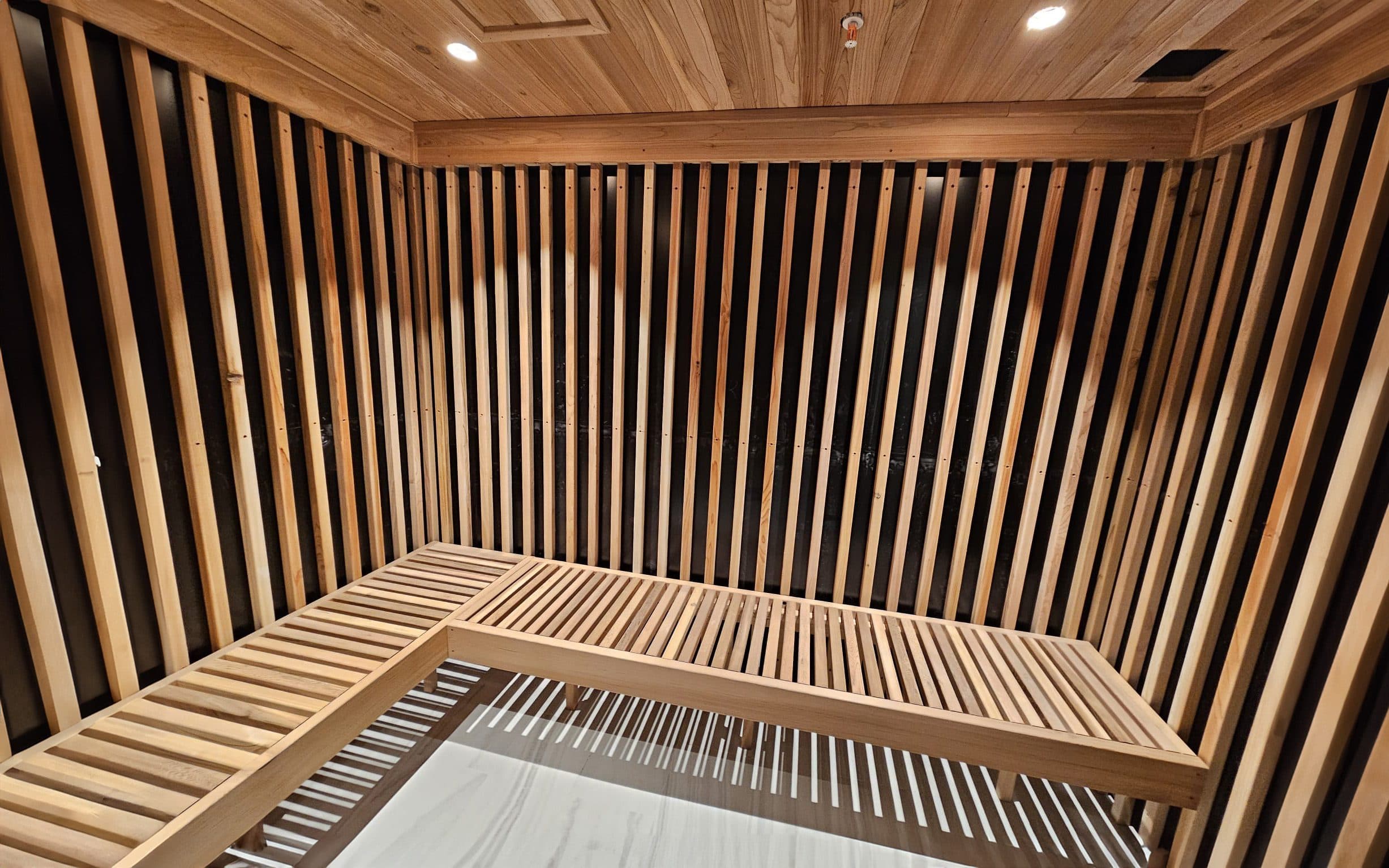
Guides
13 Proven Benefits of Infrared Sauna Therapy — With the Research Behind Each One
Read article
Guides
SaunaCloud Models Compared: Atlas, Sierra, Atlas One, and Outdoor
Read articleReady to Design Your Sauna?
Every project starts with a conversation. Tell us about your space and we'll create your custom plan — free, no obligation.
Custom 3D renderings and a proposal in 24-48 hours.