

VantaWave® Infrared Heater Technology
Proprietary carbon-blend technology. 190°F surface temperature. Ultra-low EMF. Engineered exclusively by SaunaCloud®.
97%
Emissivity
190°F
Surface Temp
7.9μm
Peak Wavelength
<0.2mG
Average EMF
Most Infrared Saunas Force You Into a Compromise
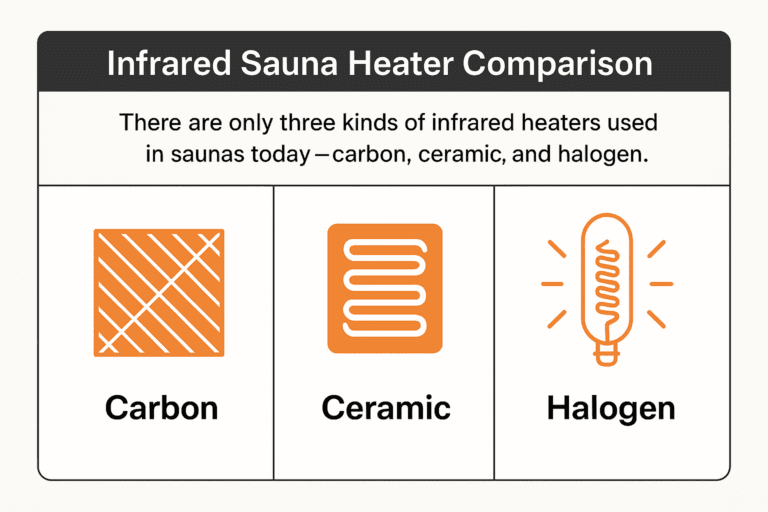
Ceramic heaters blast 350–400°F — uncomfortably hot, shallow penetration, surface-level burn risk. Cheap carbon panels barely reach 140°F — they warm the air but can't raise your core temperature or trigger a real therapeutic sweat.
And “full-spectrum” halogen heaters? Marketing fiction. They're heat lamps producing mostly near-infrared at 2,750°F — completely impractical for a comfortable 30-minute session. Every option on the market forces a trade-off between comfort and performance.
VantaWave™ Changes Everything
Tuned to Your Body
VantaWave heaters peak at 7.9 microns — the exact wavelength where water molecules in your body absorb infrared energy most efficiently. This isn't random — it's precision engineering.
Your body resonates with this wavelength, pulling infrared deep into muscle and tissue rather than warming your skin's surface. The result: faster core temperature rise, deeper detoxifying sweat, more effective therapy in less time.

Proprietary Carbon Blend
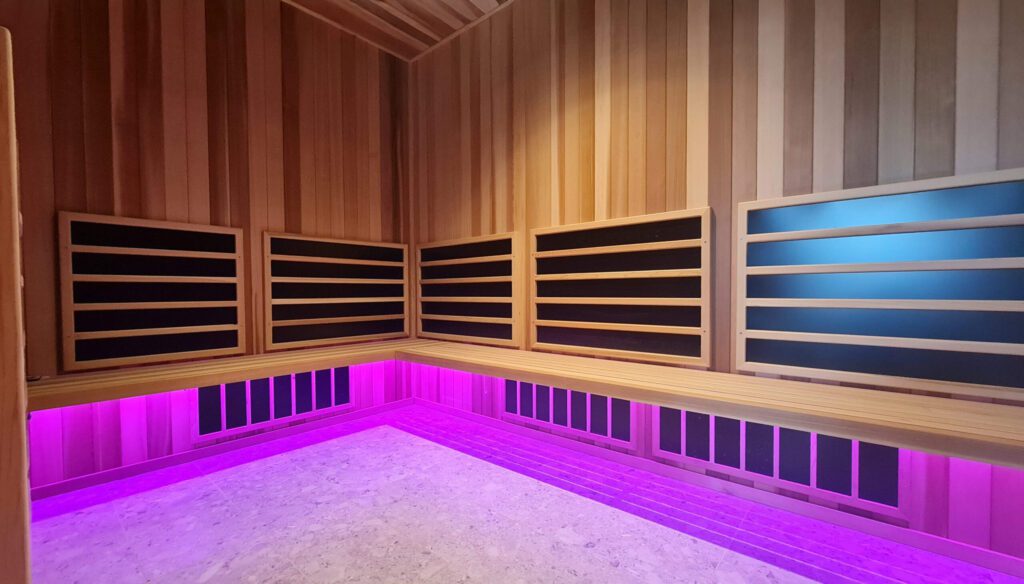
VantaWave uses a proprietary carbon-blend compound — engineered in-house, not sourced off a factory shelf. The result is 0.97 emissivity (the theoretical max is 1.0), meaning 97% of electrical energy converts to infrared radiation.
Generic carbon panels sit around 0.94–0.95. That difference compounds over a 30-minute session into meaningfully deeper penetration and more efficient heat delivery.
190°F — The Sweet Spot
Ceramic heaters run too hot (350°F+) — you can't sit near them comfortably. Generic carbon runs too cool (140°F) — your body barely responds.
VantaWave's 190°F surface temperature is the engineering sweet spot: hot enough to drive deep core heating and trigger real therapeutic response, comfortable enough to sit inches away for 30+ minutes without discomfort.

Ready to experience VantaWave®?
VantaWave™ vs. the Competition
See how VantaWave stacks up against every other heater technology on the market.
Ceramic Heaters
Generic Carbon
VantaWave™
More Than a Material:
The Carbon Blend Advantage
VantaWave™ heaters are constructed from a proprietary carbon-blend composite. This material innovation optimizes surface temperature, ensures perfect wavelength output, and achieves the highest practical emissivity, far exceeding traditional carbon systems.
Optimal Surface Temperature
~200°F — balanced for comfort & efficiency
Perfect Wavelength Output
Peak 7.90 microns — targeted for deep penetration
Highest Practical Emissivity
Blackbody emissivity: 0.97 — maximum heat transfer
The Hottest Infrared Sauna on the Market
More heat, deeper penetration — no other infrared sauna comes close
Patent-Pending Atlas™ Heater Layout
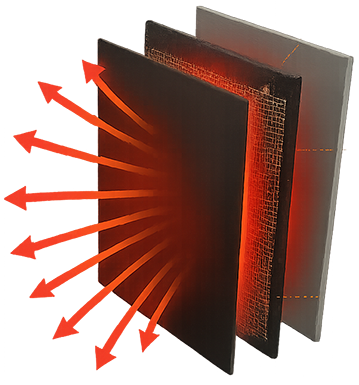
The heater is only half the story. VantaWave's full potential is unlocked by our geometrically optimized configuration.
After years of refinement, we've perfected exactly where and how every heater sits inside the cabin. Back wall panels cover lumbar through upper back. Side panels angle 15–20° toward your seated position for core and shoulder targeting. Calf panels sit at the optimal 12" height.
The result is sculpted infrared — energy that contours to your body's posture, eliminates cold spots, and maximizes absorption from every angle. This layout is exclusive to SaunaCloud. It's not available separately. It's not licensed.

Ultra-Low EMF. Zero Compromise.
Every VantaWave heater tests below 0.2 milligauss at seated position — among the lowest in the industry.
For context, a cell phone emits 50–200 mG. A laptop emits 10–20 mG. Our entire sauna system — heaters, power supply, wiring — is shielded and grounded to maintain zero ELF (extremely low frequency) emissions.
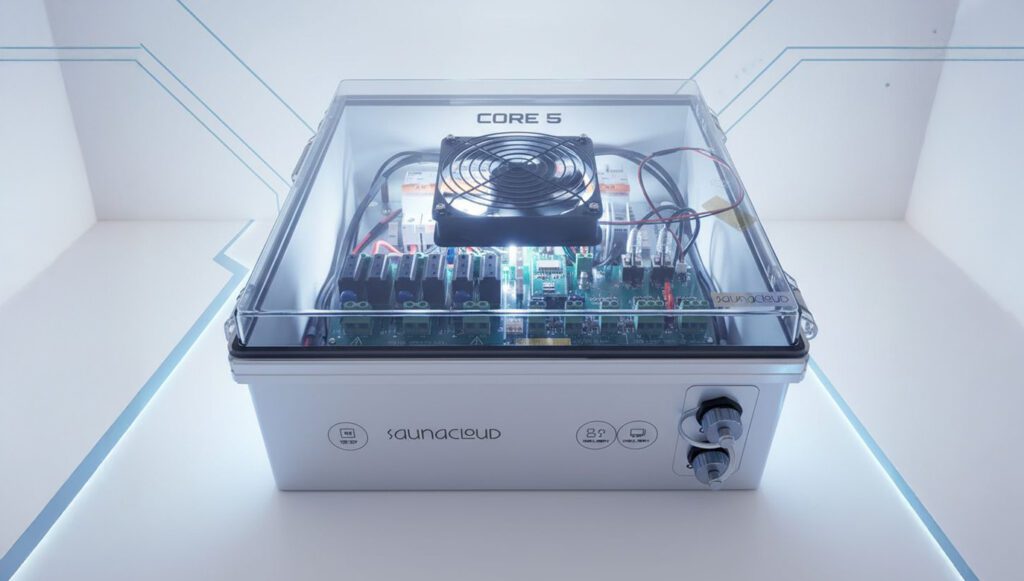
We don't just claim “low EMF” — we engineer for it from the circuit board up. Our CORE 5™ power supply is designed and built in-house specifically to eliminate the EMF spikes that plague imported power supplies.
Designed, Engineered, and Built by SaunaCloud®
Every critical component is manufactured in-house — not sourced, not white-labeled.

In-House Power Supply (CORE 5™)
We design and manufacture our own power supplies, PCBs, and WiFi-enabled control systems. When a sauna fails, it's almost always the power supply — so we built our own. Tested in-house. NEC-compliant. 7-year warranty.
WiFi Control System
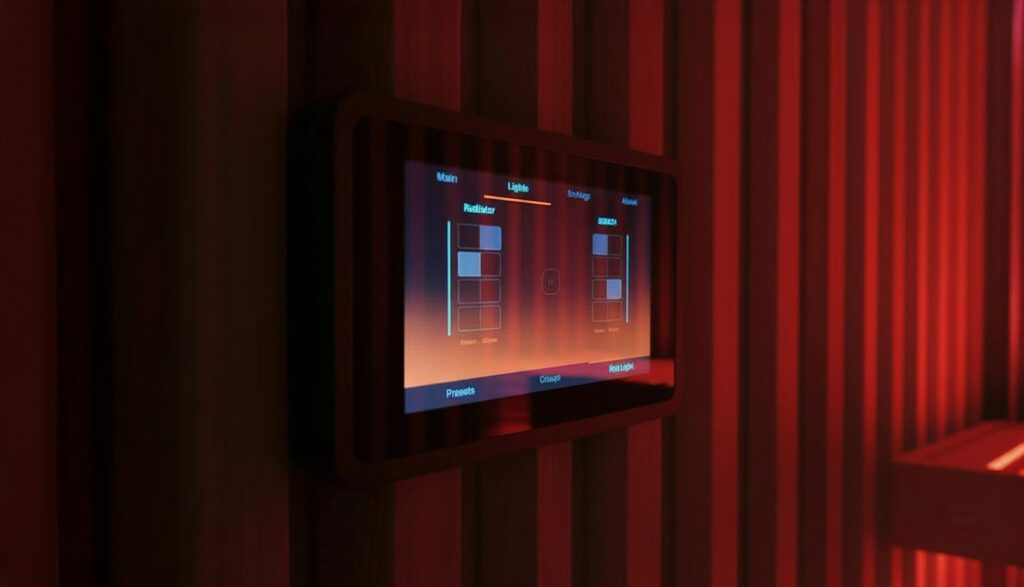
Every VantaWave sauna includes our proprietary WiFi controller — preheat from your phone, control heater zones and red light independently, monitor session data. Built by the same team that builds the heaters.
Full Vertical Integration
No other sauna company in North America manufactures its own heaters, power supplies, PCBs, control software, AND red light therapy systems. Full vertical integration means total quality control. When everything is designed as one ecosystem, everything works.
What Our Customers Say
Incredible custom sauna experience
The entire process from design consultation to delivery was seamless. The team helped me think through every detail — wood species, heater placement, bench layout — and the finished sauna exceeded every expectation. The craftsmanship is genuinely on a different level. I've used a lot of saunas and this is the best-built one I've ever stepped into.
Our next infrared sauna
We already had an infrared sauna from a different brand, but after researching SaunaCloud we knew this would be our upgrade. The quality difference is immediately obvious — the construction, the wood, the heaters. We use it every single day. If you're serious about infrared therapy, this is the brand to go with. We won't buy from anyone else.
Chris was knowledgeable and straight forward
I appreciated that Chris never tried to oversell me. He asked the right questions, understood exactly what I was looking for, and gave me honest recommendations rather than just pushing the most expensive option. The sauna arrived on time and was exactly as described. It's refreshing to deal with a company where the person you talk to actually knows what they're selling.











Only Available from SaunaCloud®
VantaWave heaters are not sold separately. They're not wholesale. They're not licensed. The full VantaWave + Atlas™ system only delivers its performance when installed with our precision placement methodology. This is a complete, purpose-built ecosystem — heaters, power supply, controls, layout — engineered to work together. You won't find it anywhere else.
Experience VantaWave™
Tell us about your space. We'll design your custom sauna with the most advanced infrared technology available — free, no obligation.





Visit our showroom in Diamond Springs, CA — hello@saunacloud.com