
Infrared vs Traditional Saunas: An Engineer's Honest Breakdown of Which Actually Works Better

Key Takeaways
- Infrared saunas heat your body directly using far infrared light, operating at 130-145°F vs 180-195°F for traditional saunas — making them more comfortable for longer, therapeutic sessions
- Infrared saunas cost $10-20/month to operate vs $40-80/month for traditional saunas, and most plug into standard 120V outlets with no electrician needed
- 95% of infrared sauna owners install it themselves. Traditional saunas typically require professional contractors, 240V circuits, and special ventilation
- The best sauna is the one you actually use consistently. Infrared’s faster heat-up (10-15 min vs 30-45 min) and lower operating costs remove the friction that prevents daily use
- For about 90% of people focused on daily therapeutic use — pain relief, inflammation, recovery, sleep — infrared is the more practical and effective choice
If you're researching saunas, one question comes up more than any other: infrared vs traditional saunas—which one is actually better?
After 11 years of building saunas and over 3,000 custom installations, I can tell you this: the answer depends on your goals, your body, and whether you'll actually use the thing consistently. Because here's what I've learned—the "best" sauna is the one you use multiple times per week, not the one that sits unused because it's too inconvenient or uncomfortable.
Traditional saunas are iconic. Wood-paneled rooms, hot stones, steam rising into the air, intense heat that makes you sweat instantly. This is what most people picture when they hear "sauna," and there's a reason—this design has been around for centuries.
Infrared saunas are the new technology. They achieve the same fundamental goal—raising your body temperature in a controlled environment—but they do it in a completely different way. Instead of heating the air around you, they use light to heat your body directly.
This guide breaks down infrared vs traditional saunas in real-world terms: comfort, health benefits, cost, energy efficiency, and whether you'll actually use it five years from now. No marketing fluff—just the engineering reality and what I've seen work for thousands of customers. For a step-by-step overview of how to evaluate and choose a sauna, see our infrared sauna buying guide.
A Brief History: Where Traditional Saunas Came From
Before we compare technologies, it's worth understanding where traditional saunas originated—because that context matters when you're evaluating whether this centuries-old design still makes sense for modern life.
Traditional saunas predate electricity, modern plumbing, and formal medicine. Early saunas were simple wooden huts heated by stones placed over fire. Water was poured over the rocks to create steam (called löyly in Finnish), raising both temperature and humidity. These weren't luxury items—they were essential infrastructure.
What Traditional Saunas Were Used For
Historically, saunas served multiple functions:
- Bathing and hygiene: Before indoor plumbing, saunas were where people got clean
- Social gathering: Community bonding and conversation happened in the sauna
- Religious and cultural rituals: Saunas held spiritual significance in Nordic cultures
- Post-labor recovery: After physical work, saunas helped muscles recover
- Even childbirth: In some cultures, the warm, sterile environment made saunas ideal for delivery
This long history gives traditional saunas a sense of authenticity and nostalgia that many people still value today. And I respect that—there's real value in ritual and tradition.
However, tradition doesn't always mean optimization, especially when we're talking about daily therapeutic use in a modern context.
How Traditional Saunas Work: The Physics of Convective Heat
Let's start with the technology most people know—the Finnish-style traditional sauna.
The Heating Mechanism
Traditional saunas operate on convection and conduction principles:
- Rocks are heated to extremely high temperatures (400-600°F) using an electric or wood-burning stove
- Water is poured over the hot rocks to create steam
- The steam and radiant heat from the rocks warm the air in the room
- Hot, humid air transfers heat to your skin through convection
- Your skin temperature rises rapidly, triggering intense sweating
The typical operating temperature is 180-195°F with humidity that can spike to 20-30% when water hits the rocks. That combination creates the intense environment traditional sauna users love—or can't tolerate.
Why It Feels So Intense
When you're in a traditional sauna, you're primarily being heated by surrounding hot air. Your body is fighting to cool itself against an environment much hotter than your core temperature. This creates significant cardiovascular demand—heart rate increases, blood vessels dilate maximally, and you sweat profusely.
It's effective for what it does, but it's also punishing if you're not acclimated. Most people can't comfortably stay in a traditional sauna for more than 15-20 minutes. Many people with cardiovascular issues or heat sensitivity can't use them at all.
The Preheat Problem
Traditional saunas require 30-45 minutes of preheating before they're ready. You need to heat hundreds of pounds of rocks and raise the ambient air temperature significantly.
For someone who wants to use a sauna daily—which is where real health benefits accumulate—this preheating requirement becomes a serious barrier to consistency.
How Infrared Saunas Work: Direct Radiant Heat Transfer
Now let's talk about the technology I actually build, and why the physics make it superior for most applications.
Radiant Heat Instead of Hot Air
The biggest difference in infrared vs traditional saunas is how heat is delivered.
Infrared saunas use far infrared (FIR) light—an invisible form of radiant energy that heats objects directly, much like warmth from the sun on your skin (but without harmful UV rays).
Here's what happens:
- Electrical current passes through carbon fiber or ceramic heater panels
- These panels emit far infrared light at wavelengths around 7-10 microns
- This infrared energy travels through air without heating it significantly
- When it contacts your skin, approximately 80% is absorbed directly into your tissues
- Only about 20% heats the surrounding air
The infrared light penetrates 1.5 to 2 inches beneath your skin, warming muscles, joints, and connective tissue from the inside out.
Lower Temperatures, Deeper Therapeutic Effect
Because infrared saunas heat your body directly rather than heating air first, they operate at much lower air temperatures—typically 130-145°F—while still producing deep, therapeutic sweat.
This makes infrared saunas:
- More comfortable for 30-45 minute sessions
- Accessible to people who can't tolerate extreme heat
- Easier to use daily without exhausting yourself
- Safer for people with cardiovascular limitations
Your skin might not feel as hot as in a traditional sauna, but your core temperature is rising more efficiently with less thermal stress on your system.
Fast Heat-Up Time
Most infrared saunas reach operating temperature in 10-15 minutes. Some users don't even preheat—they just turn it on, step in, and let it warm up around them.
This convenience is a game-changer for daily use. You can do a sauna session on your lunch break. You can hop in after a workout without planning 45 minutes ahead.
Infrared vs Traditional Saunas: Key Differences at a Glance
Here's a detailed comparison across the factors that actually matter:
Health Benefits: What Both Types Offer (And Where They Differ)
Let me be honest about this: both types of saunas provide legitimate health benefits. The question is which one delivers those benefits in a way you'll actually use consistently.
Shared Benefits of Heat Exposure
Both infrared and traditional saunas can:
- Improve cardiovascular function and circulation
- Reduce stress and lower cortisol levels
- Promote relaxation and better sleep
- Aid muscle recovery and reduce soreness
- Support immune function
- Enhance overall wellbeing
These aren't marketing claims—these are well-documented physiological responses to controlled heat exposure.
Where Infrared Saunas Pull Ahead
But when you dig into the research and talk to people using saunas for specific health conditions, infrared has clear advantages:
Better for chronic pain and inflammation: Infrared therapy has been specifically studied for conditions like arthritis, fibromyalgia, chronic back pain, and muscle tension. The deep tissue penetration directly warms inflamed joints and tight muscles more effectively than surface heating.
More accessible for daily use: The therapeutic benefits of sauna use are cumulative. Using a sauna 3-5 times per week produces dramatically better results than once a week. But if your sauna requires 45 minutes to preheat and feels punishing to sit in, you won't use it that often.
Deeper detoxification: While your liver and kidneys do most of your detoxification, there is research showing that infrared-induced sweat contains higher concentrations of heavy metals and fat-soluble toxins. The deep tissue heating appears to mobilize compounds stored in fat cells more effectively than surface sweating.
Cardiovascular benefits with less stress: Both types improve heart health, but infrared delivers these benefits with less stress on the system—important for people with cardiovascular concerns or high blood pressure.
Longer, more comfortable sessions: Because you can comfortably sit in an infrared sauna for 30-45 minutes (versus 15-20 for traditional), you're getting more total heat exposure per session. For many therapeutic applications, duration matters.
Energy Efficiency and Real Operating Costs
This is where infrared has a massive practical advantage that impacts whether you'll actually use your sauna long-term.
Traditional Sauna Energy Demands
Traditional saunas are energy hogs:
- Require 240V dedicated electrical circuits (professional electrical work, $500-1,500)
- Use 6-9 kW of power to heat rocks and air
- Need 30-45 minutes to preheat (wasting energy daily)
- Cost roughly $40-80/month to operate with regular use
Over 10 years of ownership, you're looking at $5,000-10,000 just in electricity costs.
Infrared Sauna Efficiency
Infrared saunas are dramatically more efficient:
- Most run on standard 110-120V household circuits (plug into existing outlets)
- Larger models need a 20-amp circuit (simple, affordable upgrade)
- Use 1.5-3 kW of power (less than half)
- Heat up in 10-15 minutes (minimal waste)
- Cost roughly $10-20/month with regular use
Over 10 years, that's maybe $1,500-2,500 in electricity. The difference is thousands of dollars.
When people ask me about infrared vs traditional saunas, this operating cost difference is something most don't consider until it's too late. But it matters—because if it's expensive to run, you'll use it less.
Installation: DIY vs Professional Requirements
Traditional Sauna Installation Complexity
Installing a traditional sauna typically requires:
- Professional contractors for construction
- Electrician to run 240V dedicated circuit
- Often HVAC work for proper ventilation
- Potentially plumbing if you want convenient steam
- Permits in many jurisdictions
- Total installation cost: $3,000-15,000+ including materials and labor
Infrared Sauna Installation Simplicity
Installing an infrared sauna:
- 95% of our customers do it themselves
- Most models plug into standard outlets
- Larger models need a simple 20-amp circuit upgrade
- No special ventilation required
- No plumbing needed
- Can be relocated if you move
- Total cost: $1,500-6,000 for quality units, mostly DIY
I've seen people spend $12,000 on a traditional sauna installation they use twice a month, and people spend $3,000 on a DIY infrared sauna they use daily. Guess which group gets more health benefits?
Maintenance Requirements Over Time
Traditional Sauna Maintenance
- Rocks need periodic replacement (heat degradation)
- Wood can develop mold from humidity without proper ventilation
- Heater elements burn out and need replacement
- Steam generators (if installed) require descaling and maintenance
- Higher ongoing costs and hassle
Infrared Sauna Maintenance
- Basically zero if built correctly
- Wood stays dry (no humidity = no mold issues)
- Heater panels last 10+ years with no performance degradation
- No consumables to replace
- Wipe down benches occasionally, that's it
Lower maintenance means lower long-term cost and less friction to consistent use.
When Comparing Infrared vs Traditional Saunas, Consider Your Actual Goals
Let me give you the honest decision framework I use with customers:
Choose a Traditional Sauna If:
- You grew up using them and genuinely love the intense heat and steam experience
- You have strong cultural or family connections to Finnish-style saunas
- You plan to use it occasionally (once a week or less) as a luxury ritual
- You're building an outdoor facility where the aesthetic and wood-burning experience matters
- You have unlimited budget for installation and operating costs
- The social/communal aspect is important to you
Choose an Infrared Sauna If:
- You want to use it daily or multiple times per week
- You're focused on specific therapeutic goals (pain relief, inflammation, recovery)
- You want lower upfront and operating costs
- You need something that heats up quickly for spontaneous use
- You have heat sensitivity or cardiovascular limitations
- You want to install it yourself
- You're interested in combining with red light therapy
- You value convenience and consistency over tradition
For about 90% of people I talk to, infrared makes more sense. It's more practical, more accessible, more cost-effective, and better aligned with how people actually live. Browse our sauna models to see what's available for your space.
Advanced Option: Red Light Therapy Integration
Since we're talking about technology differences, I should mention that modern infrared saunas can incorporate red light therapy for additional therapeutic benefits.
How Red Light Enhances Infrared Therapy
Red and near-infrared light (wavelengths 600-850nm, different from the far infrared heat at 7-10 microns) provides benefits at the cellular level:
- Enhanced ATP production (cellular energy)
- Improved collagen synthesis for tissue repair
- Accelerated wound healing
- Reduced inflammation through cellular signaling
- Better mitochondrial function
When you combine far infrared heat with red light in a red light infrared sauna, you're addressing health from multiple mechanisms simultaneously.
Why Positioning Matters
Most companies mount red light panels on walls 3-4 feet away—which drastically reduces therapeutic dose. We integrate red light LEDs within 2-4 inches of your body in benches, backrests, and leg panels. This close proximity delivers clinical-level dosing similar to medical devices costing thousands.
Traditional saunas can't offer this level of therapeutic sophistication.
The Verdict: Which Type Makes Sense for You?
When weighing infrared vs traditional saunas, the "best" choice depends entirely on your situation:
If you'll use it daily for therapeutic purposes: Infrared wins. Lower operating cost, more comfortable sessions, better for chronic conditions, easier to maintain consistency.
If you want occasional luxury/ritual use: Either can work. Choose based on personal preference and budget.
If you're heat-sensitive or have health limitations: Infrared is safer and more accessible.
If you have cultural/nostalgic attachment to traditional saunas: That matters. The best sauna is the one you'll use.
If budget is limited: Infrared has lower upfront and operating costs.
If you want maximum therapeutic benefit per dollar: Infrared delivers better ROI.
For most modern households focused on daily wellness, recovery, and long-term health, infrared is the more practical and effective choice.
Why We Build Infrared Saunas at SaunaCloud
I could make more money building traditional saunas—they're more expensive, require complex installation, and carry higher profit margins.
But I build infrared saunas because they work better for the way people actually live and the health outcomes they're trying to achieve.
When someone comes to me with chronic pain, arthritis, sleep issues, or just wants to improve their daily wellness routine, I know an infrared sauna will deliver better results. And I know they'll still be using it five years from now.
Our custom infrared saunas are engineered with:
- Optimal heater placement for even, effective heating
- Low EMF emission (under 0.5mG at sitting distance)
- Premium Western Red Cedar construction
- Optional integrated red light panels positioned 2-4 inches from body
- Temperature and wavelength optimization based on physics, not marketing
This isn't just product design—it's engineering for measurable, sustainable results.
Final Thoughts: Make the Choice That Serves Your Life
If you want the authentic Finnish experience, enjoy intense heat and steam, and plan to use it occasionally as a luxury ritual, a traditional sauna can be wonderful.
But if you're looking at saunas as a health tool—something you'll use regularly to manage pain, reduce inflammation, improve recovery, or just feel better day-to-day—infrared is almost certainly the smarter choice.
It's more accessible. More convenient. More cost-effective. And for most therapeutic applications, more effective.
After building thousands of both types over 11 years, I can tell you this: the people with infrared saunas are the ones still using them consistently five years later. And consistent use is what creates lasting health benefits.
If you're ready to explore your options—whether you want a pre-built unit, a DIY infrared sauna kit you can install yourself, or a fully custom design with red light integration—we're here to help you make the right choice based on your actual goals. New to SaunaCloud? Start here for a quick introduction to how we work.
Related Resources:

Founder & Lead Designer, SaunaCloud®
3,000+ custom saunas built since 2014 · Author of The Definitive Guide to Infrared Saunas · Featured in Forbes, Inc., and MSN
Chris has been designing and building custom infrared saunas since 2014. He wrote one of the first comprehensive books on infrared sauna therapy and is personally involved in every SaunaCloud build — from design consultation through delivery and beyond.
Continue Reading

How Infrared Saunas Work: From Photon to Health Effect in Five Steps (2026)
Read article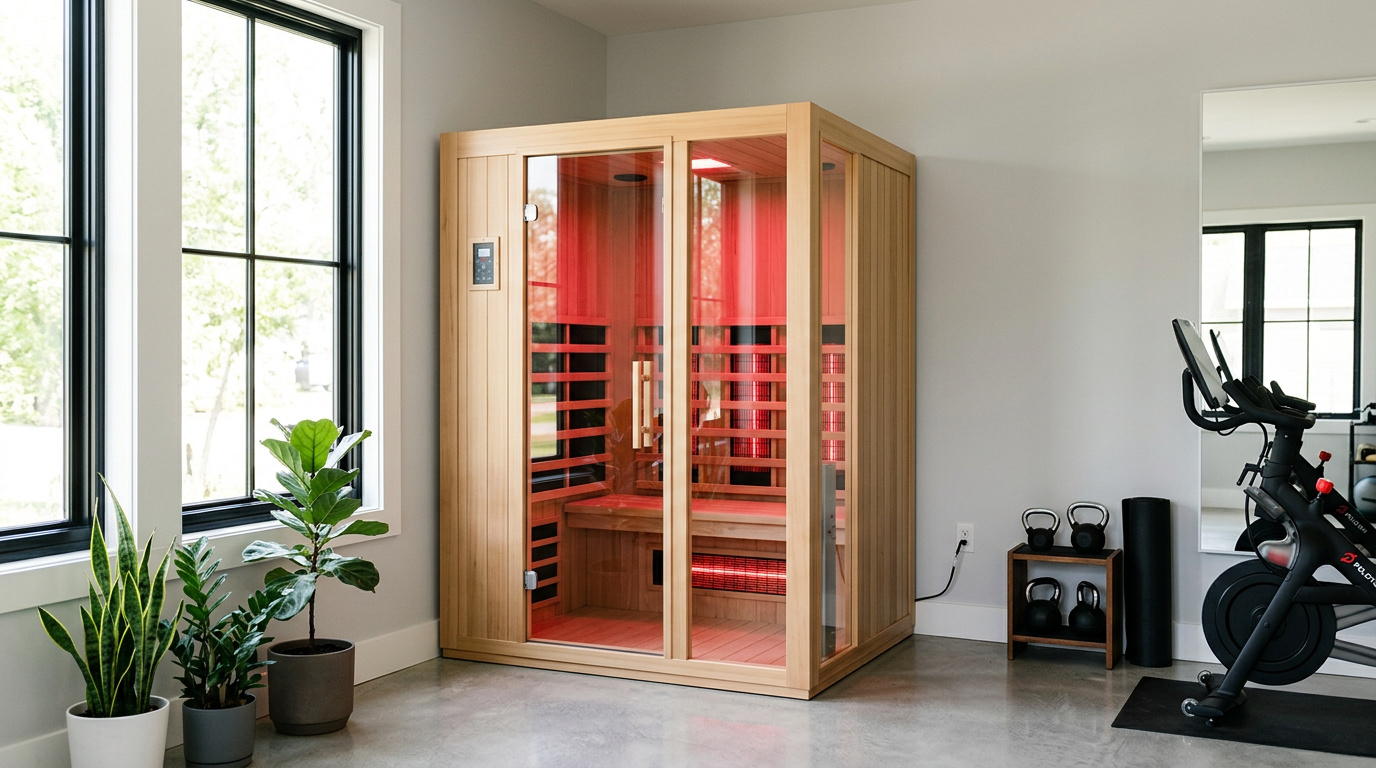
Steam Room vs Infrared Sauna: Which Heat is Right for You?
Read article
How to Convert Your Traditional Sauna to Infrared: Step-by-Step Guide (2026)
Read articleReady to Find Your Perfect Sauna?
After 3,000+ custom builds, we know exactly how to match your goals to the right sauna. Whether you want infrared, traditional, or a hybrid — let’s talk.