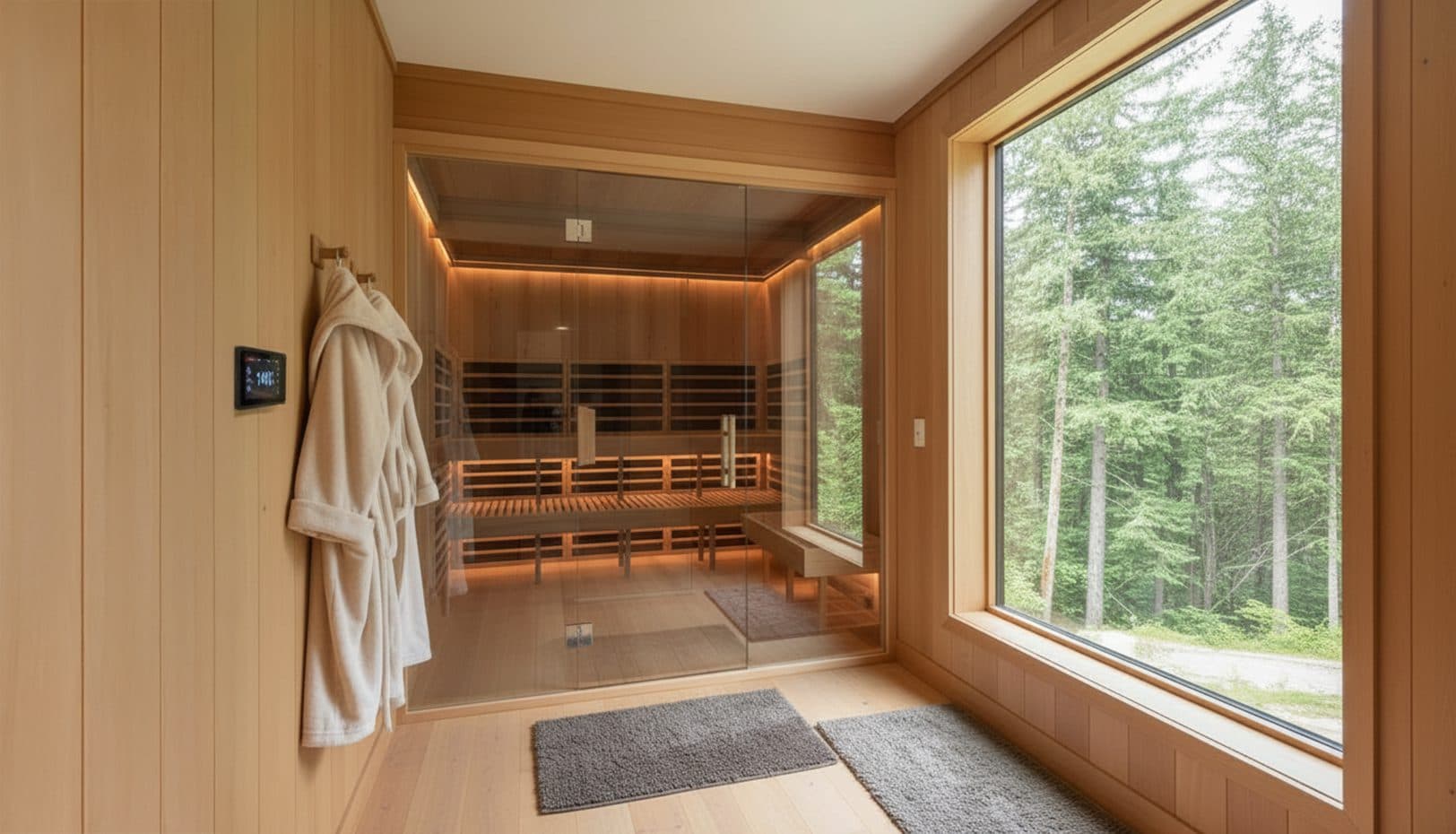
Infrared Saunas for Men: Why Depth Matters for Hormonal Health

Key Takeaways
- Regular infrared sauna use mimics light-to-moderate aerobic exercise, lowering dementia and Alzheimer's risk by up to 66% for men who use it four to seven times weekly.
- Infrared saunas operate at lower ambient temperatures (120°F to 130°F) than traditional steam saunas, providing deep tissue penetration while sparing delicate male reproductive systems from excessive thermal strain.
- Consistent 30-minute infrared sessions three times a week can promote measurable metabolic benefits, including a 4% reduction in body fat over four months.
In This Article
If you’re treating your physical recovery like another high-stress job, you're missing the point. Between tracking millisecond heart rate variability, stacking a dozen expensive powders, and scheduling your life down to the minute, it’s easy to feel like optimizing your health is a second career. But you don't need an exhausting, high-friction biohacking setup to achieve cardiovascular benefits and metabolic fat loss.
Sometimes, the most powerful physical intervention is also the simplest: sitting in a clean, quiet, specifically heated room and letting passive heat do the systemic heavy lifting. Stepping into a 120°F to 130°F infrared sauna triggers hormonal and cardiovascular responses that improve circulation, lower blood pressure, and facilitate body fat loss. Let's look at the clinical trials, strip away the influencer hype, and examine what infrared heat therapy offers for men.
The Male Wellness Gap: Using Heat as a Clinical Backdoor
Let’s face the reality of how men handle healthcare. There’s a gap between the physical stress we put on our bodies and our willingness to step into a clinic to deal with it. The 2023 Cleveland Clinic Men's Health Survey highlighted this exact contradiction, revealing that while 83% of men report experiencing high stress, a striking 44% of men completely avoid their annual physicals, and 49% admit they don't maintain a healthy diet.
This widespread culture of medical avoidance means that early, systemic changes often go unnoticed. Instead of waiting for a health crisis, you can set up a home infrared sauna to create a preventative baseline—a low-friction therapeutic habit that runs passively in your own home, giving your body a clinical-intensity recovery session without the scheduling headache.
Taking control of your health at home allows you to bypass clinical friction while directly addressing the real, daily symptoms of physiological burnout.
Why passive habits trump clinical compliance
When you avoid regular clinical checkups, you miss the subtle signs of physical decline. Markers of chronic stress, such as 83% of men reporting high stress, often manifest as midday fatigue, loss of lean muscle, and elevated cortisol levels. These aren't signs of getting older—they're indicators that your endocrine system is struggling under chronic cortisol overload. A 15–20 minute daily sauna habit helps your body stay balanced by lowering your cortisol levels. Sauna use mimics the cardiovascular benefits of moderate exercise by increasing systemic circulation and metabolic waste removal without a strenuous workout.
Hormonal Efficiency: Stress, Cortisol, and Testosterone Synthesis
Let's tackle the biggest myth running wild on social media: the idea that sitting in a hot room will double your testosterone overnight. To understand how heat therapy affects your hormones, we have to look at the relationship between stress and endocrine function. When you're constantly red-lined by work, poor sleep, or intense physical training, your adrenal glands pump out cortisol. This creates a tug-of-war with your testosterone: high cortisol interferes with the cells in your testes, effectively slowing down your natural testosterone production.
An infrared sauna does not directly synthesize testosterone, but it lowers cortisol, facilitating a better environment for testosterone production. Instead, it acts as a highly efficient biological clearing crew. Short-term passive heat exposure triggers a mild, beneficial hormetic stress response—a brief shock to your system that stimulates overall endocrine efficiency, triggers the release of physical endorphins, and lowers circulating cortisol. By orchestrating cortisol reduction, the sauna removes the chemical interference holding your body back. It clears the runway, giving your endocrine system the calm, low-stress environment it needs to produce testosterone naturally.
Thermal Mechanics: Sparing Sperm from Ambient Heat Strain
If you're looking to maintain your fertility or protect your cellular health, how your sauna heats your body matters immensely. Your body has a highly sensitive, elegant system for testicular temperature regulation, keeping your sperm precisely 2 to 4 degrees cooler than your core body temperature. When you use a traditional dry sauna, you're stepping into an environment heated to around 190°F. This humid ambient temperature puts physical strain on this cooling system, risking temporary damage to sperm motility through sheer atmospheric exposure.
This is where infrared technology changes the equation. Instead of superheating the air around you, an infrared sauna uses radiant wavelengths that focus on tissue penetration, directly warming your muscles and joints from the inside out. Because of this direct heating method, the cabin operates at a much milder ambient temperature of 120°F to 130°F. You get all the cellular and muscular benefits of deep heat without subjecting your body to the intense thermal strain of traditional steam units.
Keeping the air cool while focusing heat where you need it also helps your body clear out waste products and protect your cells.
Sweat-induced clearance: Heavy metals and semen quality
One of the most valuable, underappreciated mechanisms of a deep, radiant sweat is how it interacts with toxic accumulation. Our bodies naturally accumulate blood-borne heavy metals—like lead, cadmium, and mercury—from our environment, food, and water. These toxins have a nasty habit of settling into deep tissues, where they can damage cellular health in the pelvic region and degrade overall semen quality. Because infrared wavelengths penetrate deep into your muscles, they stimulate a highly efficient, sweat-induced clearance of these metals. Ridding your system of these heavy metals helps reduce localized inflammation, protecting delicate cellular structures and optimizing your reproductive environment.
Conception Risks: Quantifying Heat Limits and Sperm Recovery
While infrared is far easier on your body than steam, we still need to talk about real biological boundaries if you’re actively trying to conceive. The human body takes about 74 days to fully produce and mature a single sperm cell. This ~2.5-month cellular production lag means that any major thermal strain to the groin today won't just affect you tomorrow—it resets the clock on your sperm parameters for over two months.
If you and your partner are in an active conception window, the smartest protocol is to adjust your heating habits. You don't have to abandon the sauna entirely, but you must prevent prolonged heat exposure in the lower body. Scale back your weekly sessions, limit intense lower-body heat exposure, or transition to a lower-temperature protocol. By planning these calculated breaks and keeping the groin area cool, you respect the physical timeline of spermatogenesis and ensure your sperm quality remains uncompromised when it matters most.
Vascular Stress: How Passive Heat Acts as a Cardio Workout
When you sit in an infrared sauna, your heart rate climbs, your blood vessels dilate, and you sweat. To your cardiovascular system, this experience looks almost identical to going for a brisk run or a light cycling session. This phenomenon of cardiovascular mimicry is recognized by major health authorities like the American Heart Association and the CDC, who note that passive heat stress successfully mimics light-to-moderate aerobic exercise. As your body works to cool itself down, it increases blood flow, supports hormonal systems by providing natural ways to boost testosterone, and improves arterial compliance, keeping your blood vessels flexible, reducing resting blood pressure, and lowering your risk of chronic heart conditions.
This total-body vascular workout improves arterial compliance and blood flow to the brain. Increased systemic circulation means your blood is constantly carrying fresh nutrients and oxygen to every tissue in your body—including your brain. Improving vascular compliance while suppressing systemic inflammation helps shield the delicate blood-brain barrier from damage.
The real-world proof of this vascular protection is stunning. A famous, long-term Finnish study tracked 2,315 middle-aged men (aged 42 to 60) for over two decades. The researchers discovered that men who used the sauna two to three times weekly showed a 20 to 21 percent reduction in their risk of developing dementia and Alzheimer's. For those who used it four to seven times a week, that risk dropped by a massive 65% to 66%. Improved blood flow is a shield for your brain.
This increased systemic blood flow supports pelvic vascular systems and prostate wellness by reducing regional inflammatory markers.
Pelvic vascular systems and prostate wellness
For men, localized vascular health is incredibly important as we age, specifically when it comes to the prostate. Conditions like benign prostatic hyperplasia (BPH) or chronic pelvic tension are often exacerbated by poor local circulation and chronic, regional inflammatory markers. The deep tissue warmth of an infrared sauna encourages localized pelvic floor relaxation and microcirculation. By delivering highly oxygenated, nutrient-dense blood flow to these pelvic vascular systems, you can help manage BPH-related discomfort, lower regional inflammation, and support long-term prostate health.
Technology Choices: Infrared Versus Hybrid Cabin Systems
If you’ve started shopping for an in-home sauna, you’ve likely run across hybrid cabins that claim to offer the "best of both worlds" by combining traditional steam heating elements with infrared panels. While this sounds like a great deal on paper, a closer look at the biology shows why it's a poor matchup for male physiology, particularly if you are hoping to leverage the therapeutic benefits of infrared saunas for erectile dysfunction. When you combine steam with infrared, the hybrid unit ends up running at the high ambient temperatures of a dry sauna.
This defeats the core advantage of infrared therapy. To protect your testicular temperature and keep your hormonal systems running smoothly, you want to avoid smothering convective ambient heat. A dedicated, pure infrared sauna keeps the air comfortable while using targeted, deep-penetrating radiant wavelengths to warm your muscles directly. For men focused on boosting testosterone naturally while prioritizing reproductive safety, pure low-EMF infrared cabins (like those built by SaunaCloud) keep ambient air within that safe, comfortable 120°F to 130°F range while delivering maximum restorative tissue penetration.
Advanced Recovery Stacks: Coupling Light with Deep Heat
If you want to take your passive recovery to the highest level, you don't need more complex recovery tools; you just need to stack the right therapies. The most effective combination you can build inside a home sauna is coupling the deep heat of infrared with red light therapy, a biological process known as photobiomodulation. While the radiant heat of the sauna stimulates circulation and triggers heat-shock proteins to clear out metabolic waste, red light wavelengths focus on stimulating cellular respiration and mitochondrial recovery.
By mounting a red light therapy tower—like SaunaCloud’s Personal, Core, or Full-Body units—directly inside your infrared cabin, you get a highly efficient, two-pronged approach to cellular repair. The infrared heat dilates your blood vessels, flooding your muscles with oxygen-rich blood, while the photobiomodulation targets your mitochondria, boosting ATP (cellular energy) production and dramatically accelerating tissue repair. Red Light Therapy synergy improves muscle recovery and cognitive function, with CORE units fitting directly inside sauna chambers to save time.
Sauna Protocols: Formulating the Perfect Heat Schedule
To get real clinical results from your sauna, you have to ditch the "more is always better" mentality. Our protocol avoids high-heat humidity to prevent sperm motility issues, focusing on 15-20 minute sessions 3-4 times per week to trigger cortisol reduction. Let’s look at the actual data: a landmark study out of Binghamton University tracked participants who used an infrared sauna for 30 minutes, three times a week. Over the course of four months, without making any other lifestyle changes, the participants achieved an average 4% loss in total body fat.
This study proves that the key to body composition and cardiovascular health is steady consistency, not extreme heat. Stepping on the scale right after a session and seeing a drop in weight is just a temporary water illusion. Real, metabolic fat loss takes time. A smart, sustainable protocol for men is to start with three to four sessions per week, keeping your initial sessions to a comfortable 15 to 20 minutes before gradually building up to a full 30 minutes. Make sure you follow every session with immediate, trace mineral-rich electrolyte replenishment to stay hydrated and protect your cognitive performance.
To get the most out of your sessions, pay attention to your temperature dial and when you choose to hop in.
Finding the optimal heat setting for male safety
For a male-safe, highly effective session, the sweet spot for your infrared sauna's temperature dial is between 120°F and 130°F. Operating within this range ensures you achieve maximum deep tissue penetration and a thorough, cleansing sweat without overtaxing your cardiovascular system or exposing your reproductive organs to unnecessary thermal stress. If your cabin is running much hotter than this, you're raising your core/scrotal temperature too fast, which limits the time you can comfortably spend reaping the cellular benefits of the radiant waves.
Beyond temperature, when you choose to step into the heat determines how your nervous system processes the physical stress.
Managing the nervous system: Sauna timing and autonomic recovery
While a sauna session feels relaxing, the heat is still a physical stressor. If you jump straight into a hot sauna immediately after a heavy, high-intensity workout, you run the risk of overtaxing your sympathetic ("fight or flight") nervous system, slowing down your overall recovery. To optimize your autonomic recovery and protect your heart rate variability (HRV), wait at least 15 to 30 minutes after heavy lifting before starting your session. This brief buffer allows your body to begin transitioning back into a parasympathetic ("rest and digest") state, turning your sauna session into an accelerator for recovery rather than an extra layer of physical stress.
The Complete Stack: Lifestyle Synergy and Buying Paths
Infrared therapy is powerful, but it isn't an excuse to ignore your baseline health. A high-quality infrared cabin is an incredible accelerator that works in partnership with your lifestyle, mirroring the health benefits and preventive guidelines championed by the Centers for Disease Control and Prevention (CDC). To get the most out of your sauna, you'll want to pair it with these healthy habits.
That means hitting the American Heart Association and CDC recommendation of at least 150 minutes of moderate cardiovascular exercise per week, getting 7 to 9 hours of structured, restorative sleep, and fuel-injecting your diet with healthy fats and trace minerals like zinc, vitamin D, and omega-3s. Additionally, taking active steps to limit alcohol intake and quitting smoking will do more to reduce your cardiorespiratory, liver, and cancer risks than any recovery tool ever could.
When you're ready to bring a clinical-grade setup into your home, you want to invest in engineering, not marketing hype. Many options on the market use cheap, high-EMF heaters and synthetic glues that off-gas under heat. You should look for engineering transparency: handcrafted Canadian cedar, custom sizes that fit your space, and low-EMF heaters that keep you safe.
This is exactly why Christopher Kiggins, a UC Berkeley alumnus, founded SaunaCloud® back in 2014. Frustrated by the lack of clear engineering standards in the wellness industry, Kiggins built SaunaCloud around premium, low-EMF VantaWave® heaters and custom cedar craftsmanship. Instead of dealing with high-pressure sales reps or generic affiliate sites, we focus on building direct, transparent relationships with our customers. You get an honest, science-backed approach to thermal therapy, paired with a custom-crafted recovery tool designed to last a lifetime.
If you're ready to upgrade your health baseline with a professional-grade setup, you can learn more and book an obligation-free consultation with a design specialist directly on SaunaCloud.com.
Frequently Asked Questions
Is an infrared sauna good for men?
Yes, infrared saunas are highly beneficial for men as they mimic the cardiovascular effects of moderate exercise and help lower cortisol levels. By reducing systemic stress and improving circulation, these saunas create an environment that supports natural testosterone production and overall metabolic health.
Can a person with a pacemaker use an infrared sauna?
You should strictly consult your cardiologist before using an infrared sauna if you have a pacemaker. While the heat provides cardiovascular benefits to the average person, the intentional increase in heart rate and systemic blood flow can interfere with the specific settings or physiological reactions required for individuals with implanted medical devices.
How does infrared heat affect sperm health and fertility?
Because sperm production is highly sensitive to heat, traditional high-heat saunas can disrupt fertility by overheating the pelvic region. Infrared saunas are generally safer because they operate at lower ambient temperatures (120°F–130°F), though men actively trying to conceive should still monitor their duration and frequency to avoid sustained scrotal thermal stress.
Is an infrared sauna worth it for weight loss?
It can be a valuable tool, as studies have shown that consistent use—specifically 30-minute sessions three times a week—is linked to measurable body fat reduction over several months. It should be viewed as a metabolic aid that supports fat loss through increased circulation and waste removal rather than a standalone replacement for diet and exercise.
How much should I use an infrared sauna to see cognitive benefits?
To significantly lower the risk of conditions like dementia and Alzheimer's, research suggests a frequency of four to seven times per week. Consistent, regular exposure improves vascular compliance and blood flow to the brain, acting as a protective mechanism against long-term cognitive decline.
Why does the timing of a sauna session matter for recovery?
Jumping into a hot sauna immediately after a high-intensity workout can overtax your nervous system by keeping it in a 'fight or flight' state. It is best to wait 15 to 30 minutes after exercise to allow your body to transition into a 'rest and digest' state, which ensures the session promotes actual recovery rather than adding extra stress.
What is the difference between pure infrared and hybrid sauna cabins?
Pure infrared saunas use radiant heat to warm tissues directly while keeping the ambient air at a comfortable 120°F–130°F, which protects delicate reproductive systems. Hybrid units combine infrared with traditional steam, which raises the ambient temperature to levels that can cause unnecessary thermal strain and negate the specific physiological advantages of low-heat infrared therapy.

Founder & Lead Designer, SaunaCloud®
SaunaCloud: 3,000+ installations since 2014 · Author of The Definitive Guide to Infrared Saunas · Featured in Forbes, Inc., and MSN
Christopher designs every SaunaCloud sauna. His work brings the room, heaters, controls and installation plans together so you can review the project before committing. His professional expertise is sauna design and construction, not clinical medicine.
Custom 3D renderings and a proposal in 24-48 hours.
Continue Reading

Health
Infrared Sauna Detoxification: The Peer-Reviewed Science of Sweating Out Toxins
Read article
Health
Far Infrared Sauna Therapy for Crohn's Disease: A Review of the Inflammation Science and Clinical Evidence
Read article
Health
Infrared Sauna Therapy for Fibromyalgia: The Clinical Evidence for 50% Pain Reduction
Read articleReady to Design Your Sauna?
Every project starts with a conversation. Tell us about your space and we'll create your custom plan — free, no obligation.
Custom 3D renderings and a proposal in 24-48 hours.