Have you ever wanted the calm and recovery of an infrared sauna, but you hate the blast-furnace feel of a traditional hot room?
That’s exactly why red light infrared saunas caught my attention. They use light to warm your body at lower temps, often between 110°F and 135°F, so you can settle in, breathe easy, and still get a real heat therapy response.
I built SaunaCloud after I started using saunas in 2012, and I have run the company since 2014, so I’ve lived the details of infrared sauna design and light therapy from both the user and builder side.
Let me walk you through what’s happening inside your body, what benefits are realistic, and how to use a red light sauna safely.
How Red Light Infrared Saunas Work
Red light therapy and near-infrared light can interact with your cells, while far-infrared panels create a steady radiant heat load.
That combination is why these saunas can feel gentler than a traditional sauna, but still push the body into the “work mode” that supports circulation, sweating, and recovery.
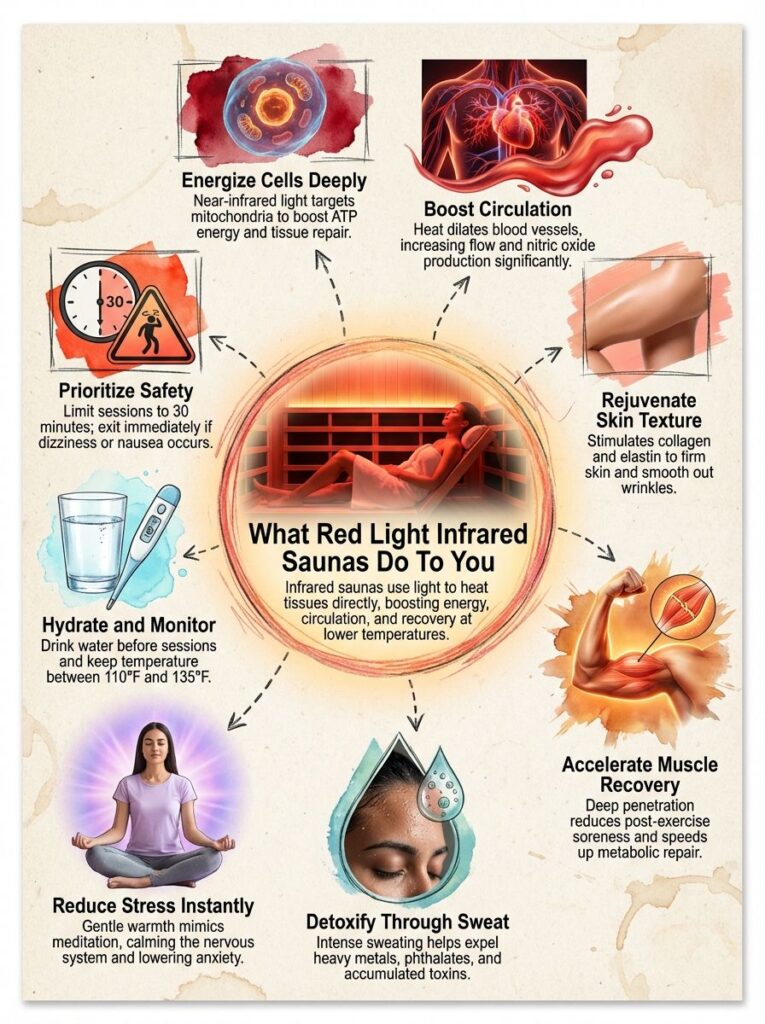
The easiest way to think about it is this: light can “signal” your cells, heat can “train” your thermoregulation. When you stack them, you get a two-track approach to heat therapy.
What are the types of infrared light used in saunas?
Most infrared saunas use three bands: near, mid, and far infrared. Some models also add dedicated red light therapy LEDs for photobiomodulation.
Here’s how I explain the bands to buyers in plain terms.
| Band | What it tends to feel like | What buyers often use it for | Smart “so what” when you’re shopping |
|---|---|---|---|
| Near infrared (NIR) (about 600–1,100 nm) | More “light” than “heat,” especially with true LED red light panels | Photobiomodulation goals like wound healing, tissue repair, scars, and wrinkles | Ask for actual wavelengths and whether the system is designed for low-level laser therapy style dosing (steady, controlled, not just “bright”). |
| Mid infrared (MIR) | Noticeable warmth on the skin | Comfort, circulation support, and easing joint inflammation and chronic pain | Look for even panel coverage across torso and legs, not just a hot back panel. |
| Far-infrared (FIR) | The classic “infrared sauna heat” sensation at lower air temps | Heat therapy, sweating, muscle recovery, relaxation | FIR works best when you can sit comfortably long enough to warm up, sweat, and then cool down well. |
My rule: buy the wavelengths for your goal, then buy the build quality for your safety and comfort.
Full-spectrum models combine NIR, MIR, and FIR to target skin, blood flow, and deeper muscle comfort. SaunaCloud uses low-EMF infrared panels and high-intensity red light therapy to support rehabilitation after physical activity, pain management for rheumatoid arthritis and osteoarthritis, and cardiovascular health, but avoid use if pregnant, recovering from burns, or living with heart failure or uncontrolled high blood pressure.
How does heat penetrate the body in an infrared sauna?
FIR saunas don’t need to superheat the air to warm you up. They load your body with radiant heat, then your skin, blood vessels, and sweat response do the rest.
One detail that matters for buyers: “deep penetration” claims are often overstated. In a 2025 study that measured muscle temperature at multiple depths during a commercially available FIR sauna session, heating was strongest near the surface and lessened with depth.
Practically, this means your body still gets a strong heat signal (skin temp rises, you sweat, your heart rate climbs), but you should not expect a FIR cabin to heat deep muscle the same way a hard workout does.
- For circulation: heat opens blood vessels, increasing blood flow in the skin and limbs.
- For recovery: warmer tissue plus improved circulation can help sore muscles feel looser after workouts.
- For sleep and calm: the cool-down after heat exposure is often the secret step, not the time spent chasing the highest temperature.
The deep heat response can raise heart rate and boost peripheral blood flow. That increased flow supports vascular shear stress, which can activate pathways tied to endothelial nitric oxide synthase and nitric oxide, a molecule that helps dilate blood vessels.
SaunaCloud uses infrared heaters and low-level-laser-therapy know-how in its designs, and the therapy stays noninvasive, with minimal adverse effects compared with other thermal treatments, while supporting mitochondria, the powerhouse of the cells.
Effects of Red Light Infrared Saunas on the Body
Red and near-infrared light, mixed with far infrared radiant heat, can boost circulation, raise skin temperature, and ease sore muscles.
Most buyers notice the “feel-good” effects first: you relax, you sweat, your body feels looser, and many people sleep better when they keep sessions consistent.
Now let’s get specific, section by section.
How does red light infrared sauna improve circulation?
Heat pushes your cardiovascular system to adapt. Blood vessels dilate, skin blood flow increases, and your heart rate rises to move more blood around the body.
A major heat-therapy review noted that heart rate can rise substantially during passive heating, and the “workload” can look similar to low-to-moderate intensity exercise, even though you’re sitting still.
- Use a pulse tracker: if your heart rate spikes quickly, lower temperature or time. You want a steady, tolerable climb, not a stress test.
- Warm up gradually: start at the low end of your degrees Fahrenheit range, then increase by small steps across sessions.
- Give yourself a real cool-down: a calm 10 minutes outside the cabin is part of the circulation benefit.
I have used SaunaCloud saunas since 2015, and I noticed better peripheral blood flow after sessions. That matches what’s been reported in clinical settings where far-infrared sauna protocols have been tested in people with cardiovascular disease risk factors, although those protocols are medical-style and should not be copied without clinician guidance.
How does sweating in an infrared sauna help detoxify the body?
Sweating is real, and it’s useful. But I like to keep “detoxification” claims grounded.
Your sweat is mostly water and electrolytes, and your liver and kidneys still do the heavy lifting for detoxing day to day.
That said, small studies have found certain environmental chemicals can show up in sweat, including research that measured compounds like BPA and phthalates in sweat samples. I treat that as an interesting data point, not a reason to ignore the basics like sleep, diet, and exposure reduction.
- Shower after: rinse sweat off your skin so it doesn’t sit there and irritate you.
- Rehydrate with a plan: if you sweat heavily, add electrolytes, not just plain water.
- Use the scale for feedback: if you drop a lot of weight in a single session, it’s fluid, and you should replace it steadily over the next few hours.
If you want “detox,” start with less exposure. A sauna can support your routine, but it can’t outwork a high-exposure lifestyle.
What skin health benefits come from using a red light infrared sauna?
“Red and near-infrared light boost skin repair, like a tune-up for your dermal cells.”
Red light therapy is popular for skin because photobiomodulation can support the cells involved in collagen production and tissue regeneration. The “why” is simple: when the right wavelengths hit your skin, your mitochondria can respond by increasing cellular energy signaling that supports repair.
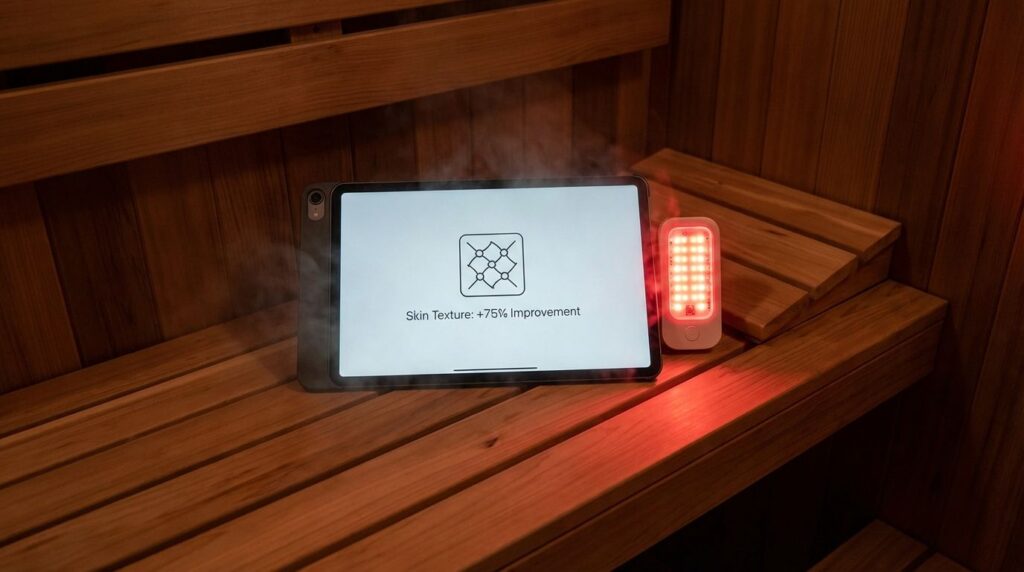
Clinical trials have reported a 51 to 75 percent improvement in skin texture and roughness after six months of treatment, and a 25 to 50 percent improvement in skin color tone with regular sessions.
- Go clean-skin first: skip fragranced oils or strong actives right before a session if you’re prone to irritation.
- Protect your eyes from discomfort: don’t stare into bright LEDs. Close your eyes, and use eye protection if the brightness bothers you.
- Think consistency, not intensity: with light therapy, steady habits usually beat occasional marathon sessions.
Near-infrared, NIR, also supports wound healing and cell regeneration, so it can help remodel photo-aged skin without ablative methods. Mild, short-lived redness has shown up after sessions, and it usually fades quickly.
SaunaCloud builds saunas that deliver the visible spectrum and near-infrared light in a way that’s comfortable to use while you sit and relax, maybe meditate a bit. People with acne or psoriasis may see clearer tone and better texture, though results vary by condition and by factors like diet, medication, and health problems like fibromyalgia.
How does a red light infrared sauna aid muscle recovery and relieve pain?
This is the benefit sauna buyers ask me about the most, because it’s easy to feel right away after workouts.
There’s also published research on infrared sauna use after training. One 2023 study in male basketball players tested an infrared sauna (about 43°C) after resistance exercise and reported better next-day recovery in certain neuromuscular performance measures compared with passive rest.
- Best timing for sore muscles: try it after training, once your breathing is under control, not when you’re still in a red-faced sprint state.
- Pair heat with hydration: the “post-sauna crash” is often dehydration plus low electrolytes.
- Use heat for comfort, not punishment: if your pain relief goal is stiffness and sore muscles, you do not need extreme temperature.
I use SaunaCloud saunas after workouts, and I see less soreness and faster recovery than passive rest. For many people, that’s the simple win: you walk out feeling looser, and your next session feels better.
People with a recent heart attack, pregnancy, or severe symptoms should get a medical diagnosis first. If you want to experiment with calming tools like meditation, do it during short sessions first so you can separate relaxation benefits from heat strain.
Can red light infrared saunas boost immune function?
Heat exposure may support immune-related responses, but I’m careful with claims here. “Boosting immunity” can mean a lot of different things.
There is an older controlled trial that tracked common cold episodes for six months and found the sauna group had fewer colds, especially in the later months of the study. That’s encouraging, but it’s not the final word, and most of the research is on traditional sauna bathing, not specifically on red light infrared saunas.
- If you’re sick right now: skip the sauna until you’re stable and fever-free.
- If you’re trying to stay well: keep sessions moderate and consistent, and treat heat as one piece of a bigger plan (sleep, nutrition, stress control).
- If you have a chronic condition: get medical clearance, because “immune support” is not worth a safety setback.
I have used far infrared sauna sessions for years, and I’ve seen fewer colds after a steady routine. Research remains preliminary for big claims, but it’s fair to say that regular heat exposure has a real effect on circulation and stress physiology, and that can influence how you feel in cold season.
How do red light infrared saunas reduce stress and promote relaxation?
If you’re a sauna buyer who runs hot or feels overwhelmed in high heat, the lower temperature range of infrared can be a real relief.

A 2019 study on sauna bathing recovery reported that heart rate variability shifted during cool-down in a way that suggested more parasympathetic activity (your “rest and recover” side). That lines up with what people feel: calmer after, not wired.
There’s also research that measured brain activity before and after sauna exposure and found increased alpha power during recovery, a pattern often associated with relaxation.
- Use a simple routine: 5 minutes warm-up, your main session, then 10 minutes quiet cool-down.
- Try breath pacing: slow nasal breathing can help you stay comfortable as your heart rate rises.
- Protect your bedtime: if heat makes you too alert, move your session earlier, then cool down fully before sleep.
For stress relief, the best sauna session is the one that feels calming enough that you actually repeat it.
Potential Risks and Precautions
Infrared saunas feel gentler than traditional saunas, but they can still push your body hard. Heat can climb faster than you expect, especially if you’re dehydrated or you stack a sauna on top of intense physical activity.
My baseline safety toolkit is boring for a reason: a timer, thermometers, and a way to check your heart rate.
If you take prescription meds, have cardiovascular disease, or you’re unsure about pregnancy and heat exposure, get medical guidance before you make this a habit.
What are the risks of overheating in infrared saunas?
I once used a red light sauna and left early after I felt dizzy and faint, so I speak from experience. Overheating can lead to dehydration, heat exhaustion, or heat stroke, especially when sessions run too long.
The CDC lists common heat exhaustion symptoms like headache, nausea, dizziness, weakness, heavy sweating, and decreased urine output. Treat those as exit signs, not things to “push through.”
- Exit fast if you feel off: dizziness, nausea, pounding heart, confusion, or chills are your cue to stop.
- Cool down safely: sit, sip cool water, use cool cloths, and don’t jump into an extreme cold plunge if you’re already lightheaded.
- Be extra cautious with medical history: unstable coronary artery disease, a recent heart attack, or heart failure should be treated as medical-clearance situations, not “try it and see.”
Older adults, and those with low blood pressure or kidney disease, face higher risks of dehydration and dizziness. Drink water before, during, and after every session, and use a thermometer or timer to track time and temperature.
For home use, keep a phone within reach (outside the hottest zone), and avoid alcohol before sauna time. Alcohol plus heat is a common setup for fainting and falls.
Who is at risk of skin sensitivity from infrared sauna use?
People with existing skin problems, like eczema, rosacea, or psoriasis, can be more reactive to heat and light therapy.
Light sensitivity can also come from medications and skincare choices. If you use prescription retinoids, certain antibiotics, or you know you’re photosensitive, talk with a clinician or pharmacist before you ramp up red light therapy sessions.
- Start low: shorter sessions at lower heat reduce the odds of redness and irritation.
- Watch for patterns: if irritation happens every time you use a certain lotion or active ingredient before sauna time, change the timing.
- Don’t treat suspicious spots: if you have changing moles or unusual lesions, get them checked before you apply regular heat or light exposure.
Talk with a doctor before using light therapy or photobiomodulation if you have health issues. Medical input matters for safety, because pre-existing conditions can raise sensitivity.
Tips for Using a Red Light Infrared Sauna
If you want the benefits and not the drama, focus on consistency, hydration, and comfort.
Use a timer, thermometers, and a pulse tracker to keep sessions safe and smart. If your sauna includes red light therapy, treat it like training: start with a dose you can repeat, then build gradually.
How long and how often should you use a red light infrared sauna?
I start most sessions at 110°F for 10 to 15 minutes, twice a week, following Dr. Young, 2022. I felt steady gains in mood and circulation after a few weeks.
If I push temperature higher, I shorten time. I keep most sittings under 30 minutes, because longer sessions can shift from “recovery” to “stress,” and your hydration needs jump fast.
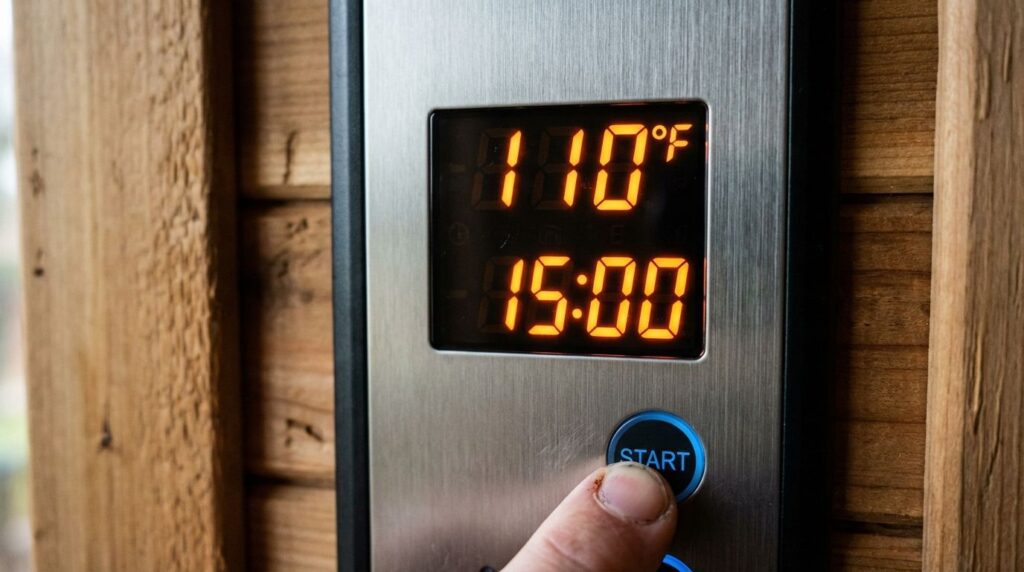
- Beginner schedule: 2 sessions per week, 10–15 minutes.
- Typical routine: 2–4 sessions per week, 15–30 minutes, based on comfort.
- After hard workouts: consider shorter sessions first, then build as your heat tolerance improves.
Kids under seven should not use an infrared sauna without medical approval, and parents should ask a doctor about older children. Older adults, people with low blood pressure, and anyone with health issues need extra caution and medical advice before trying this.
I cool down outside the cabin, then shower after every session. For more on timing, see the article on infrared sauna session duration, and check SaunaCloud for product details and temperature sensors I trust from my work in infrared sauna technology and customer service, since my B.A. at the University of California, 2004 to 2008, set me on this path.
What are the best practices for getting the most benefits from infrared saunas?
Hydrate before, during, and after each session, and avoid alcohol completely. If you sweat a lot, add electrolytes so you actually hold onto the water you drink.
Also, keep it simple. A sauna routine works best when it’s easy to repeat.
- Pre-hydrate: drink water ahead of time, not all at once right before you enter.
- Skip electronics inside: relax, meditate, breathe slowly, read, or listen to music.
- Use sauna-safe bottles: avoid containers that can warp or get dangerously hot.
- Cool down on purpose: sit quietly, then shower, then rehydrate.
- Start conservative: shorter, cooler sessions first, then build heat tolerance gradually.
- Ask for medical guidance when needed: this matters for pregnancy, heart disease, high blood pressure, kidney disease, and complex medication schedules.
What a Red Light Infrared Sauna Can Do for You
A red light infrared sauna can be a practical tool for pain relief, muscle recovery, stress reduction, and better sleep, especially if you prefer lower temperatures but still want a meaningful heat therapy response.
Keep your sessions consistent, keep your hydration tight, and treat safety as part of the benefit. That’s how you get the results you’re actually buying the sauna for.
Ready to Build Your Custom Recovery Space?
I’ve spent over a decade obsessed with the data and the design behind infrared technology. Whether you’re looking for a specific custom cabin build or you just want to make sure you’re choosing the right wavelengths for your health goals, I’m here to help.
Send me your questions or request a quote for a custom sauna build. Let’s design a setup that fits your home and your recovery needs perfectly.
— Christopher Kiggins
People Also Ask
Red light and infrared heat warm the body. They boost blood flow, relax muscles, and spark sweating, which some people call a mild detox.
Yes, an infrared sauna can ease muscle pain and lower inflammation by improving circulation and helping tissues heal.
Many people see skin benefits. Red light can help skin proteins rebuild, which may firm skin and reduce redness. Think of it as gentle repair work, not a magic wand.
It is safe for most people when used as directed, but talk to your doctor first if you have health issues or implants. Take short sessions, a few times a week, and stop if the heat feels too strong.