
Have you ever stood in front of your gym’s sauna, wondering which type would actually help you feel better? You’re looking at options for your own home now, and the choice matters more than you might think.
Here’s what I found after building over 3,000 saunas at SaunaCloud.
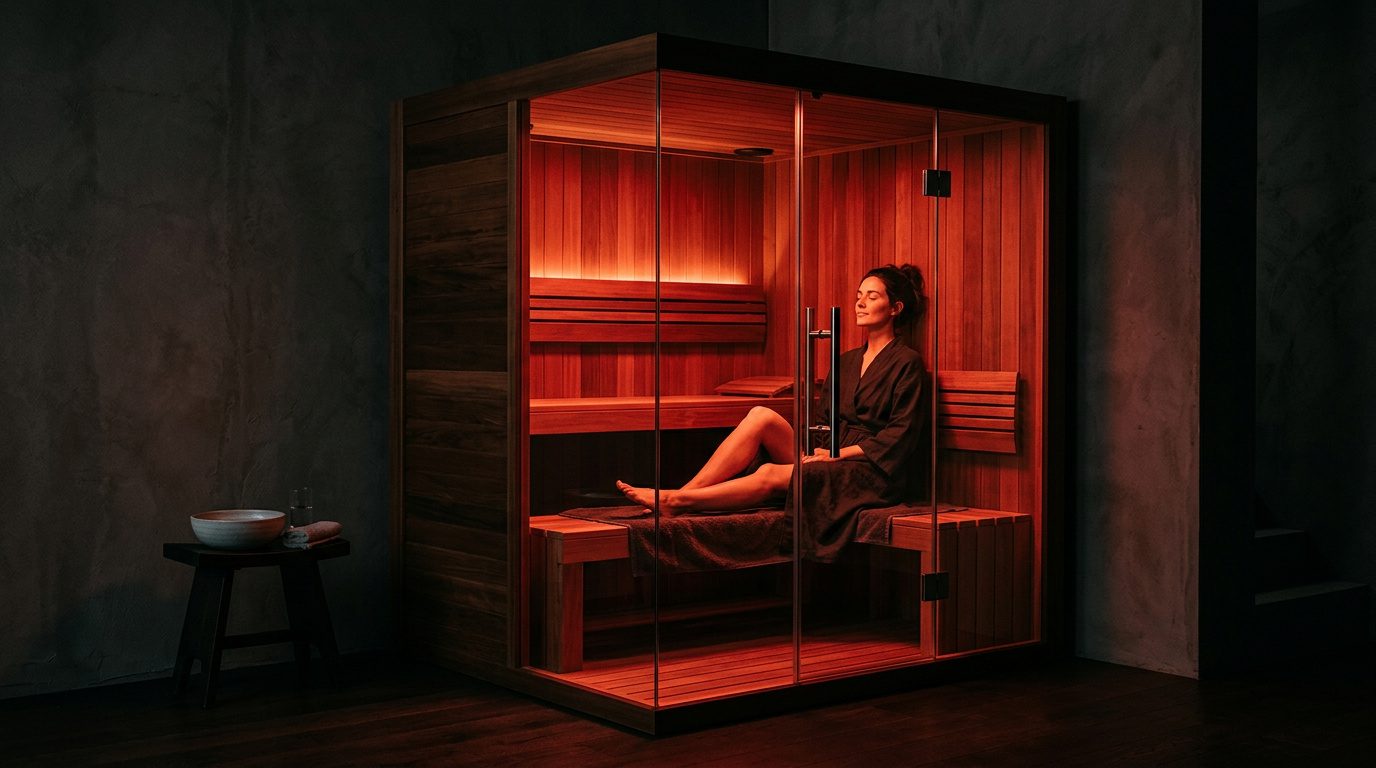
Both types can transform your health. The infrared version uses gentle far-infrared light at 120 to 140°F, perfect if high heat makes you uncomfortable. The traditional option cranks up to 180°F or higher, creating that classic steam-and-sweat experience that people have trusted for centuries.
So let’s walk through this together. I’ll show you exactly what each type does, what the research actually says, and which one fits your space and goals.
Key Differences Between Red Light Infrared and Traditional Sauna
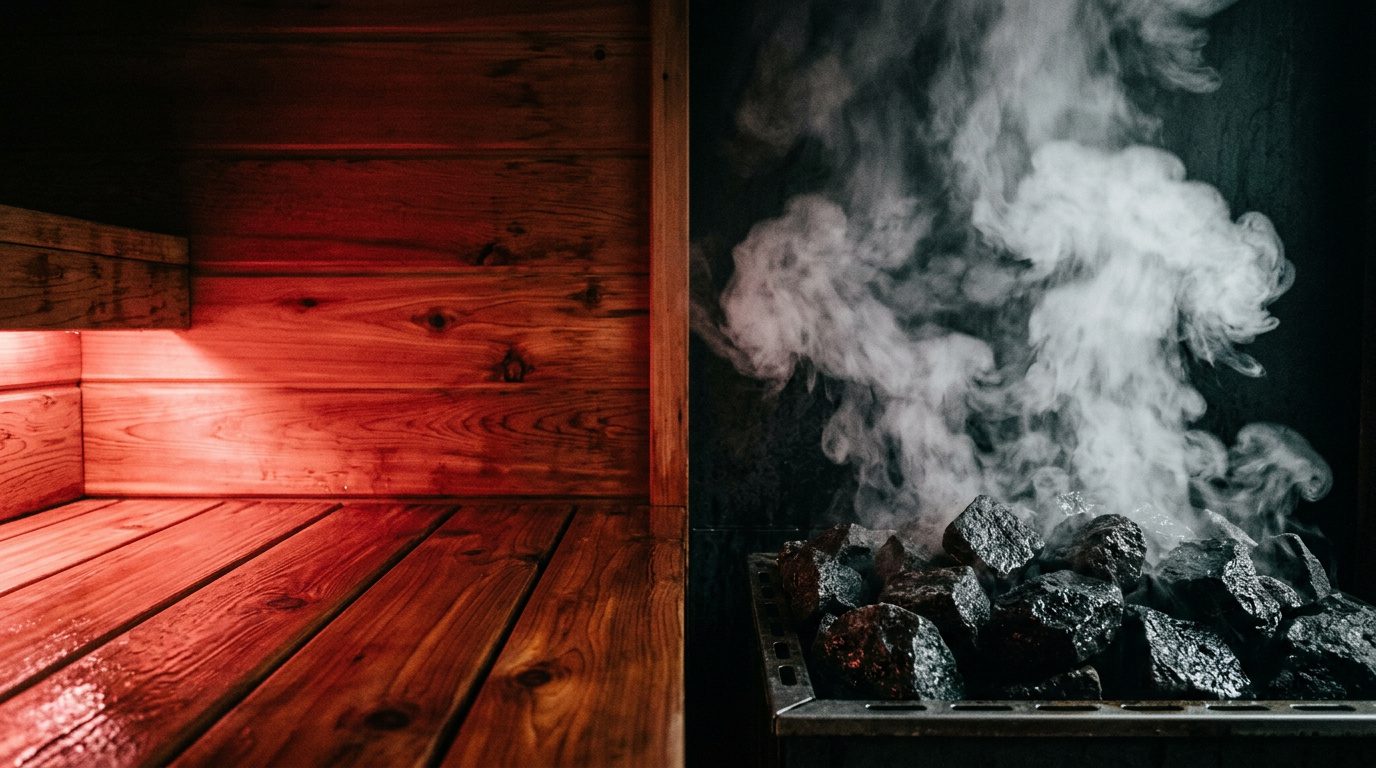
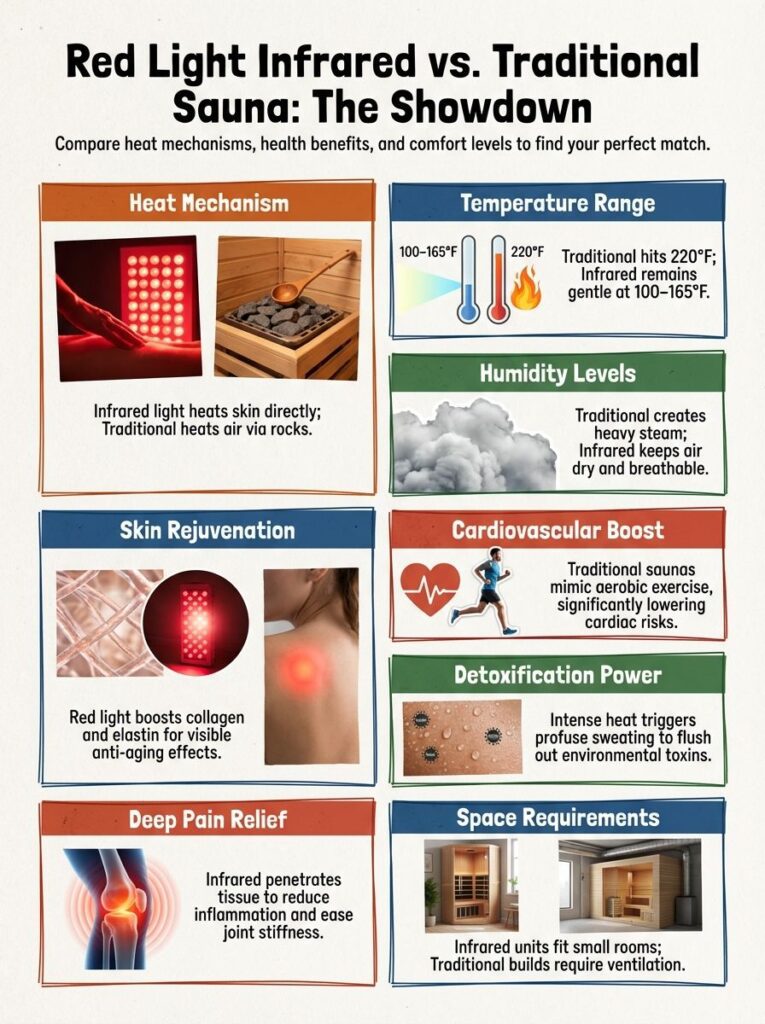
Red light therapy uses specific infrared wavelengths to heat your body from the inside out. A traditional sauna takes a completely different approach, heating the air around you first.
Think of it this way: one feels like warm sunlight soaking into your muscles, the other wraps you in a blanket of hot, steamy air.
How Does the Heat Mechanism Differ Between Infrared and Traditional Saunas?
Infrared saunas use ceramic or carbon panels that emit invisible far-infrared light. SaunaCloud’s VantaWave Carbon-Crystal heaters, for example, send energy straight into your skin cells at 7.9 microns, the wavelength human tissue absorbs best.
Your body warms up quickly without the air getting unbearably hot first.
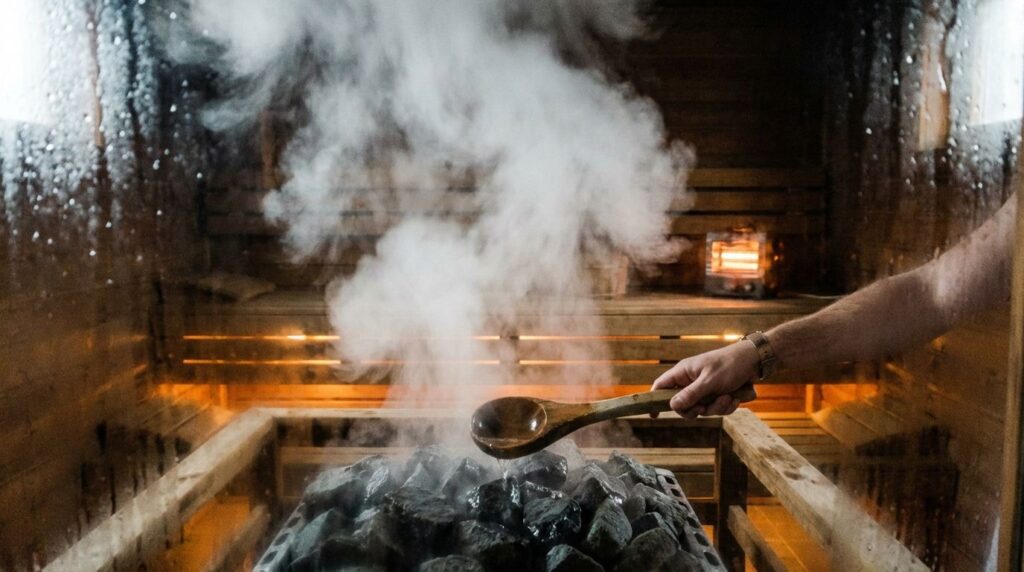
Traditional saunas work through convection. Wood, electric, or gas heaters warm a pile of stones, which then radiate heat throughout the room. When you pour water over those stones (a Finnish practice called “löyly”), you get a burst of humid steam that intensifies the heat sensation.
The air itself becomes the heating mechanism, creating that enveloping warmth that has you sweating within minutes.
What Are the Typical Temperature and Intensity Levels for Each Sauna Type?
Traditional steam saunas run hot. We’re talking 150°F to 220°F, with many units settling around 175°F for optimal cardiovascular benefits. According to research from Dr. Jari Laukkanen’s Finnish studies, that 175°F sweet spot with 19-minute sessions delivered the strongest heart health improvements.
You’ll feel the intensity the moment you step inside.
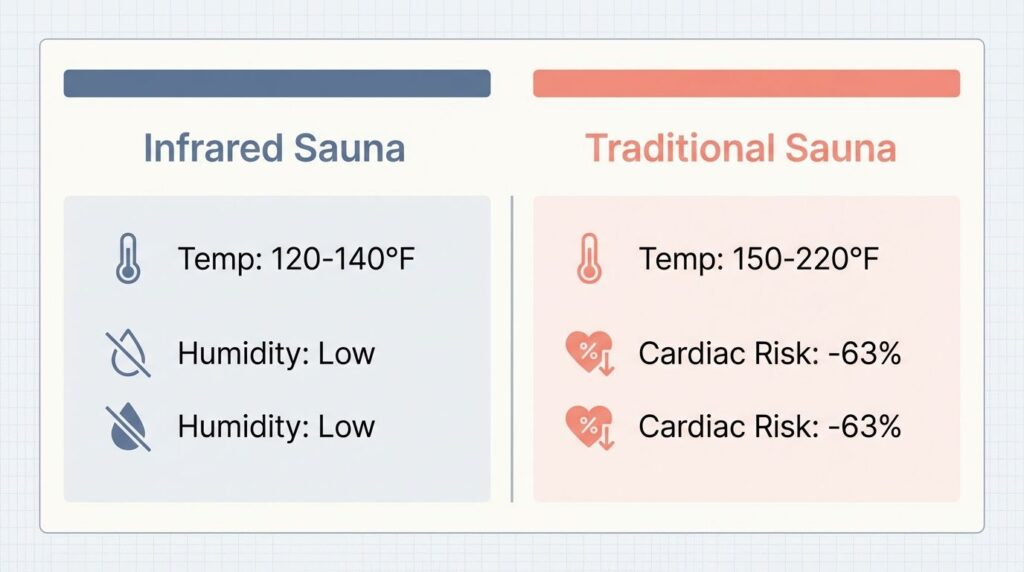
Infrared saunas take it easier on you. Most sessions stay between 120°F and 140°F, though some units max out at 150°F. A 2025 study found that 130°F in an infrared sauna produces the same deep sweat as 170°F in a traditional unit, just over a longer timeframe.
Red light therapy goes even gentler, using calibrated wavelengths from 620 to 750 nanometers for 10 to 20 minute sessions. Perfect for anyone chasing collagen production and muscle recovery without feeling like they’re melting.
How Do Humidity and Environment Vary in Red Light Infrared vs Traditional Saunas?
Traditional saunas create two completely different environments depending on how you use them. Start with dry heat at around 10% humidity, then pour water on those super-heated rocks.
Humidity can jump to 20 or even 30% in seconds.
That thick, moist air can feel heavy in your lungs, especially if you have breathing sensitivities. Temperatures often soar past 180°F while the room fills with steam, almost like sitting inside a cloud.
Infrared sauna cabins from SaunaCloud skip the steam entirely. The heaters use far-infrared light without adding any moisture to the space. Red light therapy devices also work without changing humidity levels.
Everything stays crisp and calm at normal household humidity, usually between 5 and 10%. People who hate muggy environments usually find these infrared spaces much more comfortable, even during long sessions for muscle pain relief after tough workouts.
Benefits of Red Light Infrared Sauna
Red light therapy and infrared sauna sessions can spark real changes in your skin, muscles, and stress levels.
I’ve watched clients at SaunaCloud notice clearer pores and faster muscle recovery after just a few weeks. Some even report better sleep patterns.
How Does Red Light Infrared Sauna Improve Skin Health and Rejuvenation?
Infrared light penetrates deep into your skin cells, reaching the dermis layer about 3 to 4 cm below the surface. It boosts adenosine triphosphate (ATP), which your body uses to repair and regenerate tissue faster.
A clinical study by Barolet and Boucher in 2010 saw collagen production jump by up to 30% with use a few times a week. That’s not marketing hype. It’s your skin actually building more structural support.
Collagen and elastin get a real lift too. Both proteins fight sagging and keep you looking fresh. Many dermatologists recommend this safe method for managing acne or healing small wounds without harsh treatments.
People notice smoother texture after three or four weeks of regular sessions, just 10 to 20 minutes at a time. According to a 2023 study published in PMC, visible anti-aging effects become clear around 12 weeks if you stick with it. See the full list of red light infrared sauna benefits.
Can Red Light Infrared Saunas Help Relieve Muscle Pain?
Far-infrared heat reaches deep into muscle tissue, helping sore areas relax and recover faster. Research from 2023 found that infrared sauna sessions after resistance training improved neuromuscular performance and reduced muscle soreness compared to passive recovery.
Studies show far-infrared therapy can improve blood flow by up to 20%, which boosts tissue oxygenation and cuts down stiffness.
Over eight weeks, people with chronic joint pain dropped their pain scores by 25% using infrared saunas. That’s a meaningful difference for anyone dealing with rheumatoid arthritis or muscle soreness from workouts.
Physical therapists recommend red light therapy for muscle recovery and pain relief because it reduces inflammation in problem spots. Even folks healing after surgery see easier days thanks to this kind of heat.
SaunaCloud’s hybrid heaters send steady, even warmth across your whole body with no cold spots, which means less tightness and quicker recovery every session.
How Effective Is Red Light Infrared Sauna for Relaxation and Stress Reduction?
Infrared sauna heat wraps you in gentle warmth without roasting you. Temperatures between 120 and 150°F relax muscles and ease tension without leaving you struggling for air.
A 2021 study by Podstawski and colleagues found that four rounds of sauna with cold breaks significantly reduced baseline cortisol levels after just a few sessions. Cortisol is the hormone that keeps stress high and heads pounding.
Many users report mood boosts as serotonin rises during regular use of red light therapy. This can ease depression or anxiety for some folks. Think of it as sunshine on a cloudy day.
After tough workdays or grueling workouts, sitting inside these soothing far-infrared lights is almost like an instant reset button for both mind and body. Stress melts away, sleep quality improves, and even chronic fatigue seems lighter. Each sweat session helps keep your circadian rhythm stable too, making restful nights much easier to catch.
Benefits of Traditional Sauna
Traditional sauna heat can wake up your circulation, kick toxins out through sweat, and reset tired bodies.
These classic hot rooms still steal the show after all these years, and the research backs it up.
What Cardiovascular Benefits Can You Expect from a Traditional Sauna?
Step into a traditional sauna, and your heart starts to pound, just like it would on a brisk jog. A landmark 2015 Finnish study tracked over 2,300 men for two decades.
The results? Regular sauna use led to better cardiovascular health and a 63% lower risk of sudden cardiac death.
Your heart rate can soar up to 150 beats per minute while inside, mimicking the effects of moderate exercise without having to lace up sneakers. Blood pressure drops with regular heat therapy sessions in high temperatures, which supports overall heart function.
Recent 2025 research published in Frontiers in Cardiovascular Medicine confirms that sauna bathing improves endothelial function, reduces arterial stiffness, and helps regulate the autonomic nervous system. Cardiac output can increase by 60 to 70% during a session, similar to moderate-intensity physical activity.
Clients at SaunaCloud say they feel lighter after every session, almost as if stress melts away with sweat pooling at their feet. These cardiac benefits can outpace those you get from hot tubs or even some infrared saunas, making this ancient practice a powerful ally for anyone watching their heart health.

How Does a Traditional Sauna Support Intense Detoxification?
High heat in a traditional sauna makes your sweat glands work overtime. You start sweating buckets, and that sweat pulls out heavy metals, environmental toxins, and old chemicals stuck deep in your skin.
A 2011 study from the University of Alberta (the BUS study) found striking results: 80% of participants had detectable cadmium levels in their sweat even when it wasn’t present in their blood or urine.
The research showed mercury appeared in the sweat of all participants, including 15% who had no detectable mercury in their blood. A session can feel like wringing out a sponge, with all the bad stuff leaving through every pore.
Long sessions at high temperatures push impurities from both skin and body. SaunaCloud builds with chemical-free materials for those who care about what touches their skin during this deep clean.
Strong thermal stress also raises your metabolism, sometimes leading to modest weight loss after regular use. Regular sauna time flushes clogged pores to clear up the dermis while activating your immune response, which helps keep everything running smoothly inside and out.
In What Ways Does a Traditional Sauna Enhance Circulation?
Inside a traditional sauna, high heat causes your blood vessels to expand fast. Your heart then pumps harder and sends more blood rushing through every part of your body.
This process mimics the effects of aerobic exercise without lifting a finger.
Many find their skin flushes and tingles, showing that circulation improvement kicks in almost right away. Muscle recovery gets a boost thanks to better oxygen flow after tough workouts or long days on your feet.
A 2025 review confirms that increased blood flow during sauna sessions redistributes about 50 to 70% of circulation from the core to the skin, facilitating sweating and enhancing nutrient delivery to tissues. Tissue repair picks up speed too, with nutrients racing where your body needs them most.
SaunaCloud’s Western Red Cedar design keeps things comfortable and natural for all skin types, even if you deal with allergies. Some say regular sessions support cardiovascular health by lowering blood pressure while also helping blood reach hands and feet easier over time.
Choosing Between Red Light Infrared and Traditional Sauna
Picking the right heat therapy shapes your entire sauna experience. Your goals and health needs matter most.
Think about pain management or skin rejuvenation before stepping into that warm cocoon.
How Should Your Health Goals Influence Your Sauna Choice?
Clear health goals can point you to the right sauna. Interested in skin rejuvenation or acne support?
Clinical trials show visible improvements from red light therapy within 4 to 6 weeks, with the best results at 12 weeks. Dermatologists recommend red light for wound healing and anti-aging because it boosts collagen production and supports scars or chronic inflammation.
If deep muscle recovery, pain management, or detoxification top your list, far-infrared therapy works better for targeting tissues and joint aches. Physical therapists use infrared saunas specifically for sports injuries and physical therapy needs.
Traditional saunas shine with cardiovascular health benefits and intense detoxification power thanks to higher heat levels plus sweat volume. These steamy rooms fit people aiming to improve overall wellness or circulation improvement.
Got autoimmune conditions like arthritis? Research points to heat therapy as a tool that may ease discomfort in some cases without harsh side effects of prescription drugs.
SaunaCloud’s hybrid models even let you combine these therapies based on your personal plan so every session meets your specific need set. Read more about matching treatments by visiting red light therapy vs infrared sauna.
What If You Have Sensitivity to Heat: Which Sauna Is Better?
Setting clear health goals often shows what features matter most, especially if heat sensitivity is part of your story. Infrared saunas use far-infrared light to warm the body gently at lower temperatures, between 120 and 140°F.
This makes them a friendlier choice for people who dislike high heat or feel overwhelmed in steamy spaces.
Traditional saunas run much hotter, sometimes up to 220°F, with thick humidity that can leave sensitive users wilting faster than lettuce on a hot day. Heat intolerance affects many people, especially those with certain medical conditions or taking specific medications.
Red light therapy steps things down even further since it gives almost no noticeable heat at all. People with extreme reactions to warmth can safely use red light panels without worrying about discomfort or skin irritation. This method serves all skin types well.
Many buyers choose SaunaCloud’s ultra-low EMF/ELF technology for safer sessions with less risk of electrical exposure or overheating issues. No matter which route you pick, hydration and shorter sessions remain key rules so you avoid feeling drained before dinner rolls around.
How Do Accessibility and Space Affect Your Sauna Decision?
Heat sensitivity can shift your focus to the simple question of fit. Red light therapy and infrared sauna options need less space, making them perfect for apartments or smaller homes.
You only need a small spot in a bedroom or office for a red light therapy panel. Just plug it in.

Compact infrared units like SaunaCloud’s Atlas One need as little as 3 by 4 feet of floor space and can plug into standard 120V outlets, according to 2026 electrical installation guidelines. Many infrared models for 1 to 2 people operate on 15-amp circuits using a standard household outlet.
Traditional saunas are another story. These units call for more room, think 4 by 6 feet minimum for two to three people, up to 6 by 8 feet for family use. They require extra ventilation and typically need dedicated 240V circuits with 30 to 50 amp breakers, meaning you’ll need a licensed electrician to handle the wiring.
Most areas in the US require building permits for traditional sauna installation, and the permit process can take a few weeks. You may also face inspections during and after construction to ensure everything meets safety standards.
SaunaCloud offers personal far-infrared saunas that fit even tight spaces, so you don’t have to give up on heat therapy because of square footage. At-home units from SaunaCloud use an easy-to-install, chemical-free latch system, which means you can skip hiring a contractor.
If your home has awkward nooks or corners, custom designs help these saunas fit like puzzle pieces instead of eyesores taking over your floor plan.
Can Red Light Infrared and Traditional Sauna Be Used Together?
Mixing red light therapy or infrared sauna sessions with traditional sauna use proves safe and effective. SaunaCloud even crafts units that combine both systems, giving users a one-stop experience for muscle recovery, skin rejuvenation, and detoxification.
Scientific research shows this pairing boosts healing effects by supporting cellular regeneration and lowering inflammation levels.
Many wellness centers now offer these combo sessions to help people relax deeply while supporting medical conditions like chronic pain or seasonal affective disorder. Both therapies work together to amplify benefits for cardiovascular health, mitochondrial function, mental health, and even collagen production.
Just follow recommended guidelines for timing and intensity. Too much heat at once can cause discomfort instead of relaxation.
Always check with your doctor before starting new heat therapies if you have heart disease or other conditions needing extra care. This is not personal medical advice!

Ready to Transform Your Health from the Inside Out?
The data is clear: heat therapy is one of the most powerful tools we have for longevity, skin health, and stress management. Infrared saunas offer a gentle, cellular-level detox for those who prefer lower temperatures, while traditional saunas provide the high-heat intensity that decades of Finnish research supports.
Your body deserves a recovery plan tailored to its specific needs. Are you ready to bring these life-changing benefits into your home? If you’re unsure which model fits your health profile, or if you want to explore building a custom-tailored red light infrared sauna, I’m here to help.
Click here to schedule a call so we can discuss your goals and get your custom build started.
— Christopher Kiggins
People Also Ask
Red light therapy uses cool light at specific wavelengths, typically around 660nm, to stimulate collagen and energy production directly in your skin cells without making you sweat. Infrared saunas use heat therapy to warm your body’s core, triggering a deep sweat that flushes toxins and mimics the effects of cardiovascular exercise. I tell my clients that red light repairs the surface, while the sauna restores you from the inside out.
Yes, they are powerful tools for pain relief; a study in Clinical Rheumatology actually found that patients with rheumatoid arthritis reported a 40% drop in pain and stiffness after just four weeks of regular sauna use. The heat from an infrared sauna penetrates deep into joints to loosen stiffness, while red light therapy targets localized inflammation to speed up muscle recovery.
They definitely do, and the data backs it up. A landmark 2015 study followed over 2,000 men and found that using a sauna 4 to 7 times a week reduced the risk of fatal heart disease by up to 63%. It works by raising your heart rate to 120-150 beats per minute, giving your heart a workout while you simply sit and relax.
Red light therapy is the clear winner for skin concerns, with research showing it can increase collagen density by over 25% to smooth wrinkles and heal acne scars. For systemic inflammation that affects your whole body, the infrared sauna is superior because the heat activates heat shock proteins that help repair damaged cells system-wide.
You should always consult your doctor first, especially if you have a heart condition like unstable angina or are pregnant. In my years designing saunas, I also advise people to look for low-EMF heaters to ensure you aren’t exposing yourself to unnecessary electromagnetic fields while you heal.
Yes, and I recommend using the sauna first to increase your blood flow, which primes your body to absorb the red light benefits more effectively right after.