
Have you ever stepped into infrared saunas and wondered if you should tough it out longer to get “better” results?
I get it. Heat feels productive.
But in my experience, longer heat does not automatically mean better outcomes. If you wonder how long to stay in an infrared sauna, start small: 5 to 10 minutes at 100 to 120°F for beginners. That time boosts blood flow, cuts the risk of dehydration, and can still support better sleep and muscle recovery.
I’m Christopher Kiggins. I founded SaunaCloud in 2014, and I build low-EMF, medical-grade infrared saunas. I help customers pick safe temperature settings so they feel comfortable and get results.
One helpful baseline for buyers: Cleveland Clinic describes infrared sauna air temps as typically 110–135°F, while traditional saunas often run 150–195°F, which changes how you should think about time, comfort, and heart rate.
Recommended Session Duration for Infrared Saunas
If you’re buying an infrared sauna for wellness, better sleep, pain relief, or muscle recovery, a good session length should feel repeatable, not heroic.
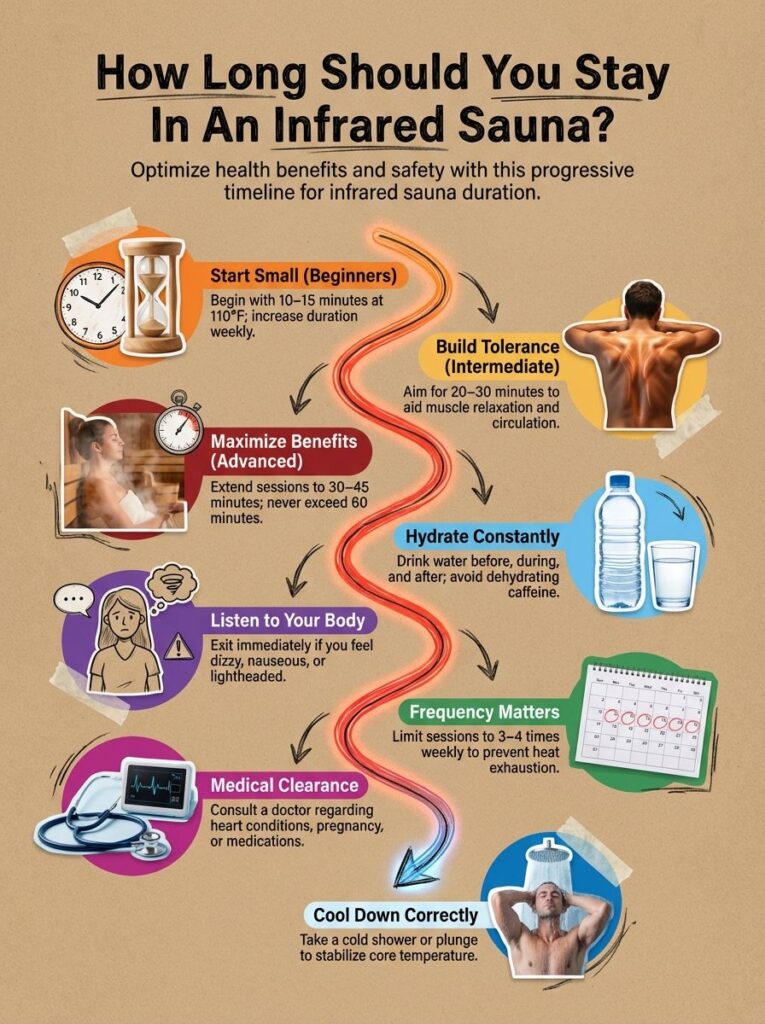
Start at a lower heat level and shorter time, then add small increments as your fitness level and comfort improve. Watch for dehydration signs like headache, cramping, or unusual fatigue.
One practical setup tip: give the cabin a short warm-up, then place your thermometer at seated chest height, away from direct heater panels, so you understand your real temperature settings where your body sits.
| Experience level | Good starting point | Typical goal range | Stop early if you notice |
|---|---|---|---|
| Beginner | 10–15 min at 110–120°F | 20–30 min by week 3 (if well tolerated) | Dizziness, nausea, pounding heart rate, cramps |
| Intermediate | 15–20 min at 115–135°F | 20–35 min | Headache, chills, “crashed” feeling later, unusual fatigue |
| Advanced | 25–30 min at your comfortable “sweat zone” | 30–45 min (rarely longer) | Lightheadedness, shortness of breath, heavy fatigue |
How long should beginners stay in an infrared sauna at lower temperatures?
For your first few sessions, aim for 10–15 minutes at lower temperature settings. Your goal is simple: finish feeling better than when you walked in.
I recommend starting around 10–15 minutes at about 100°F and building gradually, and rehydrating with at least 24 oz after sessions.
- Session 1–3: 10–15 minutes, keep the heat modest, focus on comfort and breathing.
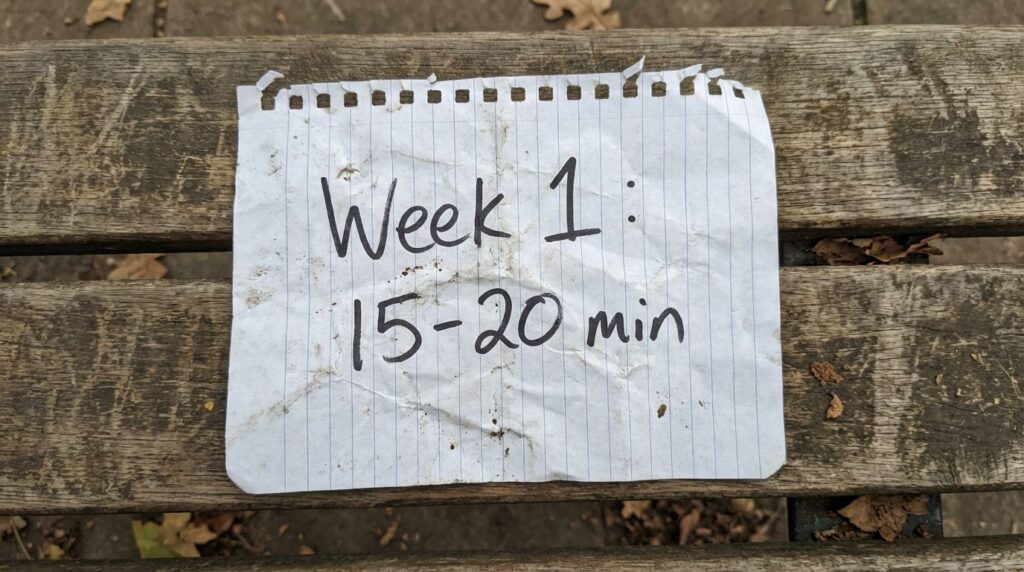
- Week 1: 15–20 minutes, increase only if you finish steady and clear-headed.
- Week 2: 20–25 minutes, keep hydration tight, especially after workouts.
- Week 3: 25–30 minutes, only if your recovery feels smooth the rest of the day.
If you want a simple “default” plan many buyers stick with, use 25 minutes at 55°C (131°F), three times per week, for at least three months. It is long enough for circulation and muscle relaxation, without turning the sauna session into a stress test.
Exit right away if you feel dizzy, overheated, or uncomfortable. That is your body asking you to shorten the dose, not push harder.
Use an independent thermometer to confirm the temperature. Whether you are using traditional electric stove controls or an infrared digital panel, the display and the real bench-level temperatures do not always match.
What is the ideal sauna time for intermediate users?
Intermediate users usually do best with 15–30 minute infrared sauna sessions. This is the range where many people notice better sleep, sore muscles calming down, and easier muscle recovery without feeling wrung out.
UCLA Health notes that sauna heat can push heart rate up into the 100–150 beats-per-minute range. That’s one reason I like intermediate sessions to stay moderate: you get blood flow and heat therapy benefits without flirting with heat exhaustion.
- If your heart rate spikes quickly: lower temperature settings first, then shorten time.
- If you feel great in the sauna but bad after: keep the same heat, cut 5–10 minutes, and focus on rehydrate strategies.
- If your goal is workouts recovery: keep the session shorter and more consistent (think 20–30 minutes), rather than longer and less frequent.
Listen to your body, drink water, and step out if you feel dizzy.
Sessions can reach 45 minutes only if you are experienced, well-hydrated, and free of cardiovascular disease risks. Watch for signs of dehydration, fainting, or heat exhaustion, and do not “power through” them.

If you are doing any sauna culture routines that include extra heat exposure outside the sauna (hot yoga, intense workouts, or long walks in the sun), shorten your sauna time that day.
How long can advanced users safely stay in an infrared sauna?
After you’ve built tolerance, most advanced users land in a reliable range: 30 to 40 minutes per session.
Some people do fine at 45 minutes, but never exceed 60 minutes in a single session, regardless of experience. Once you are past the point of comfortable sweating, extra minutes often just increase dehydration and fatigue.
- Keep the “dose” steady: aim for 3–4 sessions per week before you chase longer sessions.
- Choose a real target: muscle recovery, chronic pain support, stress reduction, or better sleep. Pick one and track how you feel the next day.
- Build in a buffer: stop 5 minutes earlier than you think you can, especially if you sauna after workouts.
If you like protocols, far-infrared “Waon therapy” research often uses 60°C for 15 minutes, followed by 30 minutes of warm rest in monitored settings. The big takeaway for buyers is that meaningful circulation support does not require marathon sessions.
Men trying to conceive should be careful with frequent heat exposure. A human study published in 2013 found sauna exposure impaired sperm count and motility during the exposure period, with reversal after stopping.
Overuse can cause dehydration and heat exhaustion. Exit immediately if you feel dizzy, heavy fatigue, or trouble breathing, and skip sauna sessions when you are sick with a common cold or other illness.
Factors Influencing Sauna Time
Two people can sit in the same infrared sauna at the same temperature and have totally different outcomes.
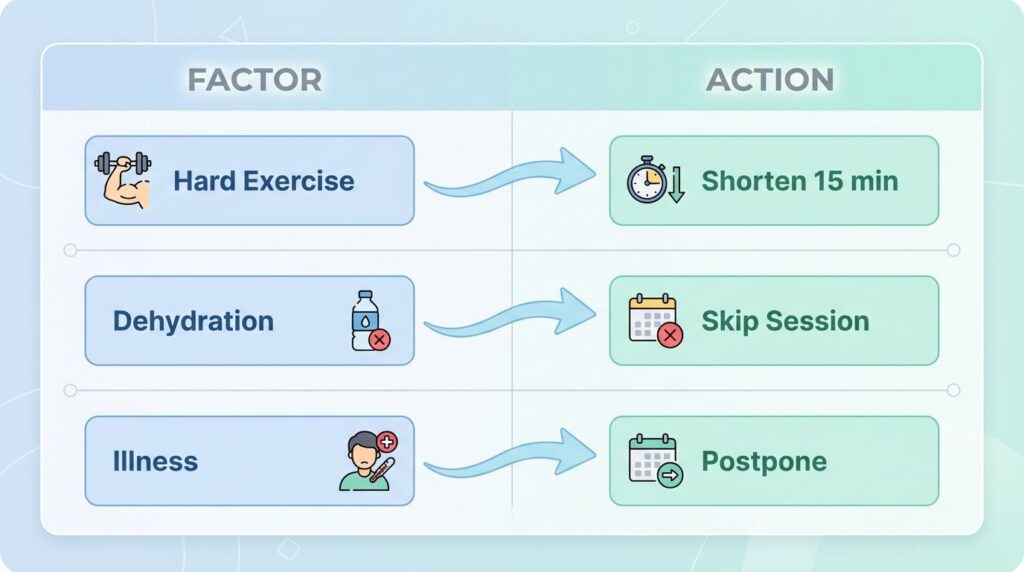
Your hydration, physical activity, sleep, hangovers, and cramping history all change how long you should sit, and how aggressively you should manage fluids and cool-down.
| Factor | What it changes | What to do |
|---|---|---|
| Hard exercise earlier that day | Higher sweat loss and faster fatigue | Shorten the sauna session by 5–15 minutes and prioritize electrolytes |
| Dehydration or hangovers | Higher fainting and cramping risk | Skip, or keep it to 10–15 minutes at lower heat |
| High blood pressure meds or diuretics | Higher dizziness and blood pressure swings | Talk with your clinician, then start conservative and track recovery |
| Cold, flu, or fever | Higher stress on heart rate and thermoregulation | Postpone until fully recovered |
How does hydration affect your sauna session?
Sauna sweat can dehydrate you fast, and dehydration changes everything: blood pressure stability, cramping risk, and how you feel after.
The American College of Sports Medicine’s fluid replacement guidance flags more than 2% body weight loss from water deficit as excessive dehydration. That is why I like a simple scale check: weigh yourself before and after your sauna session once or twice, then use that result to set your personal time limit.
- Start hydrated: drink water ahead of time, not just after.
- Bring fluids in: water is fine, and a light electrolyte drink can help if you sweat heavily.
- Use quick checks: darker urine, headache, or unusual fatigue are red flags to shorten future sessions.
- Replace what you lose: if your session leaves you noticeably wiped out, your rehydrate plan is not keeping up.
Portable infrared sauna studies show reliable dehydration effects, so treat hydration like a safety tool, not an afterthought.
If you want a more objective hydration check, urine specific gravity is often listed with a typical range of 1.005 to 1.030. If you’re routinely at the high end, shorten your sauna session length until your fluid balance improves.
How do you listen to your body during sauna use?
You do not need fancy gear to use an infrared sauna safely, but you do need feedback.
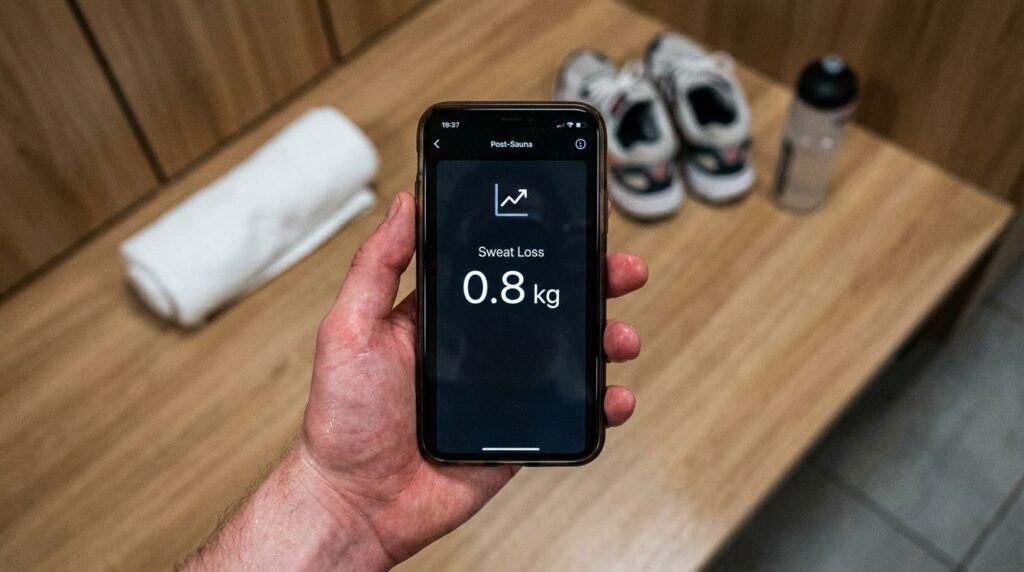
A timer, a thermometer, and a simple heart rate read (watch, strap, or finger sensor) will tell you when your session is turning from relaxation into stress.
- At minute 5: check how your breathing feels, then confirm the cabin temperature where you are sitting.
- At minute 10: check your heart rate and your head (no pressure, no dizziness).
- Every 5 minutes after: ask, “Would I be happy to stand up right now?” If the answer is no, end the session.
- Any time: exit if you feel dizzy, nauseous, chilled, or unusually uncomfortable.
Harvard Health notes that sauna heat can drive a noticeable pulse increase and major shifts in skin blood flow. That is great for blood circulation, but it is also why you should not stack sauna time on top of dehydration, alcohol use, or exhaustion.
When should you seek medical advice before using an infrared sauna?
Talk with a clinician before you try an infrared sauna if you have cardiovascular risk factors or known heart disease, especially if you have recent chest pain, uncontrolled blood pressure, or arrhythmia.
If you’re pregnant (or think you might be), be conservative. In ACOG’s guidance on early pregnancy, it says it’s best not to use saunas or hot tubs because raising core body temperature may be harmful for the fetus.
- If you have multiple sclerosis (MS): heat intolerance is common, so get individualized guidance before using heat therapy.
- If you take heat-sensitive medications: the CDC’s 2025 clinical guidance lists several medication types that can increase heat risk, including diuretics, anticholinergic agents, and some psychotropic medications.
- If you use blood pressure or heart medications: ask specifically about dizziness, fainting risk, and safe session duration.
- If you are sick: postpone until you are fully recovered, even if the sauna feels comforting in the moment.
Men trying to conceive should skip regular sauna use for now. Heat exposure can temporarily impair sperm quality, and this is one “wellness” upgrade that can work against your goal.
If you want another signal to track, watch heart rate variability trends over weeks. A single reading is not a verdict, but a steady drop after sauna sessions can mean you are overdoing heat or underdoing recovery.
Tips for a Safe Infrared Sauna Experience
Safer sauna sessions usually come down to a few basics: hydration, accurate temperature readings, and a calm cool-down.
Once you get those right, you can keep chasing better sleep, pain relief, and stress reduction without guessing.
How can you gradually increase your sauna session length safely?
Start with 10–15 minute sessions. Then add time slowly, so your heat tolerance rises without draining your recovery.
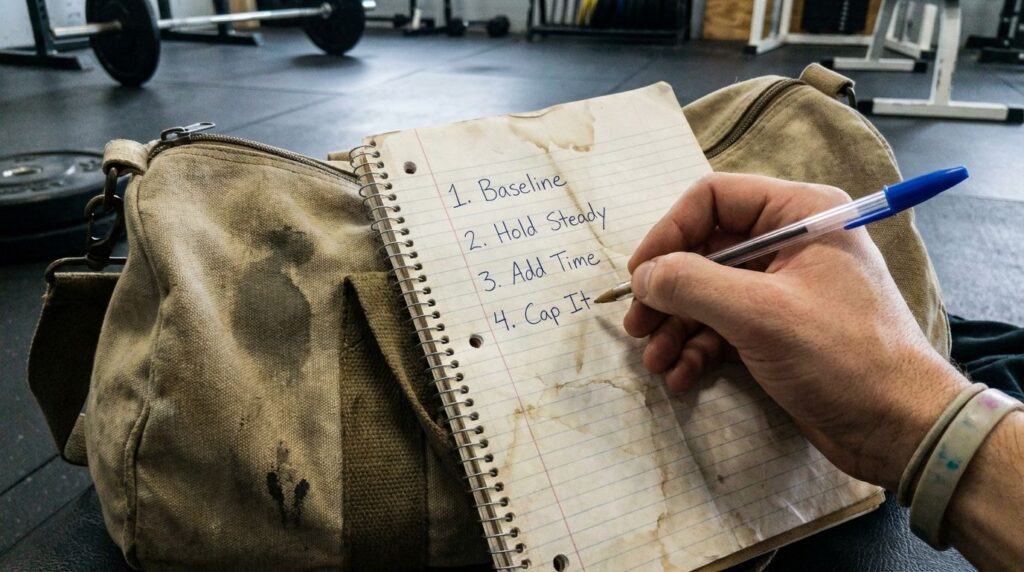
I like 5-minute increments, with at least a couple of sessions at each new duration before you add more.
- Pick your baseline: 10–15 minutes at 110–120°F.
- Hold steady: repeat the same plan for 2–3 sessions.
- Add time: increase by 5 minutes only if your post-sauna energy and sleep quality stay solid.
- Cap it: most buyers settle at 20–30 minutes as their “always feels good” range.
Hydrate before and after each session. If you have heart health or blood pressure concerns, clear your plan with your doctor before you increase session length.
What is the best way to cool down after a sauna session?
A good cool-down protects your recovery, and it also helps you avoid the woozy feeling that sometimes shows up after you stand up and leave the cabin.
- Step 1 (first 2 minutes): sit outside the cabin, breathe slowly, and let your heart rate settle.
- Step 2 (next 5–10 minutes): take a cool shower or rinse, then towel off.
- Step 3 (next 20–30 minutes): rest in a cool, ventilated spot and keep sipping fluids.
Slow, steady cooling supports parasympathetic recovery and can help you keep your sauna routine consistent.
Avoid sudden, extreme temperature changes if you are prone to fainting. If you get headaches or lingering lightheadedness after sessions, shorten your next sauna session and tighten your hydration plan.
How do you avoid overusing or overheating in an infrared sauna?
Overheating is usually a planning problem, not a toughness problem. Most buyers do best with 20–30 minutes per session, a few times per week, at temperature settings they can repeat comfortably.
- Set a hard timer: do not rely on “feel” alone, especially if you sauna to relax or meditate.
- Track real temperature: use reliable thermometers and place them where you sit, not next to heater panels.
- Watch frequency: if you go 3–4 times weekly, keep sessions moderate instead of long.
- Skip risky days: after alcohol use, during hangovers, when sick, or when you are clearly dehydrated.
If you feel dizziness, nausea, a racing heart rate, fainting sensations, or unusual fatigue, end the session and cool down gradually. If symptoms persist, get medical advice.
The Bottom Line on Sauna Safety
For most sauna buyers, the safest way to use infrared saunas is also the easiest: start with 10 to 15 minutes at about 110°F, and add time slowly.
Keep water and electrolytes close, and pay attention to your heart rate and how you feel later that day.
If you have cardiovascular disease risks, pregnancy, MS, or medications that affect heat tolerance, talk with your clinician before you push longer sessions. Use a thermometer to confirm temperature settings, and step out at the first sign of dizziness or heat exhaustion.
Respect your limits, and you’ll get more wellness benefits with less guesswork.
People Also Ask
Start with 10 to 20 minutes per session, and add time as you feel comfortable. Many people aim for about 30 minutes, but don’t chase a record, go by how you feel.
Set the heater between about 110 and 150°F, pick a level that feels warm, not brutal. Listen to your body, if it feels too hot, turn it down.
Drink water before and after a session, sweat removes fluids fast. Skip alcohol and heavy meals, and rest if you feel lightheaded. If you have medical conditions, talk to a health care provider first.
Some can, but people who are pregnant, or people with heart conditions, should consult a health care provider before trying it. Start with short sessions, stop if you feel dizzy or sick.