
Do you ever finish a workout feeling beat up instead of energized?
You’re not alone.
Here’s something that surprised me when I first started using infrared saunas back in 2012: a single 30-minute session can burn up to 600 calories and help your muscles bounce back faster. That’s according to a study published in the Journal of the American Medical Association, which showed real calorie expenditure similar to moderate exercise.
I founded SaunaCloud in 2014 because I experienced this firsthand. After years of testing different recovery methods, I found infrared heat to be one of the most effective tools for both performance and relaxation.
This article breaks down the facts about heat therapy, stress relief, weight loss support, and how infrared saunas stack up against old-school steam rooms. So, are infrared sauna workouts worth it? Let’s walk through it together.
What Are Infrared Sauna Workouts?
Infrared saunas use far-infrared heaters to warm your body directly, not just the air around you.
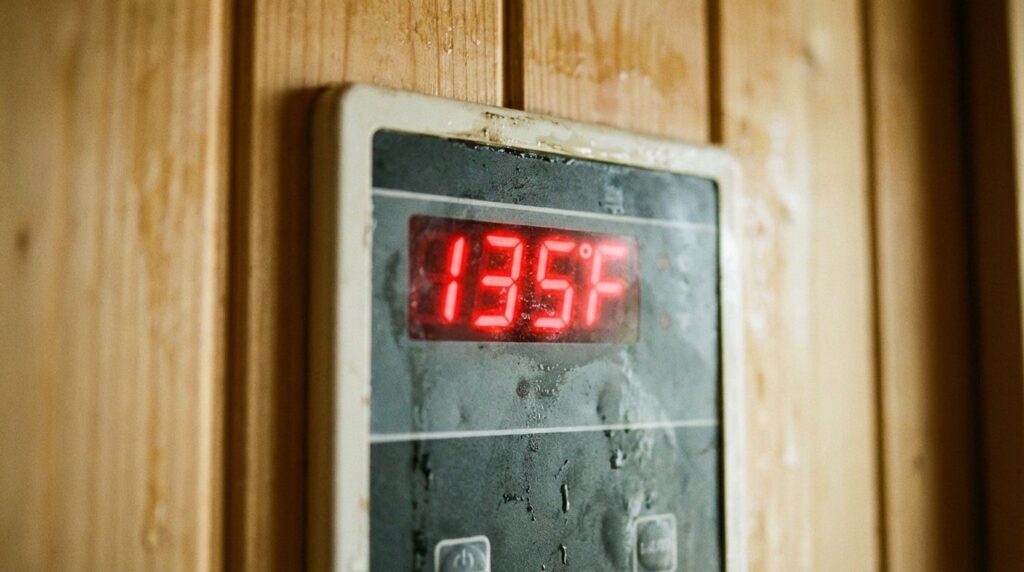
You get a deep sweat at lower temperatures, usually starting around 110 to 140 degrees Fahrenheit. I still remember my first session in San Francisco. It felt like running a brisk mile, but I was sitting down.
My heart rate went up, sweat poured out, and my muscles felt the heat sink in.
Far-infrared light penetrates up to 1.5 inches beneath your skin, according to research published by the National Institutes of Health. This deep penetration helps warm your muscles and tissues directly, which is why the air temperature can stay much lower than in a traditional sauna.
People say these sessions mimic moderate exercise for your heart and blood flow. In some cases, you can burn between 300 and 600 calories in thirty minutes without moving more than a fingertip on your playlist.
Many clients with heat intolerance or sore muscles tell me regular gyms don’t cut it. SaunaCloud’s far-infrared light therapy gets them results without exhausting strain or overheating.
Facilities are now opening that offer full studios dedicated to this kind of workout. It’s a blend of physical activity and relaxation that fits both serious lifters and folks dealing with chronic pain. It helps muscle recovery after strength training or long days on your feet, all while promoting profuse perspiration and keeping resting heart rate healthy.
Benefits of Infrared Sauna Workouts
Infrared sauna workouts bring real health benefits.
You might spot fewer blackheads in the mirror. You could feel your stress fade away as you sweat out inflammation. Your muscles might recover faster after a tough training session.
Let me walk you through the specific ways these sessions can help.
How do infrared sauna workouts reduce muscle soreness and aid recovery?
Muscle soreness fades faster inside a far infrared sauna.
Heat from SaunaCloud’s medical-grade technology increases blood flow, which brings more oxygen and nutrients to tired muscles. After heavy exercising or muscle-building workouts, this boost helps flush out built-up acids that cause pain and inflammation.
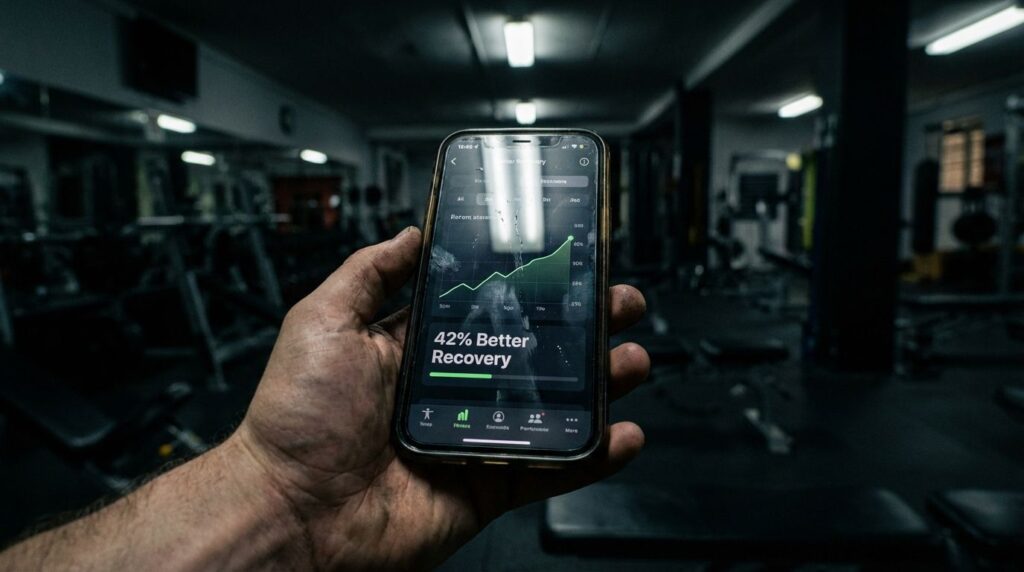
A 2023 study published in Biology of Sport found that a 20-minute infrared sauna session after resistance training led to a 20% greater reduction in muscle soreness compared to passive recovery. The same study showed that athletes experienced 42% to 60% better neuromuscular performance recovery 14 hours after their workout.
The FDA recognizes this type of sauna heat for pain relief and soothing inflammation, making it helpful for those with chronic pain or recovering from sprains and strains.
As muscles heat up, your body produces more heat shock proteins. These support muscle growth and speed up repair after overexertion. Users often mention less delayed onset muscle soreness after combining their workouts with regular sessions in an infrared sauna like ours.
Quick recovery means getting back on your feet sooner, whether you deal with plantar fasciasis or simple workout aches. That makes it easier to chase fitness goals at any age.
How can infrared sauna workouts promote relaxation and relieve stress?
Stepping into an infrared sauna studio feels like getting wrapped in a cozy blanket, far away from daily chaos.
The soft lighting sets the mood for meditation, helping your brain chill out while blood vessels expand and circulation improves. Heat raises body temperature, which tells your system to release more endorphins, the body’s feel-good chemical.

From my own use since 2012, I’ve noticed each session brings a natural high that can last hours. Some call it a “drug-free buzz.” Endorphin boosts lower anxiety levels and even make tough days seem lighter.
This type of sauna session also lowers blood pressure and supports sleep improvement. Those are major pluses if you’re stressed or dealing with type 2 diabetes or high blood pressure issues.
Many SaunaCloud users say they walk out feeling inspired, focused, sometimes even more creative than when they arrived.
In what ways do infrared sauna workouts improve circulation and flexibility?
Infrared sauna workouts get your blood moving, plain and simple.
The heat from the infrared panels goes about 3 centimeters deep into your skin. This boost helps deliver more oxygen and nutrients to tired tissues, like muscles after a tough gym session or even just a long day on your feet.
Increased circulation does not just help with muscle soreness. It also supports faster healing and recovery if you live with chronic pain or inflammation.
Your body’s flexibility often relies on how relaxed your muscles and joints feel. Heat loosens up stiff areas fast, making it easier to stretch or move than before you started sweating buckets in a SaunaCloud cabin.
Many athletes notice that regular sessions lower muscle stiffness while improving their range of motion over time. Even people looking for anti-aging benefits see tighter, healthier-looking skin thanks to boosted blood flow right at the surface level.
Can infrared sauna workouts help with weight loss and burning calories?
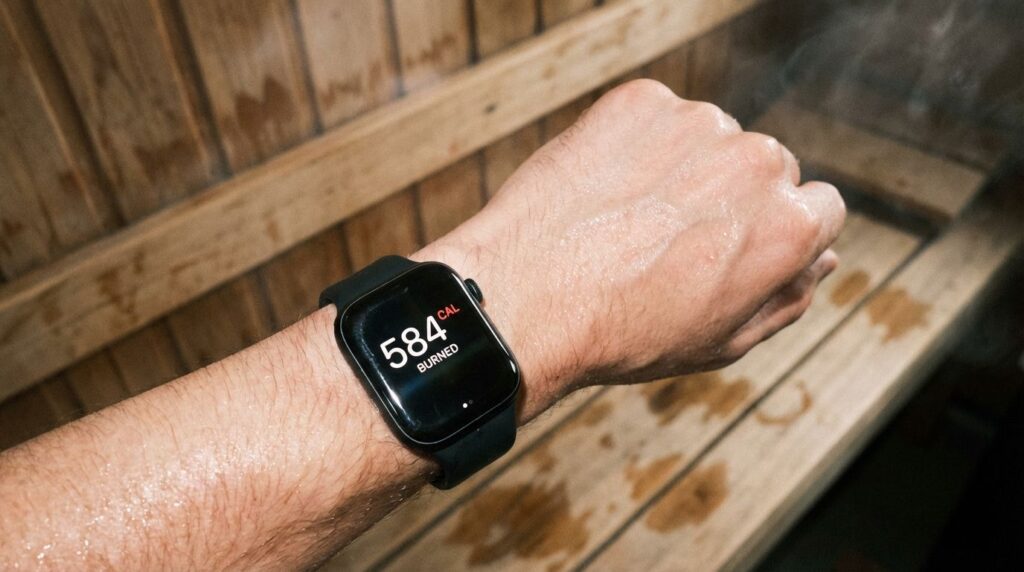
A 30-minute session in a far-infrared sauna can burn between 300 and 600 calories, according to data from multiple studies reviewed in 2025.
That matches the calorie burn of brisk walking or moderate exercise.
Many folks see their waist and legs slim down with regular use, since fat deposits like cellulite often look smoother after steady sessions. Most weight lost is water weight at first, but the real win for physical health is how infrared heat boosts your heart and lung function.
Even if you’re dealing with chronic pain or inflammation, safe daily sweating helps keep your body moving and feeling better. People who are underweight should add healthy fats and alkaline minerals to support balance during detox.
Ready to dig into the facts? Check out SaunaCloud’s infrared sauna weight loss protocol to get science-backed tips on burning calories safely without wild swings.
How Infrared Sauna Workouts Compare to Traditional Saunas
Traditional saunas, used in Finnish and Russian sauna culture, heat the whole room to a scorching 185 to 200 degrees Fahrenheit.
The high air temperature gets your heart pumping, making them great for cardiovascular health and fighting off some illness like the common cold. Many folks gather in these hot wooden rooms as part of their daily routine or even use a russian banya with steam whisks. These communal spaces boost social bonds and memories.
Infrared sauna workouts from SaunaCloud use far-infrared energy that targets your body more than the air around you, keeping temps comfortable at about 110 to 140 degrees Fahrenheit. Sessions last longer because you’re not baking your lungs, but still get benefits like inflammation reduction and chronic pain relief.
The infrared rays sink up to three centimeters into skin tissue. This deeper penetration can help with flexibility, circulation, joint pain from obesity or foot problems, quicker muscle recovery after exercise, and may even improve skin issues like acne or wrinkles faster than traditional styles.
With lower temperatures and quiet privacy instead of chatter-filled groups, many beginners feel less overwhelmed with this style. That’s especially true for those sensitive to heat or living with certain health problems such as cardiovascular disease or pregnancy concerns (always check first if pregnant).
Using thermometers helps keep track of safe settings while enjoying consistent results every time.
Tips for Maximizing Infrared Sauna Workouts
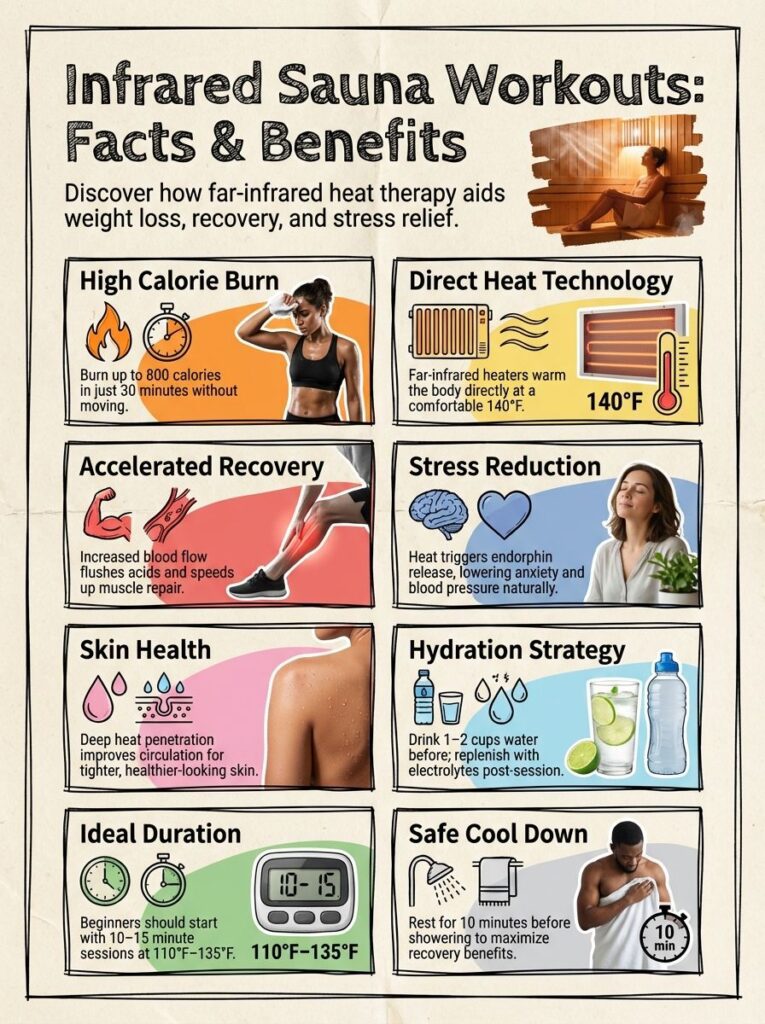
Drinking water is your best friend here, since sweating buckets can leave you feeling wiped out.
Set the right temperature, use a timer, and listen to your body. There’s no badge for overheating while trying to improve heart health or boost growth hormone.
Why is hydration important before and after infrared sauna sessions?
Infrared sauna sessions heat your body, causing sweat to pour out and water levels to drop fast.
With about 60% of the human body made up of water, losing too much can affect temperature control and how blood transports nutrients, even leading to issues with heart health or memory.

Dehydration hits harder during infrared use because you also lose minerals like sodium and potassium through sweat. According to recent hydration research, you can lose 0.3 to 0.5 kilograms of fluid in a typical 20 to 30 minute session, which equals roughly 1 to 2 pounds.
Drinking 16 to 20 ounces of water before stepping in helps a lot. Add another 8 to 16 ounces every 15 to 20 minutes inside to keep things balanced.
Post-sauna recovery needs focus too. Reach for electrolyte-rich drinks such as sports beverages or eat bananas, leafy greens, or nuts after you finish sweating it out in your SaunaCloud session.
This routine replaces key minerals lost while also supporting detoxification so your session delivers benefits like reducing inflammation or boosting growth hormones without putting stress on your system.
What are the ideal duration and temperature settings for infrared sauna workouts?
Start slow if you are new to using infrared saunas.
Beginners should stick with 10 to 15 minute sessions at around 100 to 120 degrees Fahrenheit. After a few tries, most folks can handle longer, up to 20 or even 30 minutes each time.
Old pros push it further, sometimes hitting the forty-minute mark, but that depends on your own body and how hydrated you stay.
Keep the heat between 110 degrees Fahrenheit and 140 degrees Fahrenheit for workouts in an infrared sauna like SaunaCloud designs. That’s much lower than traditional saunas, which go from 150 degrees Fahrenheit up to nearly boiling at 195 degrees Fahrenheit.
Health status matters big time here. If you feel dizzy or weird, step out right away. Don’t tough it out just because others do.
I’ve noticed my post-workout soreness drops when I stick to these ranges, plus stress melts fast after bad days.
How should you cool down safely after an infrared sauna session?
Allow your body at least 10 minutes to cool off, so it can return to a safe temperature.
Sit down in a comfy chair or lie on a clean towel during this cooldown. Many people reach for a cold eucalyptus towel across the neck or forehead. It feels both refreshing and invigorating.
Thirst hits hard after heavy sweating, so drink water right away to help replace all the fluids you lost. If you sweat buckets, grab coconut water or take electrolyte supplements. These help balance salts in your system and may ease cravings for salty snacks.
Some folks crave something salty straight out of the sauna. Aim for nutrient-dense foods like nuts instead of chips.
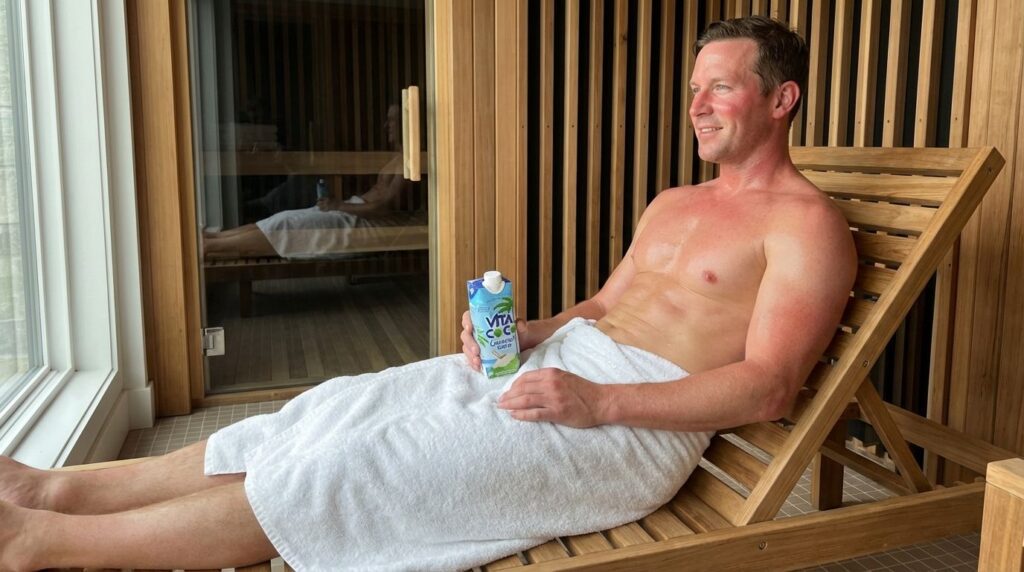
Wait about 30 minutes before hopping into the shower, since detoxification through the skin can keep working even after stepping out. Cooling down slowly boosts recovery. Your muscles relax more and brain derived neurotropic factor keeps flowing, supporting mental health too.
This simple cooldown helps manage muscle inflammation, promotes overall well-being, and gets you ready for whatever comes next outside your SaunaCloud session.
What are the potential risks of infrared sauna workouts?
Heat in infrared sauna workouts can lead to discomfort, especially if you are new.
Some people feel light-headed or notice a drop in blood pressure during or after their session. Airway irritation sometimes happens, mainly for sensitive folks. Severe side effects like burns, fainting, and falls have happened but stay rare.
Men might see lower sperm count and motility with regular use.
People dealing with inflammatory conditions such as multiple sclerosis, depression, dementia, pregnancy concerns, certain illnesses, blood pressure problems, heart issues, skin sensitivities like eczema or psoriasis, or anyone overweight should be extra careful.
Always check with your doctor if you have health questions before starting infrared sauna routines.
Is a Custom Infrared Sauna Right for Your Home?
Whether you are looking to shave minutes off your recovery time, manage chronic pain, or simply create a sanctuary for stress relief in your own home, choosing the right sauna is a big decision. At SaunaCloud, we specialize in medical-grade, far-infrared technology designed to deliver the deepest penetration and the most effective results.
If you’re ready to bring the benefits of heat therapy home but aren’t sure which model fits your space or your health goals, let’s chat.
Have questions about buying a custom infrared sauna?
We’ll walk you through the specifications, the installation process, and help you find the perfect setup to reach your wellness goals.
— Christopher Kiggins
People Also Ask
IGF-1 is a hormone that works alongside growth hormone to repair muscle tissue and reduce inflammation. Infrared saunas trigger this process by creating deep heat stress, which signals your liver to release more of this recovery agent into your bloodstream.
Yes, studies on hyperthermic conditioning show that heat exposure drives a spike in growth hormone, which directly stimulates IGF-1 release. I have seen that your body ramps up this production as a natural defense mechanism to protect and repair your cells.
You will likely notice improved recovery times and reduced soreness within two weeks if you maintain a routine of three sessions per week.
Natural spikes in IGF-1 are healthy for most active adults, but this hormone does promote rapid cell division. If you have a history of cancer, you should consult your doctor before using heat therapy to boost these levels.