In over a decade of building saunas at SaunaCloud, I’ve noticed a pattern: people spend thousands on ‘miracle’ creams and lasers, only to realize their skin still looks tired. The missing piece isn’t another product on the counter; it’s the underlying biology of circulation and cellular energy.
My name is Christopher Kiggins. Since 2012, I’ve been obsessed with how infrared heat and red light therapy interact with human skin. Below, I’m stripping away the marketing fluff to show you the science of how this ‘bio-stack’ supports collagen and why it’s the most consistent tool you can own for long-term skin health.
Key Benefits of Infrared Saunas with Red Light for Skin Health
If you’re shopping for a sauna and your goal is better-looking skin, you want benefits you can actually feel and track, not vague promises.
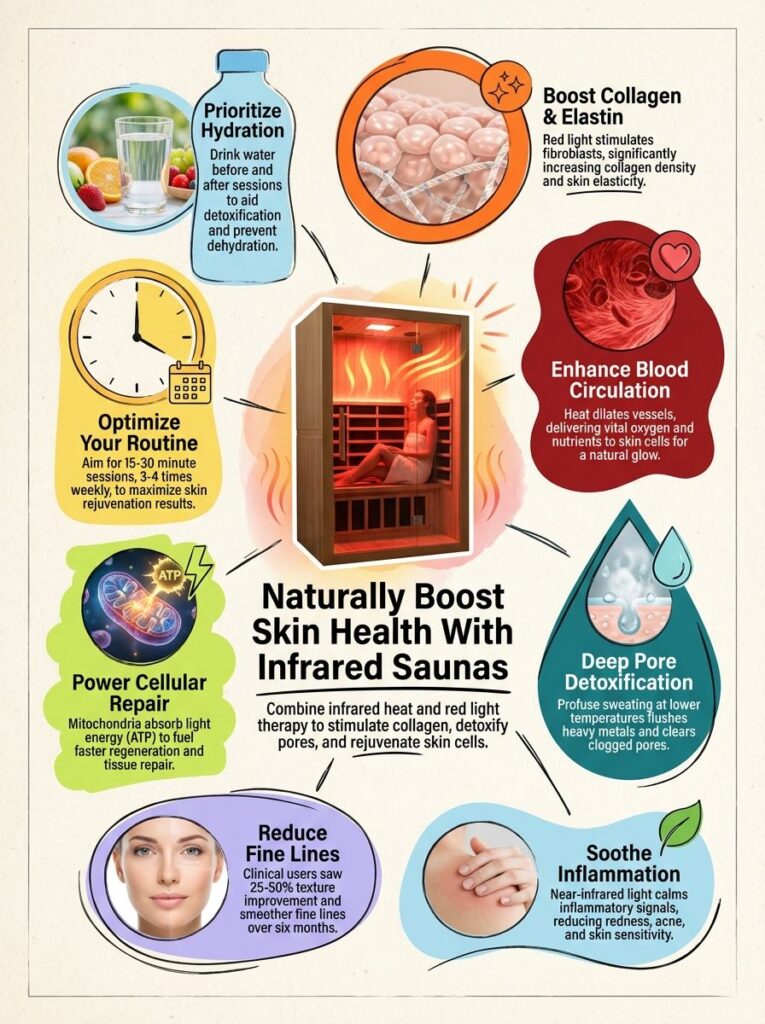
At a high level, red light therapy supports skin rejuvenation by nudging mitochondria, the powerhouse of the cells, to make more ATP for repair work, while infrared heat supports blood flow and sweating. Used together, they can create a steady, low-drama routine that helps your skin look clearer, calmer, and more even over time.
For the deeper biology piece, lab research on human dermal fibroblasts helps explain how collagen and other extracellular matrix proteins respond to different inputs, including growth signals and supportive materials. If you want to see one example of how researchers study dermal fibroblasts and collagen-related changes in a controlled setting, this overview is useful: research on dermal fibroblasts and collagen-related expression.
- Collagen support: helps reduce the look of fine lines and improves skin texture over time.
- Circulation support: helps deliver oxygen and nutrients that support wound healing and tissue repair.
- Pore cleansing: sweating can help loosen oils and debris so your skincare works better afterward.
- Recovery support: many buyers also want pain relief and faster bounce-back after exercise or physical activity, and improved circulation can support that goal.
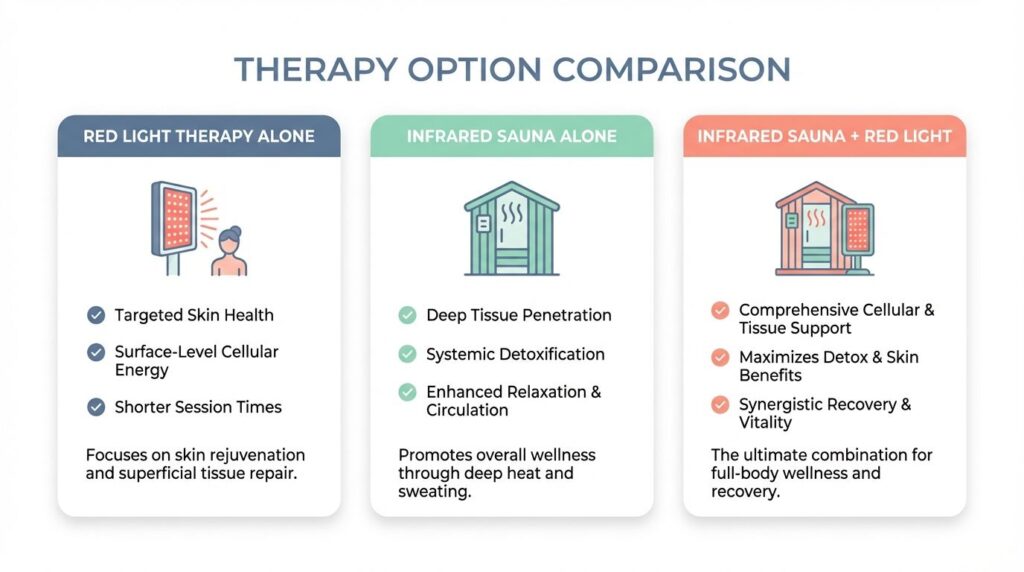
| Option | What it tends to help most | What to watch out for |
|---|---|---|
| Red light therapy alone | Skin rejuvenation, fine lines, redness support, post-procedure recovery support | Device quality varies, follow directions and use eye protection if instructed |
| Infrared sauna alone | Blood flow, sweating, workout recovery, relaxation | Overheating, dehydration, irritation from overuse |
| Infrared sauna + red light | Combined support for circulation, collagen production, and tissue repair habits | More variables to dial in (time, distance to lights, temperature), start low and adjust slowly |
How Do Red Light Infrared Saunas Boost Collagen and Elastin?
This is where dermal fibroblasts matter. These are the “builder” cells in connective tissue that help maintain the extracellular matrix, including collagen fibers and elastin.
Red light therapy supports photobiomodulation, which is the process where visible light and near-infrared wavelengths are absorbed by cell components (often discussed around mitochondria), leading to changes in cellular energy and signaling that can support repair.
Infrared heat adds a second lever: it dilates blood vessels, which helps bring oxygen and nutrients to the reticular dermis, where connective tissue support matters for firmness and texture.
One clinical far-infrared study (conducted in 2004 and published in 2006) used a device that delivered far infrared in the 900 to 1000 μm band, with an energy flux of about 35 mW/cm2, while keeping the device surface around 32–35°C during treatment.
In that same paper, lab testing on dermal fibroblasts reported collagen increasing from 4.6 to 36.46 μg/mL and elastin from 4.58 to 29.31 μg/mL after up to five hours of infrared exposure, showing a time-linked response in that specific setup.
If you’re buying a sauna for skin, look for controllability first: consistent heat, consistent light exposure, and a routine you can repeat.
- Action step for buyers: prioritize simple controls (timer plus adjustable intensity) over extreme heat or long sessions.
- Action step for results: take standardized photos every 4 weeks in the same lighting, the same distance, and the same facial expression.
- Common pitfall: chasing intensity. More time or more heat can backfire as irritation, dryness, and inconsistent use.
Next, let’s cover why better circulation often shows up as better-looking skin.
Why Does Improved Blood Circulation Enhance Skin Glow?
Your “glow” is not magic. It’s mostly circulation, hydration status, and the condition of the skin barrier.
Heat exposure causes vasodilation, which increases blood flow at the surface. That can temporarily improve how your skin looks, and over time it can support the kind of environment that helps tissue repair.
A practical reference point: Harvard Health notes that in a hot sauna setting, skin temperature can rise to about 104°F within minutes, pulse rate can jump by 30% or more, and many people sweat about a pint during a short session.
- Action step: if your face tends to flush easily, lower the cabin temperature, shorten the session, and sit farther from the heat source.
- Action step: rinse off after to remove sweat and residue that can re-clog pores and trigger irritation.
- Common pitfall: going straight from sauna heat into hot showers, which can worsen dryness and redness for sensitive skin.
How Does Sweating Promote Deep Detoxification?
Sweat is great for pore cleansing, but I try to keep “detoxifying” claims realistic.
Some studies do find trace metals in sweat, but the bigger story for sauna buyers is skin hygiene: sweat loosens oils and debris, and your post-session rinse is what decides whether your pores stay clear or re-clog.
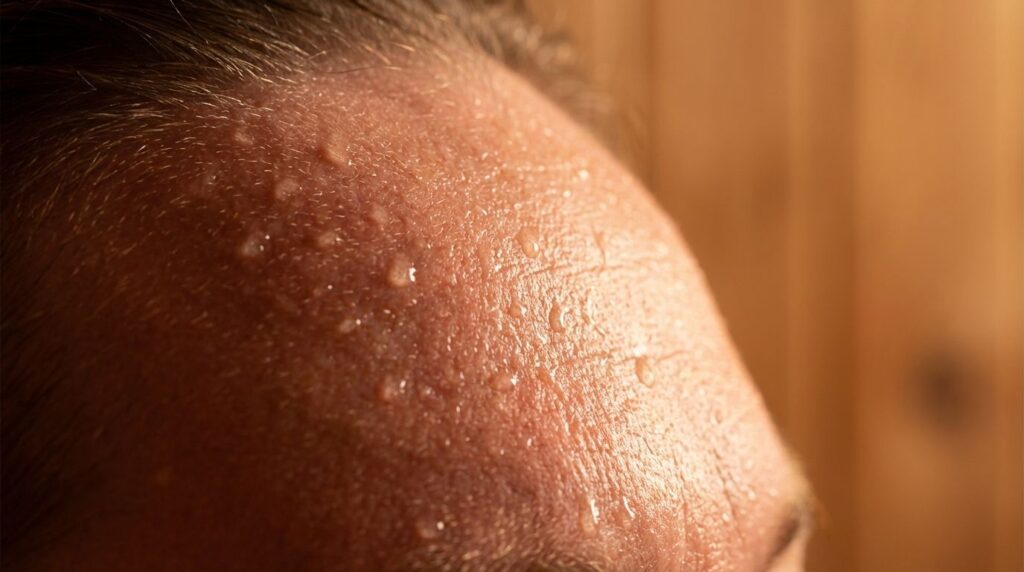
Think of sweating as “softening and lifting,” and your shower as the “reset.” The combo is what helps blackheads and congestion.
- Bring a clean towel: use it to blot sweat, not scrub. Scrubbing can cause irritation.
- Shower soon after: use a gentle cleanser, especially if you wear sunscreen, workout products, or heavy skincare.
- Rehydrate: water first, then electrolytes if you tend to sweat heavily or get cramps.
If you want the research nuance, Cleveland Clinic cautions that “sweating out toxins” is still controversial. I treat sweating as a skin-cleansing tool first.
In What Ways Do Saunas Reduce Inflammation and Calm Skin?
Heat and light can help calm inflammation, but the dose matters.
Red light therapy is often described as a gentle option that can support recovery and reduce irritation for some people, and it’s commonly used as a complementary therapy in dermatology settings, not a stand-alone cure.
For sauna buyers, that translates into a simple plan: aim for a comfortable session that you can repeat, and avoid “pushing through” stinging, itching, or tightness.
- If you have rosacea: use lower heat, shorter time, and skip the sauna during a flare.
- If you’re eczema-prone: watch for itch. Sweating can trigger itching for some people, so rinse quickly and moisturize.
- If you use active skincare: be careful with strong retinoids and acids around sauna days, especially if you’re already dry or irritated.
How Do Saunas Support Cellular Rejuvenation for Skin Repair?
I’ve seen that the best “skin repair” routines are the ones people can stick to, and that usually means shorter sessions done consistently.
Red light therapy is usually discussed in terms of photobiomodulation. In plain English, you’re delivering a measured amount of visible light to influence cellular activity, including the energy systems that support tissue repair.
A key buying tip here is that specs matter more than marketing. Some photobiomodulation reviews note common clinical ranges that keep power density under 100 mW/cm2 and often land energy delivery around 4 to 10 J/cm2 at the target tissue, but protocols still vary widely across studies.
Infrared heat supports the “delivery side” of the equation by improving blood flow, which helps move oxygen and nutrients to human skin and can support wound healing conditions in a broad sense.
I link what this looks like in a practical routine here: what it does to your body.
Next, let’s break down how infrared (IR) and red light work, so you can make smarter buying choices.
How Red Light Infrared Saunas Work
When you hear “infrared,” think electromagnetic spectrum. Infrared radiation sits just beyond visible light, and it warms tissue differently than a traditional hot-air sauna.
Instead of relying mostly on heating the air, infrared light helps warm your body more directly. That’s why many infrared sauna users sweat at lower cabin temperatures than they’d tolerate in a traditional sauna.
Harvard Health describes infrared saunas as typically running around 120°F to 140°F, which is a big reason sauna buyers choose them for comfort and consistency.
How Does Infrared Heat Penetrate Deep into the Skin?
Infrared is usually described in three bands: near-infrared, mid-infrared, and far infrared. These bands behave differently in tissue, and they can feel different during a session.
For skin goals, I care less about the marketing labels and more about whether the sauna helps you hit a safe, repeatable routine without overheating.
In a published far-infrared facial study (mid-2000s), the device emitted 900 to 1000 μm far infrared at about 35 mW/cm2 and kept the device temperature around 32–35°C on the face during 15 to 20 minute sessions. That “moderate temperature, frequent use” structure is a helpful lesson for sauna buyers who think hotter is always better.
- Action step: start lower than you think you need (example: 5 to 10 minutes), then add time gradually.
- Action step: choose a unit with clear temperature sensing and a reliable timer you will actually use.
- Common pitfall: guessing your session intensity based on how much you sweat. Sweat rate varies widely and does not automatically mean better results.
What Is Red Light Therapy and How Does It Stimulate Cells?
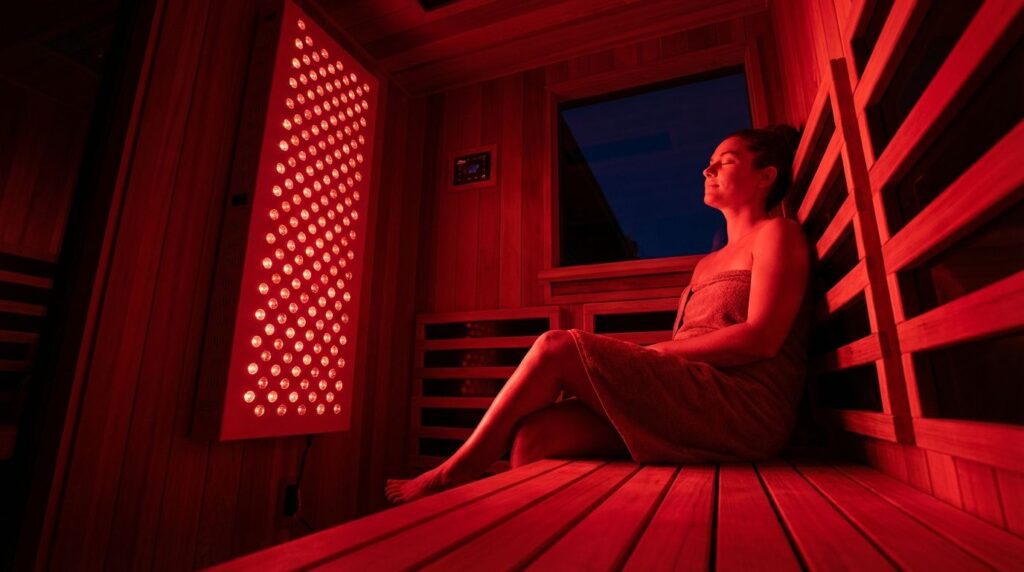
Red light, at the right dose, can support recovery and calm skin, but it still needs a smart routine.
Red light therapy uses visible red and near-infrared wavelengths. In many setups, that means roughly 600 to 1100 nm, and the goal is to deliver a consistent dose to support photobiomodulation.
The American Academy of Dermatology notes that at-home LED devices can produce subtle to noticeable improvements for concerns like fine lines, rough-feeling skin, discoloration like redness, and loose skin, but results vary by device and protocol.
They also point out something sauna buyers should not ignore: FDA clearance is about safety and intended use, and the organization recommends selecting FDA-cleared devices and following directions closely, including wearing eye protection when instructed.
- If you have a darker skin tone: talk with a dermatologist before using at-home red light, since visible light sensitivity can increase the risk of hyperpigmentation.
- If you take photosensitizing medications: get medical advice first, since light exposure can interact with certain medications and treatments.
- Budget reality check: the same dermatology guidance notes many at-home devices are expensive, often ranging from about $100 to more than $1,000, so it pays to choose carefully.
How Do Infrared Heat and Red Light Work Together for Skin Health?
Here’s the simple way I explain the combo to buyers: infrared heat helps with circulation and sweating, and red light therapy helps with cellular energy signals that support skin rejuvenation.
Together, they can support collagen production habits, clearer pores, and steadier recovery after workouts or laser resurfacing, as long as you keep the routine gentle and repeatable.
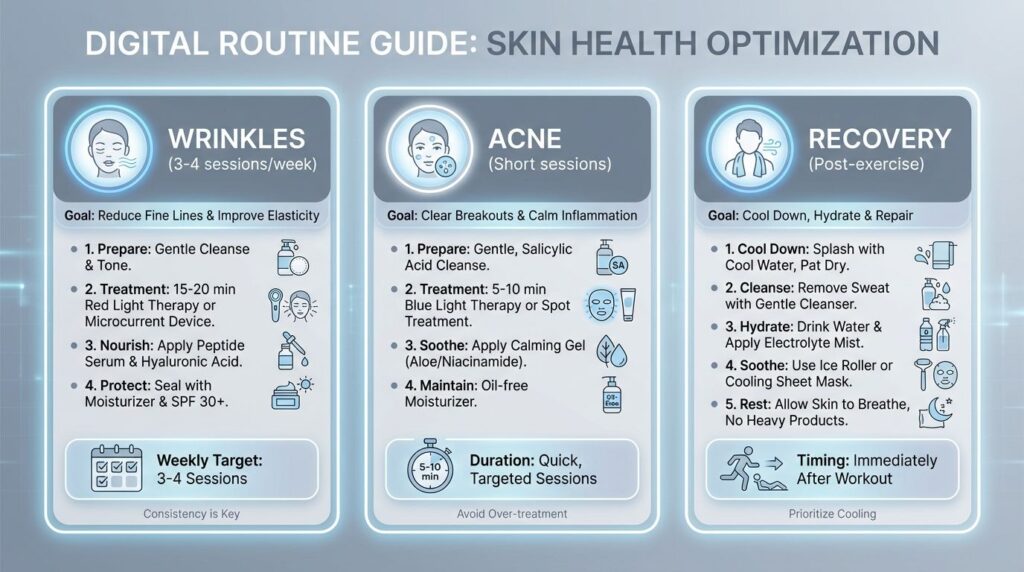
| Your goal | What to emphasize | A simple routine |
|---|---|---|
| Wrinkles and fine lines | Consistency and dose control | 3 to 4 sessions per week, moderate heat, steady red light exposure |
| Acne and congestion | Hygiene after sweating | Shorter sessions, rinse quickly, gentle cleanse, moisturize |
| Recovery and pain relief | Circulation and relaxation | Post-exercise sauna therapy with hydration and cooldown |
If you recently had an in-office procedure, ask your dermatologist. Dermatology guidance has noted that some patients who received red light therapy after laser treatment had less discoloration and swelling, but timing and protocol matter.
Specific Skin Improvements from Red Light Infrared Saunas
Let’s get specific. If you’re deciding whether a red light infrared sauna is worth it, you want to know which skin changes are realistic, and which ones usually need other tools.
My bias is toward measurable wins: improved texture, fewer fine lines, calmer-looking skin after physical activity, and better recovery support after stressors like workouts or travel.
Can Saunas Reduce Wrinkles and Fine Lines?
Fine lines respond best to consistency, not marathon sessions.
Wrinkles and fine lines tie back to collagen fibers, elastin, hydration, and cumulative irritation (think ultraviolet radiation, smoking, and barrier damage).
A controlled trial of red and near-infrared photobiomodulation (early 2010s) treated participants twice per week and tracked improvements like skin roughness and fine lines, supporting the idea that steady use can matter more than extreme intensity.
- Track one area: pick crow’s feet or forehead lines, and monitor that area for 8 to 12 weeks.
- Pair with sunscreen: daily sun protection helps you keep what you gain from collagen production support.
- Don’t stack irritation: if you tan, over-exfoliate, or do harsh peels, your results usually look worse, not better.
How Do Saunas Improve Skin Tone and Texture?
Texture and roughness are where heat and light often shine. Better blood flow plus a consistent photobiomodulation routine can support smoother-looking skin over time.
In the 2006 far-infrared facial study, participants reported good (51 to 75%) improvements in skin texture and roughness after six months, and they also reported fair (25 to 50%) improvement in overall color tone. That’s a meaningful outcome for buyers who want visible change without ablative downtime.
- Action step: aim for a 6 to 12 week trial window before you judge results.
- Action step: keep your camera setup consistent. Changing lighting makes “before and after” photos useless.
- Common pitfall: expecting overnight tone change. Tone shifts are often slower than texture improvements.
How Do Saunas Help Clear Pores and Prevent Breakouts?
Sweating can help loosen oils and debris, which is why many people notice fewer blackheads when they stay consistent.
The catch is what you do after. If sweat dries on your skin, it can leave residue behind, and that can trigger irritation or re-clog pores.
- Rinse promptly: a quick shower and gentle cleanser usually beats a complicated routine.
- Use a clean towel: face towels that sit in the bathroom for days are a breakout trap.
- Reset your products: if you’re acne-prone, keep post-sauna skincare simple (hydrating, non-greasy, fragrance-light).
Can Saunas Address Hyperpigmentation and Uneven Skin?
This is the part I like to be honest about: hyperpigmentation is not the easiest target for infrared saunas or red light therapy.
In the same six-month far-infrared facial study, hyperpigmented lesions did not show meaningful improvement, even though texture and roughness improved.
Also, dermatology guidance warns that people with darker skin tones may be more sensitive to visible light and may be at higher risk for hyperpigmentation from at-home visible light devices.
- Use saunas for quality: think texture, hydration habits, and fine lines.
- Use targeted care for pigment: ask a dermatologist about options that match your skin type.
- Protect your progress: sunscreen matters, especially if you’re working on uneven tone.
How Do Saunas Manage Acne and Psoriasis Symptoms?
Acne is often helped by routines that reduce inflammation and support consistent cleansing. A red light infrared sauna can fit into that, but it’s still a support tool, not a replacement for dermatology care.
Psoriasis is a separate conversation. For many people, the most established light-based treatments are medical phototherapy options, and dermatology organizations emphasize doing this under medical guidance rather than using tanning beds.
Visible light research is interesting though. A small double-blind randomized study (early 2010s) found that both blue and red light improved psoriasis plaques, and redness (erythema) improved more steadily with blue light than with red light in that setup.
- If you have psoriasis: ask your dermatologist before you experiment with light therapy at home, especially if you also have photosensitivity.
- If you have active flares: keep sauna heat lower and sessions shorter, overheating can worsen irritation.
- If you’re acne-prone: keep your post-session skincare consistent, and avoid heavy occlusive products right after sweating.
Maximizing the Benefits of Red Light Infrared Saunas
If you want real skin results, treat sauna therapy like a training plan. You do not need extreme sessions. You need repeatable sessions.
Set a timer, drink water, and pay attention to how your skin feels the next day, not just how it looks right after you step out.
How Often Should You Use a Red Light Infrared Sauna?
A practical target for many sauna buyers is three to four sessions per week. Start with 15 to 20 minutes, then add time gradually if your skin and hydration stay happy.
Cleveland Clinic’s guidance for infrared sauna use leans conservative: start low and slow (example: about 110°F for 5 to 10 minutes), keep sessions below 30 minutes, and limit use to about three to four times per week.
Red light therapy and photobiomodulation work together with consistent dosing, so a steady weekly rhythm often beats random long sessions.
For a clear, step-by-step walkthrough, see step-by-step guide for beginners. It covers bench setup, LED arrays, and safety tips I personally use.
Why Is Staying Hydrated Important Before and After Sessions?
If you want better skin, hydration is not optional. Sweating is literally fluid leaving your body.
Harvard Health notes that many people sweat about a pint during a short sauna session, and Cleveland Clinic recommends bringing water into the sauna, with electrolytes as an option for heavier sweating.
- Before: drink water, and skip alcohol.
- During: sip if you’re in longer than 10 to 15 minutes.
- After: rehydrate, then add electrolytes if you get headaches, cramps, or feel wiped out.
Proper hydration supports circulation, skin barrier function, and your ability to stick with sauna therapy without feeling drained.
What Skincare Should You Do After Sauna Treatments?
After a session, your goal is to calm the skin and keep pores from re-clogging.

- Cool down: step out and let your body temperature drop naturally for a few minutes.
- Cleanse gently: lukewarm water and a mild cleanser work well for most people.
- Rehydrate the barrier: apply a simple moisturizer. If you like serums, hyaluronic acid is a common, gentle choice.
- Protect: if you go outside, wear broad spectrum sunscreen.
If you use stronger actives (like retinoids or exfoliating acids), consider separating them from sauna sessions until you know how your skin responds.
How Does a Healthy Diet Support Sauna Skin Benefits?
Your sauna routine can support skin rejuvenation, but your building blocks still come from food and hydration.
For collagen production support, focus on protein plus nutrients that support connective tissue, and keep it simple: vitamin C-rich fruits and vegetables, enough total calories, and plenty of fluids.
If you take supplements, talk with a healthcare professional first, especially if you have medical conditions or take prescriptions.
Safety and Considerations for Infrared Sauna Use
I love saunas, but I’m not casual about safety. A red light infrared sauna should feel good while you’re in it, and you should feel normal afterward.
If you feel dizzy, nauseated, or overly wiped out, that’s your cue to reduce heat, reduce time, or pause your routine and talk with a clinician.
What Skin Sensitivities Should You Know About?
Some skin reactions are common and usually short-lived. In a six-month far-infrared facial study published in 2006, 80% of participants developed mild transient erythema that lasted a few hours, and there were no pigmentary alterations or burns reported in that group.
That same study reported a few cases of mild dryness and scaling, and one perioral dermatitis flare that resolved without treatment.
Dermatology guidance on red light therapy also notes that common side effects tend to be mild, like temporary discomfort or irritated skin.
- If you’re sensitive: shorten your session first, then lower temperature second.
- If you recently had laser resurfacing: ask your dermatologist about timing before you do heat or light sessions.
- If you take prescriptions: check for photosensitivity warnings, and get medical advice if you’re unsure.
How Do You Choose the Right Sauna Settings?
The “right” setting is the one you can repeat safely. For most sauna buyers, that means moderate temperature, a timer you respect, and enough recovery between sessions.
As a starting point, a lot of people do well with infrared sauna settings in the 120°F to 140°F range, with shorter sessions at first, then gradual increases as tolerated.
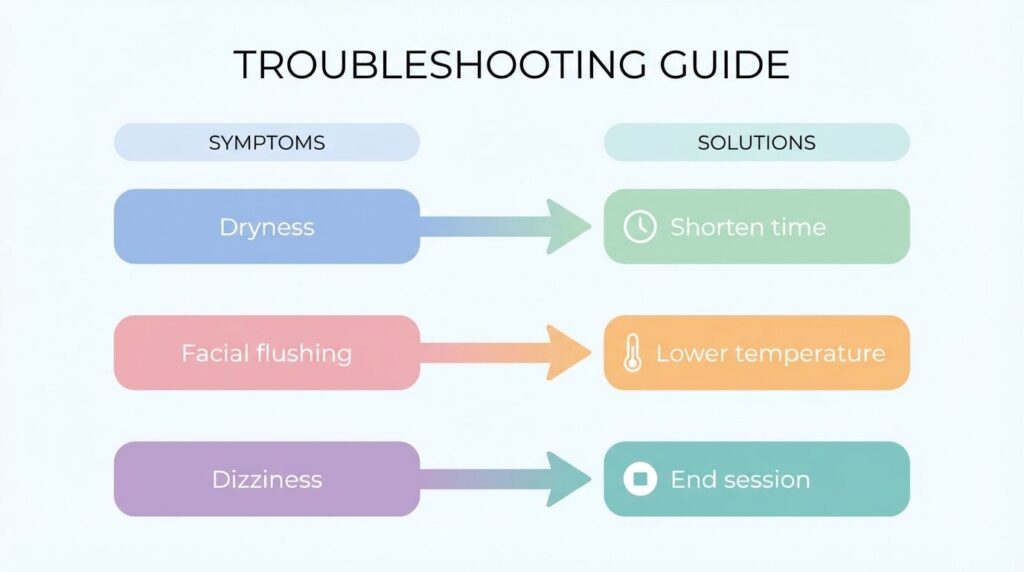
| If you’re seeing this | Try this adjustment |
|---|---|
| Dryness or tightness | Shorten time, rinse sooner, moisturize more simply |
| Facial flushing that lingers | Lower temperature, increase distance from heat, reduce frequency |
| Dizziness or headache | End the session, rehydrate, add electrolytes, reduce next session |
| No change after a month | Increase consistency before intensity, track with photos every 4 weeks |
If you have chronic conditions, talk with a healthcare professional before you commit to a routine.
Ready to build your perfect skin-health sanctuary?
If you’re shopping for an infrared sauna with skin health as your primary goal, it pays to move past the marketing hype and look at the specs. Red light therapy and infrared heat are powerful tools for collagen support and circulation, but the real results come from Having a setup that is comfortable and consistent enough to use every week.
I’ve been in the sauna industry since 2012, and since founding SaunaCloud in 2014, I’ve helped thousands of clients navigate the technical details of light therapy and heat exposure.
I specialize in designing custom red light infrared saunas tailored to your specific goals and space. If you’re looking for a unit that prioritizes precise temperature control and high-quality LED arrays for photobiomodulation, I’d love to help you get it right.
Book a call or just call me directly (1-800-370-0820) to discuss a custom build for your home.
People Also Ask
They bathe skin in red and deep infrared light. That wakes up the cell powerhouses, boosts blood flow, and helps build skin protein, so damaged skin can repair faster.
Yes, it uses light and mild heat, it works without drugs and with low risk for most people.
Some users notice a glow after one or two sessions. For deeper repair, plan weeks of regular use, often four to eight weeks. Think of it like watering a plant, small acts add up.
They help, but they do not replace sunscreen or medical advice. Use them as a tool in your skin routine, for best results.
Choosing a sauna depends on your space, your heat tolerance, and your specific goals (like anti-aging vs. recovery). If you want a setup tailored to you, contact me for a personalized consultation.