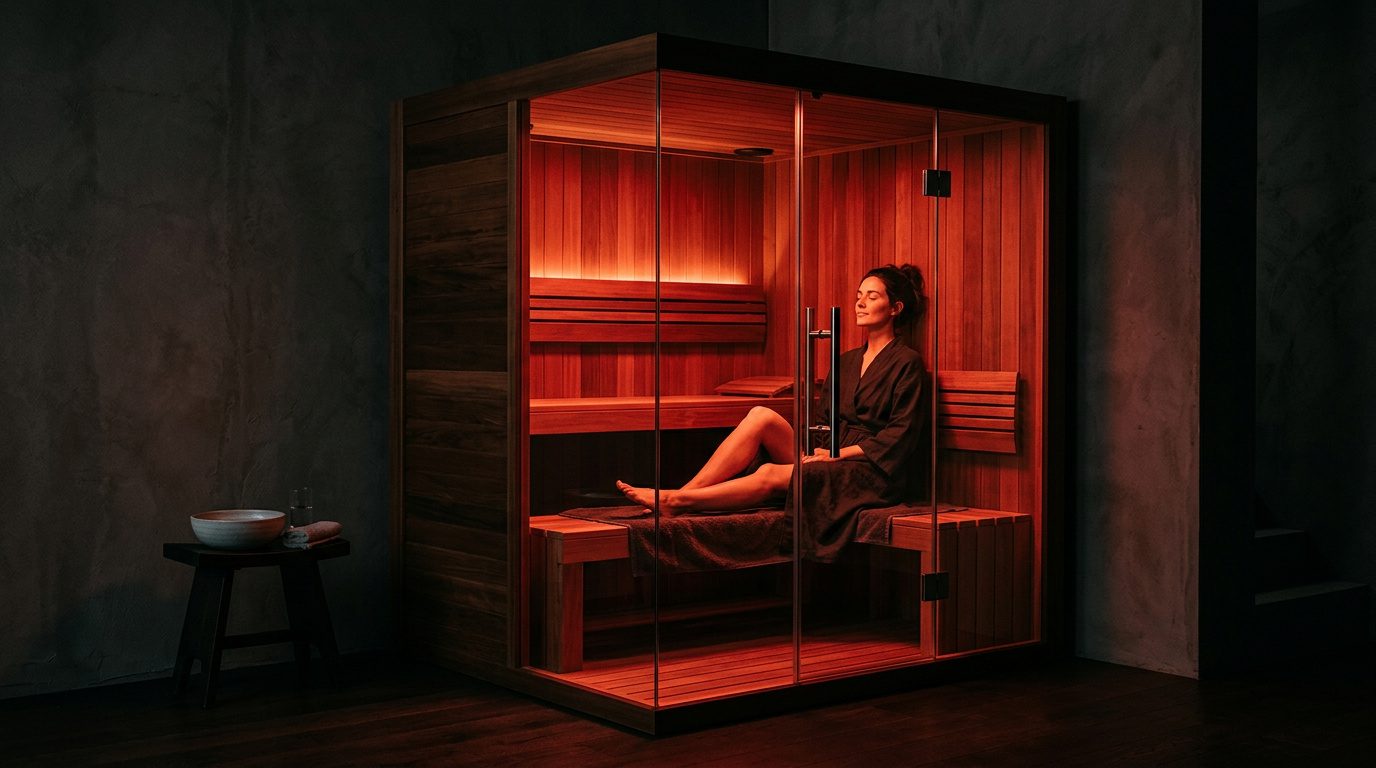
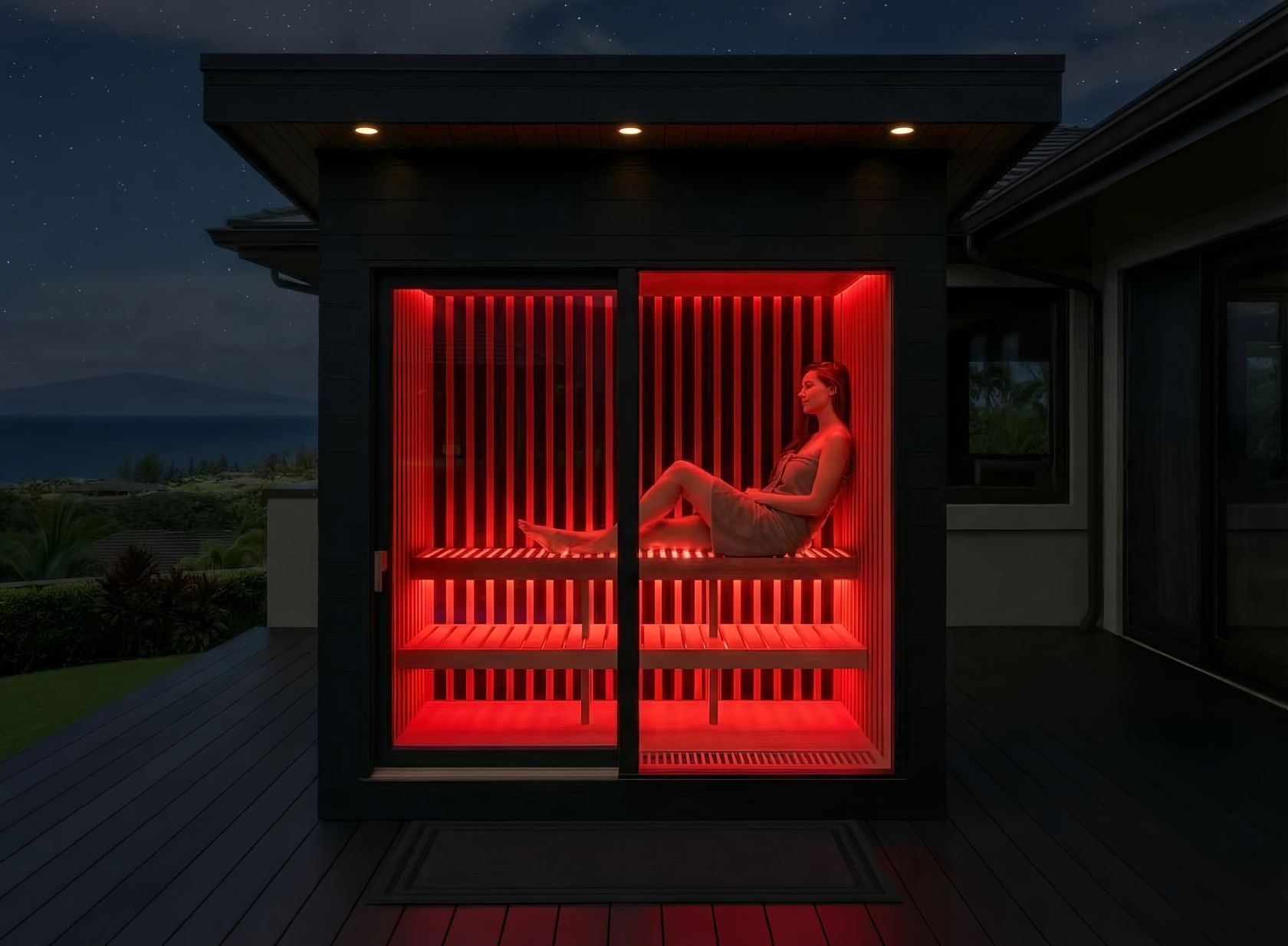
Have you ever wondered why red light therapy feels so different from a sweaty, high-heat traditional sauna?
The mix-up is common, and it’s how people end up using an infrared sauna the wrong way. Infrared saunas use light to warm your body directly, and they usually run cooler than a traditional sauna, often around 110 to 120°F.
If you’re shopping for (or already own) a red light infrared sauna, I’m going to show you the exact step-by-step routine I use for safe heat therapy, skin health, and recovery-friendly sessions.
I started using saunas in 2012, and I founded SaunaCloud in 2014, so I have hands-on experience with infrared sauna design and red light therapy. I write from real use, and I speak plain.
Let’s walk through a simple setup you can repeat, and then I’ll share the small buying details that make a big difference once the door closes.
How to Prepare for a Red Light Infrared Sauna Session
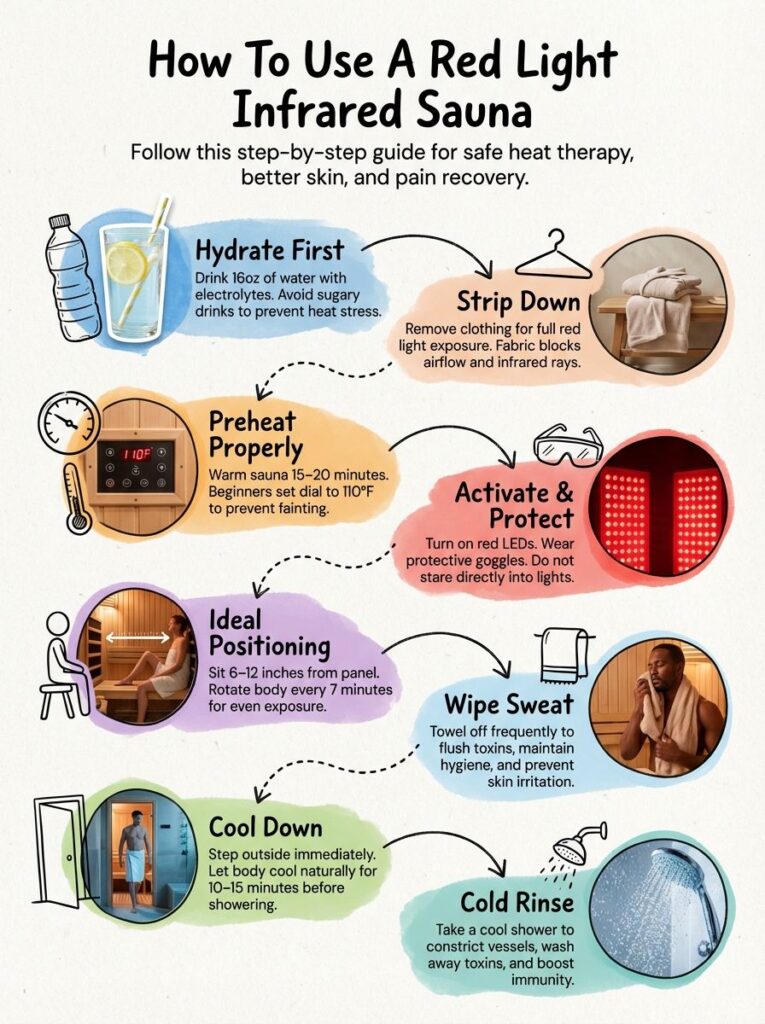
Great sessions start before you ever turn on the heaters. If you want better comfort and better results, get the basics right: hydration, clean skin, a realistic first-time temperature, and a setup that makes it easy to exit fast if you feel off.
Here’s the pre-session checklist I give sauna buyers who want a routine they can actually stick to.
- Wait 1 to 2 hours after a heavy meal, so you don’t feel nauseated or sluggish in the heat.
- Hydrate first, then bring a bottle you can sip from (glass or metal holds up well).
- Preheat 10 to 15 minutes, then confirm temperature at seated chest height with a separate thermometer if you have one.
- Remove jewelry (rings, necklaces, watches), because metal can heat up quickly.
- Bring two towels, one to sit on, one to wipe sweat.
Skip alcohol and don’t sauna when you’re sick or feverish. You’re trying to create helpful heat stress, not pile stress on top of stress.
How should I hydrate before using a red light infrared sauna?
Drink at least 16 ounces of clean water before you enter the sauna. If you’re prone to headaches, cramps, or that wiped-out feeling after heat therapy, add electrolyte minerals so you replace more than just water.
Here’s a practical way to make hydration measurable: weigh yourself before and after a session. Sports medicine research often flags about 2% body-mass loss as a meaningful dehydration threshold, and a controlled infrared sauna protocol has been shown to push people into that range with enough time and heat. Treat your scale like feedback, then adjust water and electrolytes next time.
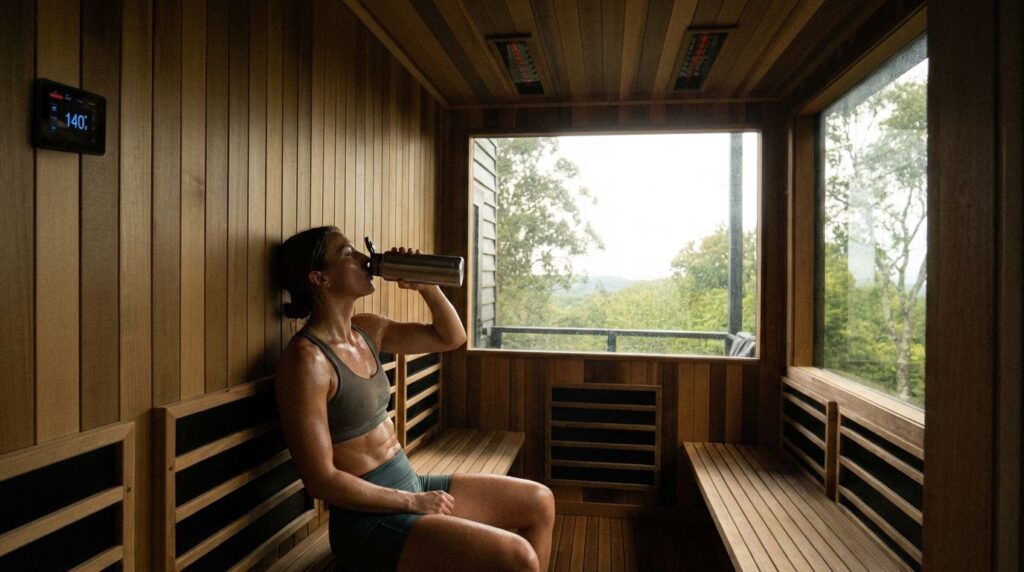
Keep sips coming, electrolytes help you sweat smarter.
Watch for thirst, dark yellow urine, dry mouth, fatigue, dizziness, or muscle cramps as signs of dehydration. Avoid sugary drinks right before the sauna since they can leave you feeling worse under heat stress.
Why is it important to remove clothing before a sauna session?
Naked skin makes it easier for heat and light to reach the areas you’re targeting. With red light and near-infrared, you’re relying on direct exposure, so fewer layers usually means fewer variables.
This is also why photobiomodulation works better with clean, uncovered skin, and why some people pair light sessions with the heat response you get from sauna use, including pathways related to heat shock proteins.
Two simple safety upgrades:
- Remove jewelry to avoid hot spots and burns.
- If you prefer coverage, choose lightweight cotton, and skip synthetic fabrics that trap sweat and feel clammy.
As a rule, keep your skin clean, sit on a towel, and keep the setup easy to adjust. If you’re buying, look for benches and backrests that let you comfortably change position without sliding or touching hot hardware.
How do I preheat the sauna and what temperature should I use as a beginner?
Preheat the sauna for 10 to 15 minutes so the cabin feels steady when you sit down. Many infrared saunas heat up faster than traditional units, but the extra few minutes helps your first session feel smoother and less “spiky.”
For most beginners, I recommend starting around 110 to 120°F for 10 to 15 minutes, then building up slowly. This lower range is easier on cardiovascular health and lowers fainting risk, especially if you tend to stand up too fast after heat exposure.
If you want a simple ramp plan you can follow without guessing:
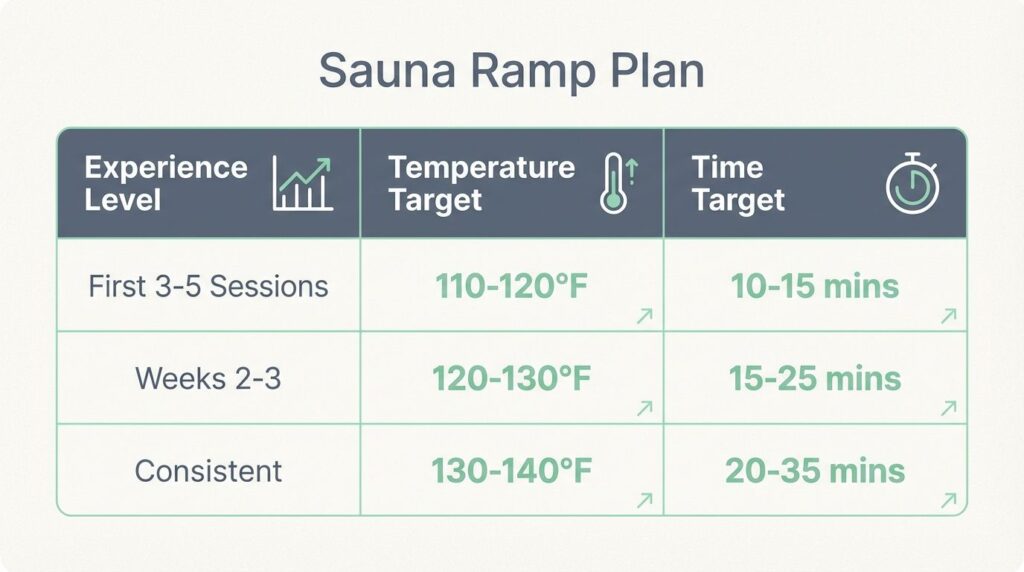
| Experience level | Temperature target | Time target | Goal |
|---|---|---|---|
| First 3 to 5 sessions | 110 to 120°F | 10 to 15 minutes | Finish feeling better than when you started |
| Weeks 2 to 3 | 120 to 130°F | 15 to 25 minutes | Build tolerance without crashes later |
| After you feel consistent | 130 to 140°F | 20 to 35 minutes | Find your repeatable “sweat zone” |
Steps to Use a Red Light Infrared Sauna
Once you’re prepped, your session should feel predictable. Buyers love fancy features, but the real win is having controls that make it easy to repeat a good session, and easy to stop a bad one.
Here’s the straightforward sequence I use.
- Power on, then preheat 10 to 15 minutes.
- Set temperature and timer before you sit down, so you’re not fiddling while you’re already hot.
- Select your mode (far infrared, near-infrared, visible spectrum, or your unit’s available mix).
- Put on eye protection if you’ll be facing bright LEDs.
- Sit, breathe, and check in at minute 5 and minute 10.
- Exit early if needed, dizziness and nausea are not “progress.”
If you like numbers, track your heart rate. A large health-system overview notes that sauna bathing can push heart rate into a roughly 100 to 150 beats-per-minute range, which is a helpful reminder that heat therapy is a real physical load, even when you’re sitting still.
How do I turn on the sauna and set the timer?
I preheat mine for 10 minutes, then set the timer, and the session flows.
Use your control panel to turn the sauna on and set your temperature. Then set the timer right away. That way, if you start feeling lightheaded, you can focus on your body instead of searching for buttons.
For many infrared saunas, a good buyer-friendly default is a timer that supports short sessions (10 to 20 minutes) and longer sessions (30 to 45 minutes), plus an auto shut-off you can trust.
If your sauna supports app control, some systems use the SaunaLogic mobile app to manage time, temperature, lighting, and schedules. If you plan to rely on remote controls, prioritize models that include safety features like door sensors or built-in lockouts, because convenience should never outrun safety.
How do I activate red light therapy and should I wear eye protection?
Turn on the LED panel, select the red or near infrared setting, and keep the session short at first. A common, buyer-friendly starting point is 10 to 20 minutes per session.
For light therapy, the “what” is the wavelength, and the “so what” is how deep it tends to target:
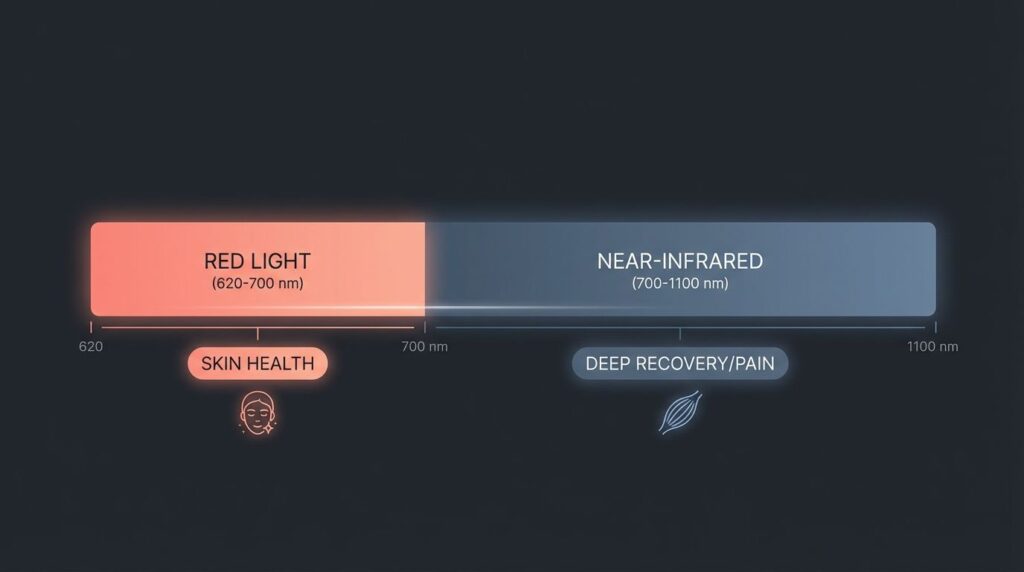
- Red light (roughly 620 to 700 nm) is often used for surface-level goals like skin health, texture, and the look of scars and wrinkles.
- Near-infrared (often discussed around 700 to 1100 nm) is commonly used for deeper comfort goals like post-workout recovery and chronic pain support.
Now the key buying lesson: photobiomodulation can follow a “sweet spot” pattern where more is not always better. A lab study looking at red (660 nm) and near-infrared (810 nm) even described ATP changes in a biphasic way, which is a fancy way of saying dose matters, and overdosing is a real thing.
On eye protection, I keep it simple. If you’re facing a bright panel, wear protective goggles and don’t stare into the LEDs. If your goal is to treat facial skin around the eyes, angle the panel slightly and keep your eyes closed, or talk with a clinician if you have eye conditions and want to experiment carefully.
If you want more context on stacking heat and light in one routine, read my breakdown of what a red light infrared sauna can do, including how the light spectrum and heat therapy can fit into an integrative health plan.
What is the best way to sit or recline in the sauna?
After you activate red light therapy and set your session, pick a position you can hold comfortably. Comfort matters because it helps you stay still, breathe well, and avoid touching heaters or hot hardware.
Use these positioning rules:
- Keep your spine relaxed and your shoulders down so your breathing stays easy.
- Rotate every 5 to 10 minutes if you’re trying to get more even infrared light exposure.
- Avoid hot spots by not pressing one body part against a heater panel for too long.
If your sauna includes chromotherapy (color lighting), treat it like a mood tool. It’s great for relaxation, but don’t let it distract you from the basics: heat, hydration, and safe timing.
How can I use relaxation techniques like meditation or music during the session?
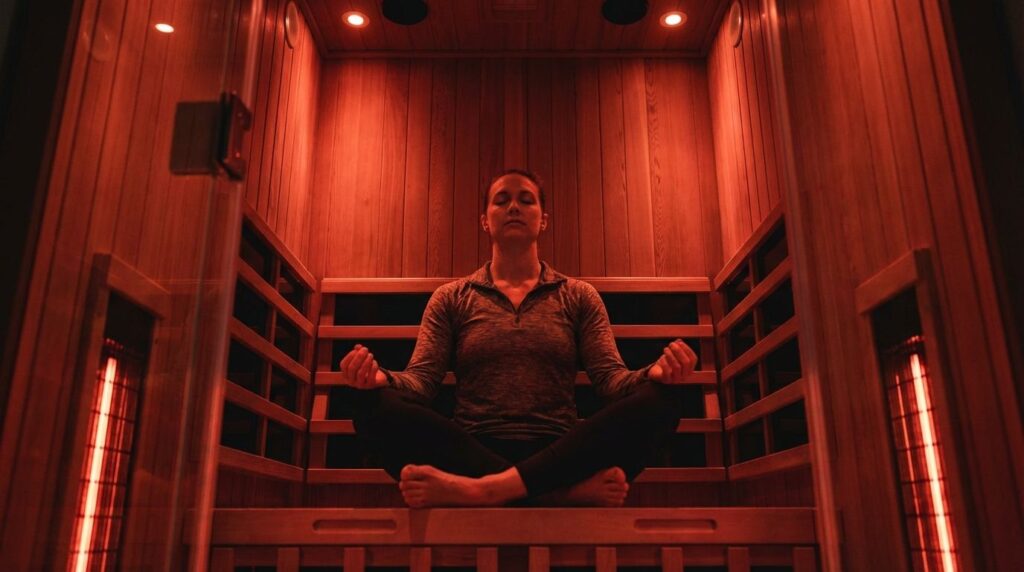
Breathe slow, scan your body, let the light and heat do the rest.
I like a low-heat first 10 to 15 minutes when I’m using the sauna for relaxation. It’s easier to settle your nervous system when you’re not fighting the heat.
Try this simple routine:
- Minute 0 to 2: Close the door, sit tall, and take slow breaths in through the nose.
- Minute 3 to 8: Do a body scan and relax your jaw, shoulders, and hands.
- Minute 9 to 15: Pick quiet music or a guided track, then stay still and let your heart rate come down.
This is the kind of session that can pair well with goals like lower stress, better sleep, and mood support when you’re dealing with anxiety or low-grade depression symptoms.
Why is it important to stay hydrated during the session?
Heat therapy can feel gentle, but it still pushes your body temperature up and makes you sweat. That’s why hydration is part of the session, not just something you do afterward.
Use this as a simple rule: sip water during the session, then drink a real recovery dose afterward. If you want to be precise, track body weight changes, since even modest dehydration can show up quickly once you start perspire heavily.
Keep your bottle inside the cabin, and keep it non-plastic if you can. I also like to keep electrolytes available for buyers who plan frequent sessions, because replacing water without minerals can still leave you feeling flat.
Maximizing the Benefits During Your Session
Most people chase intensity, but consistency wins. You don’t need to “max out” heat to get a great infrared routine, especially if your goal is chronic pain comfort, recovery after strength training, or general wellness.
Focus on small moves that improve comfort, then repeat them.
- Wipe sweat to stay comfortable and reduce slipping.
- Adjust heat gradually so your session stays steady.
- Use red LEDs for skin-focused goals, and keep timing consistent.
If your sauna includes red LEDs and you’re also chasing cognitive and mood goals, it’s worth knowing that researchers often discuss heat and light routines in the same conversation as brain-derived neurotrophic factors and other neurotrophic factors.
How does wiping sweat with a towel help detoxification?
I’m careful with the word “detox,” because your liver and kidneys do the heavy lifting. What wiping sweat reliably does is make the session cleaner, calmer, and easier to tolerate.
Wipe sweat to:
- Reduce irritation from salty sweat sitting on the skin barrier.
- Stay comfortable so you can keep your breathing slow.
- Improve safety by keeping benches less slippery.
I felt cleaner and calmer after wiping sweat, during my infrared sauna sessions.
If you’re buying, look for wood benches that are comfortable with a towel and easy to wipe down after the session. Small design choices can make or break long-term use.
How can I adjust the temperature and time for my comfort?
Start low and build slowly. If you jump too fast, you’re more likely to associate your sauna with headaches, fatigue, or a “crashed” feeling later in the day.
This is the simplest way to progress:
- Add 5 minutes once per week, or
- Add 5 to 10°F once per week,
Pick one variable to change, not both. Many infrared saunas top out around 150°F, so if you see yourself pushing higher, it’s usually a sign to increase time less aggressively, not to chase hotter settings.
Stop right away if you feel dizzy, feverish, or unwell. Skip sessions after heavy alcohol use or during hangovers. Heat can amplify those symptoms fast.
Post-Session Practices
Don’t rush the exit. Your best recovery happens in the 20 minutes after you open the door.
Use this post-session flow to protect your circulation, support recovery from workouts, and avoid headaches.
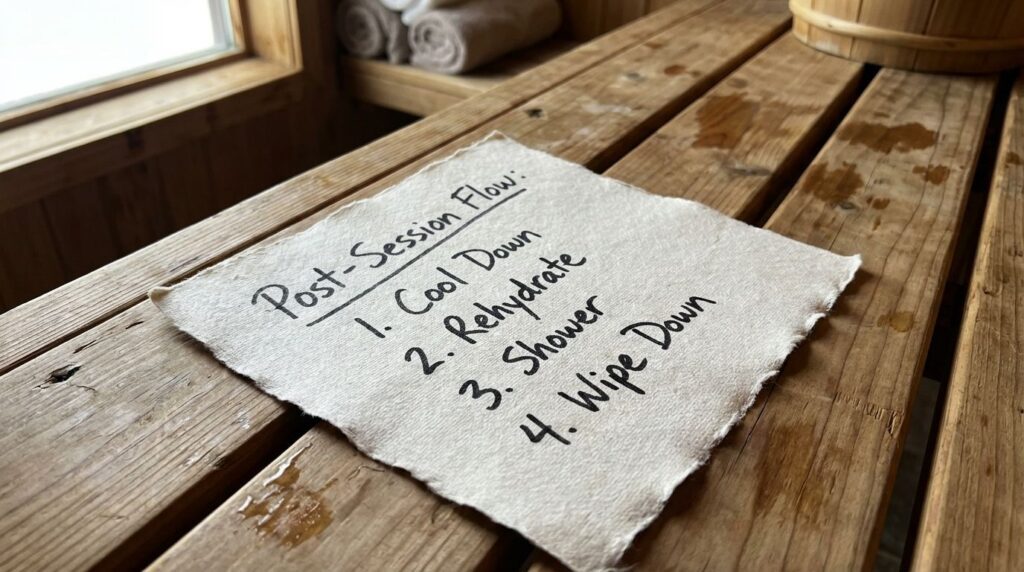
- Cool down gradually for 10 to 15 minutes.
- Rehydrate with water plus electrolytes if you sweat heavily.
- Shower to rinse sweat and feel refreshed.
- Wipe down benches and backrests so the cabin stays clean.
What is the best way to cool down after a sauna session?
Step out, sit down, and let your body temperature come down naturally. I do this in San Francisco, but the idea is the same anywhere, slow beats sudden.
Walk gently, breathe deeply, and stretch for 5 to 10 minutes if it feels good. If you feel lightheaded, sit and keep your head level until you feel steady.
If you love cold therapy, keep it reasonable. A cardiology safety review cautions that people with heart disease should avoid sudden cold plunges right after heat, because the rapid temperature swing can stress the heart rhythm. For most buyers, a cool or lukewarm shower is the safer, repeatable option.
How and why should I rehydrate after using the sauna?
After you cool down, rehydration deserves your attention. Start with 8 to 16 ounces right away, then keep drinking over the next hour.
If you’re a heavy sweater, an athlete, or someone using the sauna for chronic fatigue support, electrolytes matter. A controlled infrared sauna protocol has shown that people can lose a noticeable percentage of body mass through sweating during longer heat exposure, so it’s smart to replace sodium and fluids together instead of water only.
Eat nutrient‑rich foods next, like fruit, veggies, lean protein, and healthy fats. This is also where many people notice changes in hunger and appetite, so pay attention to your normal signals and don’t treat post-sauna cravings like an emergency.
Why should I take a cool shower after the session?
A cool shower helps drop body temperature and rinse sweat so you don’t feel sticky. It’s also the easiest way to reset after heat therapy when you want to keep your routine simple.
Keep the shower short and comfortable. If you have high blood pressure or you’re experimenting with more intense cold exposure, talk with a clinician first, because cold can be a strong stimulus for your cardiovascular system.
Important Tips and Safety Precautions
Sauna buyers often ask me, “What’s the safest default routine?” My answer is boring on purpose: start shorter, stay hydrated, and stop early if you feel off.
Here are the safety basics I want every owner to follow:
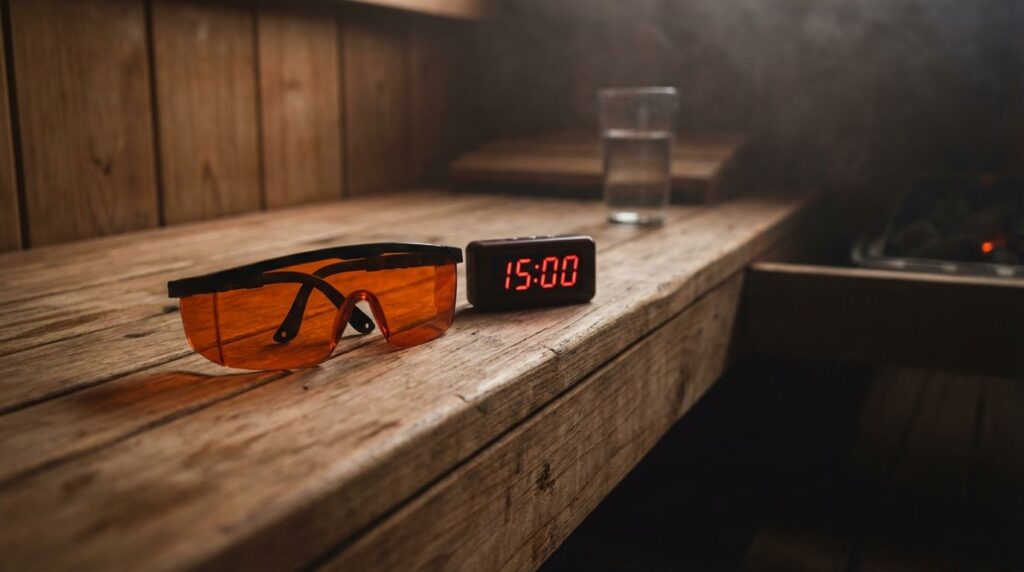
- Start at 10 to 15 minutes at low heat.
- Avoid alcohol before and during sauna use.
- Don’t sauna with fever or acute illness.
- Use eye protection when facing bright LED panels.
- Keep a timer and know your exit path.
If you’re buying, prioritize a unit with reliable auto shut-off, easy-open door hardware, and interior surfaces you can wipe down quickly.
How long should beginners start with for sauna sessions?
I recommend beginners set the sauna around 110°F for the first visit. Keep that first session to 10 to 15 minutes, and go with 5 to 10 minutes if you feel sensitive.
Then build your routine with repeatable steps:
- Week 1: 2 sessions, 10 to 15 minutes
- Week 2: 2 to 3 sessions, 15 to 20 minutes
- Week 3: 3 sessions, 20 to 30 minutes (only if you’re recovering well)
Track how you feel two hours later, not just how you feel inside the cabin. That “later” feedback is what keeps buyers from overdoing it.
Why should I avoid using the sauna if I have consumed alcohol or feel unwell?
Alcohol and sauna heat can be a dangerous combo. Alcohol can lower blood pressure and impair coordination, which increases the risk of fainting and falls.
A forensic study of sauna deaths in Finland (covering 1990 to 2002) reported that about half of cases involved alcohol. That lines up with what I’ve seen in real life: people make poor decisions when they’re buzzed, and heat makes the consequences hit faster.
Illness matters too. If you have a fever, your body is already working hard to manage body temperature and immune stress. Don’t add more heat load. Wait until you’re fully well.
When should I consult a doctor before using a red light infrared sauna?
Ask your physician before you try a red light infrared sauna if you treat a medical condition, have a recent heart attack, uncontrolled hypertension, or certain heart problems, or if you have chronic cardiovascular or circulatory issues.
In cardiology guidance for heat exposure, red flags commonly include unstable chest pain, decompensated heart failure, severe valve disease, and situations where your blood pressure drops easily. Your clinician can help you set safe limits for time and temperature.
Also talk to a medical provider if you are pregnant, breastfeeding, taking photosensitizing drugs, dealing with active skin issues, or managing chronic inflammatory conditions like rheumatoid arthritis or ankylosing spondylitis. Stop using the sauna and seek care if you get dizziness, light-headedness, or excessive fatigue.
Build Your Ideal Sauna Routine
Using a red light infrared sauna is one of the most effective ways to support skin health, soothe chronic aches, and accelerate recovery after a hard workout. However, the benefits only come when you prioritize safety and consistency over high heat.
By starting at lower temperatures, staying disciplined with your hydration, and using eye protection during light therapy, you ensure that every session leaves you feeling better than when you started.
Let’s Find the Right Sauna for Your Home
I’ve been designing infrared saunas and studying photobiomodulation since 2014. If you are ready to add a red light infrared sauna to your home, or if you have specific questions about which wavelength or heater layout is best for your goals, I’m here to help.
I believe in plain talk and real-world results—not high-pressure sales.
Book a call with me or call us directly (1-800-370-0820) to discuss your setup. Let’s make sure you get a sauna you’ll actually use every single day.
— Christopher Kiggins
People Also Ask
It works as a complementary therapies tool, it can cut pain and speed recovery, many people like the warm color glow for calm. It may help scar repair, but results vary by person.
Do not go in starving, hunger can make you dizzy, eat a light snack if your appetite dips. If you are obese, start with short sessions, build slowly. Drink water before and after.
No, red light is not a tanning bed, it does not emit UV rays or UV radiation, it won’t cause sun-like wrinkles.
It aids recovery after physical activity and can ease soreness, it is not meant for weight loss alone. Some people feel relaxed, but it is not strongly sedating.
Talk with a clinician, ask for medical education on skin and health risks, especially if you have scars or health conditions. A pro will set safe time and temp, and give clear, plain advice.