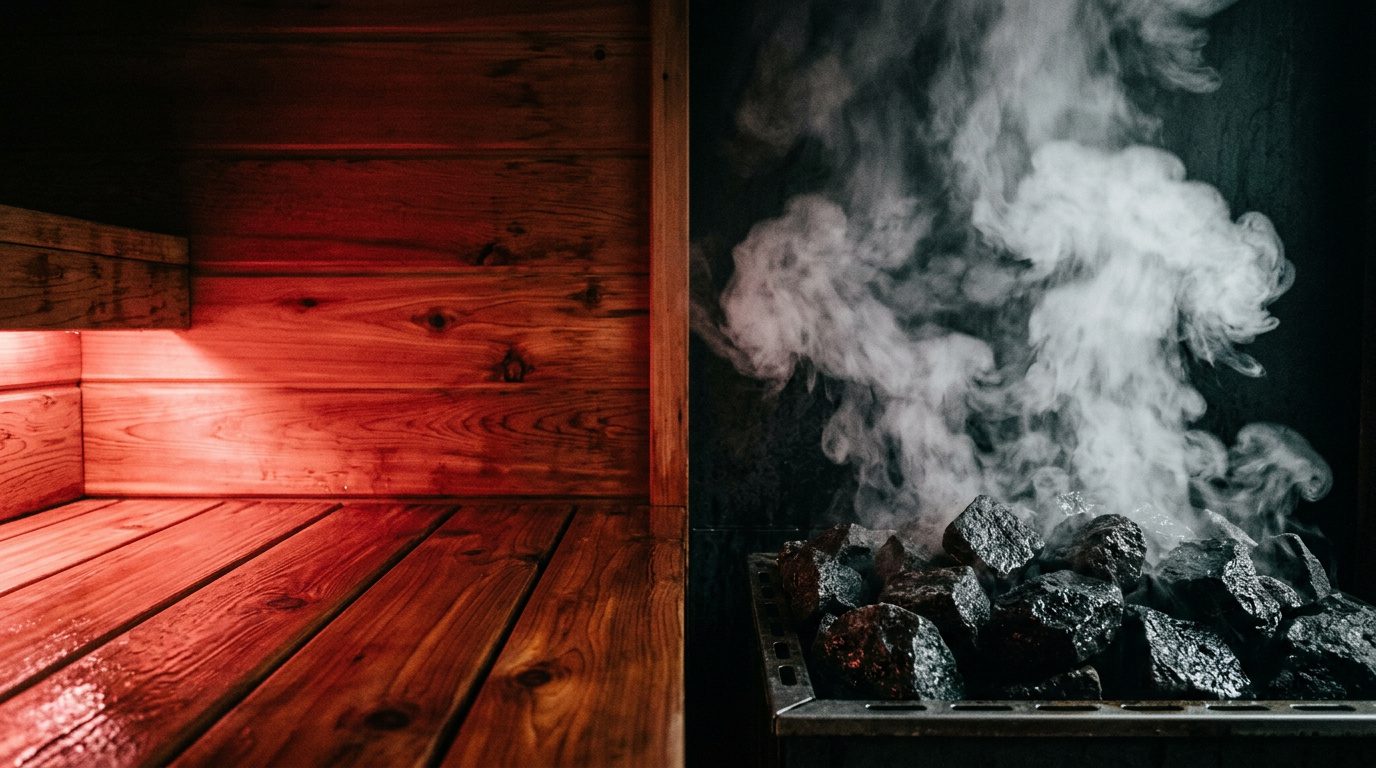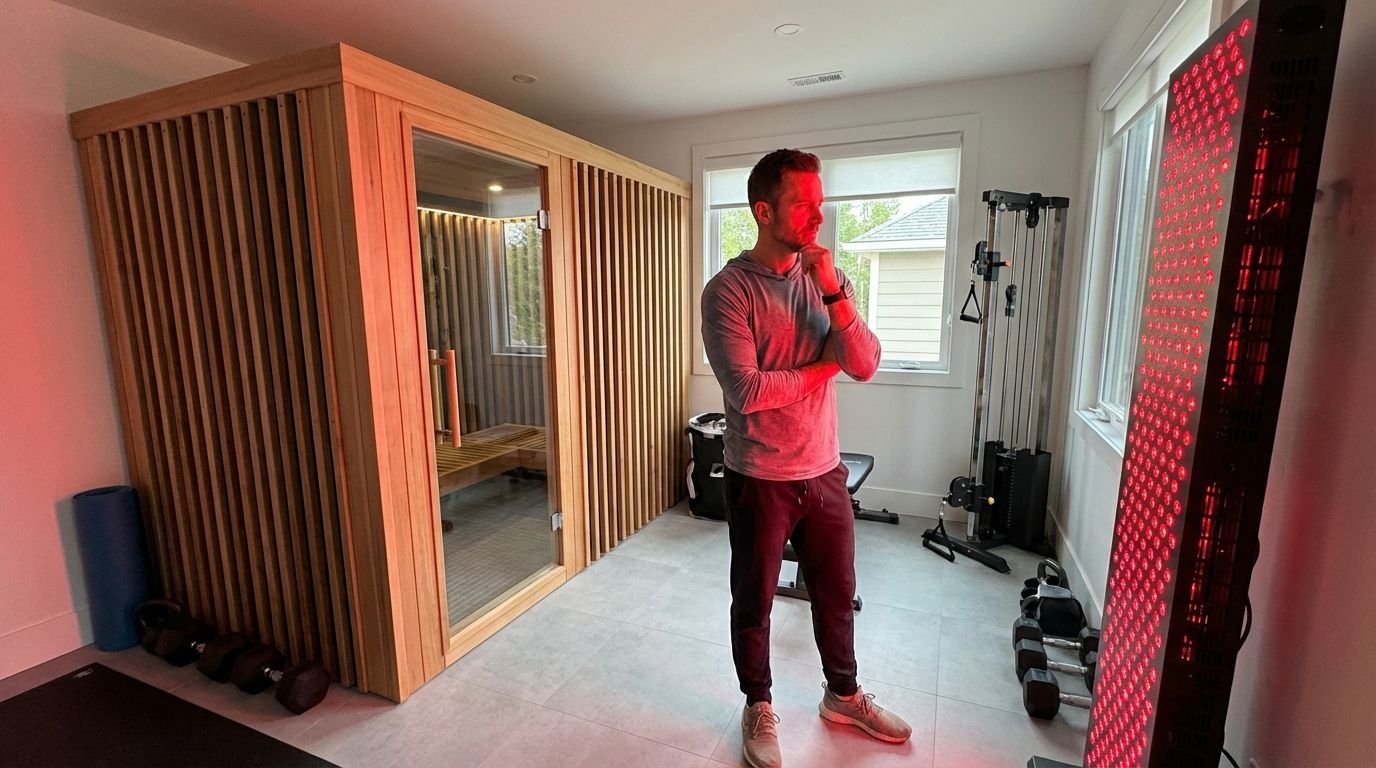
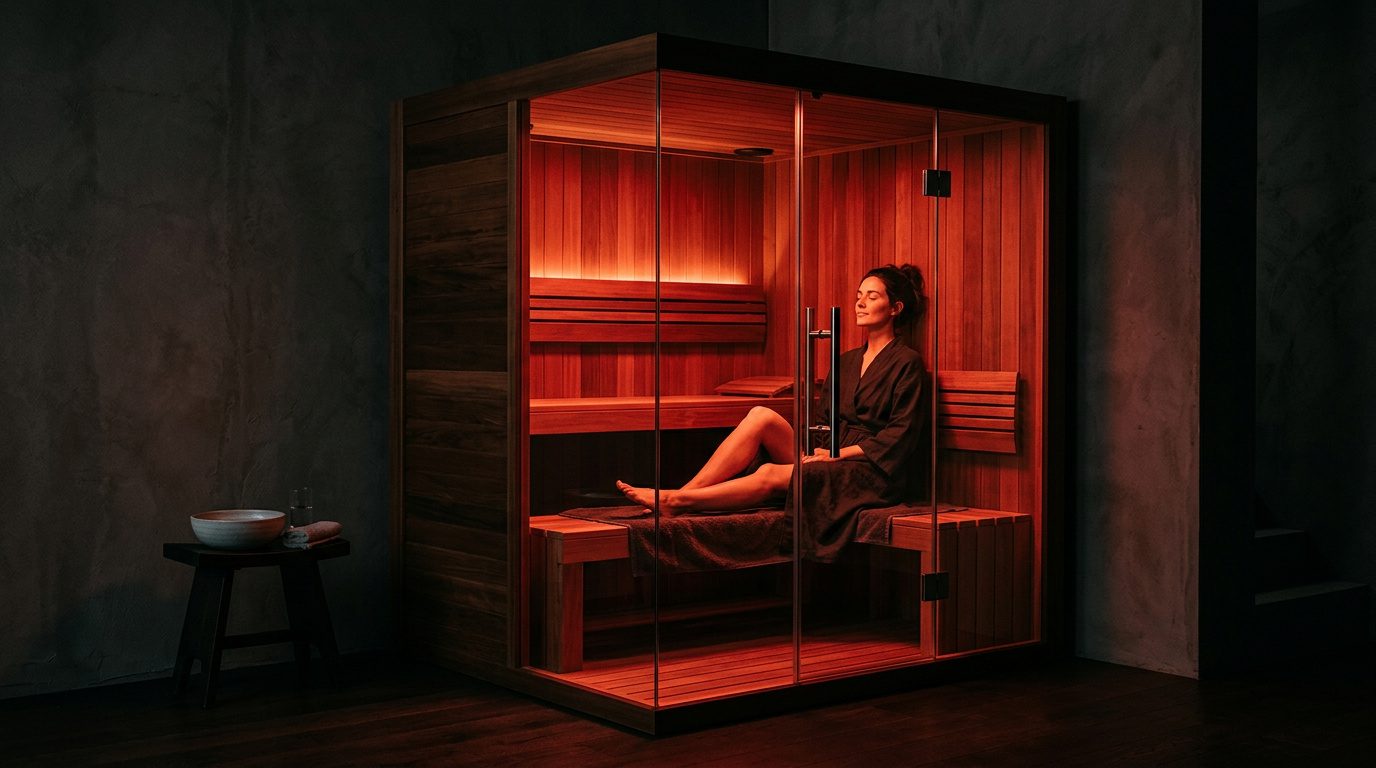
If you are buying an infrared sauna for your daily wellness routine, you intuitively want to know the truth: are all infrared sauna brands identically manufactured? The direct answer is yes for 99% of the market, but absolutely no for the premium 1%. The anxiety of spending thousands on a potentially toxic heat box is completely valid. You cannot simply check Consumer Reports for this specific niche, as genuine buyer feedback is deliberately drowned out by fake, company-authored reviews.
As the owner of SaunaCloud, I spend my life researching the competition, diving deep into the physiological mechanisms of Infra-Red Light and evaluating the exact structural engineering of modern infrared heaters. I can say definitively that no, all red light infrared saunas are not the same.
To understand why the market feels like an endless sea of identical wooden boxes, you have to look down the supply chain. If you are exploring a custom infrared sauna to upgrade your home, understanding this white-label reality is the first necessary step to protecting your investment.
The factory origins of identical infrared sauna brands
There are only a handful of infrared sauna manufacturers in China, and a massive percentage of the completed units sold in the United States arrive from those exact same factory floors.
The mechanics of white-labeling are straightforward: companies buy identical standard boxes, slap completely different logos on them, and sell them as unique products for brand differentiation. Because the structural engineering is indistinguishable across these companies, brands have to rely on smoke and mirrors to stand out.
They systematically rename standard factory components to sound exclusive. You will frequently see basic radiant panels advertised as “solo/nano carbon heaters,” which is nothing more than clever marketing nomenclature meant to disguise cheap standard parts.
Then comes the rented trust. You might see a brand boast about paid endorsements from famous doctors or organizations to leverage perceived medical authority. But think critically: how does it actually benefit the American Heart Association or a prominent figure like Dr. Joel Kahn to reach out to a small sauna distributor? It does not. These are frequently strategic sponsorships designed to allow a distributor to mask a cheap, mass-produced product as top of the line.
But the problem with mass-produced factory units goes beyond deceptive marketing. It fundamentally impacts the physics of how your body actually absorbs heat.
Heater physics: carbon panels vs. ceramic combinations
Most people assume that if a cabin gets hot, it is working. But true infrared heat therapy operates on precise wavelength frequencies—specifically harnessed from Infra-Red Light—that must reach specific thresholds for deep tissue absorption.
The mass-market carbon infrared heaters used by the majority of online companies contain a fundamental engineering flaw: they typically max out at a surface temperature of 140 degrees F. This is physically insufficient for true therapeutic penetration. To actually achieve clinical outcomes in the deep tissue, a surface temperature of 200 degrees F is the scientifically required benchmark.

This is exactly why cheap carbon heaters fall short when compared to advanced ceramic combinations. Only patented combination carbon and ceramic heaters, like the ones we engineered at Sauna Cloud LLC, can efficiently push past that 140-degree ceiling without wasting energy. The ceramic provides the intense, penetrating heat, while the carbon spreads the optimal long-wave infrared frequencies evenly across the entire cabin. At 200 degrees, the ceramic accurately produces wavelengths measuring between 7-14 microns, perfectly matching the human body’s resonant frequency. Operating consistently within this precise micron range fully bridges the physical and physiological gap that leaves standalone carbon panels ineffective for deep tissue therapy.
While poor heater performance heavily limits your physiological benefits, the cheap materials housing those heaters could actively damage your health.
Hidden health hazards: toxic glues, off-gassing, and EMFs
When you heat a poorly constructed wooden box to high temperatures, you create a catalyst for invisible threats.
Extreme heat accelerates off-gassing, a process where inexpensive building materials actively emit poisonous vapors—frequently originating from toxic glues. Even the inexpensive wood used in budget factory containers can release noxious odors once the cabin reaches operating temperature, forcing you to breathe volatile organic compounds (VOCs) during a session meant for detoxification. Importantly, universal safety standards like UL or CE certifications do not evaluate high-temperature off-gassing, meaning a standard electrical sticker does not guarantee clean air. This lack of specific certification is why independent, 3rd-party VOC testing remains uniquely critical for verifying actual cabin safety.
Then there is the massive, unseen danger of electromagnetic fields. High radiation levels inside a sauna are almost always the direct result of basic, sloppy wiring issues. Legitimate EMF testing is rigorous and expensive, which means budget factories skip it entirely. Finding the absolute cheapest infrared sauna on the market that successfully tests for legitimately low EMFs will still cost you just over $2,000.
Anything priced significantly below that threshold is almost certainly compromising on foundational electrical safety. With safety risks intentionally obscured by clever marketing, you need an airtight way to verify what you are actually bringing into your home.
How to verify actual infrared sauna quality
If you try to verify a brand’s reputation by reading comments on Facebook, Twitter, LinkedIn, Reddit, or Trustpilot, you will notice an exhausting ecosystem of aggressive marketing and manipulated ratings. To bypass the noise, you need a foolproof diagnostic tool based on structural guarantees.
- Scrutinize the warranty structure. Demand a genuine, full lifetime warranty on every single part of the sauna. Read the fine print and explicitly check for sneaky “limited” clauses. A genuine zero-limitation policy is the ultimate proxy for actual hardware durability and manufacturer confidence.
- Require a 30 day full money back guarantee. This signals real alignment with your long-term satisfaction, proving the company expects return business and specific referrals, rather than treating you as a one-off mark.
- Demand to see third-party testing documents. Require independent lab results for EMF levels, Emissivity, and VOCs. Verbal safety promises mean absolutely nothing if the manufacturer cannot produce the mechanical paperwork.
Once you filter out the mass-market clones using these criteria, you unlock the tier of the market where genuine therapeutic architecture exists.
Moving beyond white labels to custom sauna landscapes
Stepping out of the generic box tier means entering the realm of bespoke therapeutic environments. A premium high-end sauna is built entirely around your life and your existing home architecture, rather than forcing you to adapt to a standard layout.
Whether you are looking for an outdoor unit designed to withstand the elements or an integrated custom interior build, the architectural flexibility is night and day. Specific models scale natively to your home’s parameters. For example, the Sierra naturally adapts to varied spaces, while the Atlas One (often simply called the Atlas) requires at least an 8′ existing ceiling height to comfortably accommodate its 90″ finished interior space. Premium builders also allow you to dictate exact constraints, letting you choose between a 24″, 30″, or 36″ door size to match your room’s flow.
This specific freedom creates room to seamlessly merge advanced modalities like red light therapy directly into traditional infrared mechanics. Advanced commercial and premium residential units prove that precise elegance and intense physiological performance can coexist. These builds sometimes draw aesthetic and functional inspiration from varied designs, such as:
- The broad Clearlight styles
- The Sanctuary OD 2 Reflection
- The Sanctuary 3 Cedar
- The Sanctuary C Cedar
- The heavy-duty Outdoor 5-Person Reflection
Out of our headquarters in Diamond Springs CA, we build strictly to the philosophy embedded in our trademark: WALK IN, FLOAT OUT™. A true therapeutic landscape should feel native to your home.
Making a safe, long-term therapeutic investment
The overwhelming majority of online sauna brands sold in the United States are masking identical, factory-line products with rented medical authority and cleverly renamed carbon panels. Uncovering real structural differences is entirely straightforward once you stop looking at the logo and start looking at the specifications.
Your ultimate blueprint is simple: demand third-party verified low-EMF wiring, combination carbon and ceramic heaters capable of maintaining a 200-degree surface temp, and a zero-limitation lifetime warranty. If you want to dive deeper into the precise mechanics of these physical systems, or figure out exactly which is best between red light infrared and traditional saunas, I strongly encourage downloading The Definitive Guide to Infrared Saunas.
Since 2012, I, Christopher Kiggins, have made it my focus to point people in the right direction when navigating this industry. Prioritize your long-term health and your wallet by rejecting aggressive, fake-review-driven online marketers in favor of verified, relationship-driven builders. You deserve a recovery tool that actually heals.
Ready to build your true therapeutic landscape?
👉 Click here to book a private consultation with me anytime. Let’s discuss your wellness goals and ensure you make a safe, long-term investment that truly heals.
— Christopher Kiggins
Frequently Asked Questions
Standard carbon heaters usually max out at a surface temperature of 140 degrees Fahrenheit, which is physically insufficient for true therapeutic deep tissue penetration. Combination heaters use ceramic to efficiently push surface temperatures to the scientifically required 200-degree benchmark, while the carbon spreads those infrared frequencies evenly across the entire cabin.
You should expect to spend just over $2,000 at a minimum to get a unit with legitimately verified, safe EMF levels. Anything priced significantly below that threshold is almost certainly a mass-produced factory clone that skips rigorous radiation testing and relies on inherently dangerous, sloppy wiring.
That smell is off-gassing from the toxic glues and inexpensive building materials used in budget manufacturing. Extreme heat forces these volatile organic compounds (VOCs) out of the wood, meaning you end up breathing poisonous vapors during a session specifically meant for detoxification.
Look past marketed nonsense like “nano carbon heaters” and rented medical endorsements, which are just strategic disguises for identical, mass-produced boxes. You can easily filter out the clones by demanding independent third-party lab testing for EMFs and VOCs, alongside a 30-day full money-back guarantee.
It depends entirely on the specific model and your existing ceiling clearance. High-end units like the Atlas One require a ceiling height of at least 8 feet just to fit its 90-inch finished interior. If space is tight, a more natively adaptable model like the Sierra is a much better choice.
Absolutely not. Sneaky “limited” clauses are intentionally designed to let manufacturers off the hook when their cheap, mass-produced hardware inevitably fails. The ultimate proxy for hardware confidence is a genuine, zero-limitation lifetime warranty that explicitly covers every single part.