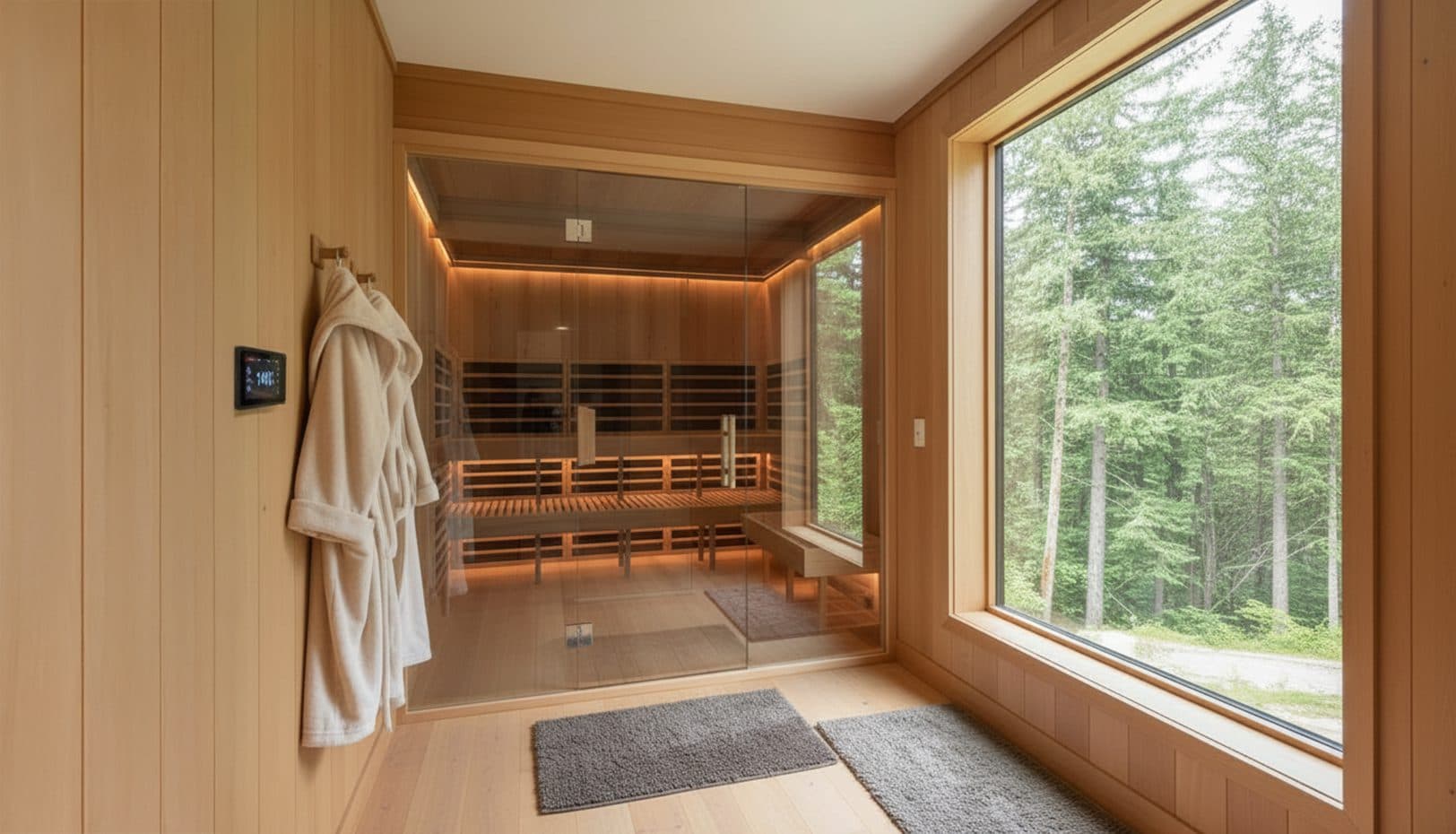
Infrared Sauna for Autism: Managing Sleep, Anxiety, and Sensory Symptoms
Key Takeaways
- Autism is a neurodevelopmental condition, NOT a disease. This article is about managing co-occurring symptoms that reduce quality of life — sleep disruption (50-80% of autistic children), anxiety (40-50%), sensory overwhelm, GI issues (30-70%), and detoxification challenges. It is NOT about treating autism itself
- Sleep improvement is the most impactful benefit. Evening sauna sessions trigger natural melatonin through the core temperature rise-then-fall mechanism. When an autistic child sleeps better, EVERYTHING else improves — behavior, sensory tolerance, communication, learning, and family stress levels
- SAFETY FOR CHILDREN: Start at 110-115 degrees F for 5 minutes. Never exceed 125 degrees F for children under 12. Parent always inside. Some autistic children cannot verbally communicate distress — watch for non-verbal signals. NEVER force a child to stay. Consent and comfort are non-negotiable
- Introduce gradually: let the child explore the sauna when it's OFF first. Then slightly warm. Build over weeks. Some children need several weeks before tolerating a warm session. Others love it immediately — warmth and enclosure provide calming deep-pressure input like a weighted blanket. Let the child lead
- The family impact extends beyond the individual. Parents of autistic children report the highest stress levels of any parenting group. When the child sleeps, the parents sleep. A 2-person sauna means calm, quiet, shared time together. Multiple families describe their sauna as the single best investment for their family's quality of life
In This Article
Important framing: This article discusses managing co-occurring symptoms experienced by many autistic individuals. Autism is a neurodevelopmental condition, not a disease. Infrared sauna therapy does not treat autism. It may help manage specific symptoms — particularly sleep disruption, anxiety, and sensory overwhelm — that affect quality of life. Always consult your child's healthcare team before starting any complementary therapy.
Autism spectrum disorder (ASD) is characterized by differences in social communication, sensory processing, and behavioral patterns. It doesn't need to be "cured" or "fixed." But many autistic individuals — children and adults — experience co-occurring conditions that genuinely reduce their quality of life and their family's quality of life: sleep that never comes, anxiety that never stops, sensory input that overwhelms, stomachs that constantly hurt.
These are the symptoms this article addresses. Not autism itself — the co-occurring conditions that make daily life harder than it needs to be. And for many families, the most transformative change starts with the simplest one: sleep.
I've worked with families who tell me their autistic child sleeps through the night for the first time after starting gentle infrared sessions. That's not curing autism — that's helping a child rest. And that changes everything for the whole family.
Co-occurring symptoms infrared may help manage
Co-Occurring Symptoms Infrared May Help
Managing quality of life — not treating autism
Sleep disruption
50-80%
Evening sauna → melatonin trigger → deeper sleep
Anxiety
40-50%
Parasympathetic activation → nervous system regulation
Sensory overwhelm
Common
Controlled warmth = calming deep-pressure input
GI issues
30-70%
Gut circulation + parasympathetic = better digestion
Detox challenges
Subset
Sweat excretion bypasses impaired liver pathways
Muscle tension
Common
Deep heating relaxes chronically contracted muscles
1. Sleep disruption — the biggest impact area
50-80% of autistic children have significant sleep problems — difficulty falling asleep, frequent waking, reduced total sleep, and disrupted circadian rhythm. Melatonin production is often atypical in autism, with delayed onset and reduced quantity. And poor sleep worsens every other autism-related challenge: behavior, sensory sensitivity, communication, learning, and family stress.
Infrared therapy helps through a well-understood mechanism: the core body temperature rise during the session, followed by the gradual drop afterward, triggers natural melatonin production and promotes deep sleep onset. Evening sessions — adjusted for children with lower temperatures and shorter durations — 60-90 minutes before bed can establish a sleep routine that many families describe as transformative.
The warm, enclosed, dimly lit sauna environment itself can be deeply calming for children who've been overwhelmed by sensory input all day. It becomes a transition space — from the stimulating world to the quiet of bedtime. This may be the single most impactful benefit: improving sleep improves everything else.
2. Anxiety and nervous system regulation
Anxiety disorders co-occur with autism at rates of 40-50%. The autistic nervous system is often in chronic sympathetic overdrive — "fight or flight" stuck on — driving meltdowns, rigidity, avoidance behaviors, and physical symptoms like stomach aches and rapid heartbeat.
Infrared therapy activates the parasympathetic nervous system (vagal tone) — the calming branch. Consistent sessions help train the nervous system toward better regulation over time. Cortisol reduction from regular use directly reduces anxiety. And the predictable, controlled sauna environment becomes a safe space — same temperature, same routine, same sensory experience every time. Autistic individuals often thrive with predictability.
3. Sensory processing support
Autism involves differences in sensory processing — some inputs are overwhelming while others may be under-registered. The sauna provides a controlled sensory environment that many autistic individuals find regulating:
- Warmth as deep pressure: The enveloping warmth provides sensory input similar to a weighted blanket — calming for many autistic individuals who seek proprioceptive/pressure input
- Reduced stimulation: The enclosed cedar space reduces visual clutter and auditory noise that drive sensory overload throughout the day
- Consistent olfactory input: Western Red Cedar's natural aroma provides a pleasant, predictable scent — part of the sensory routine
- Chromotherapy: Lights can be set to calming colors (blue, green) or turned off entirely based on the individual's preference
Some occupational therapists recommend controlled heat exposure as part of sensory integration protocols. The sauna becomes a sensory regulation tool — a place to decompress after overwhelming days.
4. Gastrointestinal issues
GI problems affect 30-70% of autistic individuals — constipation, diarrhea, abdominal pain, reflux, and suspected gut dysbiosis. The gut-brain axis is increasingly recognized as significant in autism. Infrared may provide support through improved gut circulation, reduced intestinal inflammation, and parasympathetic activation (which promotes digestive function — "rest and digest"). The autoimmune inflammatory pathways that drive many GI conditions respond to the same heat-mediated mechanisms. Not a treatment for GI disease, but a comfort alongside medical management.
5. Detoxification support
Some research suggests a subset of autistic individuals have reduced glutathione levels and methylation capacity — components of the liver's Phase 2 detoxification system. This may make toxin clearance less efficient. Infrared-induced sweating provides an additional excretion pathway that doesn't rely on these potentially impaired liver pathways — the Genuis BUS Study found toxins in sweat that weren't detectable in blood or urine.
This is a supportive strategy for a subset of individuals with documented detoxification challenges — not a treatment for autism itself. Discuss with your child's healthcare team.
6. Muscle tension and motor planning
Many autistic individuals carry chronic muscle tension from sustained sensory overwhelm and anxiety. Motor planning (praxis) challenges are common. Deep infrared heating relaxes chronically contracted muscles, and improved blood flow supports muscle function. Post-sauna stretching or occupational therapy exercises may be more effective when muscles are warm and relaxed.
Safety for autistic children — non-negotiable guidelines
Communication and consent
Some autistic children cannot verbally communicate discomfort or distress. Watch for non-verbal signals: flushing, excessive sweating, agitation, trying to leave, changes in stimming patterns, crying, or withdrawal. NEVER keep a child in the sauna if they want to leave. Consent and comfort are non-negotiable. For non-speaking children, establish a clear signal system — a "done" card, tapping the door, or any consistent gesture that means "I want to stop."
Temperature and duration
- Start at 110-115°F for 5 minutes — much lower and shorter than adult protocols
- Never exceed 125°F for children under 12
- Maximum 15-20 minutes for children
- A parent or caregiver must be inside the sauna at all times
- See our complete children's safety guide and contraindications reference
Gradual introduction
Introducing Your Child to the Sauna
Gradual steps — let the child lead
Explore
Sit inside the sauna when it’s OFF. Get familiar with the space.
Warm visit
Sauna at room temp or slightly warm (90°F). 5 minutes. With parent.
First session
110-115°F, 5 minutes. Watch for comfort signals.
Building
115°F, 8-10 minutes, 2x/week. Only if child is willing.
Routine
115-120°F, 10-15 minutes, 3-5x/week. The sauna becomes a safe space.
⚠️ Let the child lead. Never force it. Stop if distressed. Every child is different.
Some autistic children find the sauna overwhelming initially — the enclosed space, the warmth, the unfamiliar environment. Others love it immediately — the warmth and enclosure provide the same calming effect as a weighted blanket. Let the child lead. Every autistic individual has different sensory preferences.
Seizure risk
Epilepsy co-occurs with autism at rates of 20-30% (vs 1-2% in the general population). Heat can lower the seizure threshold in some epilepsy patients. If your child has epilepsy or any history of seizures, get neurologist approval before any sauna use. Start even more conservatively and monitor closely.
Medication interactions
Many autistic children take medications — SSRIs, antipsychotics (risperidone, aripiprazole), stimulants, anticonvulsants — some of which affect thermoregulation and sweating. Review all medications with the prescribing physician before starting sauna therapy. See our medication interaction guide.
The family impact
Autism affects the entire family. Parents of autistic children report higher rates of stress, burnout, sleep deprivation, and relationship strain than any other parenting group. The impact compounds: when the child can't sleep, the parents can't sleep. When the child is in constant distress, the parents are in constant crisis mode.
When an autistic child begins sleeping through the night, the cascade runs in reverse. The parents sleep. The household stabilizes. Patience returns. Energy returns. The quality of life improvement is felt by everyone under the roof.
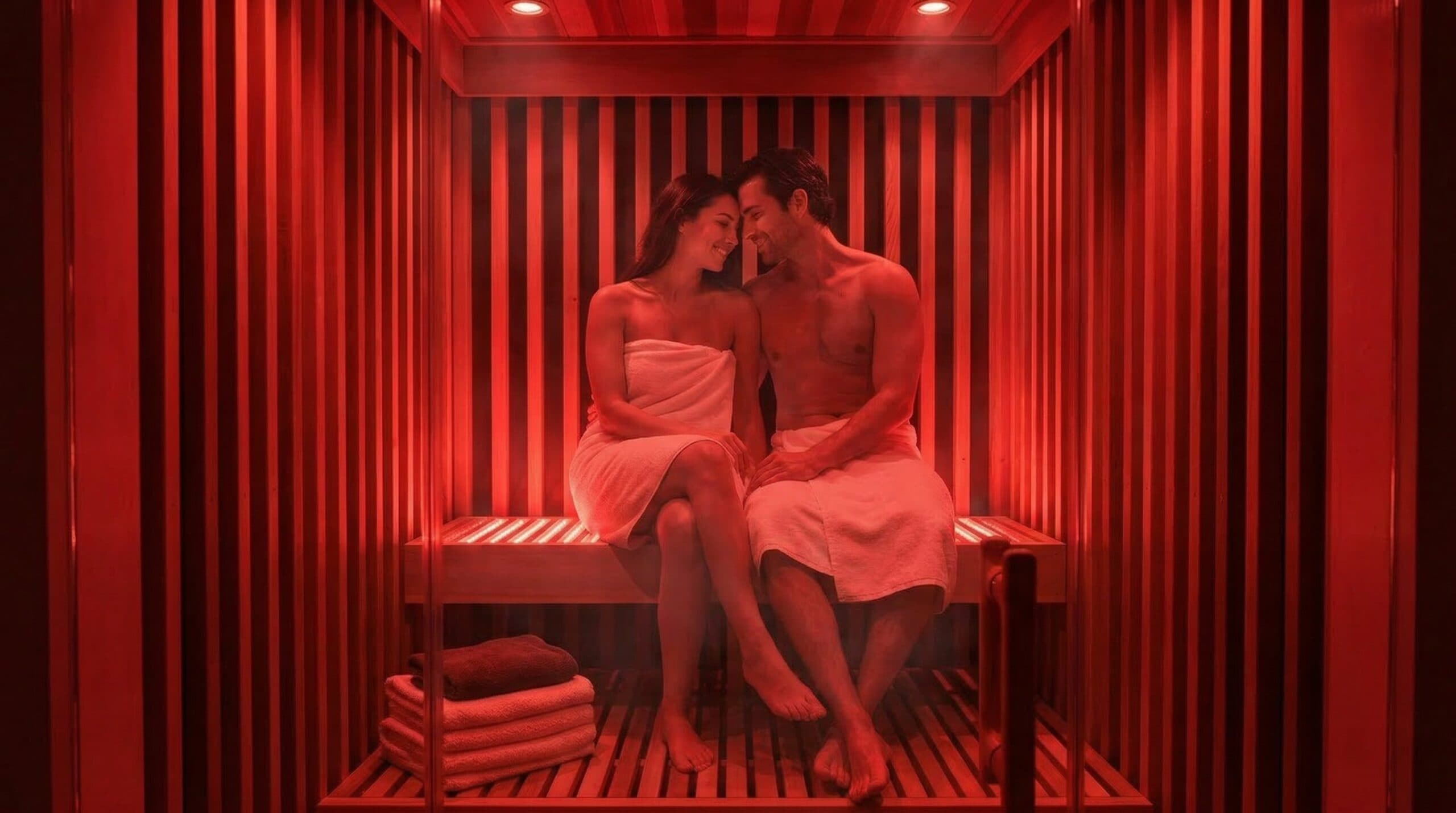
A daily sauna routine provides structure and predictability — which many autistic children crave. The parent can sauna alongside the child, getting their own stress relief and self-care. A 2-person sauna means a calm, warm, quiet moment together — no screens, no demands, no sensory bombardment. Just being together in warmth.
What the research says — honest assessment
There are no large-scale randomized controlled trials specifically on infrared sauna therapy for autism. The existing evidence is extrapolated from sleep research, anxiety and parasympathetic activation studies, detoxification literature, and family reports. The mechanisms are biologically plausible and each co-occurring condition has its own evidence base.
More research is needed. But families dealing with these symptoms daily shouldn't have to wait for perfect evidence when the risk is low (with proper precautions) and the potential quality-of-life benefit is meaningful.
I don't make claims about treating autism. What I've seen is autistic children who finally sleep, families who finally breathe, and kids who choose the sauna as their calm-down space. That's not curing anything — it's improving quality of life. And that matters.
If you're exploring whether an infrared sauna could help your family, call us at 800-370-0820. We can discuss family-sized custom builds, VantaWave's precise temperature control starting at 110°F, chromotherapy options for sensory comfort, and zero-glue construction for children with chemical sensitivities.
Frequently Asked Questions
Can infrared sauna help autistic children?
Infrared sauna therapy may help manage co-occurring symptoms that many autistic children experience — particularly sleep disruption (50-80% of autistic children), anxiety (40-50%), sensory overwhelm, and GI discomfort. It does not treat autism itself. The most impactful benefit reported by families is improved sleep, which cascades into better behavior, mood, sensory tolerance, and family quality of life.
Is infrared sauna safe for children with autism?
With appropriate precautions: lower temperatures (110-120 degrees F), shorter sessions (5-15 minutes), parent always present inside, and close monitoring for discomfort. Some autistic children cannot verbally communicate distress — watch for non-verbal signals like flushing, agitation, or trying to leave. Never force a child to stay. Get pediatrician approval, especially if the child takes medications or has epilepsy (20-30% co-occurrence rate).
Can infrared sauna help an autistic child sleep?
This is the most commonly reported benefit. 50-80% of autistic children have significant sleep problems, often related to atypical melatonin production. Evening sauna sessions trigger natural melatonin release through the core temperature rise-then-fall mechanism. Multiple families report their autistic child sleeping through the night for the first time after establishing a regular gentle sauna routine.
Does infrared sauna help with autism-related anxiety?
Infrared therapy activates the parasympathetic nervous system, directly counteracting the chronic sympathetic overdrive (fight-or-flight stuck on) that many autistic individuals experience. Regular sessions reduce cortisol and promote nervous system regulation over time. The predictable, controlled, enclosed sauna environment can also serve as a calming sensory space — same routine, same warmth, every time.
Is the sauna environment overwhelming for autistic children?
It can be initially. Introduce very gradually: let the child explore the sauna when it's off first. Then slightly warm. Build up over weeks. Some children need several weeks before tolerating a warm session — others love it immediately because the warmth and enclosure provide calming deep-pressure input similar to a weighted blanket. Every child is different. Let them lead the pace.
Can infrared sauna help with detoxification in autism?
Some research suggests a subset of autistic individuals have reduced glutathione levels and methylation capacity, potentially making toxin clearance less efficient. Infrared-induced sweating provides an additional excretion pathway that doesn't rely on these impaired liver pathways. This is a supportive strategy for a specific subgroup, not a treatment for autism, and should be discussed with the child's healthcare team.
What temperature should an autistic child use in an infrared sauna?
Start at 110-115 degrees F for just 5 minutes — much lower and shorter than adult protocols. Never exceed 125 degrees F for children under 12. Always with a parent inside. Increase temperature and duration very gradually over weeks, only if the child is comfortable and willing. Children thermoregulate less efficiently than adults, and autistic children may not communicate discomfort verbally.
Founder & Lead Designer, SaunaCloud®
SaunaCloud: 3,000+ installations since 2014 · Author of The Definitive Guide to Infrared Saunas · Featured in Forbes, Inc., and MSN
Christopher designs every SaunaCloud sauna. His work brings the room, heaters, controls and installation plans together so you can review the project before committing. His professional expertise is sauna design and construction, not clinical medicine.
Custom 3D renderings and a proposal in 24-48 hours.
Continue Reading
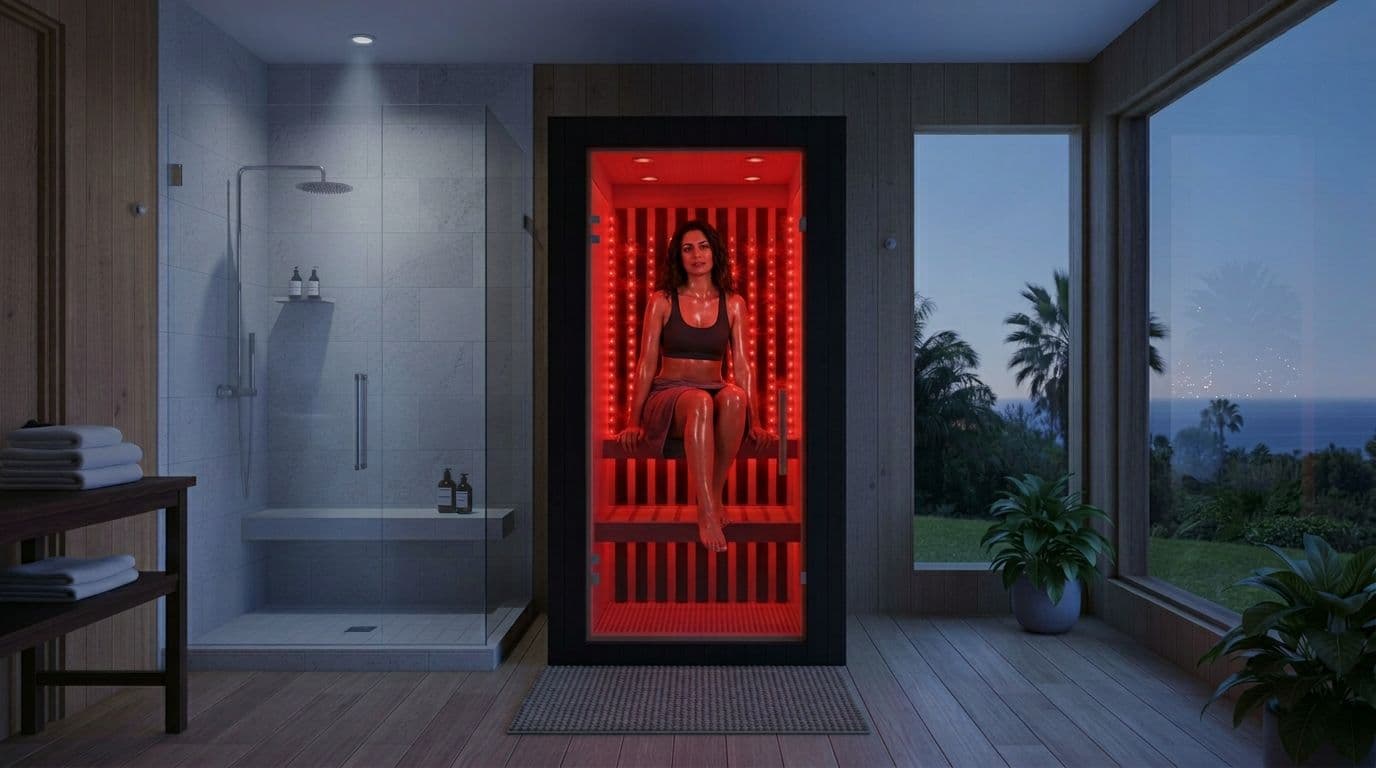
Designed for Families — Built for Comfort
VantaWave precise temperature starting at 110°F. Chromotherapy for calming sensory environment. Zero-glue cedar for chemical sensitivity. Custom sizing for parent + child. Call 800-370-0820.
Custom 3D renderings and a proposal in 24-48 hours.